
Chaos is the primordial deity of Greek mythology, personification of the original void or abyss from which the universe was born. According to Hesiod in the Theogony (c. 700 BCE), Chaos is the first being to have existed. From Chaos emerge Gaia, Tartarus, Eros, Nyx, and Erebus.
Chaos
Chaos
8 min read
Frequently asked questions
Key Facts
- First being to exist according to Hesiod's Theogony (c. 700 BCE): “In the beginning, Chaos came to be”
- Gives rise to five primordial entities: Gaia (Earth), Tartarus (Abyss), Eros (Desire), Nyx (Night), and Erebus (Darkness)
- In its original Greek meaning, Chaos denotes a gaping void or chasm — not disorder, which is its modern sense
- The concept was taken up by Pre-Socratic philosophers in their reflections on the origin of the cosmos
- Ovid mentions it in the Metamorphoses (1st century BCE/CE) as a raw, formless mass preceding creation
Works & Achievements
According to Hesiod, Chaos gave birth to Erebus (the subterranean darkness) and Nyx (the Night), the first two entities to emerge from the primordial void. These two beings form the first divine generation, far predating the Titans and the Olympians.
After Chaos, Gaia (the Earth), Tartarus (the Abyss), and Eros (the creative Force) arose in the nascent cosmos. Together with Chaos, these entities form the four primordial powers that structure the Greek universe before the advent of the personal gods.
Hesiod's *Theogony* is the foundational text that establishes Chaos as the first reality of the universe. This epic poem is considered the primary source for Greek cosmogony and has come down to us across the centuries.
The Orphic mysteries reinterpret Chaos as a more active cosmic power, from which a primordial egg containing Phanes emerges. This tradition considerably enriched the figure of Chaos and exerted a profound influence on Neoplatonism.
Ovid revisits and expands the figure of Chaos as a shapeless, confused mass from which cosmic order emerges. This version had a decisive influence on medieval and Renaissance Western culture, shaping our modern understanding of the word.
Anecdotes
In Hesiod's Theogony (c. 700 BCE), Chaos is described as the very first being to have existed, even before the gods of Olympus. The Greek word χάος (khaos) did not mean disorder as we understand it today, but a 'yawning void' — a vast and primordial emptiness. It was only centuries later, in modern languages, that the word took on the meaning of confusion and disorder.
Aristophanes, in his comedy The Birds (414 BCE), offers a poetic and fanciful version of the creation of the world: in the beginning existed Chaos, Night, dark Erebus, and Tartarus, and it was from the union of Night and Erebus that Love (Eros) was born, setting the world in motion. This version differs slightly from Hesiod's but illustrates how deeply Chaos was rooted in the popular Greek imagination.
The pre-Socratic philosophers of the 6th century BCE drew on the concept of Chaos to develop their theories about the origin of the universe. Anaximander posited that the origin of all things was the apeiron, an undefined and boundless substance strikingly reminiscent of Hesiod's Chaos. These thinkers were among the first to try to explain the world through natural principles rather than divine narratives.
In the Orphic traditions (a Greek religious movement of the 6th–3rd centuries BCE), the role of Chaos is reinterpreted: a cosmic egg takes the place of the empty void, and from this egg Phanes, the god of light and procreation, would be born. This version illustrates how the myth of Chaos evolved and grew richer over the centuries, moving from a simple cosmogony to a complex theological system.
Ovid, in his Metamorphoses (c. 8 CE), describes Chaos as a formless, confused mass in which all matter was mixed together without order. This vision would profoundly influence medieval Christian thought on Creation, and even the modern conception of the word 'chaos' — a fine example of how a Greek mythological concept crossed the centuries to shape our language and our thinking.
Primary Sources
Verily, at the first Chaos came to be; then wide-bosomed Gaia, the ever-sure foundation of all things forever, and Eros, the fairest among the immortal gods. From Chaos came Erebus and black Night.
In the beginning there was Chaos, Night, dark Erebus, and vast Tartarus; there was no earth, no air, no sky. In the immense breast of Erebus, dark-winged Night first laid an ungerminated egg, from which, as the seasons turned, sprang graceful Eros.
Before the sea and lands and sky that covers all, nature everywhere wore the same face: this was called Chaos — a formless and confused mass, nothing but inert weight, the ill-joined seeds of discordant things.
I invoke you, blessed Chaos, who before all others gave birth to light and the immortal gods, you from whom all things proceed and to whom all things return, dark and unfathomable principle of all existence.
Key Places
The mythic place par excellence, the original Chaos is conceived as a space preceding all geography. The Greeks placed it conceptually "before" the world, in an undefined beyond that no map could represent.
Born shortly after Chaos according to Hesiod, Tartarus is the deepest abyss of the Greek underworld, as far beneath the Earth as the Sky is above it. The cosmic twin of Chaos, it shares its abyssal and shadowy nature.
A major religious center of ancient Greece, considered the omphalos (navel) of the world. It was here that the Greeks came to consult the oracle on great existential questions, including the origins of the cosmos.
The native region of Hesiod, the poet who first set down the myth of Chaos in writing in the *Theogony*. It was here that the oral cosmogonic tradition was fixed as a written text around 700 BCE.
Typical Objects

The central image associated with Chaos, this gaping void represents the state before all creation. In ancient depictions, the chasm is rendered as a dark and bottomless abyss, the source of all things — what the Greeks sometimes called 'khaos' in its literal sense of 'opening.'

In Orphic traditions, a silver egg emerges from the primordial Chaos, and its hatching gives birth to light and the first gods. This symbolic object illustrates the idea of creative potential held within the original void.

Born from Chaos, Nyx (the Night) is often depicted wrapped in a dark veil scattered with stars. This veil symbolizes Chaos's first offspring — the passage from absolute void to the first tangible reality: darkness.

Erebus, the subterranean darkness born from Chaos, is sometimes depicted carrying an extinguished or smoldering torch, a symbol of the primordial darkness that precedes all light. He represents the first materialization of Chaos into a distinct reality.

In Greek rites offered to the primordial chthonic powers, a pit dug into the earth (bothros) received libations of dark wine, honey, and milk. This gesture symbolized a return to the depths of primordial Chaos — a force that predated all divine order.
School Curriculum
Vocabulary & Tags
Key Vocabulary
Daily Life
Morning
In mythical representations, Chaos exists before time itself — and therefore before day and night. If one imagines a cosmogony in the making, the dawn of Chaos would be that undefined instant when the absolute void first stirred, preceding all creation. Greek priests commemorated this primordial moment through rites of silence and darkness performed before the break of day.
Afternoon
Chaos is a permanent reality in Greek thought: behind the apparent order of the world, the residue of the primordial void still lingers. The pre-Socratic philosophers meditated on the idea that the visible cosmos conceals an eternal and inexhaustible Chaos — an intuition that modern physics would much later revisit with the concept of the quantum vacuum.
Evening
Night, daughter of Chaos according to Hesiod, was the moment when the Greeks felt most acutely the presence of the primordial void. The nocturnal rites of the Orphics, performed in caves or dark crypts, sought to symbolically reconnect with primordial Chaos, perceived as the source of all rebirth and all revelation.
Food
An abstract and primordial entity, Chaos does not eat. But in rites addressed to chthonic powers, the Greeks would deposit in pits dug into the earth (*bothroi*) black wine, honey, and milk — offerings intended for beings of the before-world, close to primordial Chaos, to whom sacrifice was never made on a raised altar.
Clothing
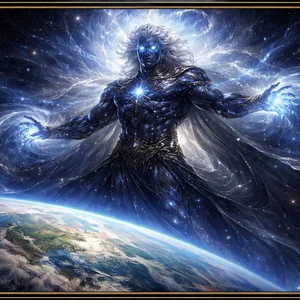
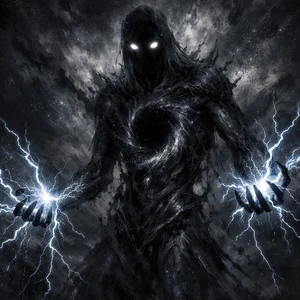
Chaos has neither form nor clothing in classical Greek mythology. In later pictorial and allegorical representations, it sometimes appears as an indistinct silhouette enveloped in swirling mists and darkness, symbolizing the absolute absence of any defined form or boundary.
Housing
The abode of Chaos is the cosmos itself before any organization. The Greeks associated it with deep chasms, dark caverns, and marine abysses — all those spaces that seemed to escape the order of the world and preserve something of the primordial night and the original formlessness.
Historical Timeline
Period Vocabulary
Liens externes & ressources
Références
Œuvres
Genèse d'Érèbe et de Nyx
Temps mythique primordial
Émergence de Gaïa, Tartare et Éros
Temps mythique primordial
Inspiration de la Théogonie d'Hésiode
vers 700 av. J.-C.
Cosmogonie orphique
VIe-IIIe siècle av. J.-C.
Réception latine dans les Métamorphoses d'Ovide
vers 8 ap. J.-C.