Monsters of Greek Mythology
Cerberus, Minotaur, Hydra, Chimera, Medusa, Typhon — the terrifying creatures of Olympus and the Greek underworld.
150 characters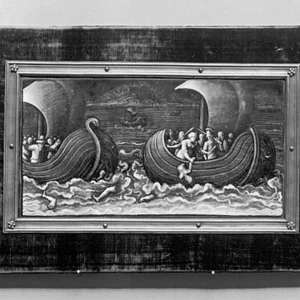

150 characters
Absyrtos
Absyrtos (or Apsyrtus) is a prince of Colchis, son of King Aeëtes and brother of Medea. He appears in the mythological cycle of the Argonauts, where he dies during the flight of Medea and Jason carrying off the Golden Fleece.
Aeëtes
King of Colchis in Greek mythology, son of the god Helios and the Oceanid Perseis. Father of Medea, he is the guardian of the Golden Fleece and the main adversary of Jason during the quest of the Argonauts.
Aegeus
Legendary king of Athens and father of Theseus. Believing his son dead after spotting the black sails on his ship returning from Crete, he threw himself into the sea that now bears his name.
Aethra
Aethra is an Oceanid of Greek mythology, one of the daughters of the Titan Oceanus and Tethys. The wife of the Titan Atlas, she is the mother of the Hyades and of their brother Hyas. Her figure belongs to the primordial deities connected with the waters.
Ajax
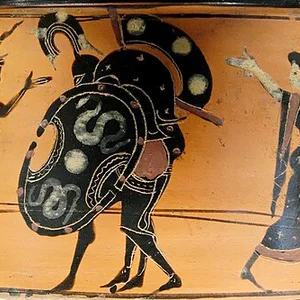
Ajax, son of Telamon, king of Salamis, is one of the greatest Greek heroes of the Trojan War. Renowned for his colossal size and strength, he is considered, after Achilles, the finest warrior in the Achaean camp.
Andromache
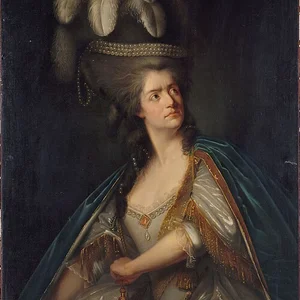
Princess of Thebe in Mysia and wife of Hector in the Greek epic tradition, Andromache is the figure of the woman and mother struck by the Trojan War. Immortalized by Homer in the Iliad and by Racine in his eponymous tragedy (1667), she embodies conjugal fidelity and grief.
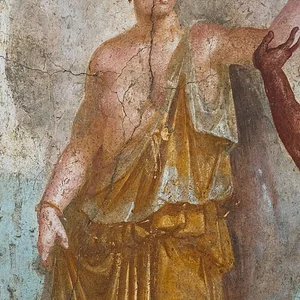
Andromeda
Andromeda is a princess of Greek mythology, the daughter of Cepheus, king of Ethiopia, and Cassiopeia. Chained to a rock to be offered to a sea monster, she is rescued by the hero Perseus, whom she later marries.
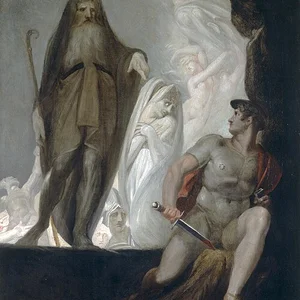
Anticleia
Anticleia is a figure from Greek mythology, daughter of the cunning Autolycus and mother of Odysseus (Ulysses). Wife of Laertes, king of Ithaca, she dies of grief during the long absence of her son, who has gone off to the Trojan War.
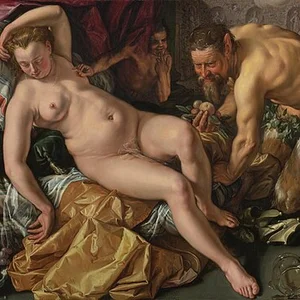
Antiope
Antiope is a figure from Greek mythology, daughter of Nycteus, king of Thebes (or of the river-god Asopus, depending on the version). Seduced by Zeus disguised as a satyr, she gave birth to the twins Amphion and Zethus, future builders of the walls of Thebes.
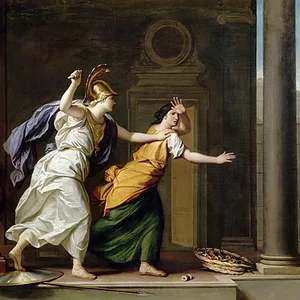
Arachne
A mortal weaver from Lydia in Greek mythology, Arachne challenged the goddess Athena to a weaving contest. Defeated or shamed, she was transformed into a spider — giving arachnids their name.
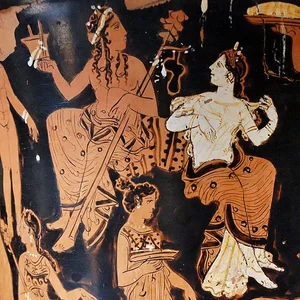
Ariadne
Cretan princess of Greek mythology, daughter of King Minos and Pasiphae. She helps the Athenian hero Theseus defeat the Minotaur by giving him a thread to navigate the labyrinth. Abandoned on the island of Naxos, she becomes the wife of the god Dionysus.
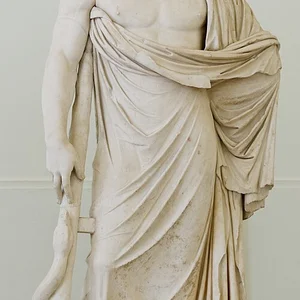
Asclepius
Greek god of medicine and healing, son of Apollo and Coronis. Raised by the centaur Chiron, he mastered the healing arts so completely that he could resurrect the dead — a transgression that led Zeus to strike him down with a thunderbolt.
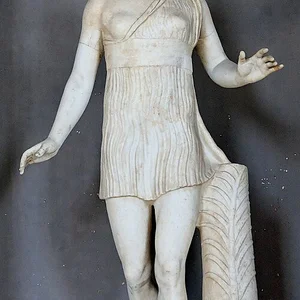
Atalanta
Heroine of Greek mythology, Atalanta is a huntress of unmatched agility and speed. An Argonaut and participant in the Calydonian Boar Hunt, she is famous for her challenge: any suitor had to outrun her on pain of death.
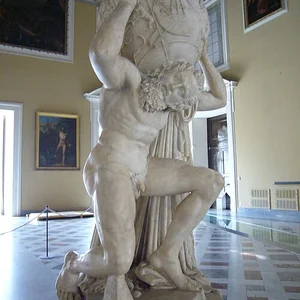
Atlas
Titan of Greek mythology, son of Iapetus and Clymene. Condemned by Zeus to hold up the sky on his shoulders after the defeat of the Titans in the Titanomachy. He is also the father of the Pleiades and the Hesperides.
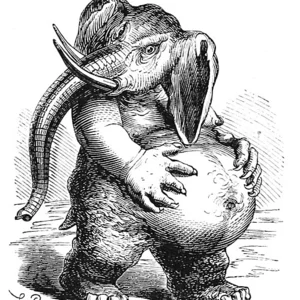
Behemoth
Behemoth is a monstrous creature from the Hebrew Bible, described as a colossal, primordial land beast. In the Book of Job, God invokes it to illustrate his omnipotence before humankind. Jewish tradition makes it the terrestrial counterpart of the sea monster Leviathan.
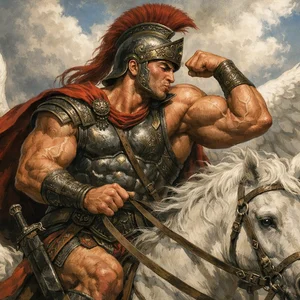
Bellerophon
Hero of Greek mythology from Corinth, Bellerophon tames the winged horse Pegasus and slays the Chimera. A victim of his own hubris, he attempts to reach Olympus and is cast down to earth by Zeus.
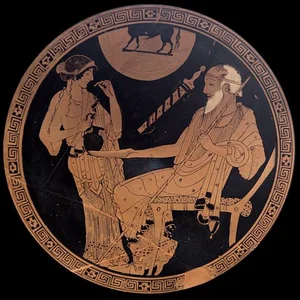
Briseis
Briseis is a figure from Greek mythology, a war captive whose possession sparks the famous quarrel between Achilles and Agamemnon in Homer's Iliad. Her seizure by Agamemnon drives Achilles to withdraw from the fighting, a pivotal event in the tale of the Trojan War.
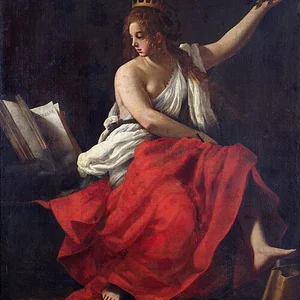
Calliope
Calliope, in Greek mythology, is the eldest of the nine Muses, daughters of Zeus and the Titaness Mnemosyne. She presides over epic poetry and eloquence, and is reputed to be the mother of the poet Orpheus. Her name means “she of the beautiful voice.”
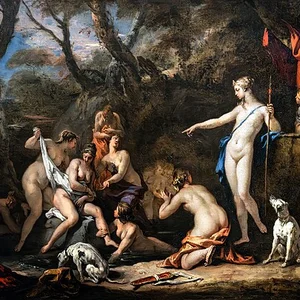
Callisto
Callisto is a nymph from Greek mythology and a companion of Artemis, goddess of the hunt. Seduced by Zeus, she was transformed into a bear by the jealous Hera, then placed in the sky as the constellation Ursa Major.

Calypso
An Oceanid nymph of Greek mythology, Calypso rules over the island of Ogygia. In Homer's Odyssey, she holds Odysseus captive through her love for seven years, offering him immortality in exchange for his company. Forced by Zeus to release him, she embodies the figure of impossible love set against the longing to return home.
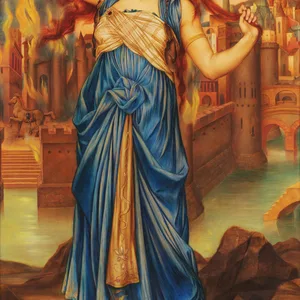
Cassandra
Trojan prophetess and daughter of King Priam, Cassandra was granted the gift of prophecy by Apollo, then cursed so that no one would ever believe her. A tragic figure of Greek mythology, she foretold the fall of Troy but could not prevent it.
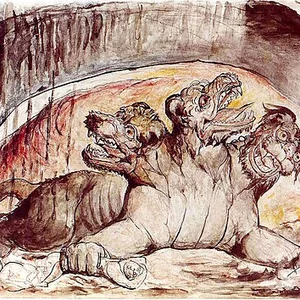
Cerberus
Cerberus is the monstrous three-headed dog who guards the entrance to the Underworld in Greek mythology. Son of Typhon and Echidna, he prevents the living from entering and the dead from leaving. Heracles captured him alive during his twelfth and final labor.
Chaos
Chaos is the primordial deity of Greek mythology, personification of the original void or abyss from which the universe was born. According to Hesiod in the Theogony (c. 700 BCE), Chaos is the first being to have existed. From Chaos emerge Gaia, Tartarus, Eros, Nyx, and Erebus.
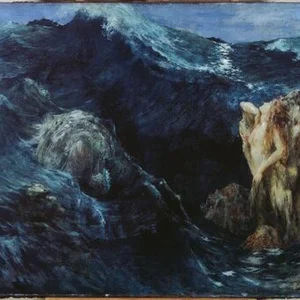
Charybdis
Charybdis is a sea monster from Greek mythology, daughter of Poseidon and Gaia, transformed into a devastating whirlpool by Zeus. She swallows the waters three times a day in the Strait of Messina, threatening any ship that draws near. Odysseus encounters her during his long journey home to Ithaca.
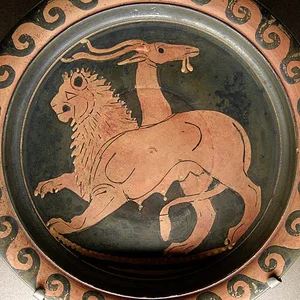
Chimera
Monster from Greek mythology, born of Typhon and Echidna. A flame-breathing hybrid creature, she was slain by the hero Bellerophon riding the winged horse Pegasus.
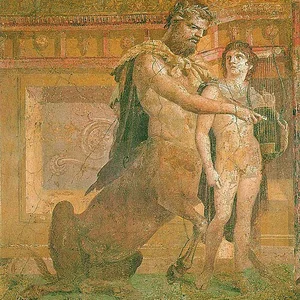
Chiron
Chiron is a centaur from Greek mythology, son of Cronus and the nymph Philyra. Renowned for his wisdom, he served as tutor to many Greek heroes, including Achilles, Jason, and Asclepius. He excelled in medicine, music, hunting, and philosophy.
Circe
Circe is an enchantress from Greek mythology, daughter of the sun god Helios, known for her magical powers. In Homer's Odyssey, she transforms Odysseus's companions into pigs before becoming the hero's ally.
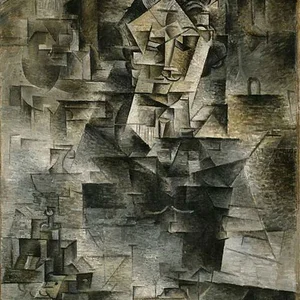
Clitô
Cléito is a figure from Greek mythology, daughter of Evenor and Leucippe, known through Plato's dialogue 'Critias'. A mortal woman living on the island that would become Atlantis, she was beloved by the god Poseidon, who surrounded her home with concentric ramparts and fathered with her the ten first kings of Atlantis.
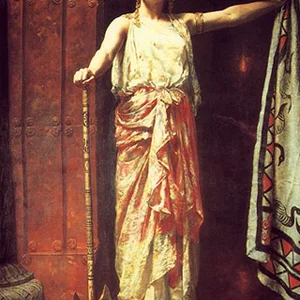
Clytemnestra
A major figure in Greek mythology, Clytemnestra is the wife of King Agamemnon of Mycenae. She murders him upon his return from the Trojan War to avenge the sacrifice of their daughter Iphigenia. She is the central character of Aeschylus's Oresteia (458 BCE).
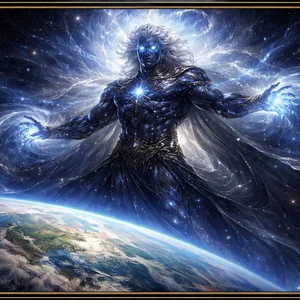
Coeus
Titan of Greek mythology, son of Uranus and Gaia, Coeus personifies heavenly intelligence and the axis of the world. Husband of Phoebe, he is the father of Leto and Asteria, and thus the grandfather of Apollo and Artemis.
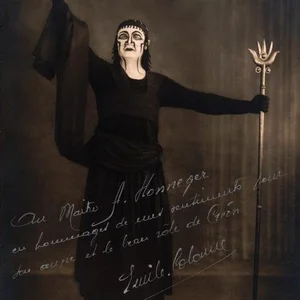
Creon
Creon is a character from Greek mythology, king of Thebes. Brother of Jocasta and uncle of Antigone, he seizes power after the death of Oedipus's sons. He embodies the authority of the state in conflict with divine and family laws.
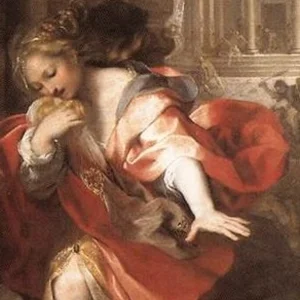
Creusa
Creusa is a princess from Greek mythology, daughter of King Priam and Hecuba, and wife of the Trojan hero Aeneas. She disappears during the fall of Troy, and her ghost appears to Aeneas to foretell his destiny.
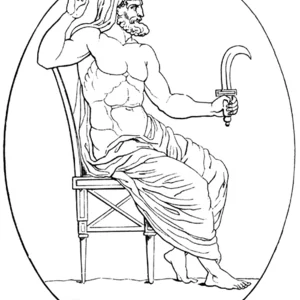
Cronos
Cronos is the youngest of the Titans, son of Uranus and Gaia. He overthrew his father, ruled over the Golden Age, then devoured his own children for fear of being dethroned. Zeus, saved by his mother Rhea, eventually defeated him.
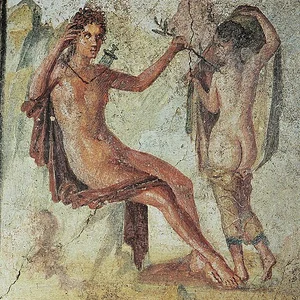
Daphne
Daphne is a nymph from Greek mythology, daughter of the river-god Peneus (or of the river Ladon according to some versions). Pursued by the god Apollo who had fallen in love with her, she is transformed into a laurel tree to escape his embrace. Her myth is one of the most famous tales of metamorphosis from antiquity.
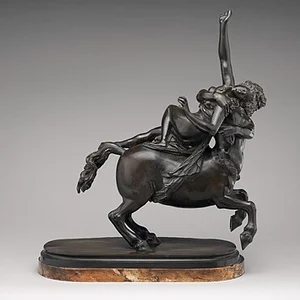
Deianira
Wife of Heracles and princess of Calydon, Deianira is a tragic figure in Greek mythology. Deceived by the centaur Nessus, she gives her husband a tunic soaked in poison, believing it to be a love potion, thereby causing his death.
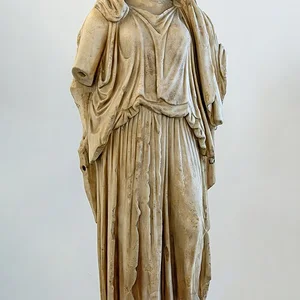
Demeter
Greek goddess of agriculture and the harvest, venerated in ancient Greek religion. Daughter of Cronus and Rhea, she is the mother of Persephone. Her myth, passed down through oral tradition and later codified by the Greeks, explains the cycle of the seasons.
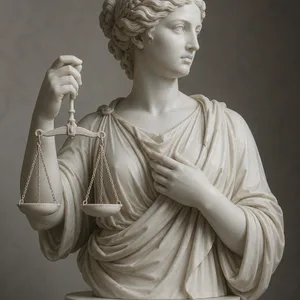
Dike
Dike is the Greek goddess of human justice and moral order. The daughter of Zeus and Themis, she is one of the Horae (Hours) and watches over the upholding of law among mortals, denouncing injustices to her father.
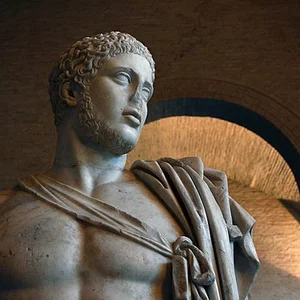
Diomedes
Hero of Greek mythology, king of Argos and son of Tydeus, Diomedes is one of the greatest Greek warriors of the Trojan War. Renowned for his exceptional bravery, he dared to wound the gods Ares and Aphrodite in battle.

Dragon of Colchis
A creature of Greek mythology, the Dragon of Colchis is a gigantic serpent with ever-open eyes that guards the Golden Fleece in the sacred grove of Ares, in Colchis. It never sleeps — until the sorceress Medea lulls it into slumber so that Jason can seize the precious trophy.
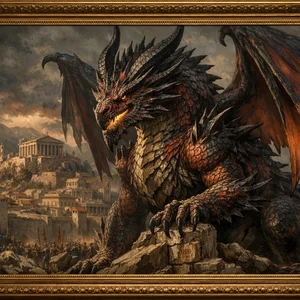
Dragon of Thebes
A monstrous creature sacred to Ares in Greek mythology, it guarded the divine spring near Thebes. Slain by the Phoenician hero Cadmus, its teeth were sown into the earth and gave rise to the Spartoi, the ancestral warriors of Thebes.
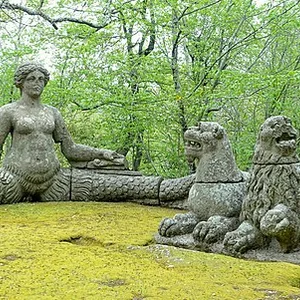
Echidna
Echidna is a creature from Greek mythology, half-woman and half-serpent, known as the "Mother of All Monsters." Mate of the giant Typhon, she gave birth to the most terrifying creatures of the ancient Greek world.
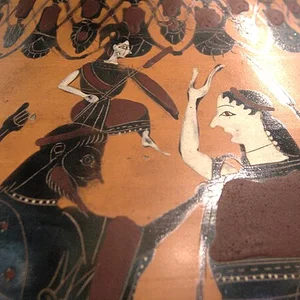
Eileithyia
Eileithyia (Ilithyia) is the Greek goddess of childbirth and labor. The daughter of Zeus and Hera, she presides over births and either eases or prolongs the pains of women in labor. She plays a decisive role in several myths, notably during the births of Heracles and Apollo.
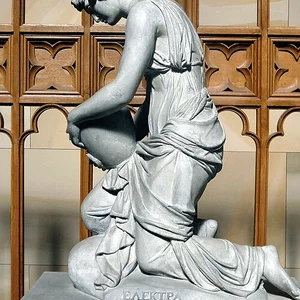
Electra
Electra is a heroine of Greek mythology, daughter of Agamemnon and Clytemnestra. After her father is murdered by her mother and her lover Aegisthus, she convinces her brother Orestes to avenge him. Her tragic fate inspired all three of the great Greek tragedians.
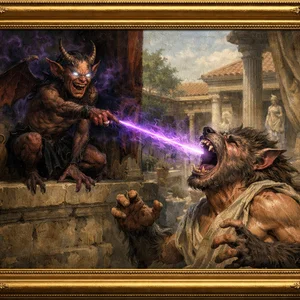
Empousa
A demonic creature of Greek mythology, servant of Hecate. Endowed with one leg of bronze and one leg of a donkey, she transforms herself to seduce lone travelers before devouring them.
Enyo
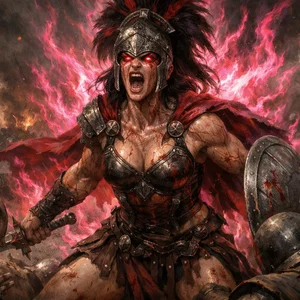
Greek goddess of war and destruction, Enyo is the companion or sister of Ares. She embodies the bloody turmoil of battle and spreads terror across the battlefield in Greek mythology.
Eos
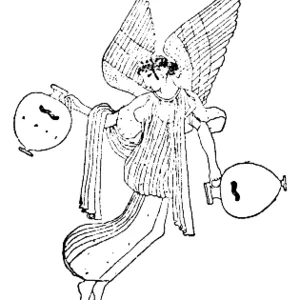
Eos is the Greek goddess of the Dawn, daughter of the Titans Hyperion and Theia, sister of Helios (the Sun) and Selene (the Moon). Each morning, she opens the gates of the sky to herald the rising of the day, riding her chariot drawn by two winged horses.
Erinyes
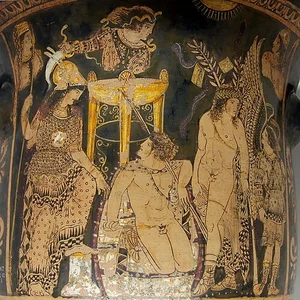
The Erinyes are three chthonic deities of Greek mythology tasked with punishing crimes against the natural order, especially perjury and the murder of kin. Alecto, Megaera, and Tisiphone relentlessly pursue the guilty, driving them to madness and torment.
Eros
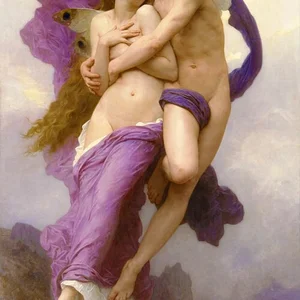
Eros is the Greek god of love and desire. The son of Aphrodite and Ares according to classical tradition, he is depicted as a winged young child armed with a bow and golden arrows. His Roman equivalent is Cupid.

Eteocles
Eteocles is a mythical king of Thebes, son of Oedipus and Jocasta, brother of Polynices, Antigone, and Ismene. He refuses to hand over the throne to his brother as their power-sharing agreement required, triggering the war of the Seven against Thebes, at the end of which the two brothers kill each other.
Euryale
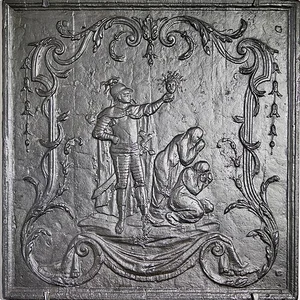
Euryale is one of the three Gorgons of Greek mythology, sister of Stheno and of the famous Medusa. Unlike the latter, Euryale is immortal. Daughter of the primordial sea deities Phorcys and Ceto, she is often depicted as a monster with a petrifying gaze.
Eurycleia
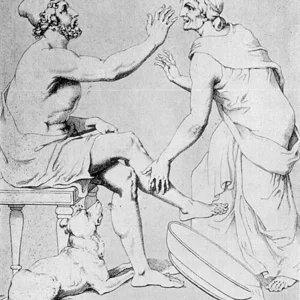
In Greek mythology, Eurycleia is the faithful nurse of Odysseus, king of Ithaca, whom she raised from his birth. A character in Homer's Odyssey, she is the first to recognize her master on his return, thanks to a scar on his leg.
Eurydice
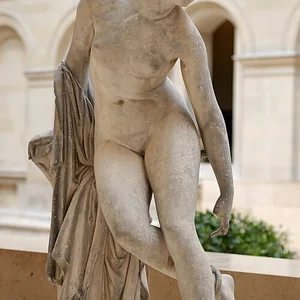
Nymph of Greek mythology and wife of the poet Orpheus. Bitten by a serpent, she descends to the Underworld. Orpheus attempts to bring her back to life through his music, but loses her forever by looking back.
Gaia
A primordial deity of Greek mythology, Gaia personifies the Earth Mother. Emerging from the primordial Chaos, she gives birth to Uranus (the Sky), the Mountains, and Pontus (the Sea). With Uranus, she bears the Titans, the Cyclopes, and the Hecatoncheires.
Galatea
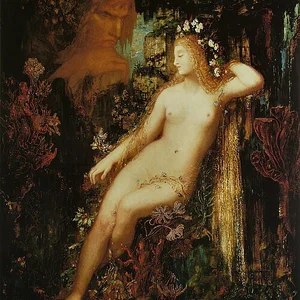
Galatea is a Nereid in Greek mythology, one of the fifty daughters of the sea god Nereus and the Oceanid Doris. She is famous for her love affair with the Sicilian shepherd Acis and for the advances of the Cyclops Polyphemus, who, out of jealousy, crushes Acis beneath a boulder.
Geryon
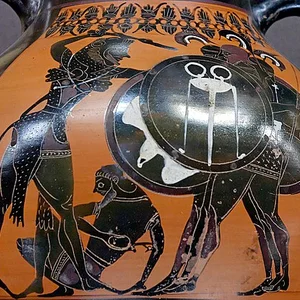
Geryon is a monstrous giant of Greek mythology, endowed with three bodies joined at the waist. The guardian of a herd of red cattle on the island of Erytheia, he is slain by Heracles during the hero's tenth Labour.
Harpies
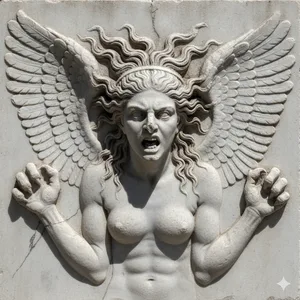
The Harpies are creatures from Greek mythology, half-woman and half-bird, personifying violent and destructive winds. Sent by the gods to torment the blind prophet Phineus, they would defile or steal his food. They were driven away by the Argonauts Zetes and Calais, sons of the wind god Boreas.
Hector
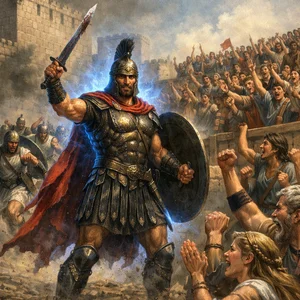
Prince of Troy and eldest son of King Priam, Hector is the greatest Trojan warrior of the Trojan War according to the Greek tradition handed down by Homer. Husband of Andromache and father of Astyanax, he embodies martial honor and love of his homeland. He kills Patroclus before being defeated by Achilles, whose fury leads him to drag Hector's body around the city walls.
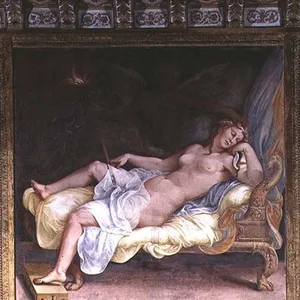
Hecuba
Queen of Troy in Greek mythology, wife of King Priam and mother of Hector, Paris, and Cassandra. A central figure in the Iliad and Greek tragedies, she embodies maternal grief and the fall of an entire civilization.
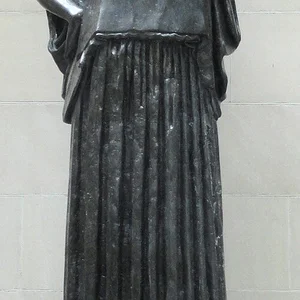
Hestia
Hestia is the Greek goddess of the hearth, domestic fire, and family in ancient Greek mythology. Daughter of Cronus and Rhea, sister of Zeus, she is one of the twelve Olympian deities. An eternal virgin, she embodies stability, purity, and the sacred heart of the home.
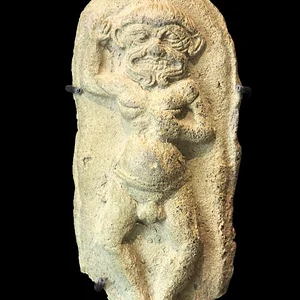
Humbaba
Humbaba (or Huwawa) is a monstrous creature from Mesopotamian mythology, the guardian of the Cedar Forest on behalf of the god Enlil. He appears in the Epic of Gilgamesh, where he is defeated and killed by Gilgamesh and Enkidu.
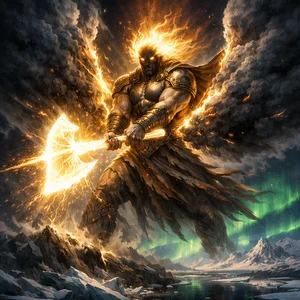
Hyperion
Titan of light in Greek mythology, son of Ouranos and Gaia. Husband of Theia, he is the father of Helios (the Sun), Selene (the Moon), and Eos (the Dawn). His name means "the one who walks above" in ancient Greek.
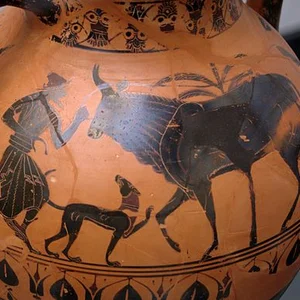
Io
Io is a figure from Greek mythology, a priestess of Hera and daughter of the river-god Inachus. Loved by Zeus, she was transformed into a heifer and pursued across the world by Hera's jealousy before regaining her human form in Egypt.
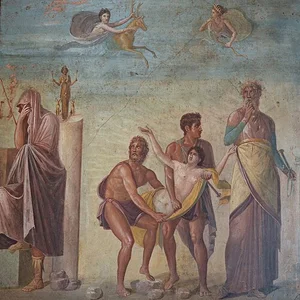
Iphigenia
Daughter of Agamemnon and Clytemnestra, Iphigenia was condemned to be sacrificed at Aulis to appease Artemis and allow the Greek fleet to sail for Troy. Saved by the goddess, she was transported to Tauris where she became a priestess. Her fate inspired major tragedies by Euripides.
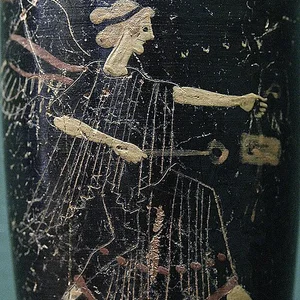
Iris
Iris is the Greek goddess of the rainbow and messenger of the Olympian gods, most notably Zeus and Hera. Daughter of Thaumas and Electra, she serves as an intermediary between the divine world and the human world, carrying messages from the immortals to mortals.
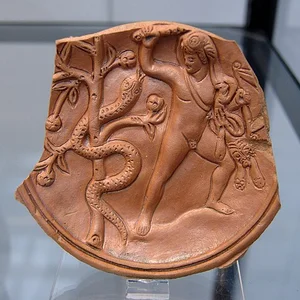
Ladon
Ladon is a dragon from Greek mythology tasked with guarding the golden apples of the Garden of the Hesperides. Often described as a many-headed creature whose sleep was eternally watchful, he was defeated during the eleventh of the Labors of Heracles.
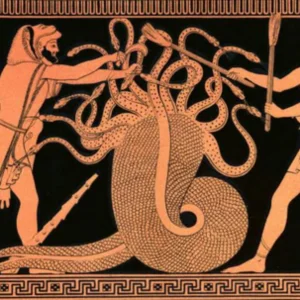
Lernaean Hydra
An aquatic monster from Greek mythology, the Lernaean Hydra was a multi-headed serpent whose heads would grow back two-fold whenever they were cut off. It was slain by Heracles during his second labor, with the help of his nephew Iolaus.
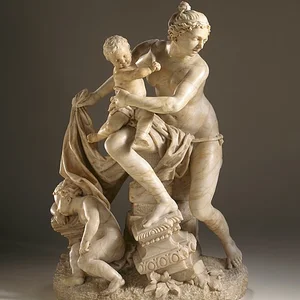
Leto
A Titaness of Greek mythology, Leto is the mother of Apollo and Artemis, born of her union with Zeus. Pursued by a jealous Hera, she gave birth on the island of Delos after a long wandering.
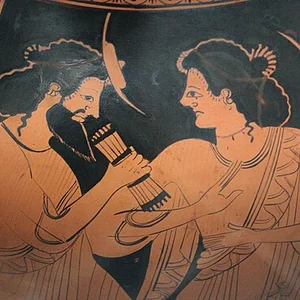
Maia
Maia is a deity of Greek mythology, daughter of the Titan Atlas and the Oceanid Pleione. She is the eldest and most beautiful of the seven Pleiades. She is best known as the mother of Hermes, whom she conceived with Zeus in a cave on Mount Cyllene.
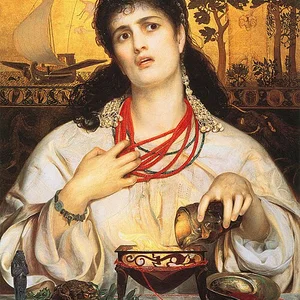
Medea
A tragic figure of Greek mythology, Medea is a sorceress from Colchis, daughter of King Aeëtes and granddaughter of Helios. Driven by love for Jason, she helps him seize the Golden Fleece, but when he betrays her, she exacts a terrible revenge by killing her own children.
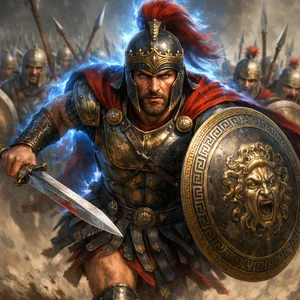
Menelaus
King of Sparta in Greek mythology, husband of Helen, the most beautiful woman in the world. The abduction of Helen by the Trojan Paris leads him to seek the aid of his brother Agamemnon and to unite the Greek kings against Troy.
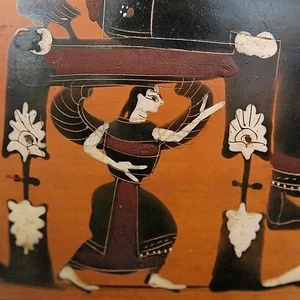
Metis
Metis is an Oceanid of Greek mythology, daughter of the Titans Oceanus and Tethys. The personification of cunning and wisdom, she was Zeus's first wife and the mother of Athena. Zeus swallowed her while she was pregnant, fearing a prophecy that their child would dethrone him.
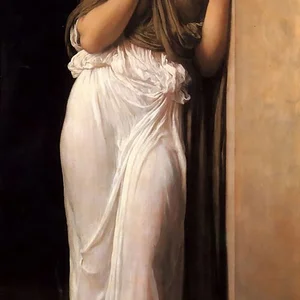
Nausicaa
Nausicaa is a Phaeacian princess from Greek mythology, the daughter of King Alcinous and Queen Arete. In Homer's Odyssey, she discovers the shipwrecked Odysseus on the shore of the island of Scheria and welcomes him to her father's court.
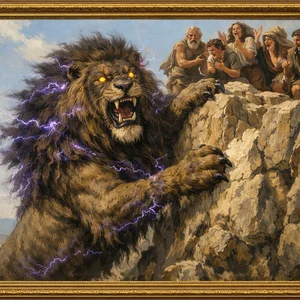
Nemean Lion
A monstrous creature of Greek mythology, the Nemean Lion terrorized the region of Nemea in Argolis. Its hide was said to be impenetrable by any weapon. Heracles strangled it with his bare hands during the first of his twelve labors, then wore its skin as armor.
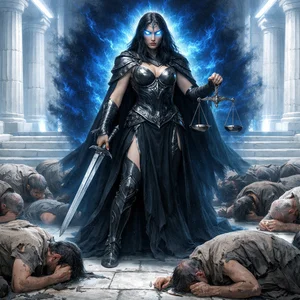
Nemesis
Greek goddess of divine vengeance and just retribution, Nemesis punishes hubris — the arrogance and excess of mortals who rise above their station. She embodies cosmic balance and immanent justice in the tradition of Greek mythology.
Nestis
Nestis is a deity from Greek mythology associated with water, mentioned by the philosopher Empedocles (5th century BCE) as one of the four fundamental roots of the universe. Sometimes identified with Persephone, she personifies the element of water in Empedoclean cosmology.
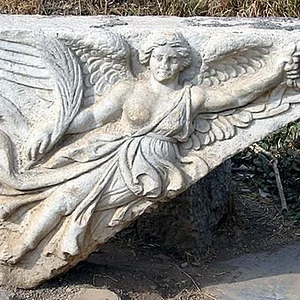
Nike
Nike is the personified goddess of victory in Greek mythology. Daughter of Pallas and Styx, she is depicted as winged, holding a laurel wreath or a palm branch. She accompanies Zeus and Athena and presides over both military and athletic victories.

Otrera
In Greek mythology, Otrera is a queen of the Amazons, the people of warrior women. As the daughter or consort of Ares, the god of war, she is presented as the mother of the famous queens Hippolyta and Penthesilea.
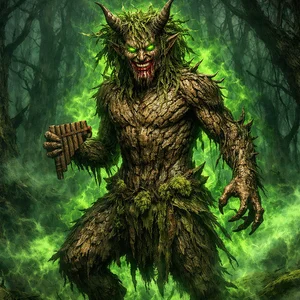
Pan
Greek deity of wild nature, shepherds, and flocks, Pan is depicted as half-man, half-goat. Inventor of the reed flute (syrinx), he embodies the uncontrollable forces of nature and is the origin of the word "panic."
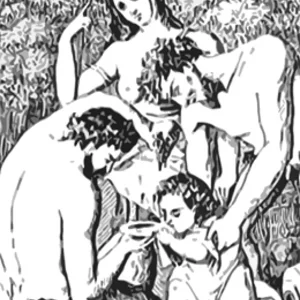
Panacea
Greek goddess of universal healing, daughter of Asclepius and Epione. She personified the remedy capable of curing all ailments. Her name, meaning “she who heals all” in Greek, is the origin of the word “panacea” in modern languages.
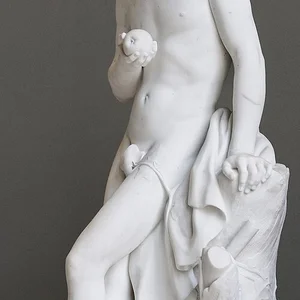
Paris
Trojan prince, son of Priam and Hecuba, Paris triggers the Trojan War by abducting Helen, wife of the Spartan king Menelaus. His judgment among the three goddesses determines the fate of Troy.
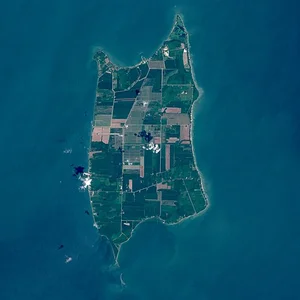
Peleus
Hero of Greek mythology, king of Phthia in Thessaly. Son of Aeacus and grandson of Zeus, he is famous for his marriage to the Nereid Thetis and for being the father of Achilles.
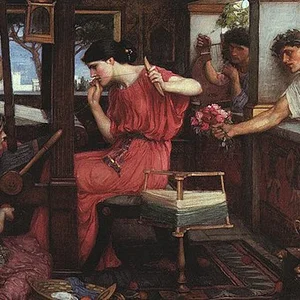
Penelope
A figure from Greek mythology, wife of Odysseus and mother of Telemachus. During her husband's twenty-year absence, she fends off her suitors with a famous trick: each night she unravels the shroud she weaves by day. She embodies faithfulness, patience, and female intelligence in the Homeric epic.
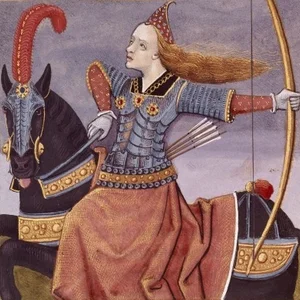
Penthesilea
Queen of the Amazons in Greek mythology, daughter of Ares and Otrera. According to the epic tradition, she led her warrior women to the aid of Troy after Hector's death and faced Achilles in single combat, who killed her even as he fell in love with her.

Polybus
In Greek mythology, Polybus is the king of Corinth who takes in and raises Oedipus, abandoned as a child, knowing nothing of his true origins. Oedipus believes himself to be his legitimate son, which drives him to flee Corinth to escape the oracle foretelling that he will kill his father and marry his mother.
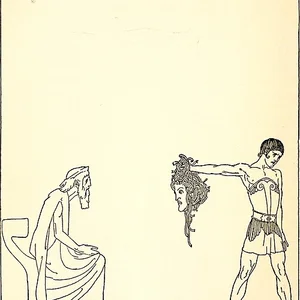
Polydectes
King of the island of Seriphos in Greek mythology, son of Magnes. Consumed by desire for Danaë, he sent her son Perseus to retrieve the head of the Gorgon Medusa in order to get rid of him. Upon his return, Perseus turned Polydectes to stone by showing him Medusa's head.
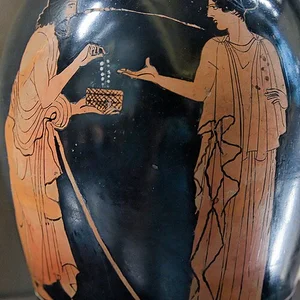
Polynices
Polynices is a figure from Greek mythology, the son of Oedipus and Jocasta, and brother of Eteocles, Antigone, and Ismene. His conflict with his brother over the throne of Thebes triggers the war of the Seven Champions and inspires Sophocles's tragedy.
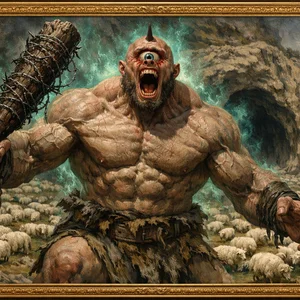
Polyphemus
A one-eyed Cyclops, son of Poseidon and the nymph Thoosa, Polyphemus is one of the monstrous giants of Greek mythology. Famous for imprisoning Odysseus and his companions in his cave, he is ultimately blinded by the hero, who outsmarts his revenge by calling himself “Nobody.”
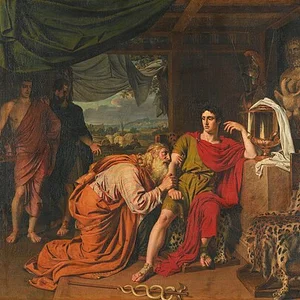
Priam
Priam is the last king of Troy in Greek mythology, father of fifty sons including Hector and Paris. His reign is defined by the Trojan War, triggered by the abduction of Helen. He dies during the fall of the city, killed by Neoptolemus.
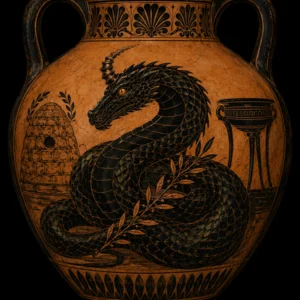
Python
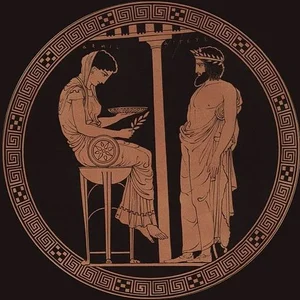
A massive serpent-dragon of Greek mythology, guardian of the sanctuary of Delphi. Slain by the god Apollo, who seized the site and established the famous oracle there. Its name was given to the Pythia, the prophetic priestess of Apollo.
Rhea
Titaness of Greek mythology, daughter of Uranus and Gaia, wife of Cronus. Mother of the six great Olympian gods, she saved Zeus by substituting a swaddled stone for the infant to deceive Cronus. Identified with Cybele, she is venerated as the Great Mother of all the gods.
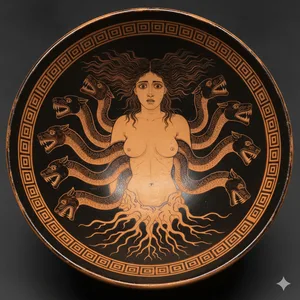
Scylla
A sea monster of Greek mythology, Scylla was a nymph transformed into a six-headed creature by the sorceress Circe. She devours sailors from her rock in the Strait of Messina, forcing Odysseus to choose between her and the whirlpool Charybdis.
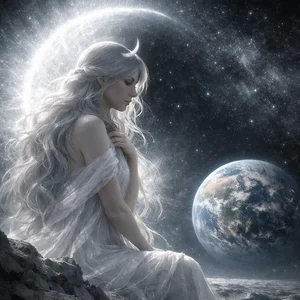
Selene
A Greek Titaness personifying the Moon, Selene crosses the sky each night on her silver chariot drawn by white horses. Daughter of Hyperion and Theia, she is the sister of Helios (the Sun) and Eos (the Dawn). Her passion for the shepherd Endymion, whom she caused to fall into an eternal sleep so she could gaze upon him forever, is one of the most celebrated myths in the Greek tradition.
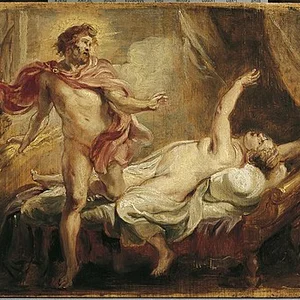
Semele
Semele is a princess of Thebes in Greek mythology, daughter of Cadmus and Harmonia. Loved by Zeus, she becomes the mother of Dionysus, god of wine. She perishes struck by lightning after asking to see Zeus in all his divine splendor.
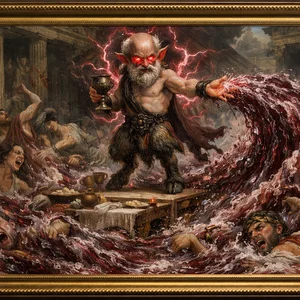
Silenus
A deity of Greek mythology, Silenus is the old satyr companion and foster-father of Dionysus, god of wine. Perpetually drunk yet reputed for profound wisdom, he is often depicted riding a donkey, unable to stand on his own. His paradoxical figure — drunkenness as a path to truth — resonated throughout Greek and Roman Antiquity.
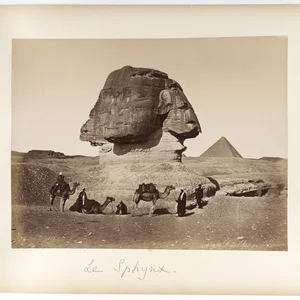
Sphinx
A monster from Greek mythology with the body of a lion and the head of a woman, the Sphinx guarded the gates of Thebes. It posed a deadly riddle to travelers and devoured those who failed to answer. Defeated by Oedipus, it threw itself off a cliff.
Stheno
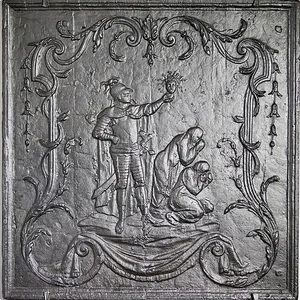
In Greek mythology, Stheno is the eldest of the three Gorgons, daughters of the sea deities Phorcys and Ceto. Unlike her sister Medusa, she is immortal. Her name means “the strong one” or “the mighty one.”
Tantalus
Legendary king of Lydia or Phrygia, son of Zeus, Tantalus was condemned to the Underworld for offending the gods by serving them the flesh of his son Pelops. His eternal torment — surrounded by water and fruit forever out of reach — gave rise to the word "tantalize."
Tartarus
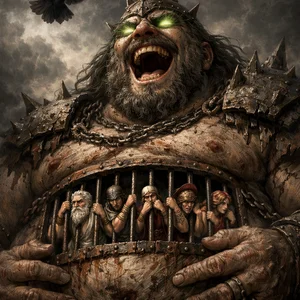
In Greek mythology, Tartarus is both a primordial deity born of Chaos and a cosmic place: the deepest abyss in the universe, located beneath the Underworld, where Zeus imprisoned the defeated Titans and where the greatest criminals atone for their crimes for eternity.

Telegonus
Son of Odysseus and the sorceress Circe, Telegonus is a figure from Greek mythology. He accidentally killed his father Odysseus without recognizing him, thus fulfilling a tragic prophecy.
Telemachus
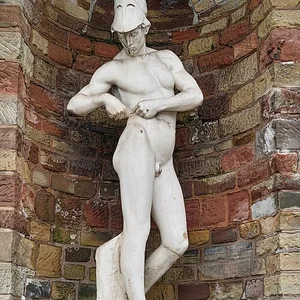
Telemachus is the son of Odysseus and Penelope in Greek mythology. A young man at the time of his father's return to Ithaca, he sets out to search for him and then helps him eliminate the suitors besieging his mother.

Tethys
Titaness of the sea and freshwaters in Greek mythology, daughter of Gaia and Ouranos. Wife of the Titan Oceanus, she is the mother of the 3,000 Oceanids and the great river gods, personifying the nourishing waters of the world.
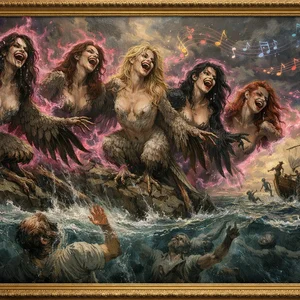
The Sirens
Hybrid creatures of Greek mythology — half-woman, half-bird (later half-fish in the Middle Ages) — whose bewitching song lures sailors to their deaths. Odysseus, lashed to the mast of his ship, is the only mortal ever to have heard them and survived.
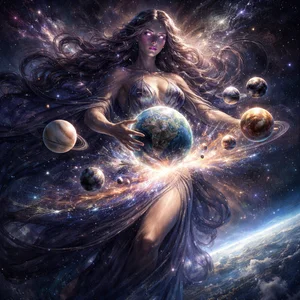
Theia
Titaness of celestial light and vision in Greek mythology. Daughter of Ouranos and Gaia, she united with her brother Hyperion and gave birth to the three great astral deities: Helios (the Sun), Selene (the Moon), and Eos (the Dawn).
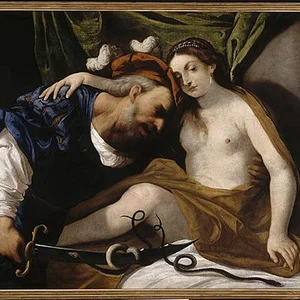
Tiresias
The blind seer of Greek mythology, Tiresias was the most celebrated prophet of Thebes, serving Apollo. Struck blind by the gods, he received in return the gift of prophecy and an exceptionally long life. He appears in many of the greatest works of antiquity, from Sophocles to Homer.
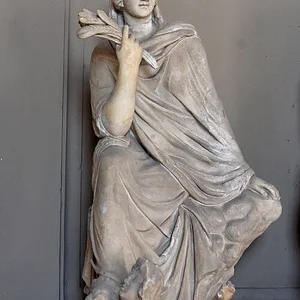
Tyche
Tyche is the Greek goddess of fortune, chance, and destiny. Daughter of Oceanus and Tethys, she personifies the whims of fate that govern the lives of mortals and the destinies of cities. Her cult spread throughout the Hellenistic world.
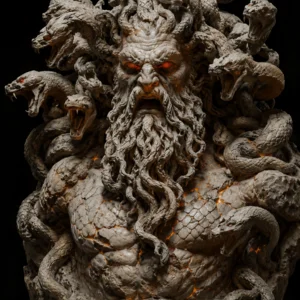
Typhon
Typhon is the ultimate monster of Greek mythology, born of Gaia and Tartarus. A giant with a hundred fire-breathing serpent heads, he challenged Zeus for dominion over the cosmos and was ultimately crushed beneath Mount Etna. He is considered the father of all monstrous creatures.
Achilles
Achilles is the greatest Greek warrior in mythology and the central hero of Homer's Iliad. Son of Thetis and Peleus, he is invulnerable except for his heel — his legendary weak point. He embodies the ideal of the Greek warrior hero, renowned for his strength, courage, and pride.
Achlys
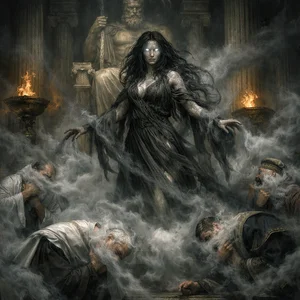
Greek deity personifying the darkness of death and the mist that veils the eyes of the dying. Rooted in Greek mythological tradition, she ranks among the primordial entities who preceded the Olympians.
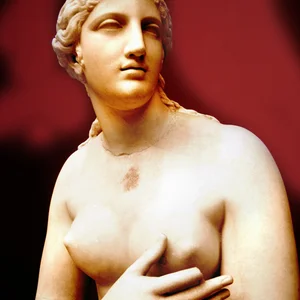
Aphrodite
Greek goddess of love, beauty, and fertility in ancient mythology. Venerated throughout Greece and the Roman Empire under the name Venus. A central figure in mythological narratives and ancient art.
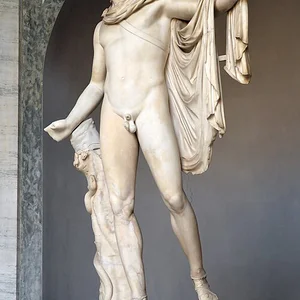
Apollo
Greek god of music, poetry, the sun, and prophecy, Apollo is one of the most important deities in Greek mythology. Son of Zeus and Leto, he embodies harmony, beauty, and knowledge. His cult spread throughout the ancient Greek world, most notably at Delphi, where his famous oracle was located.
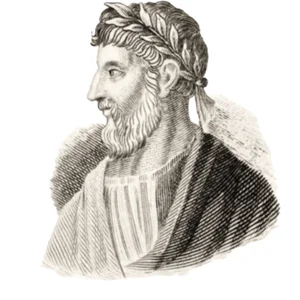
Apollonius of Rhodes
294 av. J.-C. — 214 av. J.-C.
Apollonius of Rhodes was a Greek poet and grammarian of the 3rd century BC, a major figure of Hellenistic literature. He directed the famous Library of Alexandria and composed the Argonautica, a great epic recounting the quest for the Golden Fleece by Jason and the Argonauts.
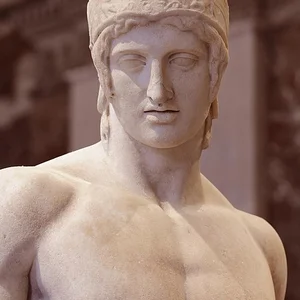
Ares
Ares is the god of war in ancient Greek mythology. Son of Zeus and Hera, he embodies violence, chaos, and the brutality of battle. He is one of the twelve major deities of Mount Olympus.
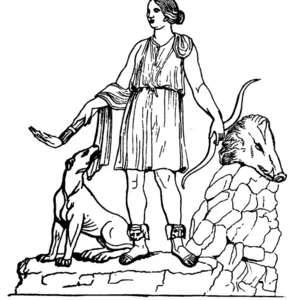
Artemis
Greek goddess of the hunt, the moon, and the wilderness, Artemis is one of the twelve major deities of Olympus. Twin sister of Apollo, she embodies independence and remains a virgin according to Greek mythology. She is the protector of young girls and wild animals.
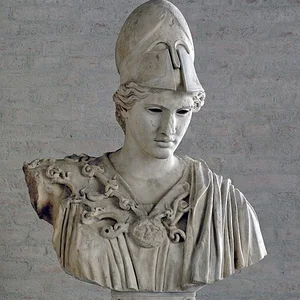
Athena
Athena is the Greek goddess of wisdom, military strategy, and the arts in ancient mythology. Patron of the city of Athens, she is depicted armed with an aegis and a spear, embodying intelligence and strategic thinking.
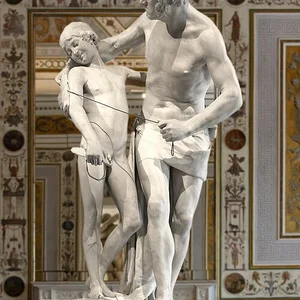
Daedalus and Icarus
Legendary figures from Greek mythology: Daedalus is a brilliantly skilled craftsman and inventor who builds the Labyrinth of Crete, while Icarus is his son. Their story illustrates the themes of ambition, disobedience, and the limits of human nature when faced with greater forces.
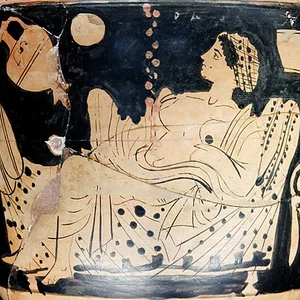
Danaë
Danaë is a princess of Argos, daughter of King Acrisius. Imprisoned by her father in a bronze chamber to prevent a prophecy, she is seduced by Zeus transformed into a shower of gold and gives birth to Perseus, the hero who will kill Medusa.
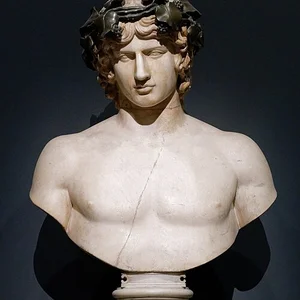
Dionysus
Greek god of wine, theater, fertility, and ecstasy, worshipped in ancient Greece. Son of Zeus and the mortal Semele, he embodies the duality between civilization and the wild, reason and intoxication. A central figure in mystery cults and ancient theatrical performances.
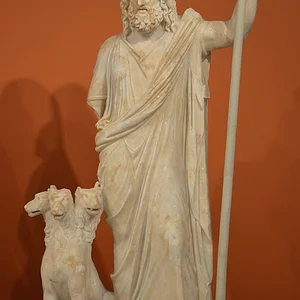
Hades
Hades is the god of the underworld and the dead in Greek mythology. Brother of Zeus and Poseidon, he rules over the realm of souls and the mineral riches of the earth. He is often portrayed as a just and unyielding god, though mortals feared him greatly.
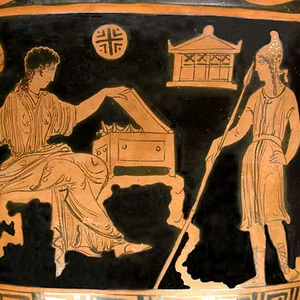
Helen of Troy
A central figure in Greek mythology, Helen is the wife of King Menelaus of Sparta. Her abduction by the Trojan prince Paris triggers the Trojan War, one of the greatest conflicts in ancient mythology. She symbolizes both ideal beauty and the destructive consequences of passion.
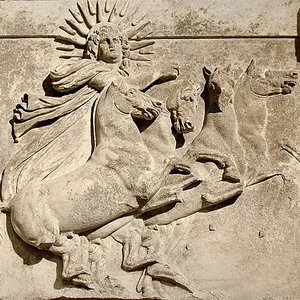
Helios
Helios is the sun god of Greek mythology, son of the Titan Hyperion and Theia. Each day, he crosses the sky in his fiery chariot pulled by four spirited horses, bringing light to mortals and gods alike.
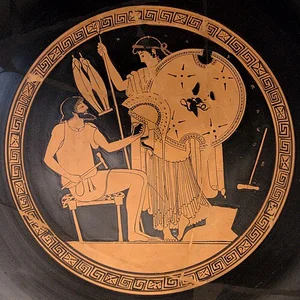
Hephaestus
Greek god of fire, the forge, and metalworking, Hephaestus is the patron of craftsmen and blacksmiths. Son of Zeus and Hera according to Greek mythology, he is depicted as a lame god who works in his underground workshop creating wondrous objects.
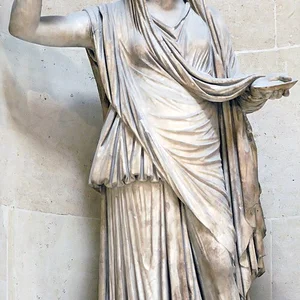
Hera
Hera is the queen of the gods and goddess of marriage in ancient Greek mythology. Wife of Zeus, she is venerated as the protector of marriage and family. Her legends reflect the values and conflicts of the Greek pantheon.
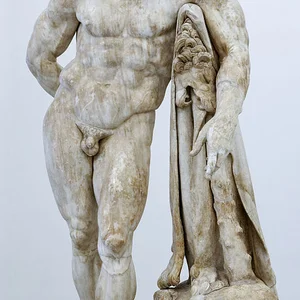
Hercules
Heracles is a hero of Greek mythology, son of the god Zeus and the mortal Alcmene. Famous for completing the twelve labors imposed by the goddess Hera, he embodies strength, courage, and perseverance. His story, passed down by Greek poets, has influenced Western literature and art for millennia.
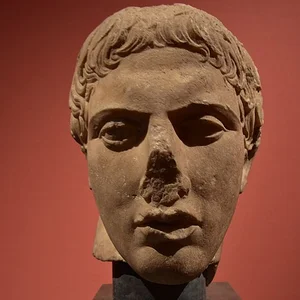
Hermes
Hermes is a major deity in Greek mythology, son of Zeus and Maia. He is venerated as the messenger of the gods, protector of commerce, travelers, and thieves, and identified with Mercury in Roman mythology.
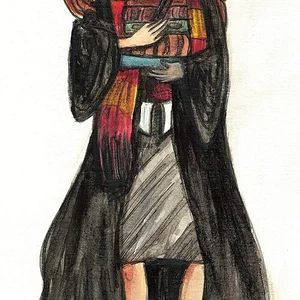
Hermione
Hermione Granger is a fictional character created by J.K. Rowling, the heroine of the "Harry Potter" series published from 1997 onward. Born to Muggle parents in 1979, she embodies the brilliant, studious, and loyal witch whose intelligence and courage play a decisive role in the fight against Voldemort.
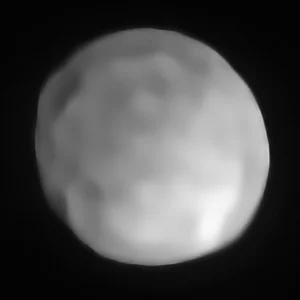
Hygiea
Hygiea is the Greek goddess of health, cleanliness, and hygiene. Daughter of Asclepius, god of medicine, she personified the prevention of disease. Her name gave rise to the word “hygiene” in all Western languages.
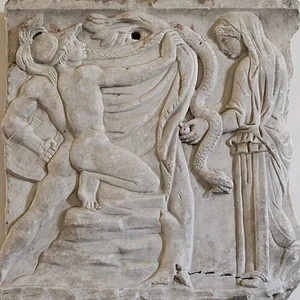
Jason
Jason is a hero of Greek mythology, son of Aeson and leader of the Argonauts. He undertakes a legendary quest to seize the Golden Fleece, a symbol of royal power. This adventure is one of the most celebrated in all of Greek mythology.
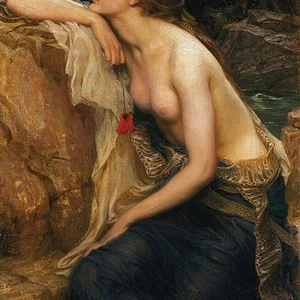
Lamia
Lamia is a figure from Greek mythology, a queen of Libya loved by Zeus. Struck by Hera's jealousy, who stole her children from her, she became a devastating monster who devoured the children of others.
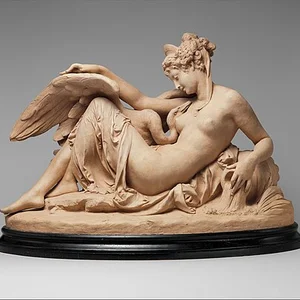
Leda
Queen of Sparta and figure from Greek mythology, Leda is seduced by Zeus in the form of a swan. From this union are born Helen of Troy, Clytemnestra, Castor, and Pollux — central figures of the Greek epic tradition.
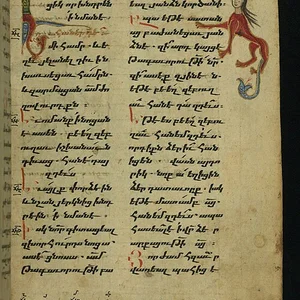
Manticore
A fabulous creature of Persian origin, the manticore has the body of a lion, a human face, and a venomous scorpion tail. Described by Ctesias of Cnidus in the 5th century BC, it was later referenced by Pliny the Elder in his Natural History.
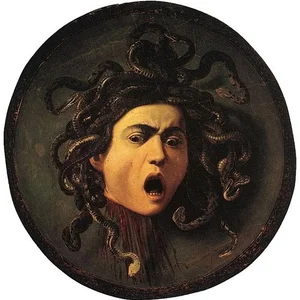
Medusa
In Greek mythology, Medusa is one of the three Gorgons — fearsome female monsters with snakes for hair whose gaze turns anyone who looks at them to stone. She is slain by the hero Perseus, who uses his shield as a mirror to face her without being petrified.
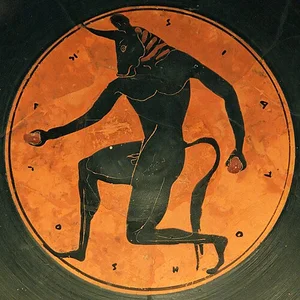
Minotaur
A monstrous creature of Greek mythology, half-man and half-bull, born from the unnatural union of Pasiphae and a bull sent by Poseidon. Imprisoned in the Labyrinth of Crete by King Minos, he was ultimately slain by the hero Theseus.
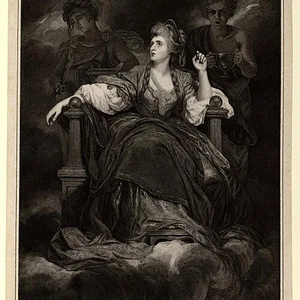
Muse
In Greek mythology, the Muses are the nine goddesses of the arts, sciences, and inspiration. Daughters of Zeus and the Titaness Mnemosyne (Memory), they preside over poetry, music, dance, and knowledge.
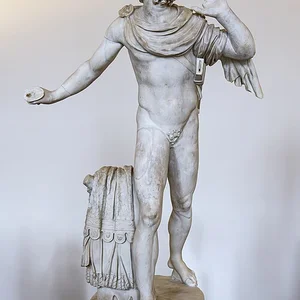
Odysseus
Legendary king of Ithaca, hero of Greek mythology celebrated for his intelligence and cunning. He is the central character of Homer's Odyssey, an epic poem recounting his ten years of wandering to return home after the Trojan War.
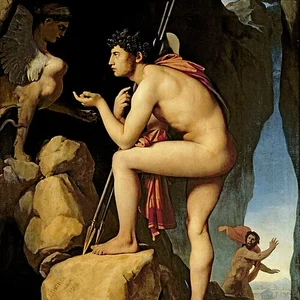
Oedipus
Legendary king of Thebes in Greek mythology, Oedipus is the hero of a classic tragedy exploring inevitable fate and destiny. Having unknowingly killed his father Laius and married his mother Jocasta, he embodies the archetype of a character caught in forces beyond his control.
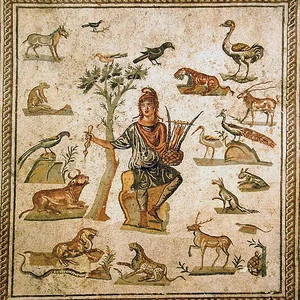
Orpheus
Legendary musician and poet of Greek mythology, son of Apollo and the Muse Calliope. He is famous for his magical lyre whose music enchanted gods, mortals, and nature alike. His love for Eurydice and his descent into the Underworld make up one of the greatest myths of Antiquity.
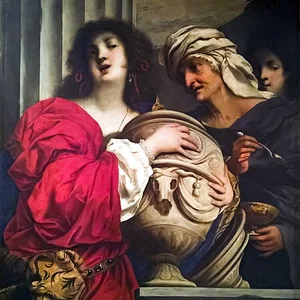
Pandora
Pandora is the first female figure in Greek mythology, created by the gods to punish humanity. She receives a jar (or box) containing all the evils of the world, which she opens out of curiosity, releasing suffering among humankind. Her myth illustrates the consequences of disobedience and the human condition.
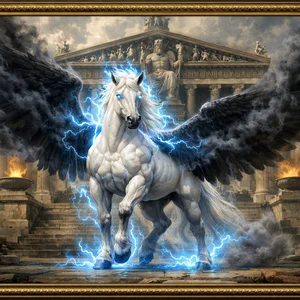
Pegasus
Winged horse of Greek mythology, born from the blood of Medusa when Perseus severed her head. Tamed by the hero Bellerophon with a golden bridle, he helped him defeat the Chimera. He ended his celestial journey among the stars, transformed into a constellation by Zeus.
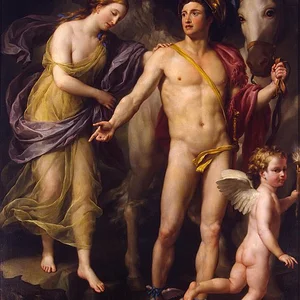
Perseus
Perseus is a hero of Greek mythology, son of Zeus and Danaë. He is famous for slaying the Gorgon Medusa and rescuing the princess Andromeda from a sea monster. His exploits make him one of the most important heroes in Greek mythology.
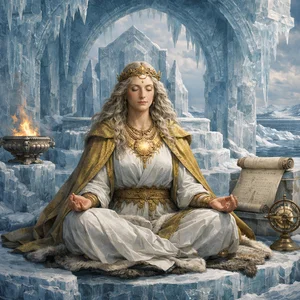
Phoebe
50 — 100
Titaness of brilliance and prophecy in Greek mythology, Phoebe is the daughter of Gaia and Ouranos, wife of the Titan Coeus. Mother of Leto, she is the grandmother of Apollo and Artemis, and is said to have held the oracle of Delphi before passing it on to her grandson.
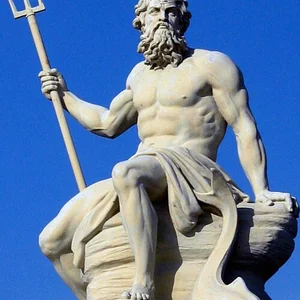
Poseidon
Greek god of the sea, oceans, and earthquakes, worshipped in ancient Greek mythology. Brother of Zeus and Hades, Poseidon rules over the seas and is often depicted wielding a trident. A central figure of the Olympian pantheon, he embodies the power of marine and seismic forces.
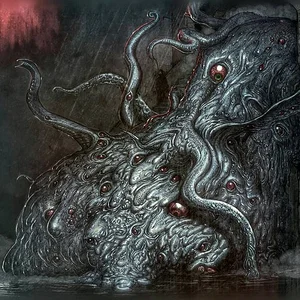
Shoggoth
The shoggoth is a fictional creature invented by American writer H. P. Lovecraft in his novella "At the Mountains of Madness" (1931). A formless, gelatinous protoplasmic mass, it belongs to the Cthulhu Mythos and has no real historical or folkloric existence.
Talos
Talos is a bronze giant from Greek mythology, forged by Hephaestus to guard the island of Crete. He circled it three times a day and drove off intruders by hurling rocks at them. His life hung on a single vein of ichor sealed by a nail in his ankle.
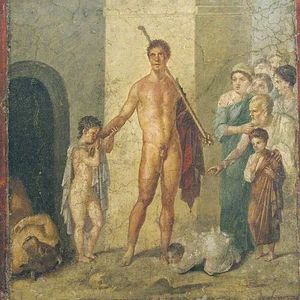
Theseus
Legendary hero of Greek mythology and king of Athens. Theseus is best known for slaying the Minotaur, a half-man half-bull monster imprisoned in the Labyrinth of Crete. He embodies the civilizing hero and unifier of Attica.
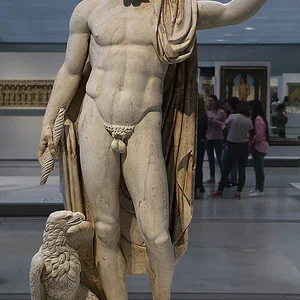
Zeus
Zeus is the king of the Olympian gods in ancient Greek mythology. God of the sky, lightning, and thunder, he embodies divine authority and celestial justice. A central figure in Greek religion, he was worshipped throughout the ancient Greek world.
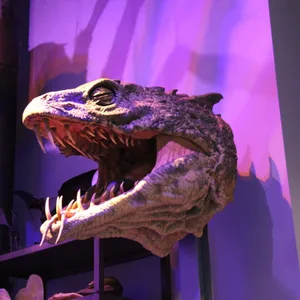
Basilisk
A legendary creature of the Middle Ages, the Basilisk is the king of serpents, said to kill with a single glance or its poisonous breath. It hatches from a rooster's egg incubated by a snake, and ranks among the most feared beasts in medieval bestiaries.
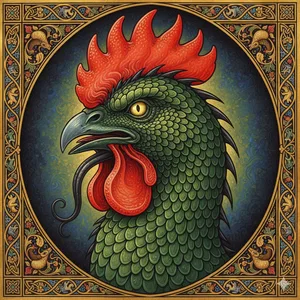
Cockatrice
The cockatrice is a legendary creature from medieval bestiaries, half-rooster and half-serpent, reputedly born from a rooster's egg incubated by a toad or a snake. Similar to the basilisk, it was believed to kill with a single glance or its venomous breath. It haunted the European imagination from the Middle Ages through the Renaissance.
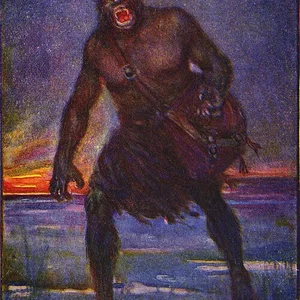
Grendel
Grendel is a monster descended from the cursed lineage of Cain, who terrorizes the mead-hall of Heorot — home of the Danish king Hrothgar — for twelve years. A creature of darkness and marshes, he is ultimately defeated by the Geatish hero Beowulf in the oldest epic poem in English literature (8th century).

Tarasque
The Tarasque is an amphibious dragon from Provençal legend that ravaged the banks of the Rhône near Tarascon. According to Christian tradition, it was tamed by Saint Martha with the sign of the cross and holy water, before being put to death by the townspeople.
Ahuizotl
1450 — 1502
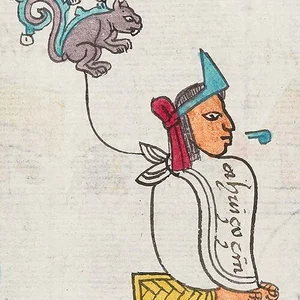
A legendary creature of Aztec mythology, the Ahuizotl is an aquatic monster resembling a small dog, with smooth black fur and a grasping hand at the tip of its tail. Lurking in lakes and ponds, it lures and drowns its victims to devour their eyes, teeth, and nails.