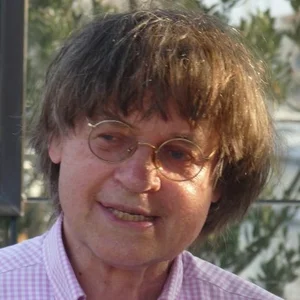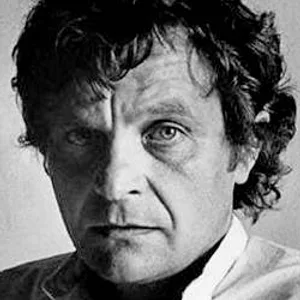

Charb (1967-2015) was a French political cartoonist and satirical journalist, publishing director of Charlie Hebdo. A defender of freedom of expression and secularism, he was murdered on 7 January 2015 during the attack on the newspaper.
Charb(1967 — 2015)
Charb
France
6 min read
Frequently asked questions
Famous Quotes
« I would rather die standing than live on my knees.»
Key Facts
- Born on 21 August 1967 in Conflans-Sainte-Honorine
- Became a cartoonist and then publishing director of Charlie Hebdo in 2009
- Published and defended satirical caricatures despite threats and a 2007 lawsuit
- Murdered on 7 January 2015 in the attack on Charlie Hebdo, along with eleven other victims
- Posthumous work published in 2015: Open Letter to the Fraudsters of Islamophobia Who Play into Racists’ Hands
Works & Achievements
Satirical comic strip featuring a cynical dog and cat; one of Charb's most famous creations.
Charb ran the satirical weekly and championed an editorial line irreverent toward all forms of power.
A provocative issue “edited” by Muhammad, which triggered the firebombing of the offices and a national debate about caricature.
A regular cartoon column in which Charb ferociously sketched political and social current events.
A series of illustrated biographies of the prophet of Islam, presented as a work of historical popularization.
An essay in which Charb distinguishes the criticism of religions from racism, which has become a reference text on secularism.
Anecdotes
His real name was Stéphane Charbonnier, but he chose the pen name “Charb” very early on — shorter and easier to slip beneath a drawing. Passionate about comics since childhood, he published his first drawings while still a teenager and joined the staff of *Charlie Hebdo* as soon as it was revived in 1992.
In 2004, Charb created “Maurice and Patapon,” a cynical dog and a crude cat who comment on current events with a gleeful nastiness. The series became one of his best-known creations and appeared in several newspapers before being collected into albums.
After the arson attack on the offices of *Charlie Hebdo* in November 2011, Charb lived under permanent police protection: a bodyguard accompanied him everywhere. Asked about it by *Le Monde* in 2012, he calmly replied that he would rather “die standing than live on his knees.”
On 7 January 2015, two armed men burst into *Charlie Hebdo*’s editorial meeting and killed twelve people, including Charb. In the days that followed, the slogan “Je suis Charlie” spread around the world, and millions of people marched across France on 11 January.
At the time of his death, Charb was working on a book titled “Open Letter to the Fraudsters of Islamophobia Who Play into the Hands of Racists.” The manuscript, completed two days before the attack, was published posthumously a few weeks later and became a widely studied text on the meaning of the word *laïcité*.
Primary Sources
I have no kids, no wife, no car, no debt. It probably sounds a bit pompous, but I would rather die standing than live on my knees.
If we want to defend the oppressed, we must not confuse criticism of a religion with racism toward those who practice it.
The issue, supposedly “guest-edited” by the prophet Muhammad, bore the caption: “100 lashes if you don't die laughing”.
Key Places
A town in the Yvelines department, in the Paris region, where Stéphane Charbonnier was born in 1967.
Headquarters of the editorial staff where Charb ran the paper and where he was murdered during the attack of 7 January 2015.
The paper's offices, firebombed in a criminal attack in November 2011, after the publication of “Charia Hebdo”.
The gathering point for the republican march of 11 January 2015 and a place of remembrance for the victims of the attack.
Typical Objects

The caricaturist's basic tools, with which Charb sketched his editorial cartoons in a few quick strokes. Black and white heightened with colour remained his signature.

A work surface lit from below that lets the artist trace and cleanly ink his pages. A central fixture in a comic-book author's studio.

A satirical weekly of which Charb was the editor-in-chief, blending caricatures, editorial cartoons and irreverent articles. The paper claimed the right to disrespect all authorities and all religions.

A humorous drawing that distorts and exaggerates in order to denounce or poke fun at current events. At the heart of Charb's profession, it is protected in France by freedom of expression.

From 2011 onwards, Charb was permanently accompanied by police officers responsible for his safety because of the threats against him. His bodyguard, Franck Brinsolaro, was killed at his side on 7 January 2015.

A slogan created after the attack and held up by millions of demonstrators to defend freedom of expression. It became a worldwide symbol of solidarity with the victims.
School Curriculum
Vocabulary & Tags
Key Vocabulary
Daily Life
Morning
Charb's mornings revolved around the news: he read the papers and listened to the radio to spot subjects worth sketching. His ideas for cartoons often sprang from these early-morning press reviews.
Afternoon
The afternoon was devoted to drawing, hunched over his work table, pencil and then felt-tip pen in hand. On press days, he took part in the editorial meeting where the team chose the issue's front page.
Evening
In the evening, like many press cartoonists, he finished his artwork while meeting the printing deadlines. From 2011 onwards, his outings were framed by his police protection.
Food
Charb led the ordinary life of a Parisian of his time, taking his meals as appointments and the paper's deadlines allowed. No particular eating habits set him apart.
Clothing
He dressed in a casual, unfussy way, in keeping with the world of satirical journalism: T-shirts, plain shirts, far from any uniform. His everyday outfit contrasted sharply with the gravity of the threats he faced.
Housing
He lived in an apartment in the Paris region. After the threats of 2011, his daily life was upended by the constant presence of bodyguards and security measures.
Historical Timeline
Period Vocabulary
Liens externes & ressources
Références
Œuvres
Maurice et Patapon
à partir de 2004
Direction de la publication de Charlie Hebdo
2009-2015
Couverture « Charia Hebdo »
2 novembre 2011
Les fatwas de Charb
années 2000-2010
Illustrations de « La Vie de Mahomet »
2013
Lettre aux escrocs de l'islamophobie qui font le jeu des racistes
2015 (posthume)