 Flip the card
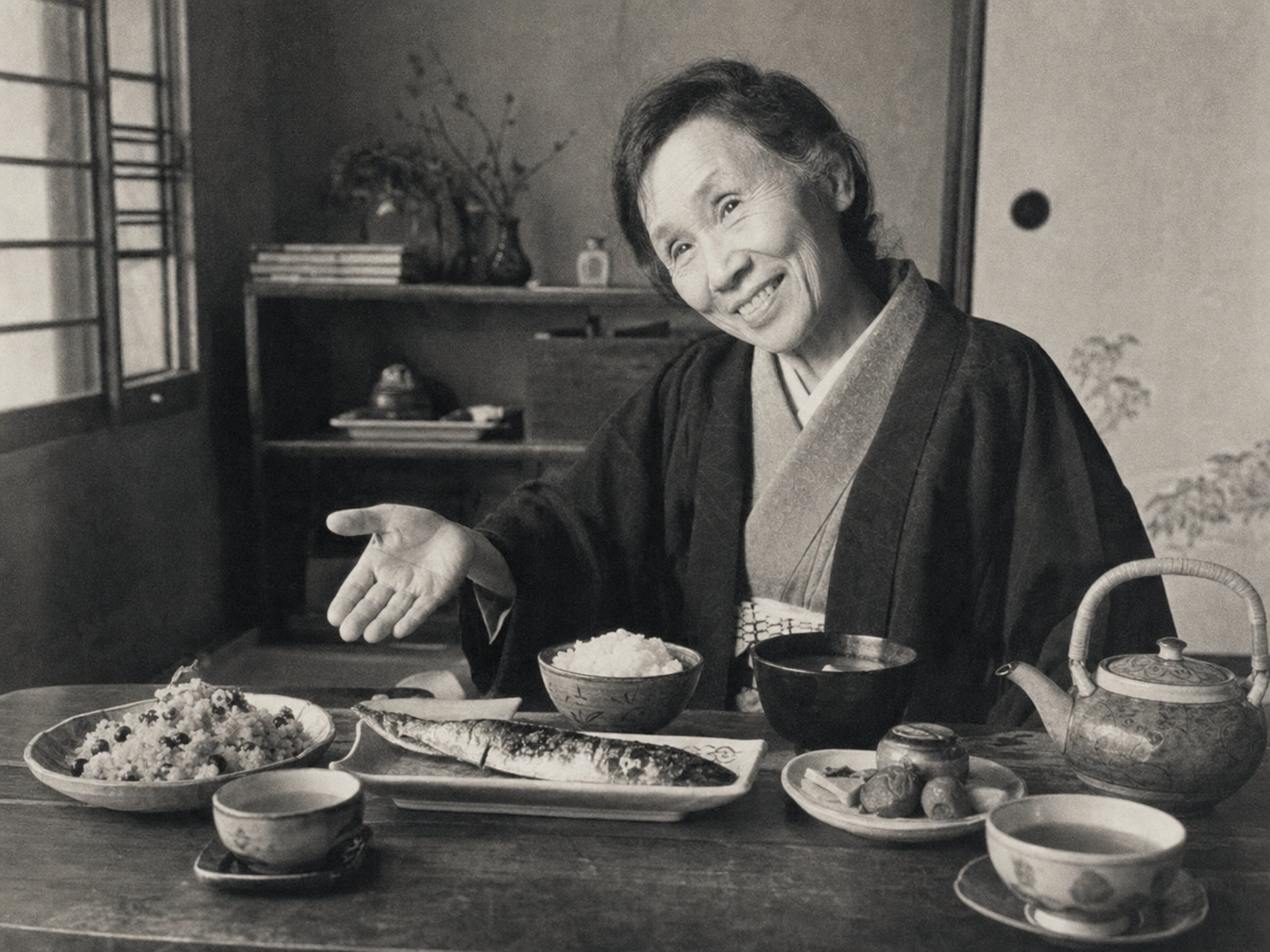
Chika Kuroda at the table
1884 — 1968
On the menu
Ichijū-sansai (一汁三菜)
The classic structure of a Japanese meal: a bowl of white rice (gohan), a soup (usually miso), and three side dishes (san-sai) — often a grilled fish, a simmered vegetable, and a pickled or fermented preparation. Balance is considered through colors and flavors as much as nutrition. Green tea and preserved foods (umeboshi, tsukemono) punctuate the meal. Hot beverages accompany study or convalescence outside of mealtimes.
Signature : Dashi (出汁), the umami broth
The invisible foundation of all Japanese cuisine from the Meiji-Shōwa era: a clear infusion of kombu (kelp) and katsuobushi (dried and shaved bonito) that releases umami. For a chemist passionate about matter and natural pigments, this broth is a successful extraction — the amber color, clarity, and depth of flavor betray good technique.
click to flip back
Chika Kuroda at the table
1884 — 1968
5 period recipes
 Everyday
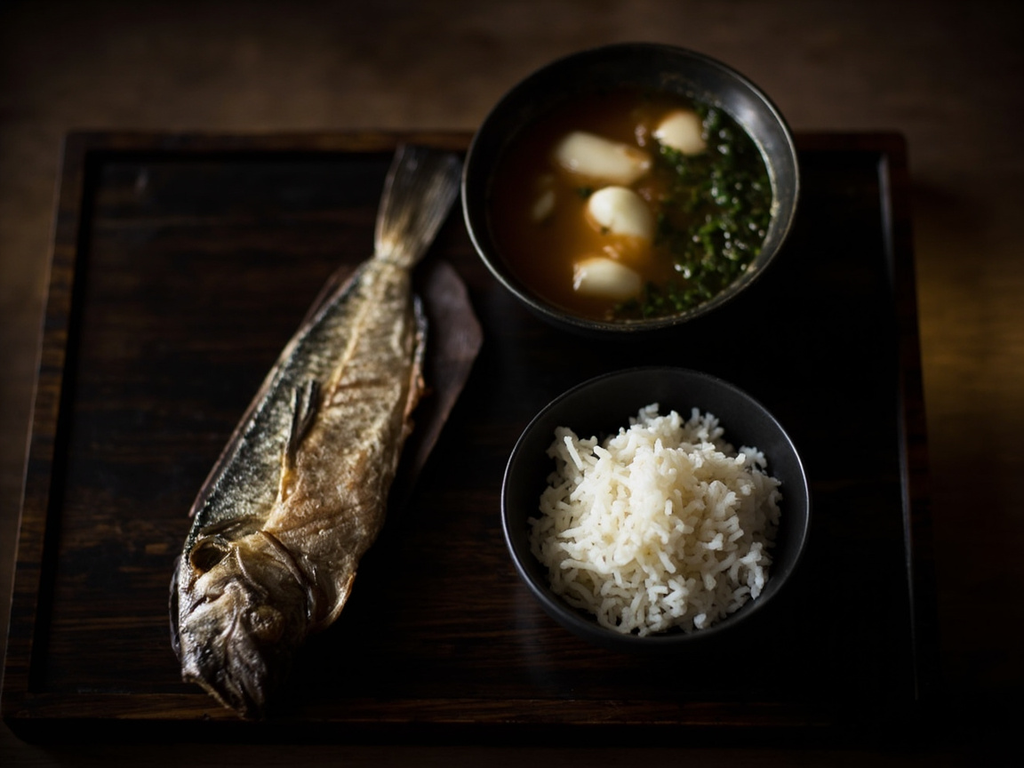
Evening meal: rice, miso soup, and salt-grilled mackerel
Ichijū-sansai — gohan, miso-shiru and yakizakana
🍄 🧂· 50 min
View the recipe
 Festive
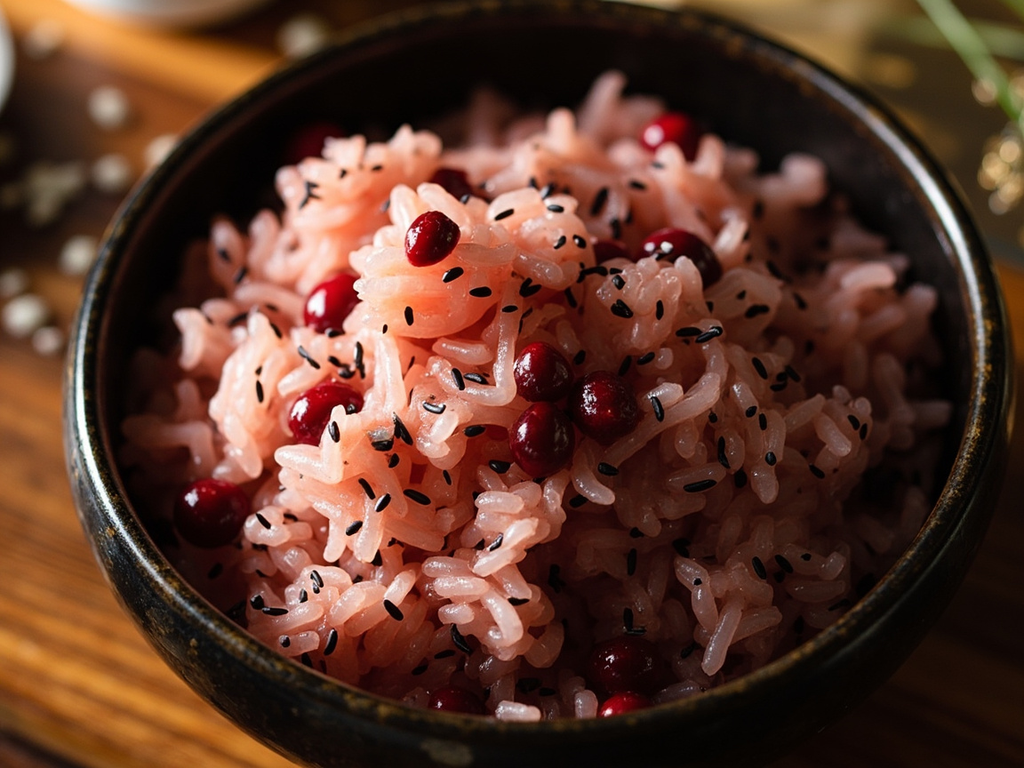
Sekihan, the red rice of special days
Ceremonial dish — kowameshi (steamed glutinous rice)
🍯 🧂· 1 h (plus overnight soaking)
View the recipe
 Drink
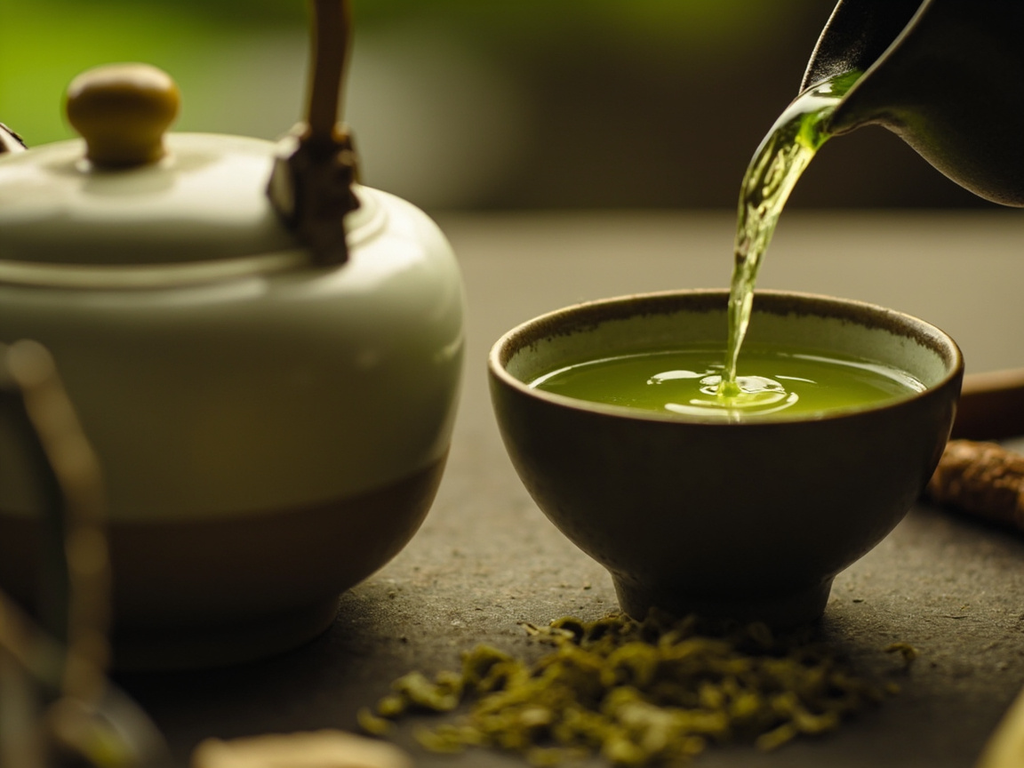
DrinkSencha, the green tea of the study table
Daily beverage — ocha brewed in a kyūsu
☕· 10 min
View the recipe
 Preserving
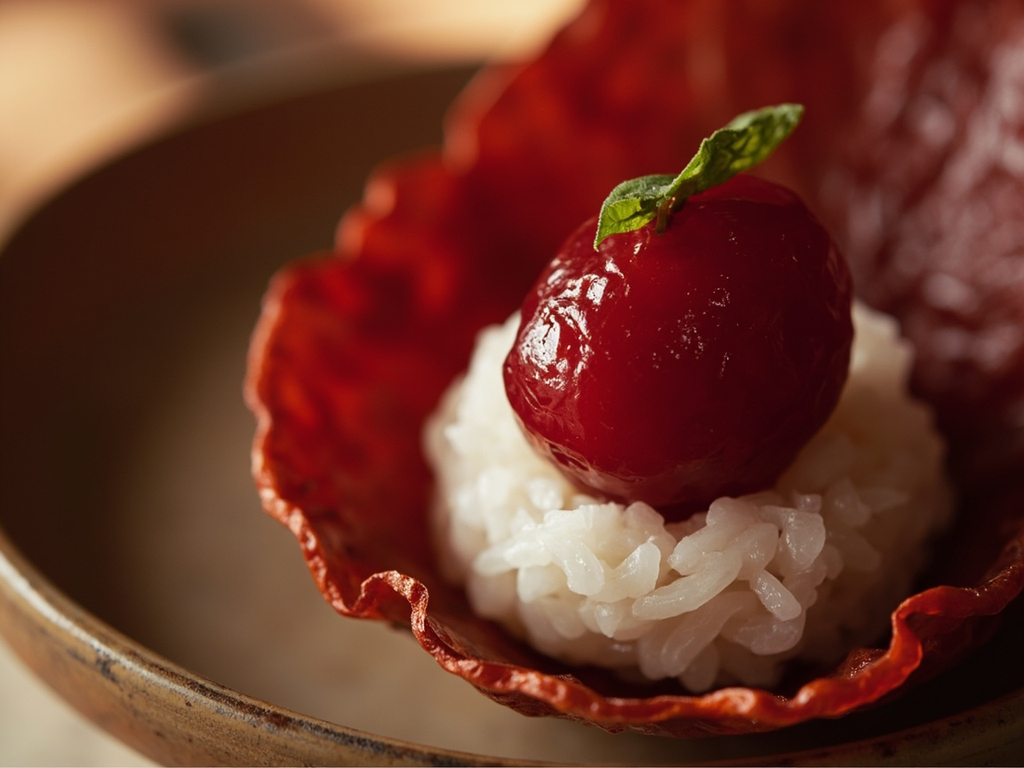
Umeboshi, the salted plums of the pantry
Pickled preserve — tsukemono for storage
🍋 🧂 🫙· 3 to 4 weeks (including 3 days of drying)
View the recipe
 Remedy
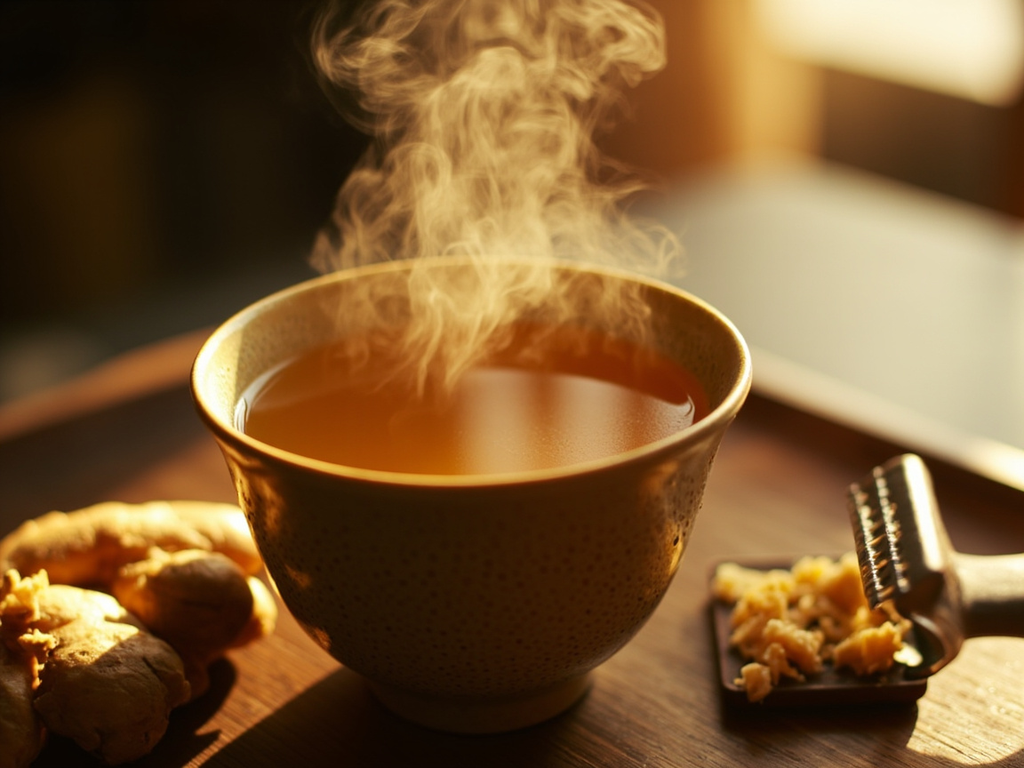
Shōgayu, hot ginger water for cold evenings
Grandmother's remedy — medicinal hot drink
🌶️ 🍯· 10 min
View the recipe