 flip
flipSencha, the green tea of the study table
Sencha, the green tea of the study table
Why this dish? Green tea closes every meal in Chika Kuroda's record and certainly accompanied her long hours of study. For a chemist, brewing is again a matter of temperature and time: too hot, the water extracts bitterness; well controlled, it releases the sweetness (umami) of the young leaves.
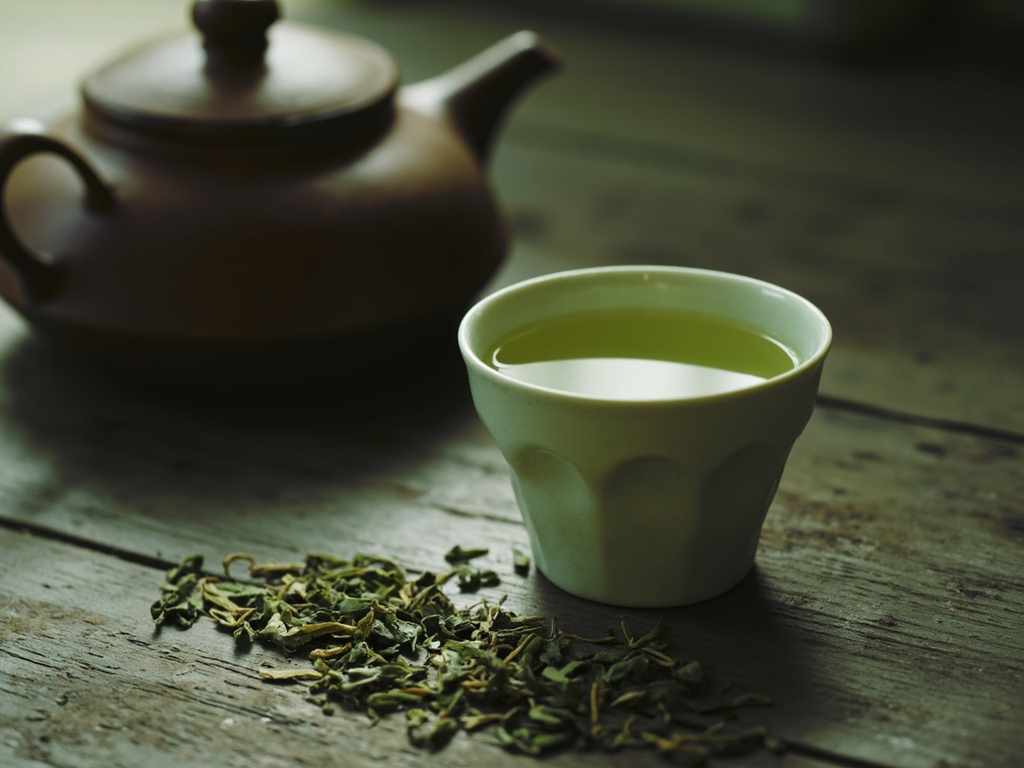
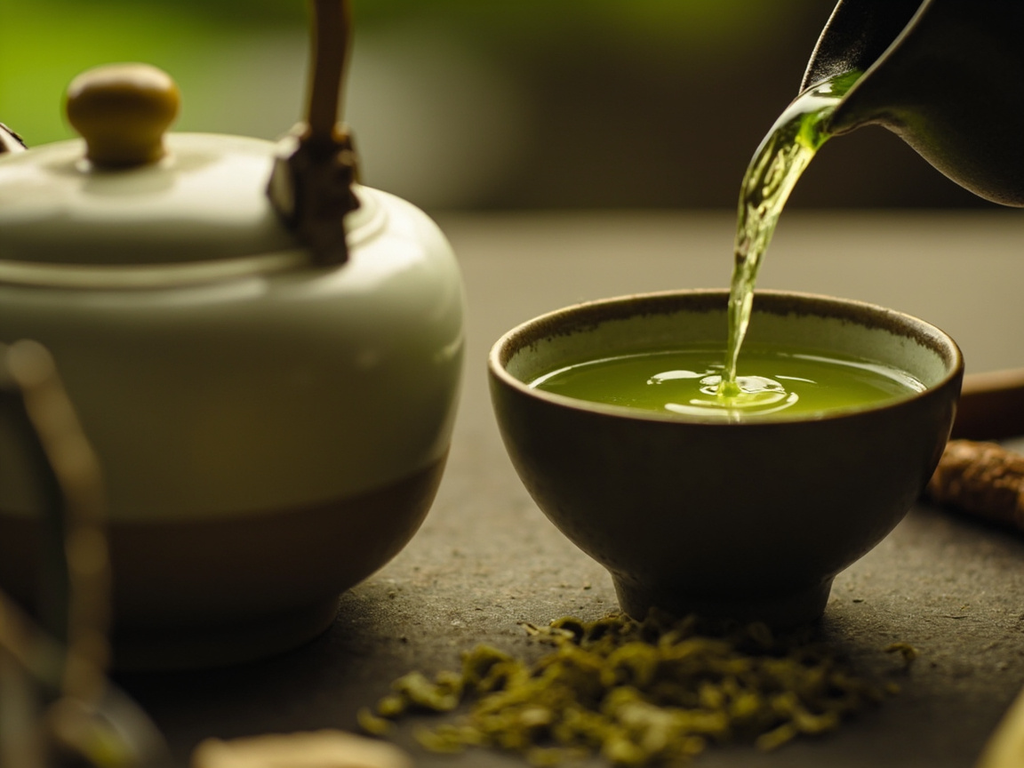
A teapot of sencha brewed briefly, in water neither boiling nor tepid. The first sip is clear, slightly astringent, then a vegetal sweetness settles in. The drink of sustained attention.
I always let the water cool a little before pouring it over the leaves — boiling, it draws only bitterness from the tea, and that would waste good leaves. About seventy degrees, a short wait, and the liquor comes out a tender green. During long evenings over my pigments, this bowl has kept me company more often than any human being; I owe it the care of a proper brew.
- •Sencha leaves — one measure (tea)
- •Cooled spring water — as needed (infusion)
Sencha, the green tea of the study table
A teapot of sencha brewed briefly, in water neither boiling nor tepid. The first sip is clear, slightly astringent, then a vegetal sweetness settles in. The drink of sustained attention.
Why this dish? Green tea closes every meal in Chika Kuroda's record and certainly accompanied her long hours of study. For a chemist, brewing is again a matter of temperature and time: too hot, the water extracts bitterness; well controlled, it releases the sweetness (umami) of the young leaves.
I always let the water cool a little before pouring it over the leaves — boiling, it draws only bitterness from the tea, and that would waste good leaves. About seventy degrees, a short wait, and the liquor comes out a tender green. During long evenings over my pigments, this bowl has kept me company more often than any human being; I owe it the care of a proper brew.
Ingredients (period version)
- Sencha leaves — one measure (tea)
- Cooled spring water — as needed (infusion)
Ingredients
- Sencha green tea — 6 g (≈ 2 tsp) (tea)
- Low-mineral water — 300 ml (infusion)
Method
- Bring water to a boil then let it cool to 70 °C (pour it into empty bowls to cool it and preheat the vessels).
- Place the sencha in a small teapot (kyūsu).
- Pour the tempered water over the leaves and let steep for about 1 minute.
- Serve in several small cups by pouring back and forth to distribute the strength evenly down to the last drop (the most flavorful).
- Re-infuse the same leaves once or twice, with slightly hotter water.
How it was made : Rolled-leaf sencha had become established in Japanese households well before the Meiji era, distinct from the powdered matcha of the tea ceremony. Water was heated on a brazier and transferred from bowl to bowl to cool it and gauge its temperature, lacking a thermometer.
The contemporary twist : Served cold in summer (mizudashi: leaves infused cold for several hours in the refrigerator), sencha reveals a sweetness without any bitterness.
Sources : Ishige Naomichi, The History and Culture of Japanese Food (2001)
Chika Kuroda · Charactorium