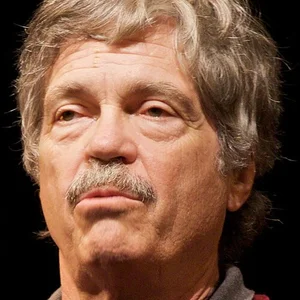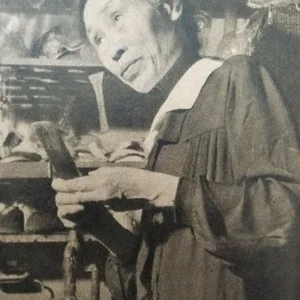

Chika Kuroda (1884-1968) was a pioneering Japanese chemist, one of the first women in Japan to earn a university degree in science. She made her mark with her research into the structure of natural pigments.
Frequently asked questions
Key Facts
- Born in 1884 in Saga, Japan.
- In 1916, became one of the first Japanese women to earn a Bachelor of Science degree.
- Conducted research on the structure of natural pigments such as shikonin (extracted from gromwell) and carthamin (extracted from safflower).
- Earned a Doctor of Science degree in 1929, becoming one of the first Japanese women to hold a doctorate in chemistry.
- Died in 1968 after a career in research and teaching.
Works & Achievements
Kuroda was among the first three female students at a Japanese national university, paving the way for women in higher scientific education.
She deepened her work in dye chemistry under William Henry Perkin Jr., one of the world's leading specialists in organic chemistry.
Work elucidating the chemical structure of the purple pigment from the murasaki root, the heart of her doctoral thesis.
She became one of the first Japanese women to hold a doctorate in science, and the first in chemistry.
Study of the red pigment from safflower (benibana), linking modern chemistry to traditional Japanese dyes and cosmetics.
At the Tokyo Women's Higher Normal School, she trained many female students and helped open the sciences to women.
Anecdotes
In 1913, Tohoku Imperial University in Sendai became the very first Japanese national university to admit women. Chika Kuroda was one of the three pioneers accepted. The Ministry of Education, astonished, sent a letter asking for an explanation of this decision it deemed extraordinary: studying science at university was at the time reserved for men.
Chika Kuroda became fascinated by shikonin, the purple pigment extracted from the root of a plant called murasaki (the gromwell). In ancient Japan, this purple was so precious that it was reserved for high-ranking nobles. By unlocking the molecular secret of this prestigious color, she connected modern chemistry to a tradition many centuries old.
Between 1921 and 1923, she travelled halfway around the globe to study at the University of Oxford, in England, under the chemist William Henry Perkin Jr. The coincidence is delicious: his father had invented the very first synthetic dye, mauveine, while Kuroda was busy taking apart natural dyes.
In 1929, thanks to her work on the structure of shikonin, she earned her doctorate in science. She became one of the very first Japanese women to hold this title, and the first in chemistry — a feat in a country where higher education had only just begun to open its doors to women.
Kuroda also studied carthamin, the red pigment drawn from the flowers of the safflower (benibana). This dye had long been used to make lipstick and to dye fabrics. Her work showed that traditional Japanese arts concealed a complex chemistry that science could at last explain.
Primary Sources
Documents from 1913 attesting to the admission of three female students (Chika Kuroda, Kono Yasui, Raku Makita) and the Ministry's official inquiry into admitting women to a national university.
Work in which Chika Kuroda established the chemical structure of shikonin, the purple pigment from the root of the murasaki plant, submitted for her doctorate in science.
Research articles detailing the isolation and analysis of red and purple dyes of plant origin, published in scientific journals of the time.
Key Places
Region in southwestern Japan where Chika Kuroda was born in 1884.
The first national university in Japan to admit women, where Kuroda studied chemistry and later defended her doctorate.
Site of her research stay (1921-1923) working with the chemist William Henry Perkin Jr.
Institution where she trained and then taught chemistry for much of her career.
Capital of Japan where Chika Kuroda spent the end of her life and died in 1968.
Typical Objects
Instrument that splits light to analyze the colors absorbed by a substance. Kuroda used it to study the composition of pigments.
Glass flasks, beakers and test tubes used to mix, heat and purify reagents. Everyday tools of experimental chemistry.
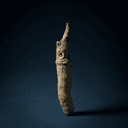
Root of the gromwell, a plant from which the purple pigment shikonin is extracted. The raw material at the heart of Kuroda's research.

Notebook in which the chemist recorded her protocols, observations and experimental results. The written memory of every procedure.
📷 CC BY-SA 2.0 · Wikimedia Commons ↗
A balance capable of weighing very small amounts of matter, essential for measuring out reagents and purified products.
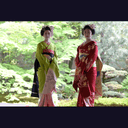
Traditional Japanese garment worn by women of the time, including the first female university students. Often dyed with colorants like those Kuroda studied.
📷 CC BY-SA 2.0 · Wikimedia Commons ↗School Curriculum
Vocabulary & Tags
Key Vocabulary
Daily Life
Morning
Early in the morning, Chika Kuroda would arrive at her university laboratory. She prepared her solutions, carefully weighed out small quantities of pigments, and noted every step in her notebook before beginning her experiments.
Afternoon
Afternoons were devoted to analysis: observation under the spectroscope, purification of plant extracts, comparison of results. As a teacher, she also gave lectures and supervised her students.
Evening
In the evening, she went through her data, read scientific papers from Europe, and prepared her publications. Writing and corresponding with other researchers filled much of these quiet hours.
Food
Her diet followed the Japanese cuisine of the era: rice, fish, seasonal vegetables, miso soup, and green tea. Meals were simple and balanced, shared according to local customs.
Clothing
Like many women of her generation, she wore the kimono in everyday life, sometimes paired with Western-style clothing adopted in academic circles and during her stay in England.
Housing
She lived in Japanese urban dwellings with tatami-matted rooms and sliding partitions. Close to the universities where she worked, her home reflected a modest life devoted to study.
Historical Timeline
Period Vocabulary
Liens externes & ressources
Références
Œuvres
Admission à l'Université impériale du Tohoku
1913
Séjour de recherche à l'Université d'Oxford
1921-1923
Détermination de la structure du shikonin
1929
Doctorat en sciences (rigaku hakushi)
1929
Recherches sur la carthamine
années 1920-1930
Carrière de professeure de chimie
1920-1950