 flip
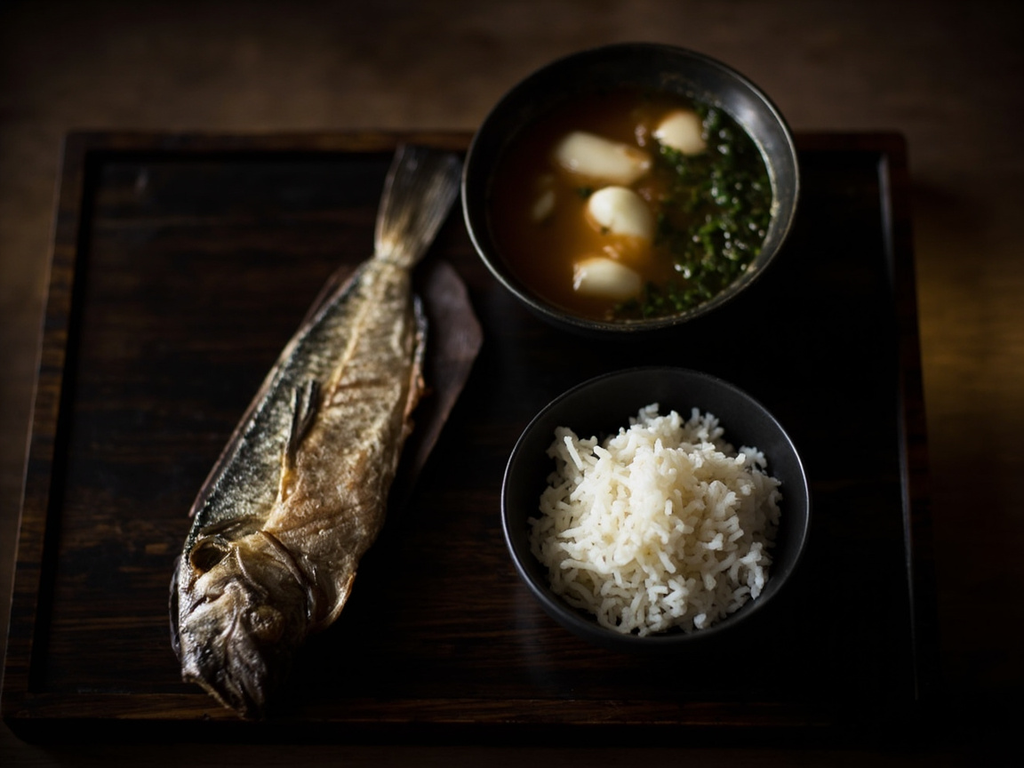
flipEvening meal: rice, miso soup, and salt-grilled mackerel
Evening meal: rice, miso soup, and salt-grilled mackerel
Why this dish? Chika Kuroda's record describes a simple and balanced table: rice, fish, seasonal vegetables, miso soup, and green tea. This is exactly the ichijū-sansai of the literate households of Sendai and Tokyo where she lived, a meal conceived as a stable formula repeated every evening.
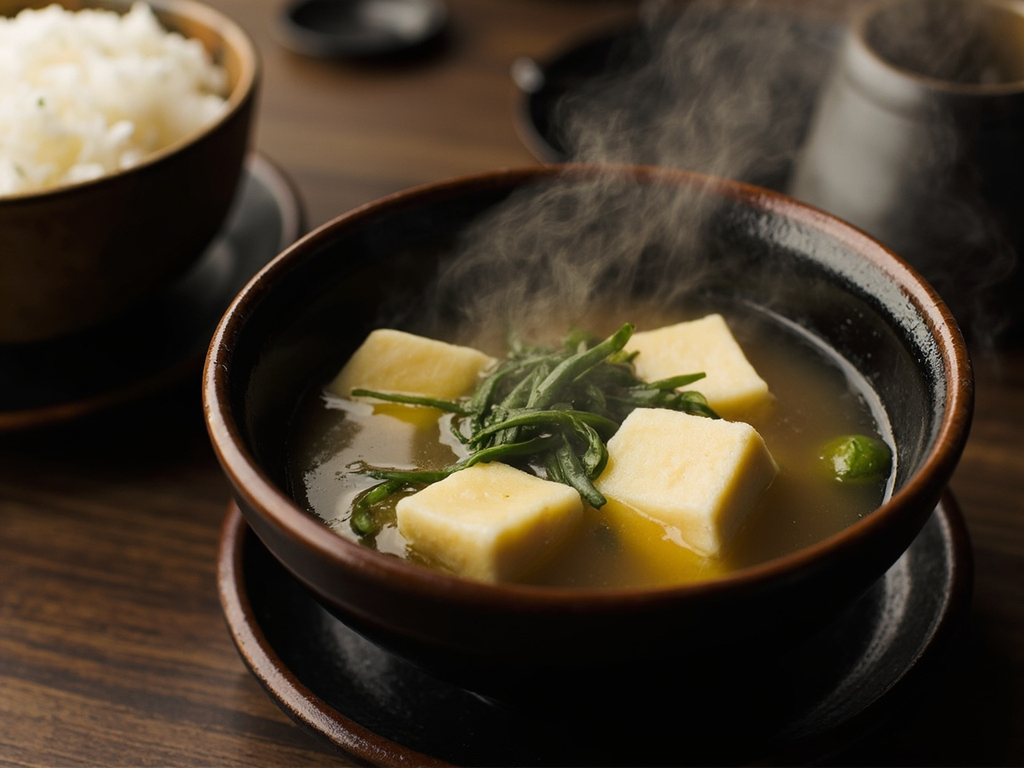
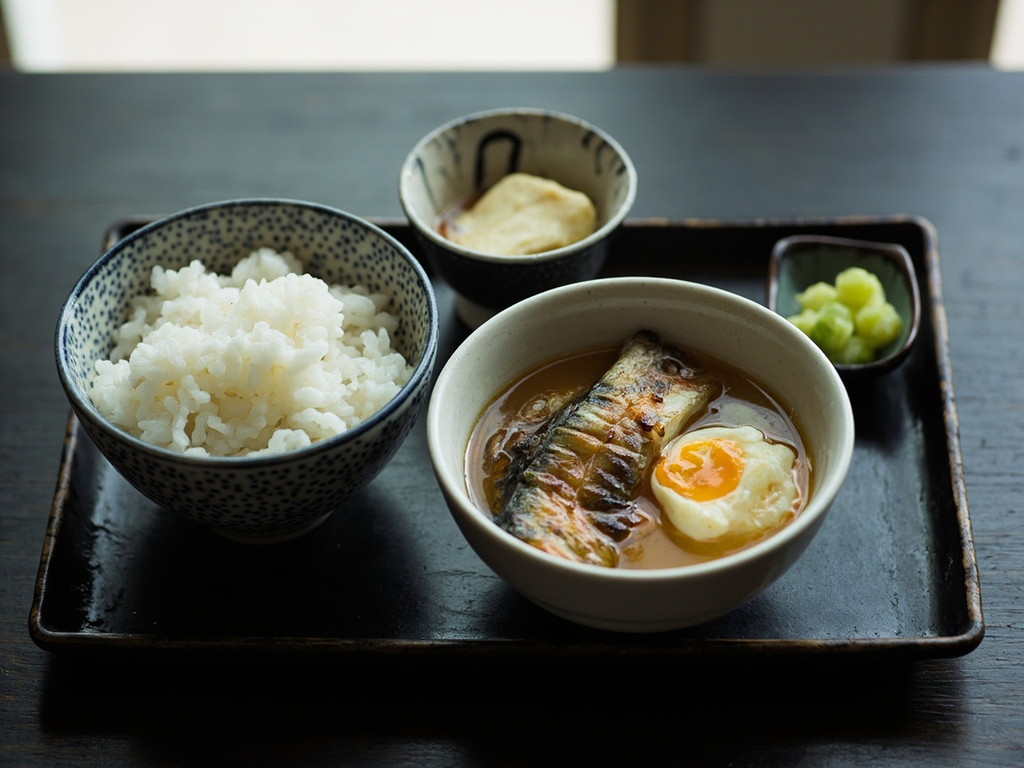
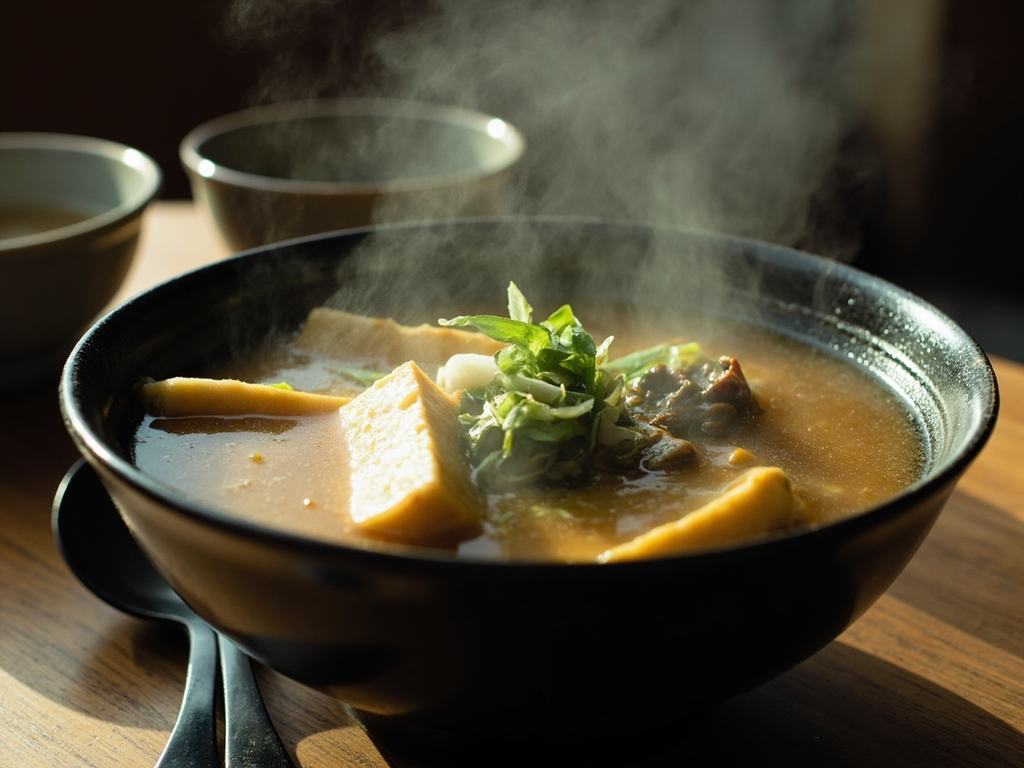
A bowl of steaming rice, miso soup with tofu and wakame seaweed, and a fillet of mackerel (saba) grilled skin-side until it crackles under the tooth. Three simple elements, precisely measured, whose correctness depends on the dashi broth that flavors the soup.
I come home late from the lab, my mind still full of my flasks. At home, I ask for nothing extravagant: well-cooked rice, miso soup, and a piece of saba grilled with salt. You see, I treat my broth like an experiment — first the kombu in cold water, never brought to a full boil, then the bonito removed before it turns bitter. It's an extraction, no more, no less, and patience counts as much there as at the bench.
- •Japanese white rice — two bowls (base of the meal)
- •Miso paste — to taste (soup seasoning)
- •Kombu and katsuobushi — a handful (dashi, umami base)
- •Tofu and wakame — a little of each (soup garnish)
- •Fresh mackerel (saba) — one fillet per person (grilled fish)
- •Salt — a generous pinch (to salt the fish)
Evening meal: rice, miso soup, and salt-grilled mackerel
A bowl of steaming rice, miso soup with tofu and wakame seaweed, and a fillet of mackerel (saba) grilled skin-side until it crackles under the tooth. Three simple elements, precisely measured, whose correctness depends on the dashi broth that flavors the soup.
Why this dish? Chika Kuroda's record describes a simple and balanced table: rice, fish, seasonal vegetables, miso soup, and green tea. This is exactly the ichijū-sansai of the literate households of Sendai and Tokyo where she lived, a meal conceived as a stable formula repeated every evening.
I come home late from the lab, my mind still full of my flasks. At home, I ask for nothing extravagant: well-cooked rice, miso soup, and a piece of saba grilled with salt. You see, I treat my broth like an experiment — first the kombu in cold water, never brought to a full boil, then the bonito removed before it turns bitter. It's an extraction, no more, no less, and patience counts as much there as at the bench.
Ingredients (period version)
- Japanese white rice — two bowls (base of the meal)
- Miso paste — to taste (soup seasoning)
- Kombu and katsuobushi — a handful (dashi, umami base)
- Tofu and wakame — a little of each (soup garnish)
- Fresh mackerel (saba) — one fillet per person (grilled fish)
- Salt — a generous pinch (to salt the fish)
Ingredients
- Japanese short-grain rice — 150 g raw (base of the meal)
- Kombu — 1 piece 10 cm (dashi)
- Katsuobushi (shaved bonito) — 10 g (dashi)
- Water — 800 ml (dashi)
- Miso paste — 2 tbsp (soup)
- Firm tofu — 100 g cubed (soup)
- Dried wakame — 1 tsp (soup)
- Mackerel fillets — 2 (grilled fish)
- Fine salt — 1 tsp (salting)
Method
- Rinse the rice until the water runs clear, then cook it by the absorption method and let it rest covered.
- Prepare the dashi: soak the kombu in cold water for 30 minutes, heat gently without boiling, remove the kombu just before the boil, add the bonito, turn off the heat, and strain after 2 minutes.
- Salt the mackerel fillets and let them sit for 15 minutes, pat dry, then grill skin-side down until golden and crispy.
- Reheat the dashi with the tofu and wakame, remove from heat, and dissolve the miso (never at a full boil to preserve its aroma).
- Serve the rice, soup, and fish in separate bowls and plates, to be eaten in alternation.
How it was made : Salt-grilling (shioyaki) was the most common way to prepare inexpensive blue fish in Japan at the time; it was cooked on a charcoal grill (shichirin). Dashi was made fresh daily, with katsuobushi shaved as needed on a bonito plane (katsuobushi-kezuriki).
The contemporary twist : On a light wooden board, the mackerel placed skin-side up, a lemon wedge and a few bonito flakes wavering in the steam: the science of umami, minimalist plating version.
Sources : Ishige Naomichi, The History and Culture of Japanese Food (2001) · Shizuo Tsuji, Japanese Cooking: A Simple Art (1980)
Chika Kuroda · Charactorium