 Flip the card
Chrétien de Troyes at the table
1135 — 1181
On the menu
The Dishes of the Lord's Table (service by courses)
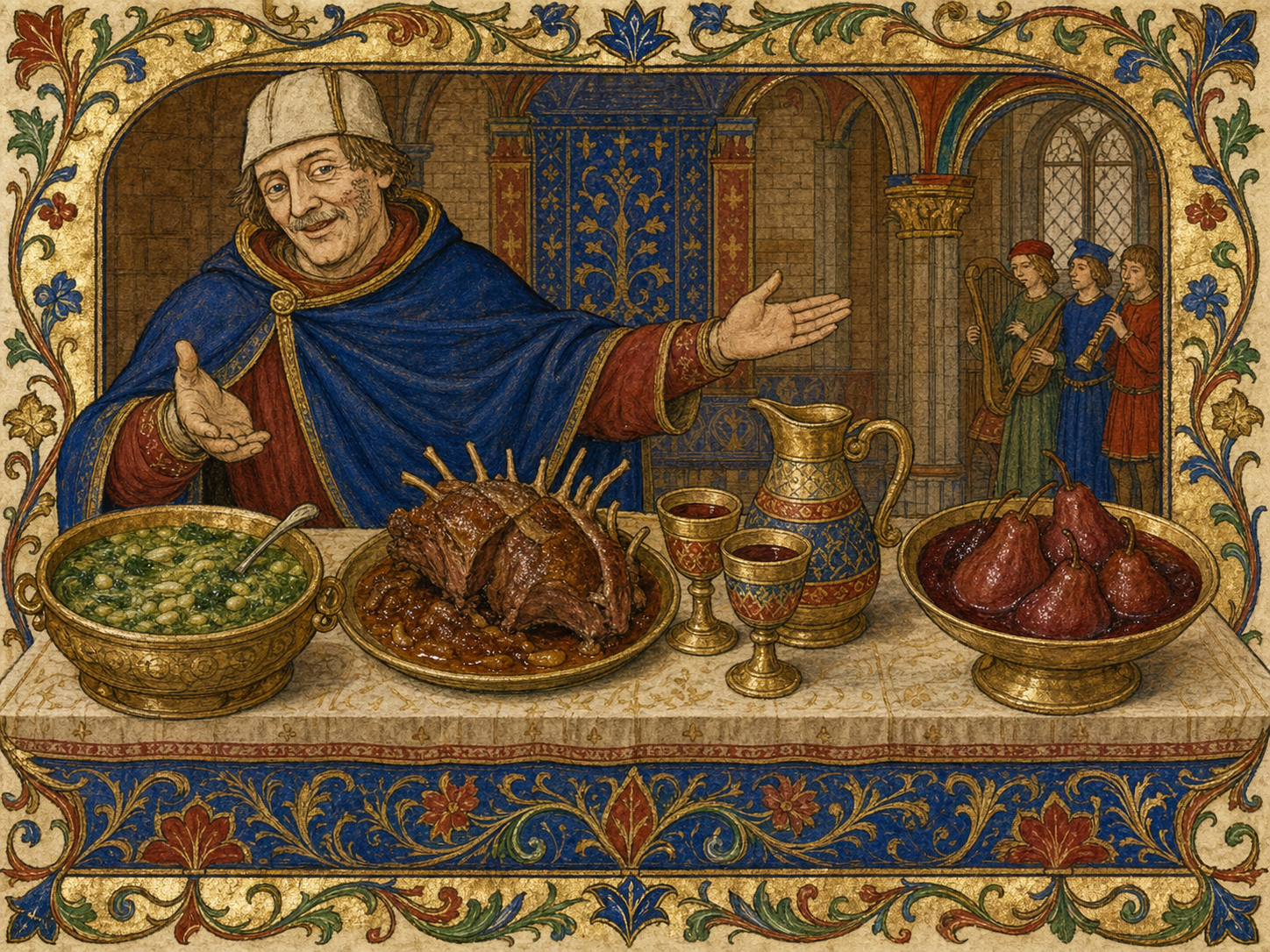
At the court of Champagne in the 12th century, meals were not served as starter-main-dessert but as a succession of "courses": several savory and sweet dishes placed together on the table, where each person helped themselves. Bread served as a plate (the "trencher"), potages opened the meal, roasts and their spiced sauces were the glory of feast days, and spiced wine closed the banquet to aid digestion. Rank was read in the abundance of spices, luxury goods that arrived via the Champagne fairs.
Signature : Verjuice and Fair Spices
Acidity came from verjuice (juice of unripe grapes), never lemon, and cinnamon dominated the famous cameline sauce. Troyes, a crossroads of the Champagne fairs, saw pepper, cinnamon, ginger, and saffron arriving from the East: placing these spices on one's table was a display of wealth as much as a treat for one's guests.
click to flip back
Chrétien de Troyes at the table
1135 — 1181
5 period recipes
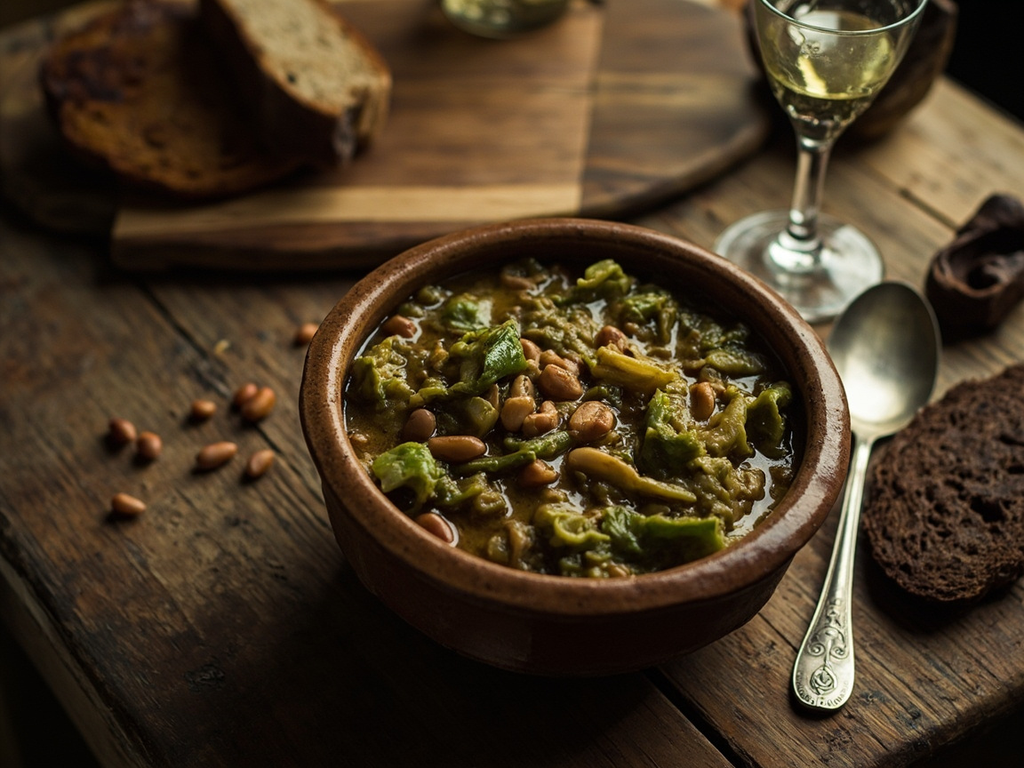 Everyday
Green Porée with Beans and Cabbage
Opening Potage (the first course)
🧂 🍄· 50 min
View the recipe
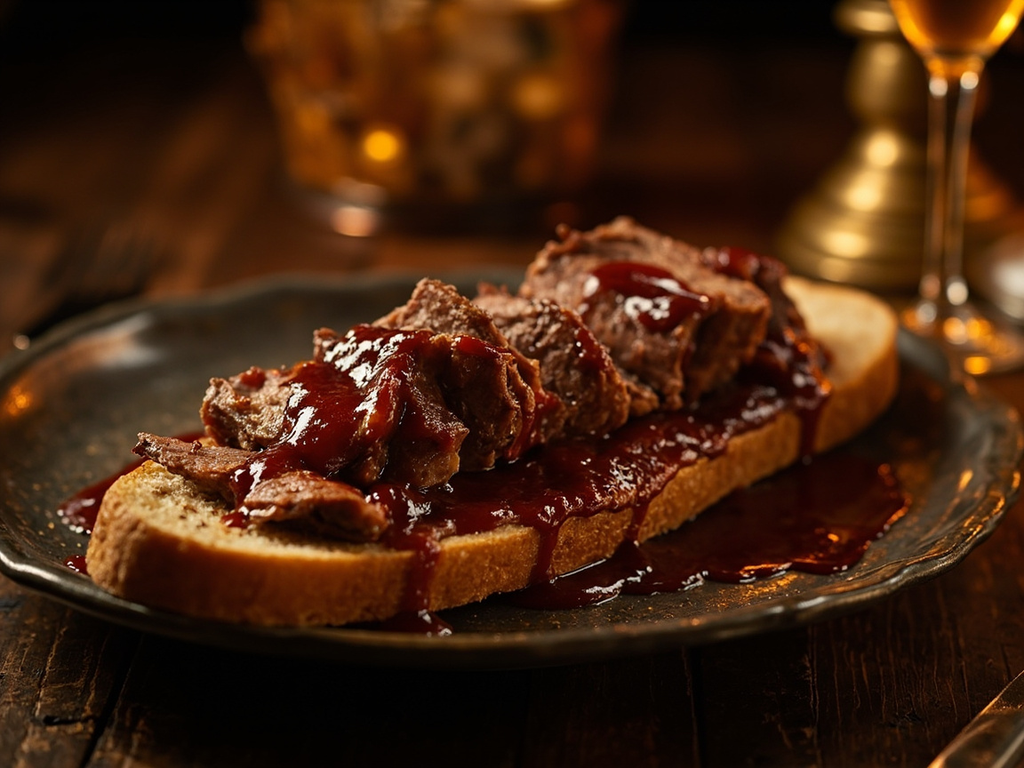 Festive
Roasted Venison with Cameline Sauce
The Roast Course (dish of honor for feast days)
🌶️ 🍋 🍯· 1 h
View the recipe
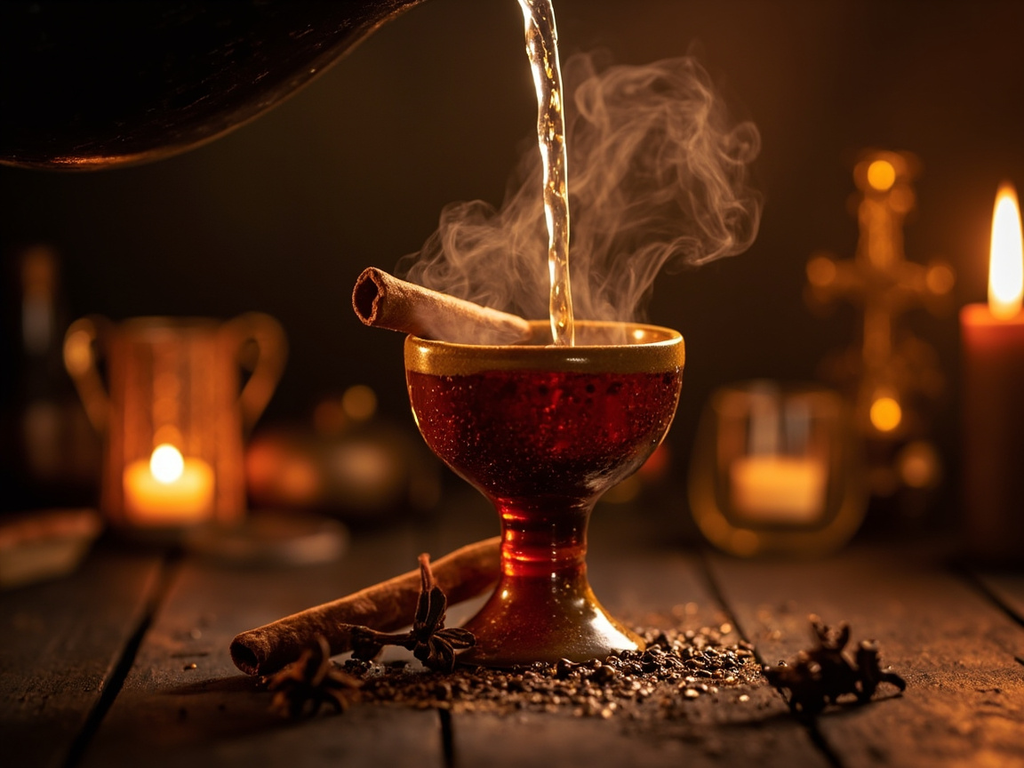 Drink
DrinkPiment, Spiced Wine with Honey
The Final Course (end-of-feast drink)
🍯 🌶️· 35 min
View the recipe
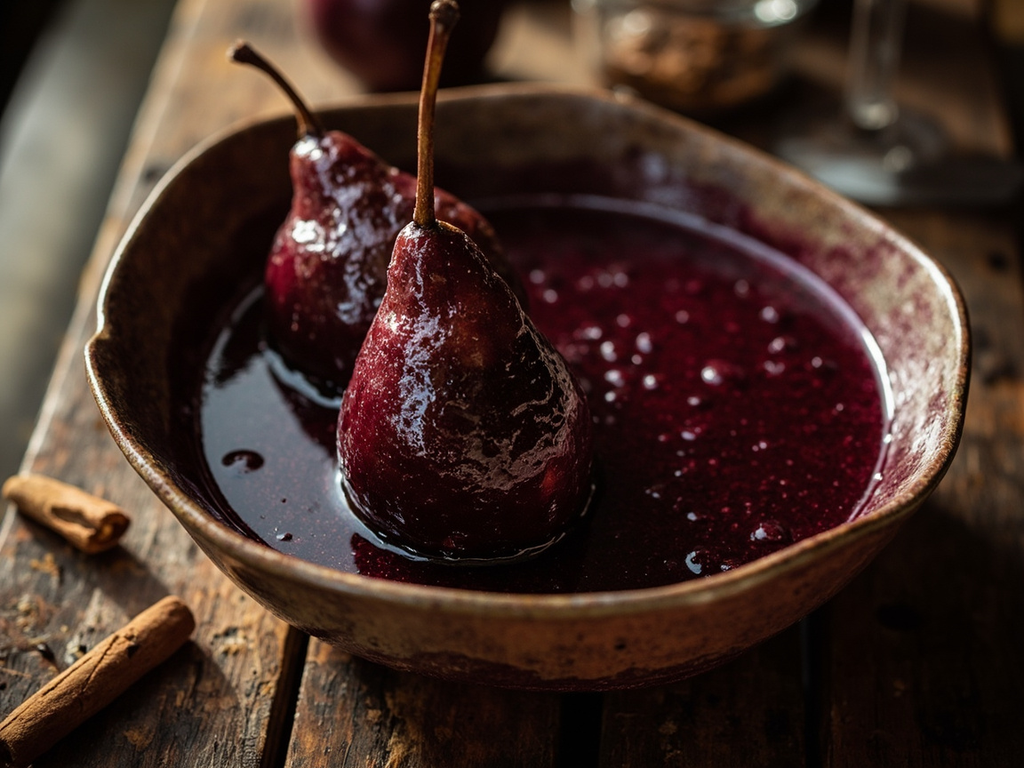 Preserving
Pears in Wine and Honey (Pear Compost)
Sweet Preserved Course (late-season conserve)
🍯 🍋 🌶️· 45 min
View the recipe
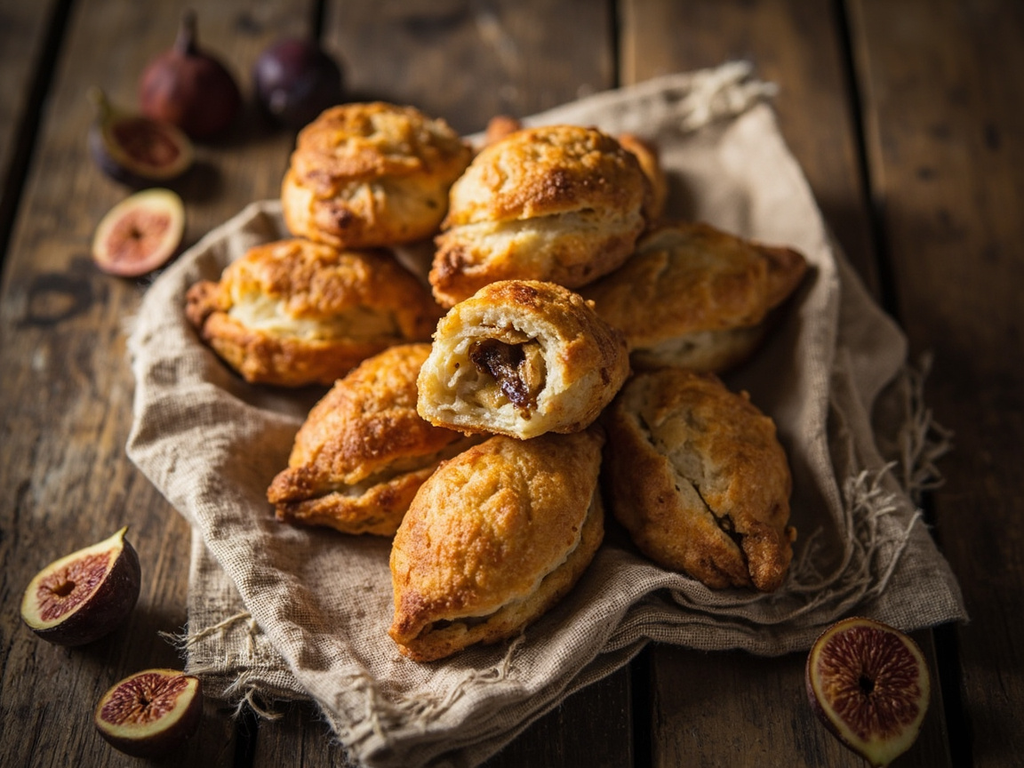 Travel
Rissoles with Dried Fruit and Cheese
Small Hand-Held Dish (travel and fair snack)
🍯 🧂· 1 h
View the recipe