 flip
flipPiment, Spiced Wine with Honey
Piment, Spiced Wine with Honey
Why this dish? In Chrétien's romances, the well-received hero is offered this spiced wine sweetened with honey — "piment" or "claré" — a mark of courtly hospitality. He himself, at the court of Champagne, drank it at the end of banquets.
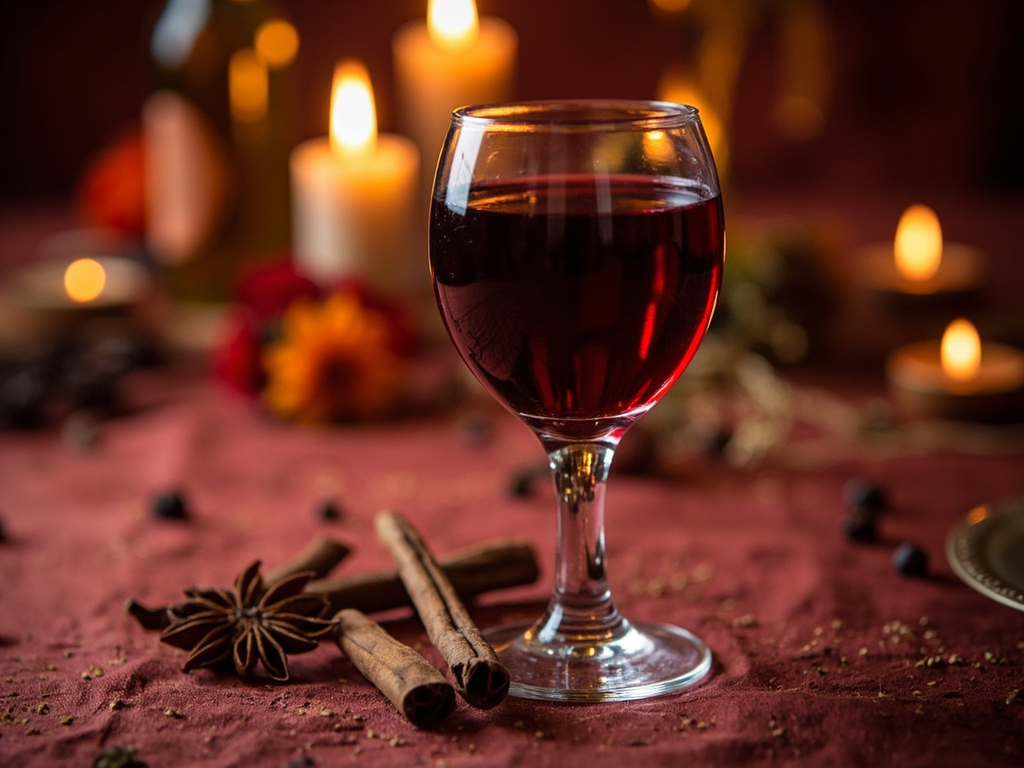
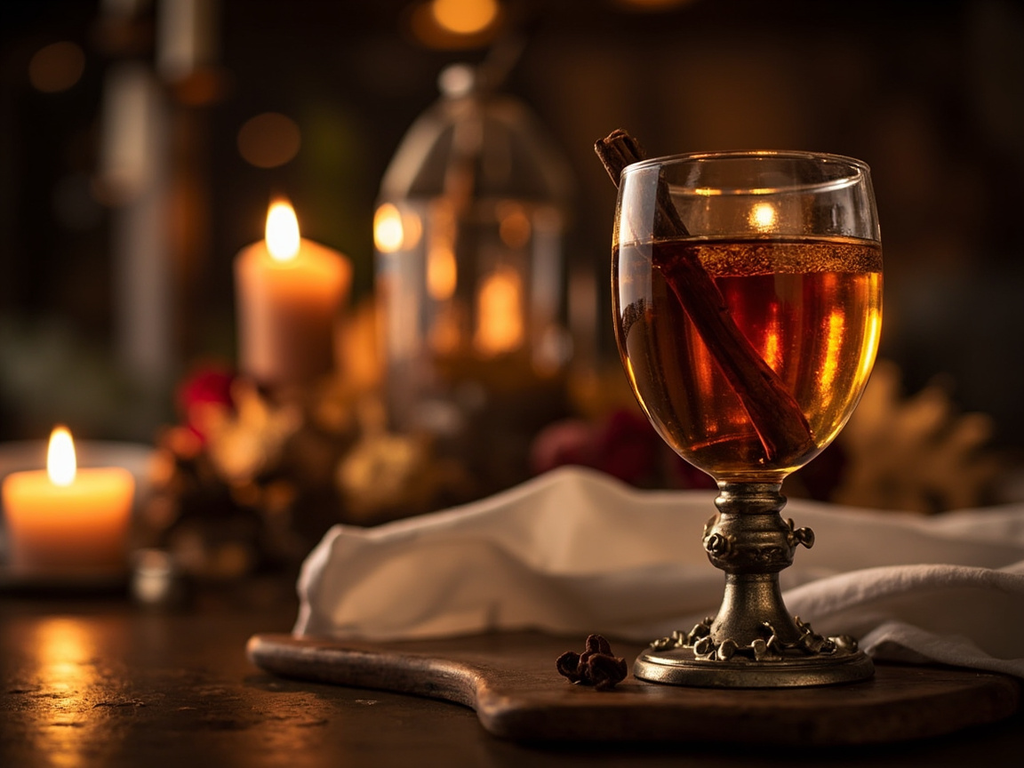
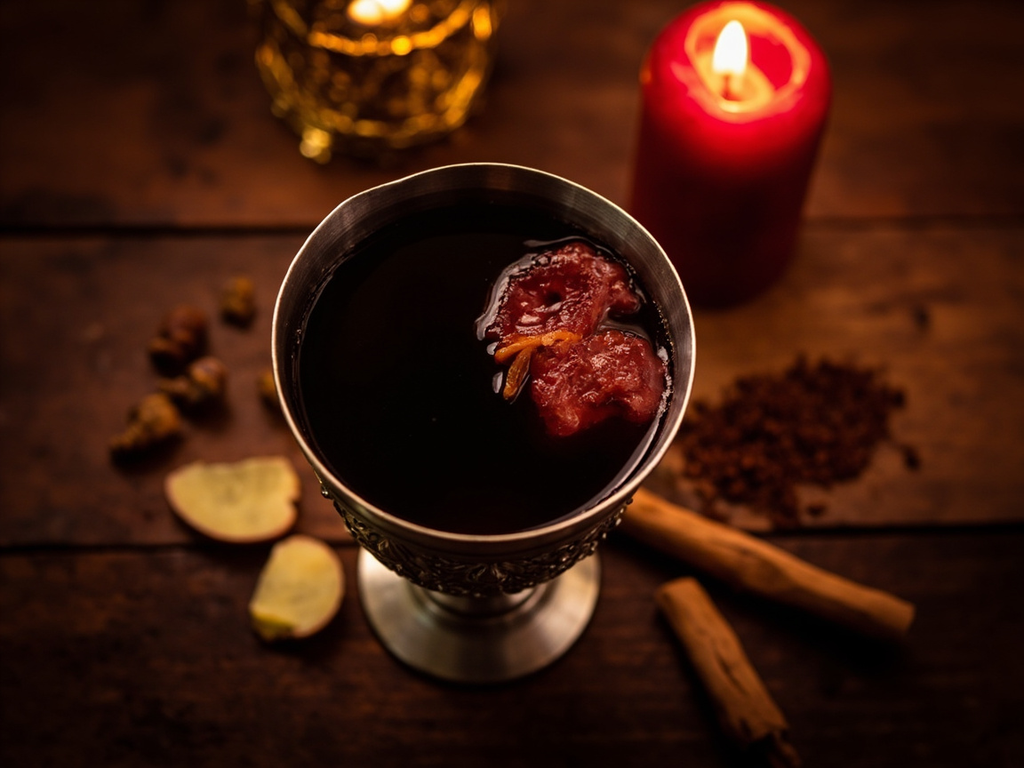
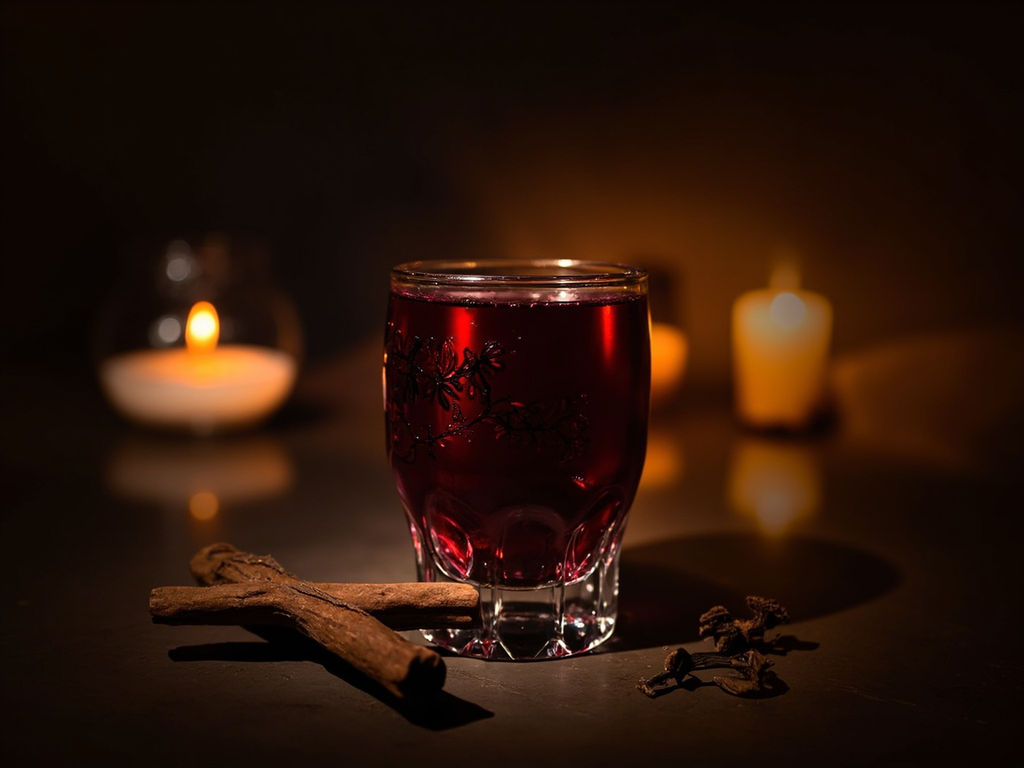
A warmed wine, sweetened with honey and laden with noble spices (cinnamon, ginger, long pepper), served at the end of the meal to close the feast and "aid digestion." The direct ancestor of hypocras.
When the last dish is removed and the cloths are about to be lifted, the piment is brought in: this is how we honor a distinguished guest, and you will find many a cup of it in my romances. Good Champagne wine is poured, honey is melted into it, and cinnamon, ginger, and pepper are ground in, then the whole is strained through a tight cloth. Drink it warm in small sips, friend: it gladdens the heart and, they say, greatly aids digestion.
- •Champagne wine (red or white, still) — a pitcher (base)
- •Honey — generous (sweetness)
- •Cinnamon — a stick (spice)
- •Ginger — a piece (spice)
- •Long pepper — a few grains (heat)
- •Clove — two or three (spice)
Piment, Spiced Wine with Honey
A warmed wine, sweetened with honey and laden with noble spices (cinnamon, ginger, long pepper), served at the end of the meal to close the feast and "aid digestion." The direct ancestor of hypocras.
Why this dish? In Chrétien's romances, the well-received hero is offered this spiced wine sweetened with honey — "piment" or "claré" — a mark of courtly hospitality. He himself, at the court of Champagne, drank it at the end of banquets.
When the last dish is removed and the cloths are about to be lifted, the piment is brought in: this is how we honor a distinguished guest, and you will find many a cup of it in my romances. Good Champagne wine is poured, honey is melted into it, and cinnamon, ginger, and pepper are ground in, then the whole is strained through a tight cloth. Drink it warm in small sips, friend: it gladdens the heart and, they say, greatly aids digestion.
Ingredients (period version)
- Champagne wine (red or white, still) — a pitcher (base)
- Honey — generous (sweetness)
- Cinnamon — a stick (spice)
- Ginger — a piece (spice)
- Long pepper — a few grains (heat)
- Clove — two or three (spice)
Ingredients
- Fruity red wine (or sweet white) — 75 cl (base)
- Honey — 4 to 5 tbsp (sweetness)
- Cinnamon stick — 1 (spice)
- Fresh ginger — 3 thin slices (spice)
- Peppercorns — 5 (heat)
- Cloves — 3 (spice)
Method
- Pour the wine into a saucepan with the honey and heat gently without boiling.
- Add the cinnamon, ginger, pepper, and cloves; maintain a very light simmer for 10 minutes.
- Remove from heat, cover, and let infuse for 15 to 20 minutes.
- Strain carefully through a fine cloth or coffee filter.
- Serve warm in small cups, at the end of the meal.
How it was made : "Piment" and "claré" in the 12th century referred to wines with honey and spices, ancestors of the hypocras of later centuries. They were filtered through a "Hippocrates' sleeve" (cloth bag). Offering spiced wine was a codified gesture of honor in courtly literature.
The contemporary twist : Served cold over ice in summer, piment becomes a surprising spiced aperitif — to be enjoyed in moderation.
Sources : Mentions of "piment" in 12th-century courtly literature · Bruno Laurioux, Manger au Moyen Âge
Chrétien de Troyes · Charactorium