 flip
flipRoasted Venison with Cameline Sauce
Roasted Venison with Cameline Sauce
Why this dish? The knights in his romances hunt the stag in the forest of Brocéliande; at the table of Marie de Champagne and the court of Flanders, roasted game napped with cameline sauce was the dish that crowned a festive banquet.
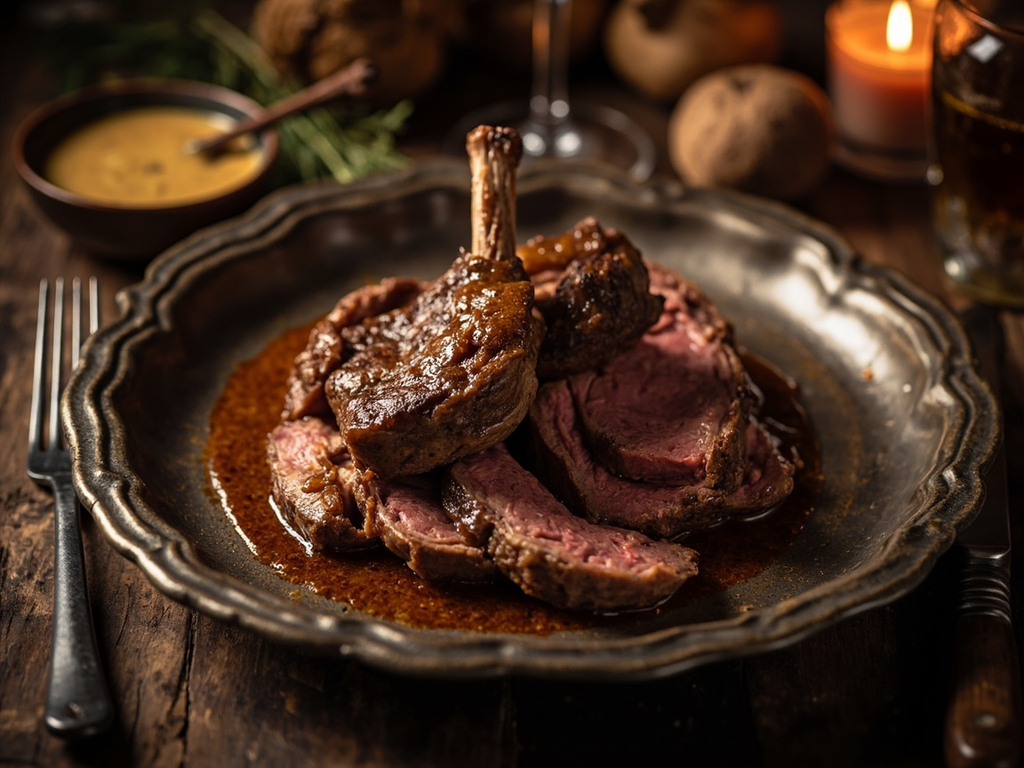
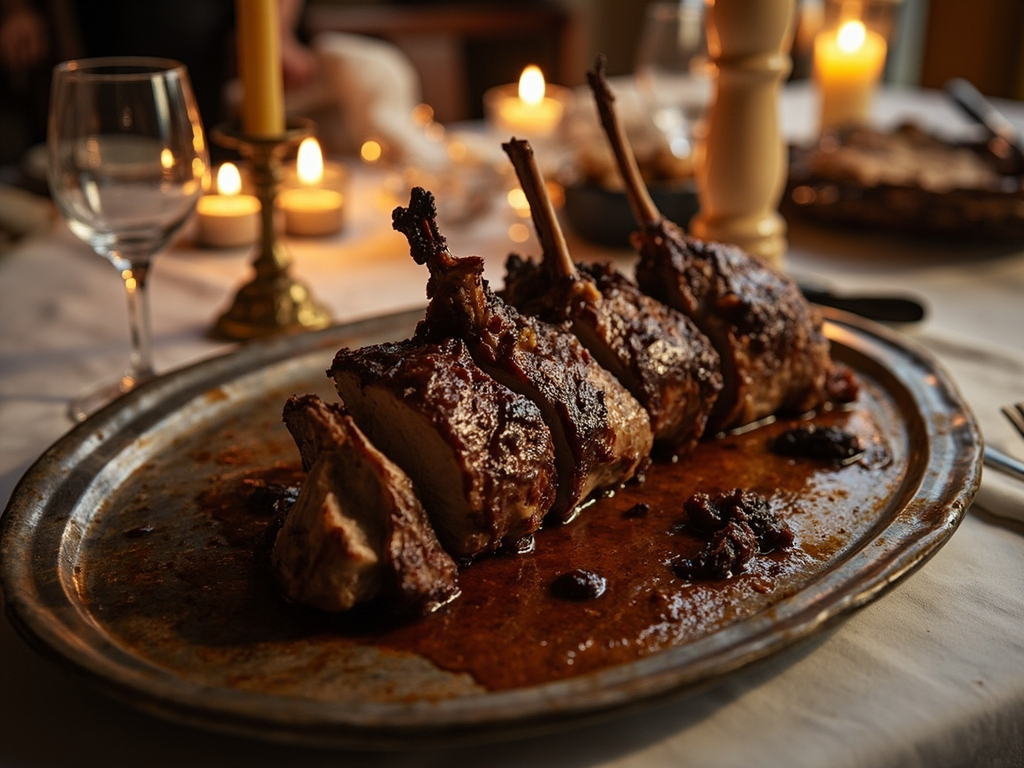
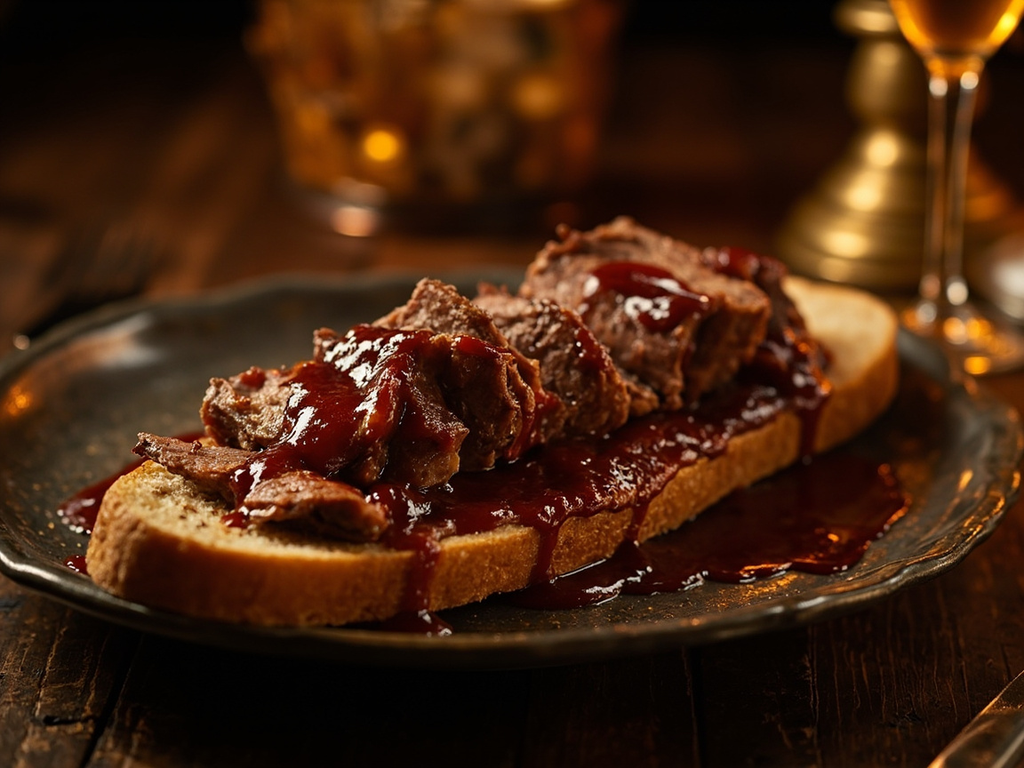
A piece of roasted game, served with the quintessential medieval sauce: cameline, reddish-brown, dominated by cinnamon and sharpened with verjuice. The luxury of Eastern spices on a great lord's table.
This dish, gentle reader, is feast food, such as is served at weddings and full courts. When the huntsman brings back the stag from the forest, the venison is spitted and turned before the flame until it browns. But the secret is the cameline sauce: we grind cinnamon, ginger, and cloves into verjuice with toasted breadcrumbs, and nap the meat with it. Taste then this piquant acidity mingled with the scent of the East: this is fit for a knight of the Round Table.
- •Haunch of venison (stag or roe deer) — a fine piece (main roast)
- •Cinnamon — generous (dominant spice of cameline)
- •Ginger — a pinch (spice)
- •Clove — a few (spice)
- •Verjuice — a good splash (acidity)
- •Toasted bread — two slices (sauce thickener)
- •Honey — a drizzle (sweet roundness)
Roasted Venison with Cameline Sauce
A piece of roasted game, served with the quintessential medieval sauce: cameline, reddish-brown, dominated by cinnamon and sharpened with verjuice. The luxury of Eastern spices on a great lord's table.
Why this dish? The knights in his romances hunt the stag in the forest of Brocéliande; at the table of Marie de Champagne and the court of Flanders, roasted game napped with cameline sauce was the dish that crowned a festive banquet.
This dish, gentle reader, is feast food, such as is served at weddings and full courts. When the huntsman brings back the stag from the forest, the venison is spitted and turned before the flame until it browns. But the secret is the cameline sauce: we grind cinnamon, ginger, and cloves into verjuice with toasted breadcrumbs, and nap the meat with it. Taste then this piquant acidity mingled with the scent of the East: this is fit for a knight of the Round Table.
Ingredients (period version)
- Haunch of venison (stag or roe deer) — a fine piece (main roast)
- Cinnamon — generous (dominant spice of cameline)
- Ginger — a pinch (spice)
- Clove — a few (spice)
- Verjuice — a good splash (acidity)
- Toasted bread — two slices (sauce thickener)
- Honey — a drizzle (sweet roundness)
Ingredients
- Roast venison (roe deer or doe) — 800 g (main roast)
- Ground cinnamon — 1 heaped tsp (dominant spice)
- Ground ginger — 1/2 tsp (spice)
- Ground clove — 1 pinch (spice)
- Verjuice (or grape juice + vinegar) — 100 ml (acidity)
- Grilled country bread — 2 slices (thickener)
- Honey — 1 tsp (roundness)
- Salt — to taste (seasoning)
Method
- Salt the roast and sear it on all sides, then roast in the oven at 200°C (about 15 min per 500 g for pink doneness).
- Meanwhile, soak the grilled bread in verjuice for a few minutes.
- Blend the bread, verjuice, cinnamon, ginger, cloves, and honey until smooth; adjust acidity.
- Strain the sauce through a sieve for a velvety texture and taste: it should be spicy, tangy, and just sweet.
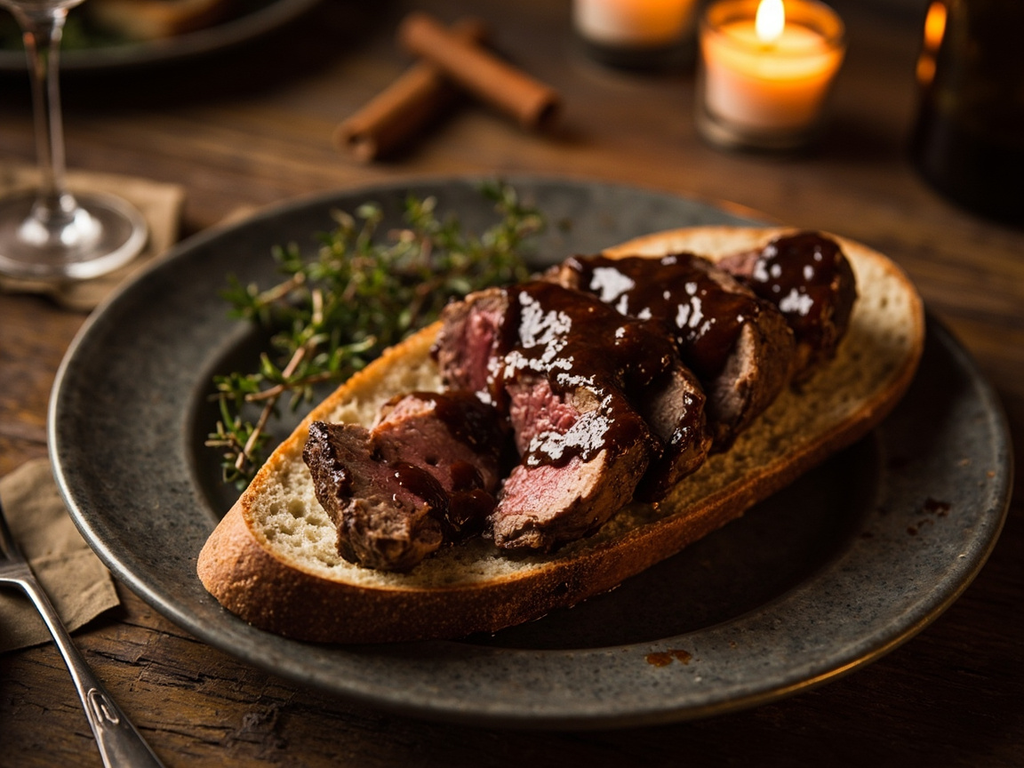
- Rest the meat for 10 minutes, slice it, and nap with sauce (or serve cameline on the side).
How it was made : Cameline sauce (perhaps named for its camel-hair color) is one of the best-attested medieval sauces. Uncooked, thickened with bread, and sharpened with verjuice, it accompanied roasts and fish. In the 12th century, these spices cost a fortune: their use marked the table of a powerful lord.
The contemporary twist : Arrange the slices in a fan with a cordon of cameline and a few fresh blackberries: the sweet-sour-spice contrast surprises as much as in the Middle Ages.
Sources : Le Viandier (tradition attributed to Taillevent) · Le Ménagier de Paris · Bruno Laurioux, Le règne de Taillevent
Chrétien de Troyes · Charactorium