Bhojana — the meal served on a leaf
In ancient India, there was no separation of starter, main course, and dessert: all dishes appeared together on a large banana leaf or a copper plate (thali). Every flavor — sweet, salty, sour, bitter, astringent, pungent — had to be represented to balance the body. Rice occupied the center; around it were arranged vegetables, yogurt, ghee, and at the edge, the sweet dish (payasam) eaten last as a blessing. For Devaki, imprisoned, this ideal feast became a memory, contrasted by the meager prison fare.
Signature : Ghee and yogurt
Clarified butter (ghee) and dairy products (milk, yogurt, makhan) are the soul of this cuisine and the thread running through the cycle of Krishna, the butter-thieving child god. Ghee perfumes everything, sanctifies offerings, and connects Devaki's table to the legend of her son.
Devaki at the table
4 period recipes
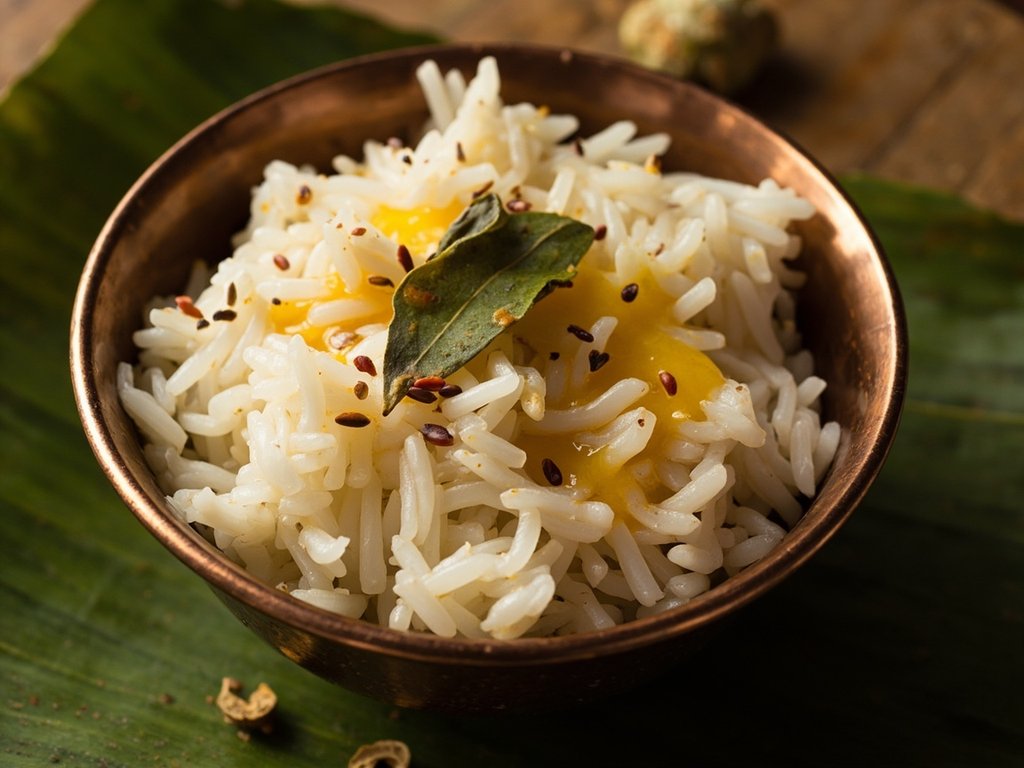 Everyday
Curd Rice with Ghee (dadhi-bhāta)
Heart of the bhojana — everyday rice drizzled with dairy
🍋 🧂· 15 min
View the recipe
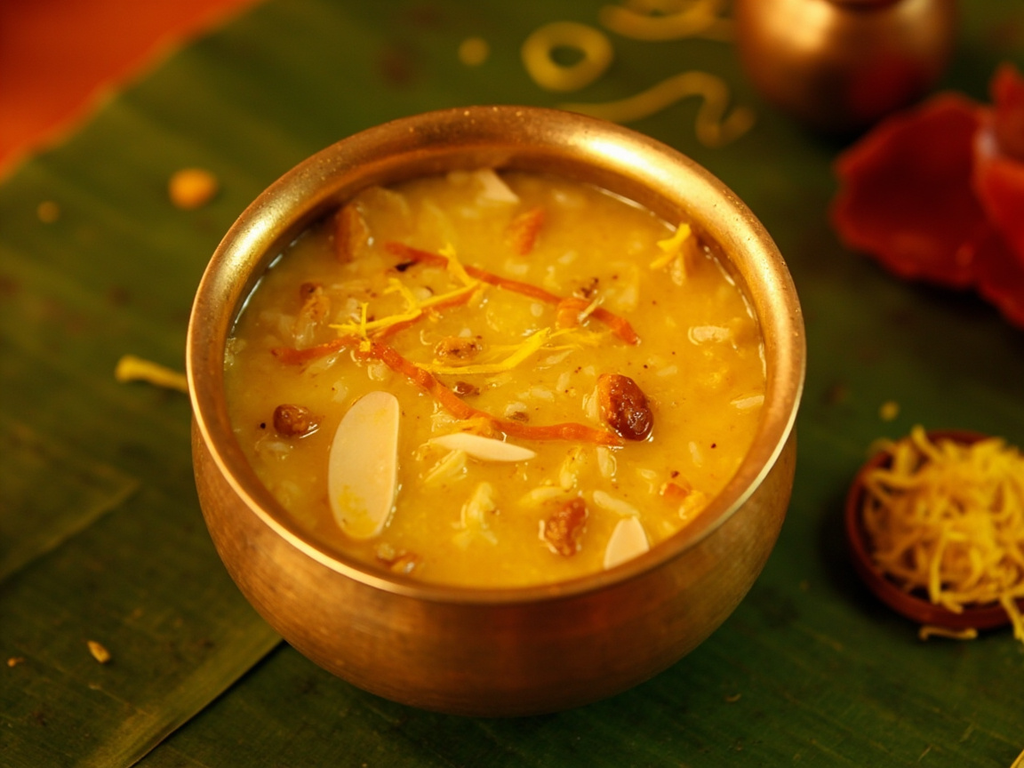 Offering
Rice Payasam (kshira)
Blessing dish — the sweet served at the edge of the leaf, eaten last
🍯· 1 h
View the recipe
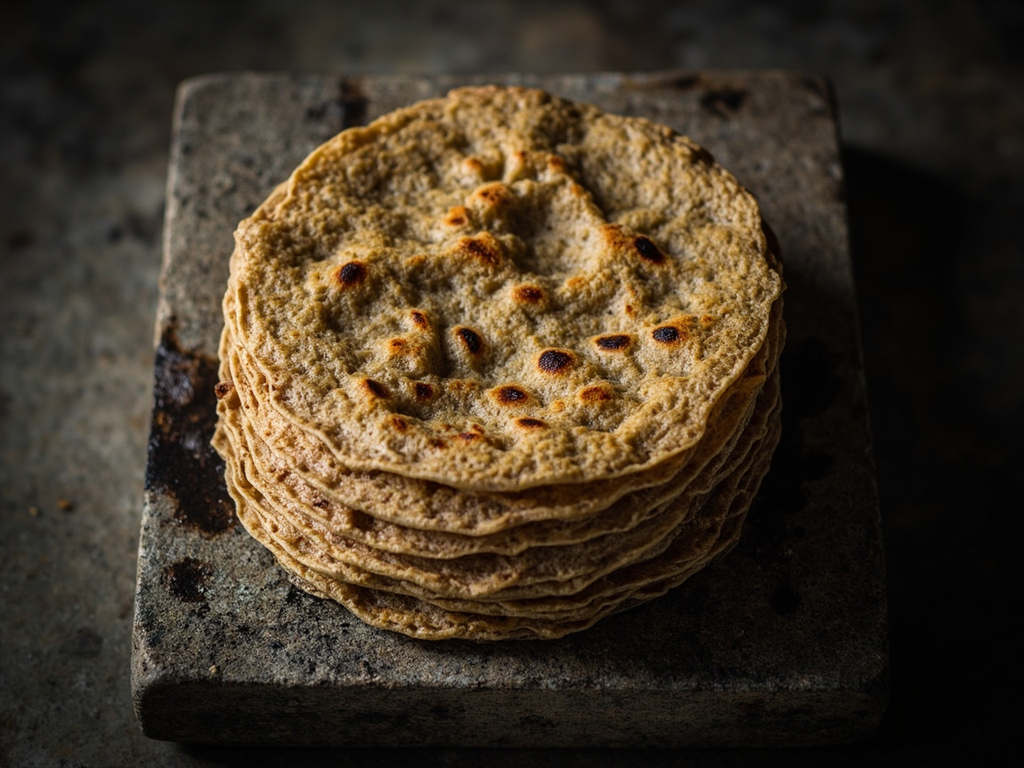 Preserving
Millet Flatbread and Prison Paste (barley rotika)
Captivity fare — the dry flatbread served without leaf or color
☕ 🧂· 35 min
View the recipe
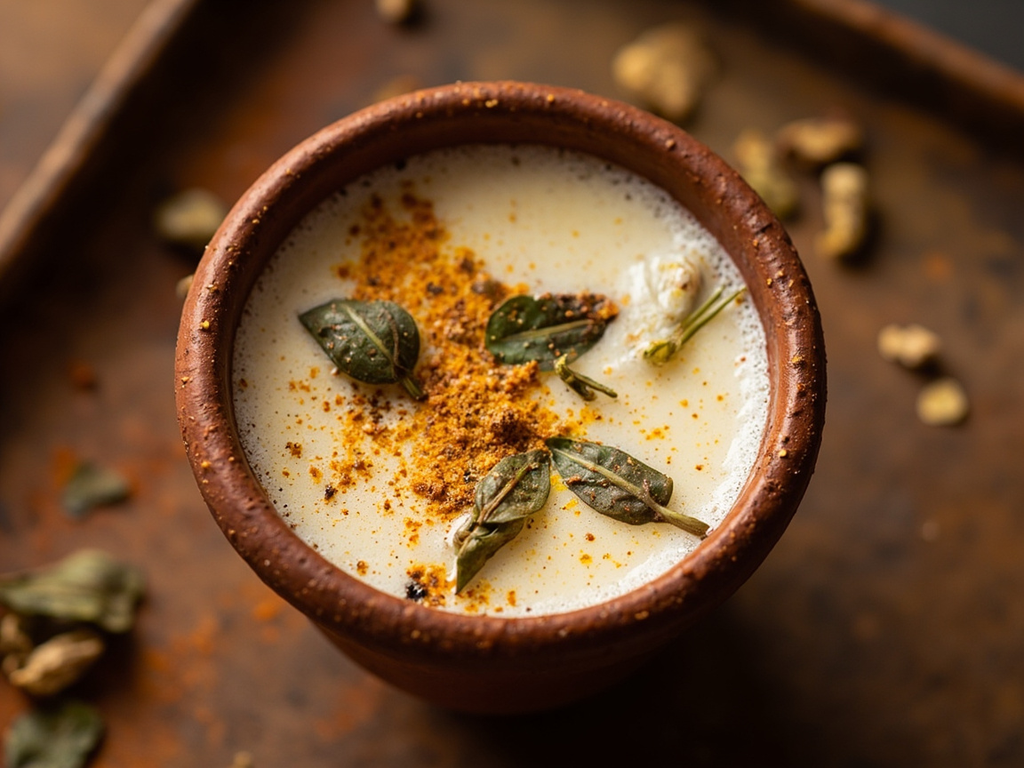 Drink
DrinkSpiced Buttermilk (takra)
Leaf beverage — the churned dairy that closes and refreshes the bhojana
🍋 🫙· 10 min
View the recipe