 flip
flipRice Payasam (kshira)
Rice Payasam (kshira)
Why this dish? At every birth, Devaki dreamed of offering the gods payasam, rice cooked long in milk sweetened with jaggery — the quintessential offering food, presented to deities before being shared. For a mother whose children are snatched away, this sweet milk is the heart's offering, and it foretells Krishna, the child god nurtured on sweets.
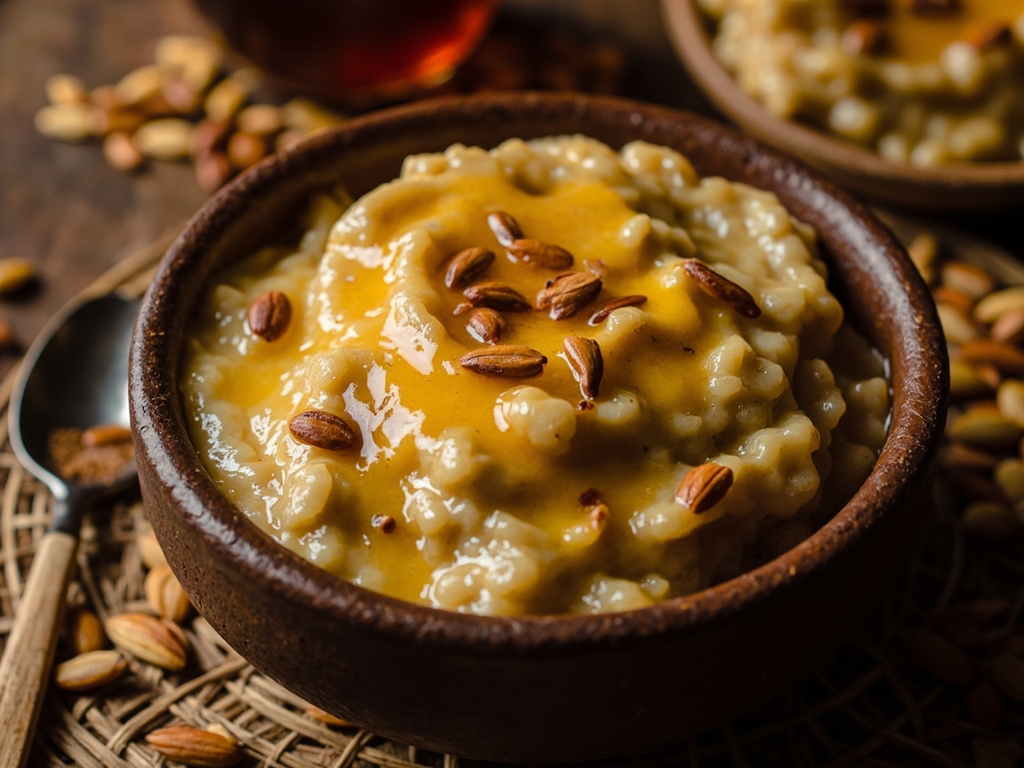
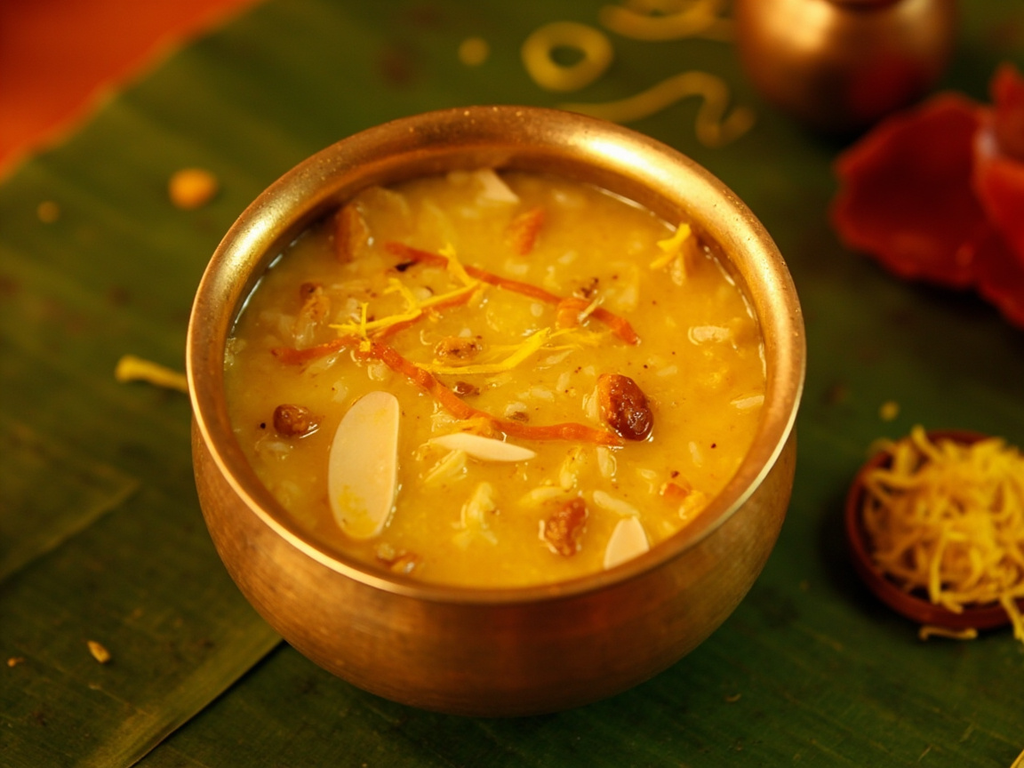
Rice melted into milk until creamy, sweetened with jaggery (brown cane sugar), perfumed with cardamom and saffron, studded with almonds and raisins.
Listen well, for this dish is not for the belly but for the sky. It is first presented to the gods, on a copper cup, before any mouth touches it. I would reduce the milk for hours, over a low fire, until the rice dissolved into it like prayer into silence; then the cane sugar, the gold of saffron, the perfume of cardamom. For each child taken from me, I offered this sweet milk so that their little soul might find the sweetness that this world denied them.
- •Rice — a handful (base)
- •Milk — in abundance (nourishing liquid)
- •Jaggery (brown cane sugar) — as much as needed (sweetness)
- •Cardamom — a few pods (fragrance)
- •Saffron — a few threads (color and fragrance)
- •Almonds and raisins — a pinch (garnish)
- •Ghee — a little (fragrant binder)
Rice Payasam (kshira)
Rice melted into milk until creamy, sweetened with jaggery (brown cane sugar), perfumed with cardamom and saffron, studded with almonds and raisins.
Why this dish? At every birth, Devaki dreamed of offering the gods payasam, rice cooked long in milk sweetened with jaggery — the quintessential offering food, presented to deities before being shared. For a mother whose children are snatched away, this sweet milk is the heart's offering, and it foretells Krishna, the child god nurtured on sweets.
Listen well, for this dish is not for the belly but for the sky. It is first presented to the gods, on a copper cup, before any mouth touches it. I would reduce the milk for hours, over a low fire, until the rice dissolved into it like prayer into silence; then the cane sugar, the gold of saffron, the perfume of cardamom. For each child taken from me, I offered this sweet milk so that their little soul might find the sweetness that this world denied them.
Ingredients (period version)
- Rice — a handful (base)
- Milk — in abundance (nourishing liquid)
- Jaggery (brown cane sugar) — as much as needed (sweetness)
- Cardamom — a few pods (fragrance)
- Saffron — a few threads (color and fragrance)
- Almonds and raisins — a pinch (garnish)
- Ghee — a little (fragrant binder)
Ingredients
- Short-grain rice (or basmati) — 60 g (base)
- Whole milk — 1 liter (nourishing liquid)
- Jaggery (or whole cane sugar) — 80 to 100 g (sweetness)
- Ground green cardamom — 1/2 tsp (fragrance)
- Saffron — 1 pinch (color and fragrance)
- Slivered almonds — 2 tbsp (garnish)
- Raisins — 2 tbsp (garnish)
- Ghee — 1 tsp (binder)
Method
- Rinse the rice and sauté it in ghee for one minute.
- Pour in the milk, bring to a simmer, then cook over very low heat for 40 to 50 minutes, stirring often to prevent sticking.
- When the rice has melted and the milk has thickened, remove from heat and let cool slightly (jaggery should not be added to boiling milk as it may curdle).
- Stir in the grated jaggery, cardamom, and saffron infused in a spoonful of warm milk.
- Toast almonds and raisins in a little ghee, garnish the payasam. Serve warm or chilled.
How it was made : Payasam (kshira in Sanskrit) has been attested since antiquity as a temple offering (prasada). It was thickened by long reduction of milk, without any New World ingredients. Cane sugar (jaggery) and honey were the only sweeteners; saffron and cardamom, precious spices, marked it as a festive or devotional dish.
The contemporary twist : Serve warm in small glasses, topped with a sheet of edible gold leaf — a 'temple chic' version for a festive dessert.
Devaki · Charactorium