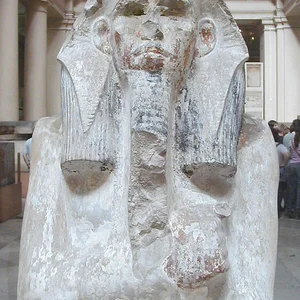

Pharaoh of the Third Egyptian Dynasty (c. 2650 BCE), Djoser is famous for commissioning the Step Pyramid of Saqqara, the first great funerary monument built in stone in history.
Frequently asked questions
Key Facts
- Reigned c. 2650 BCE, considered by some sources to be the founder of the Third Dynasty
- Commissioned the Step Pyramid of Saqqara, the world's first large cut-stone structure
- His architect Imhotep was later deified for his remarkable achievements
- The funerary complex at Saqqara covers more than 15 hectares
Works & Achievements
The first large-scale cut-stone monument in history, standing 62 meters tall and composed of six stacked mastabas. It revolutionized funerary architecture and served as a model for the great pyramids of Giza.
A 15-hectare architectural ensemble surrounding the pyramid, featuring temples, ceremonial courtyards, dummy chapels, and the earliest fluted columns ever erected in a stone monument.
A labyrinth of 5.7 km of tunnels adorned with blue faience tiles, housing burial chambers and thousands of alabaster vessels — a testament to the artistic refinement of the Old Kingdom.
Djoser consolidated royal authority across the entire territory, strengthened the nome system, and organized expeditions into the Sinai Peninsula to extract turquoise and copper.
Anecdotes
Djoser was the first pharaoh to have a monument built entirely from cut stone. Before him, royal tombs were constructed from dried mud bricks. His architect Imhotep had the revolutionary idea of stacking six mastabas of decreasing size to create the first step pyramid, standing 62 meters tall and visible for miles around.
Imhotep, the brilliant architect who designed Djoser's pyramid, was so admired by the Egyptians that he was deified after his death, centuries later. He was credited with healing powers, and the Greeks identified him with Asclepius, their god of medicine. Building such a monument was apparently worth immortality.
Beneath the Saqqara pyramid, archaeologists discovered a labyrinth of underground galleries totaling more than 5.7 kilometers of corridors. These tunnels were decorated with blue faience tiles imitating reed mats — a decoration that reproduced in stone the apartments of the royal palace, allowing Djoser to live in a familiar environment for eternity.
The Famine Stele, carved on the island of Sehel near Aswan, recounts that Egypt suffered seven years of famine during Djoser's reign — a story that bears a striking resemblance to the Bible. Djoser reportedly consulted the oracle of the god Khnum and received a promise of an abundant Nile flood. However, this stele dates from the Ptolemaic period and was written long after the events it describes.
Inside the Saqqara pyramid lies a small sealed chamber called the serdab, in which a statue of Djoser gazes toward the sky through two small openings. This sculpture, the oldest life-size statue of a pharaoh ever found, allowed the king's soul to emerge and contemplate the stars for eternity. A replica is visible on-site today; the original is kept in the Cairo Museum.
Primary Sources
Fragment of a basalt stele recording the annals of Egypt's earliest pharaohs, with references to royal gifts to temples and Nile flood levels during the first dynasties.
"I was in mourning on my great throne... The Nile had not flooded for seven years. Grain was scarce, seeds were lacking, and the bodies of children were wasted..."
Cartouches and hieroglyphic inscriptions identifying Netjerikhet (Djoser) as the patron of the complex, associating his name with that of Imhotep as chief architect and high priest.
A narrative text describing wonders performed by magicians at the courts of Old Kingdom pharaohs, offering a glimpse into courtly life and religious beliefs of the era.
Key Places
Site of the Step Pyramid, the world's first large-scale stone monument. The complex covers 15 hectares and includes the pyramid, temples, ceremonial courtyards, and a network of decorated underground galleries.
Capital of ancient Egypt during the Old Kingdom, the pharaoh's primary residence and the country's political, religious, and economic center. Djoser governed his kingdom from the royal palace here.
Sacred city dedicated to the god Osiris and burial site of the earliest pharaohs. Djoser had a symbolic cenotaph built here to complement his main tomb at Saqqara.
Island in the Nile near Aswan where the Famine Stele was carved, crediting Djoser with ending a devastating famine through the intervention of Khnum, god of the Nile's floods.
Major religious center dedicated to the sun god Ra, where high priests and scribes received their training. Imhotep, Djoser's architect, had deep ties to this great seat of Egyptian learning.
Typical Objects

A staff of power shaped like a shepherd's crook, symbolizing the pharaoh's role as guide of the people. Djoser was depicted holding this scepter during state ceremonies.

A headdress combining the white crown of Upper Egypt and the red crown of Lower Egypt, symbolizing the unification of the country. It signified that Djoser ruled over the entire Nile territory.

A painted limestone sculpture depicting Djoser seated, wearing the Sed festival mantle, sealed inside a chamber beneath the pyramid. It is the oldest surviving life-size statue of an Egyptian ruler.

Vessels designed to preserve the embalmed organs of the pharaoh after death. Discovered in the galleries of Saqqara, they bear witness to the elaborate funerary practices already in place during the Old Kingdom.

Glazed ceramic panels in turquoise and cobalt blue adorning the underground galleries. They imitated reed matting and recreated in stone the luxurious décor of the royal palace, preserving it for eternity.

A wooden instrument with black and red ink wells, used by court scribes to record administrative decisions, royal annals, and architectural plans for major construction projects.
School Curriculum
Vocabulary & Tags
Key Vocabulary
Daily Life
Morning
Djoser rose at sunrise to perform purification rites: ritual baths, anointings with scented oils, and ceremonial dressing assisted by priests. He then proceeded to the temple for the morning offerings to the gods — a daily act essential for maintaining cosmic order (Ma'at) and ensuring divine protection over Egypt.
Afternoon
Afternoons were devoted to royal audiences and administration: receiving nomarchs (provincial governors), approving decisions made by viziers, and overseeing major construction projects through reports from architects and scribes. Djoser could also personally inspect the Saqqara building site, visible from Memphis on the opposite bank of the Nile.
Evening
Evenings featured banquets with the royal family and high dignitaries, accompanied by harp and flute music, dancing, and recitations of sacred texts. Priests read from the annals and prophecies. Further religious rites were performed before bedtime to secure divine protection through the hours of the night.
Food
The royal table included finely milled white bread, meats (beef, duck, goose), fish from the Nile, vegetables (onions, leeks, lentils), fruits (figs, dates, grapes), and emmer wheat beer — the everyday drink of Egypt. Wine imported from the Mediterranean coast was reserved for special occasions and offerings to the gods.
Clothing
Djoser wore a white fine linen kilt (shendyt) adorned with a gilded belt. For ceremonies, he donned the Sed festival cloak and the double crown (pschent). His body was decorated with gold and faience pectorals, bracelets, and gilded leather sandals. Black kohl lined his eyes to shield them from the intense sun and ward off evil spirits.
Housing
Djoser resided in the royal palace of Memphis, a vast complex of mud-brick buildings coated in white stucco, surrounded by irrigated gardens and ornamental pools. The royal apartments featured painted columns, polished calcite floors, and walls decorated with colorful frescoes. The palace also housed the royal workshops, state granaries, and barracks for the pharaoh's personal guard.
Historical Timeline
Period Vocabulary
Visual Style
Esthétique de l'Ancien Empire égyptien : frontalité hiératique, teintes sable et ocre, faïences turquoise, reliefs calcaires gravés et pigmentés sous un ciel de lapis-lazuli.
Sound Ambience
Ambiance du chantier de Saqqarah et de la cour royale : taille de la pierre, vents du désert, litanies des prêtres et rumeur paisible du Nil à l'horizon.
Liens externes & ressources
Références
Œuvres
Pyramide à degrés de Saqqarah
v. 2650 av. J.-C.
Complexe funéraire de Saqqarah
v. 2650 av. J.-C.
Réseau de galeries souterraines de Saqqarah
v. 2650 av. J.-C.
Réformes administratives et expéditions minières
v. 2686-2648 av. J.-C.