 Flip the card
Durga at the table
On the menu
Bhog and Naivedya (the sacred offering, then shared prasad)
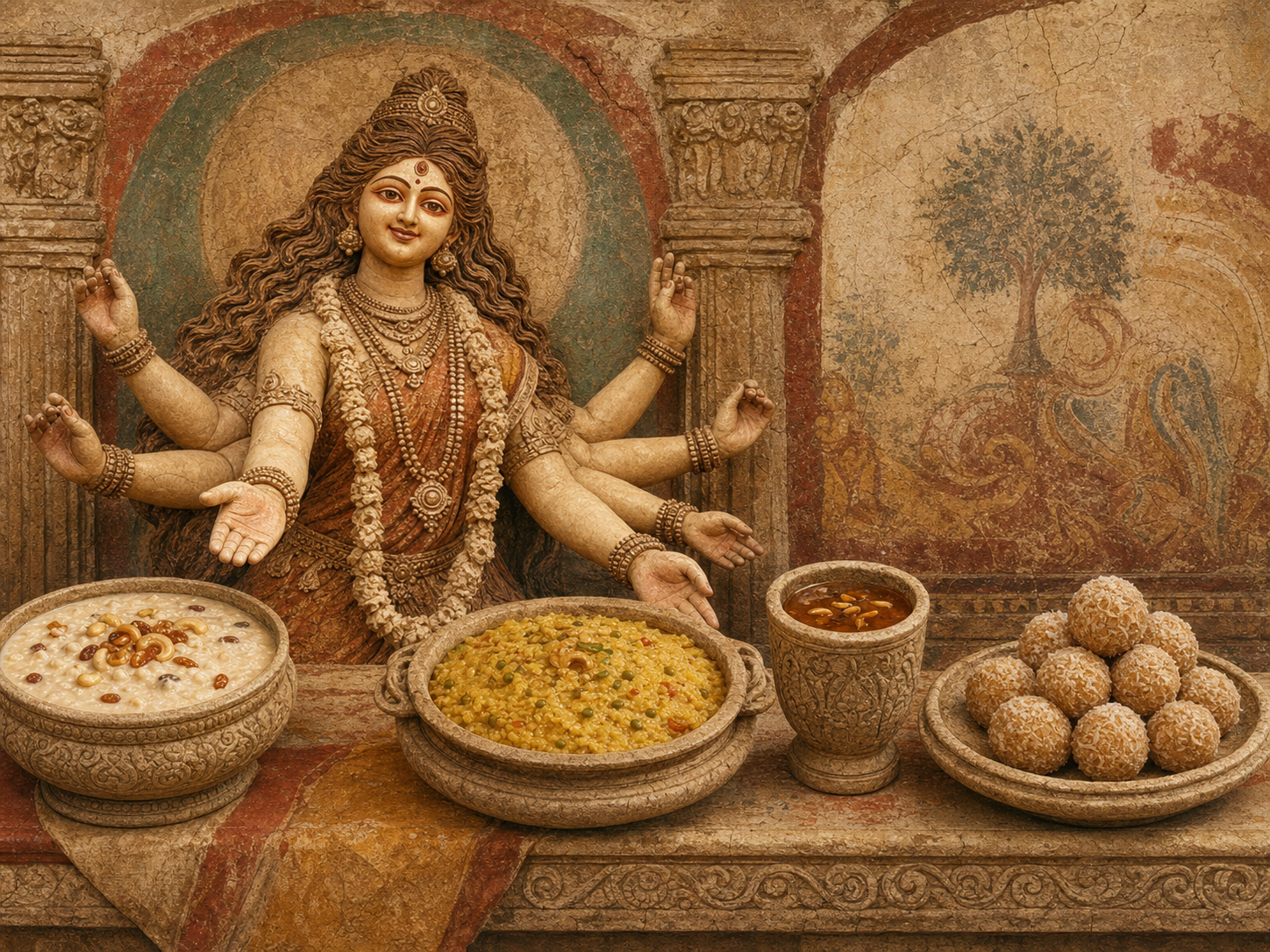
In Hindu devotion, one does not serve a meal to Durga as to an ordinary guest: first, the bhog (नैवेद्य, naivedya) is presented — an assortment of pure foods set before her image. The goddess "tastes" them with her gaze, transforming them into prasad — sanctified food that the faithful then consume together. The order is not starter-main-dessert but a logic of purity: sweet and milky (auspicious) items sit alongside savory khichuri, fruits, drinks, and preserved sweets. During Bengali Durga Puja, this bhog becomes a community banquet where each person receives their portion seated on the ground, on a banana leaf.
Signature : Ghee and Gur (palm sugar), bound by cardamom
Ghee (clarified butter) is the quintessential offering food: it feeds the sacred fire as well as the palate, and makes any dish "worthy of the gods." Gur — unrefined cane or palm sugar, the Indian ancestor of sugar — sweetens the offerings without later refinement, and green cardamom perfumes nearly every ritual preparation. No chili or tomato here: these New World products arrived in India long after the age of the Puranas.
click to flip back
Durga at the table
5 period recipes
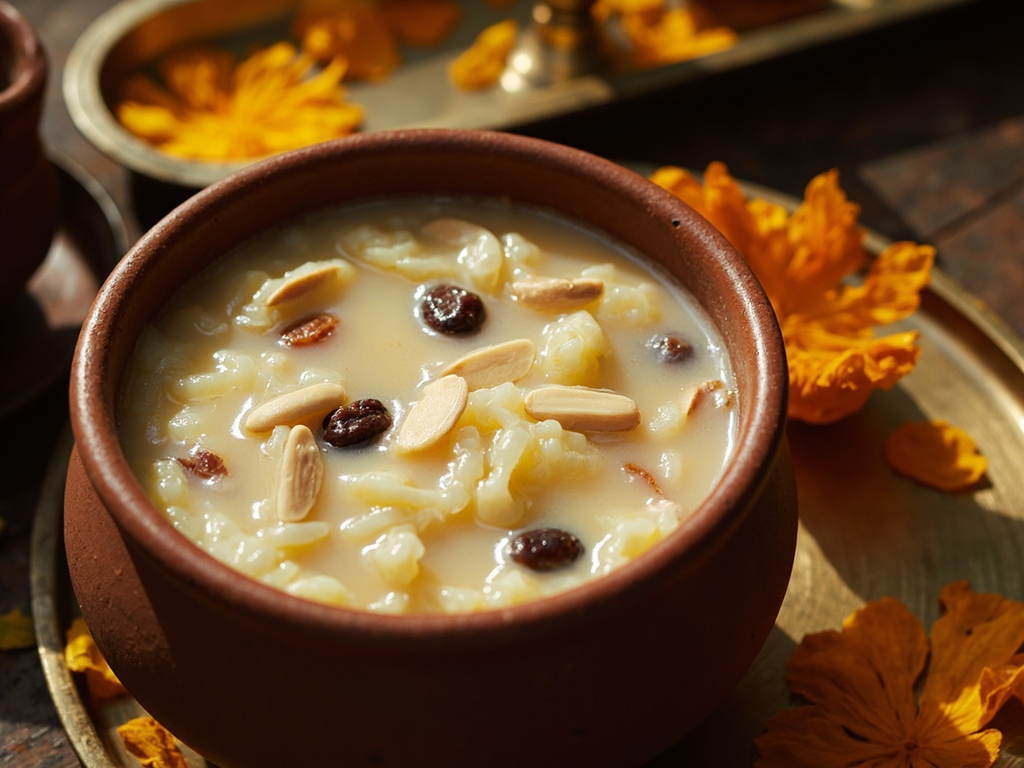 Offering
Payesh — rice pudding of the offerings
Sweet Naivedya (auspicious milky offering, mishti bhog)
🍯· 1 h
View the recipe
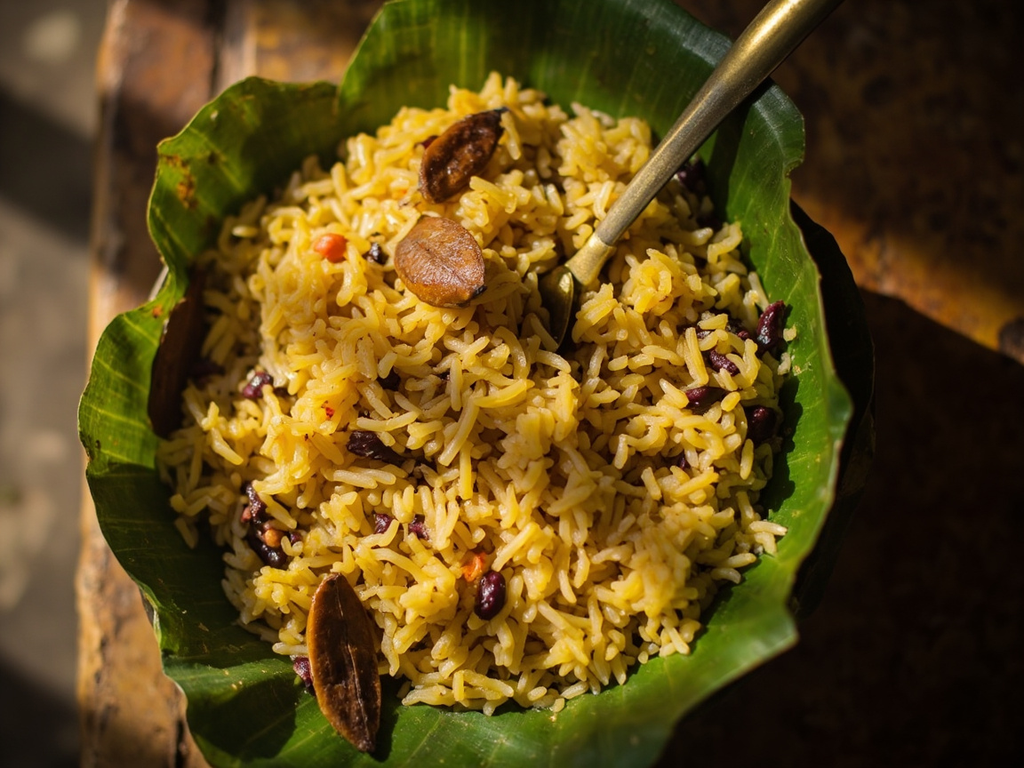 Festive
Bhoger khichuri — festive khichuri
Savory Bhog of the community banquet (Durga Puja anna-bhog)
🧂 🍄 🌶️· 50 min
View the recipe
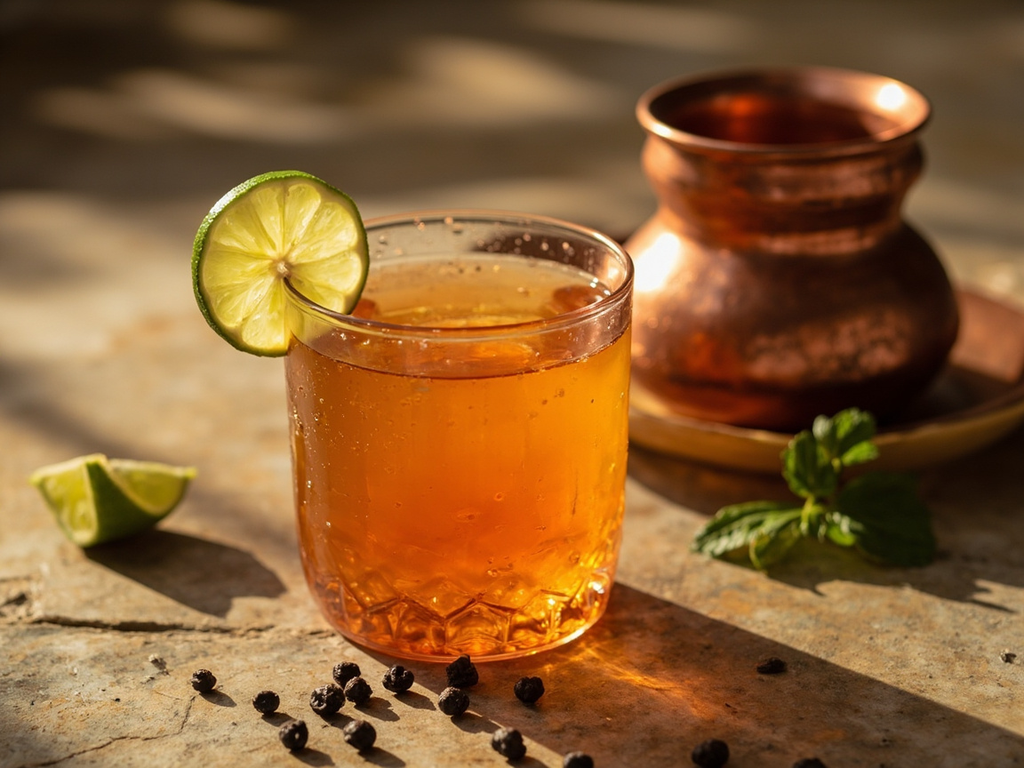 Drink
DrinkPanakam — gur drink with ginger and pepper
Pana (thirst-quenching offering drink, liquid naivedya)
🍯 🍋 🌶️· 10 min
View the recipe
 Preserving
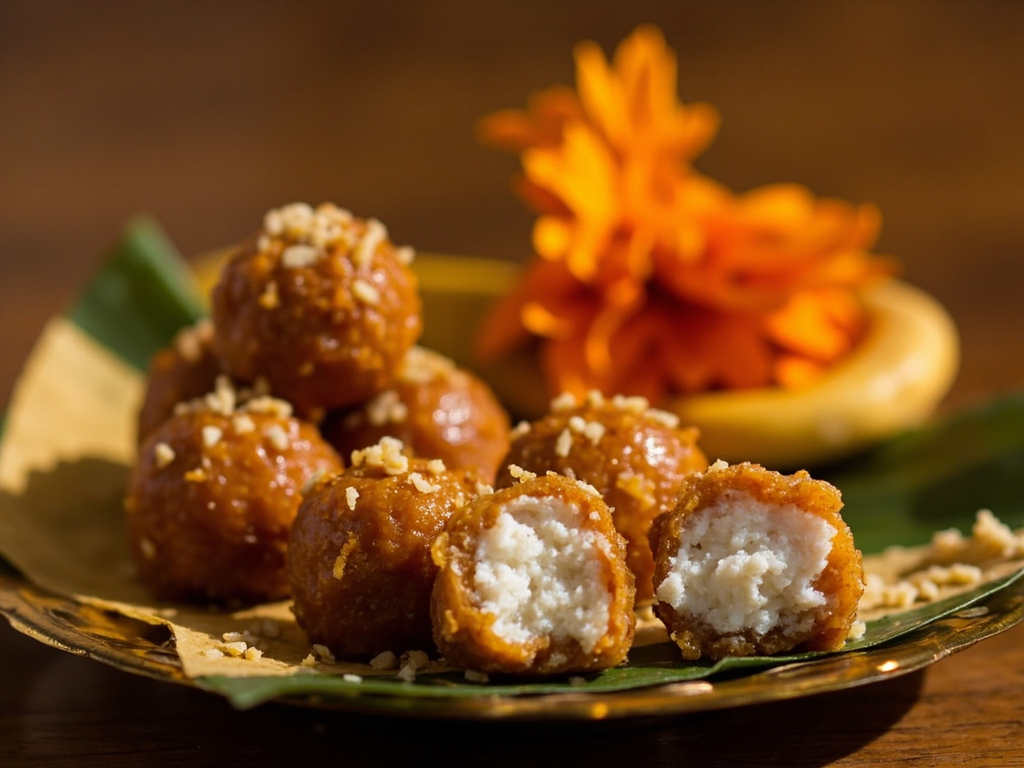
Narkel naru — coconut balls with gur
Keepable sweet (festive confectionery to store, sweet bhog)
🍯· 35 min
View the recipe
 Remedy
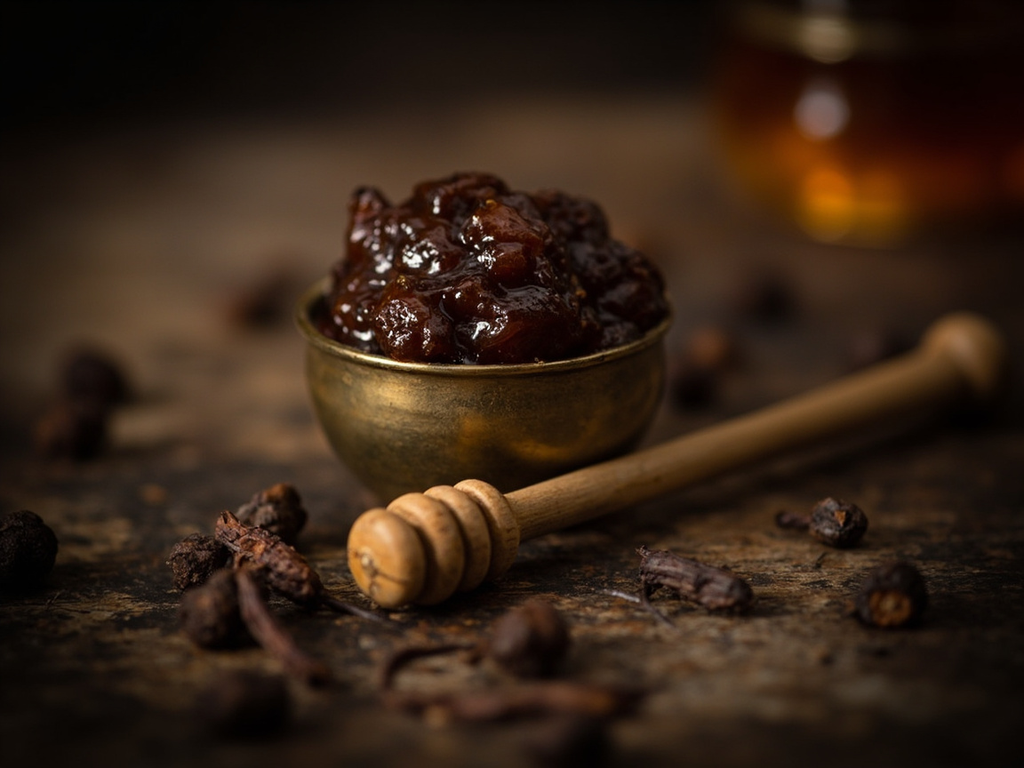
Pippali-madhu — long pepper honey for convalescents
Aushadha-ahara (Ayurvedic food-medicine, electuary to lick)
☕ 🌶️ 🍯· 10 min
View the recipe