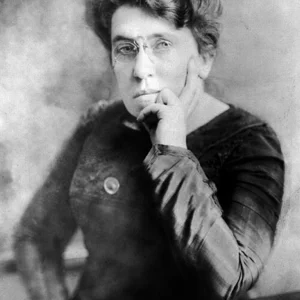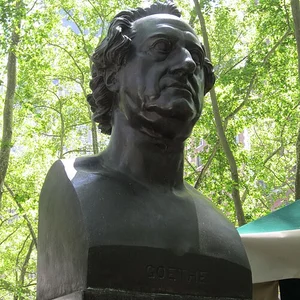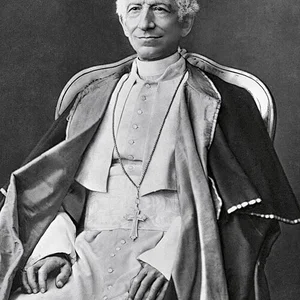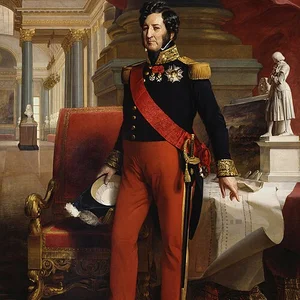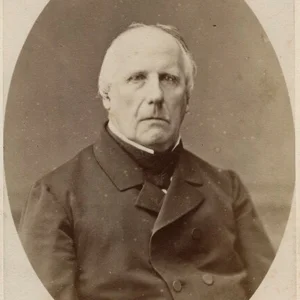

French historian, philosopher, and politician (1803-1875), a leading figure of anticlerical republicanism. A professor at the Collège de France, he was exiled during the Second Empire for his opposition to Napoléon III.
Edgar Quinet(1803 — 1875)
Edgar Quinet
France
8 min read
Frequently asked questions
Famous Quotes
« The French Revolution is a religion, and Robespierre is its Saint Paul.»
« Without the freedom to criticize, there can be no genuine praise.»
Key Facts
- 1803: Born in Bourg-en-Bresse
- 1842: Appointed professor at the Collège de France; his lectures drew large crowds
- 1845: Suspended alongside Michelet for his criticism of the clergy
- 1852: Exiled following Napoléon III's coup d'état, remaining in exile until 1870
- 1875: Died in Versailles, shortly after his return to France
Works & Achievements
An annotated translation of the major work by German philosopher Herder, which introduced German philosophy to the French public. This foundational undertaking launched Quinet's intellectual career and deeply influenced the Romantic historical movement.
A vast epic and philosophical poem featuring the Wandering Jew as a symbol of humanity marching toward freedom. An emblematic work of French republican Romanticism.
A scathing pamphlet co-authored with Michelet denouncing the influence of the Jesuits in French education and politics. The book caused a national scandal and reignited the debate over secularism.
A collection of his lecture courses at the Collège de France, examining the links between the Christian heritage and the ideals of the Revolution. The work led directly to the government suspending his professorship.
An essay arguing for secular, republican public education as the only means, in Quinet's view, of producing truly free citizens. A founding text of French secular thought.
A major historical synthesis on the French Revolution, written from Swiss exile. Quinet analyzes the causes of the republican failure and the conditions required for a lasting Republic — a work that influenced Clemenceau and the republicans of the Third Republic.
Quinet's final major text, published the year of his death, calling for a moral and secular renewal of France in the aftermath of the 1870 defeat. The intellectual testament of nineteenth-century anticlerical republicanism.
Anecdotes
In 1843, Edgar Quinet and his friend Jules Michelet taught their anti-clerical courses simultaneously at the Collège de France. The lecture halls were so packed that students climbed to the windows to listen. Their two chairs side by side became a symbol of intellectual resistance against the growing influence of the Jesuits in French education.
In 1846, the government of Louis-Philippe suspended Quinet's courses, deemed too dangerous for public order. Students took to the streets of Paris in protest, chanting his name outside the Collège de France. It was one of the first major academic demonstrations in French history in defense of freedom of teaching.
After the coup d'état of December 2, 1851, Quinet categorically refused to swear allegiance to Louis-Napoléon Bonaparte. He went into voluntary exile rather than betray his republican convictions, giving up his chair, his income, and his friends. For nineteen years, he would write from his Swiss refuge in Veytaux, his eyes always turned toward France.
In 1838, Quinet had married Minna Moré, a cultured German woman he had met during his stays in Germany. She served as his privileged intellectual partner in deepening his knowledge of German philosophy — Herder, Hegel, Schelling — and was his steadfast companion throughout his exile. Their correspondence bears witness to a relationship that was as intellectual as it was romantic.
When Quinet returned to Paris in September 1870 after the fall of the Second Empire, an enthusiastic crowd welcomed him at the station. He was 67 years old and had spent nearly twenty years outside France. Elected as a deputy the following year, he served until his death in 1875, defending secularism and the Republic to the very end.
Primary Sources
The French Revolution is a consequence of Christianity. It is its final expression, its most extreme development, its necessary conclusion.
What the French Revolution lacked was a new religion — or at least a religious feeling deep enough to establish a civic morality capable of replacing the old one.
There can be no Republic without republican education. To shape free citizens is first and foremost to free them from the grip of prejudice and ignorance.
I live here as an exile, but I have never ceased to be French. France is within me like a wound I carry, reminding me every day of what we have yet to win.
Democracy will only be stable once it has founded its own system of education and its own morality — entirely separate from the Church and its dogmas.
Key Places
Birthplace of Edgar Quinet, born on February 17, 1803. His childhood in this provincial Burgundian town shaped his deep attachment to rural France and its popular roots.
Quinet held the chair of languages and literatures of Southern Europe here from 1841 onward. It was here that his anticlerical lectures drew enormous crowds before being suspended in 1846.
The first stop of Quinet's exile after the coup d'état of 1851. There he mingled with other proscribed republicans, including Victor Hugo, who was living nearby.
Quinet's main place of exile from 1858 to 1870, on the shores of Lake Geneva near Montreux. It was here that he wrote *La Révolution* (1865), his major historical work.
After returning from exile in 1870, Quinet was elected as a representative to the National Assembly. There he defended secularism, the separation of Church and State, and republican legislation until his death.
Typical Objects

Quinet was a tireless writer: in exile, he spent several hours a day writing. His quill was the instrument of his resistance, producing essays, epic poems, and historical analyses from Veytaux.

It was his translation of Herder's Ideas that launched Quinet's career. He kept his German editions with great care, testament to the decisive influence of Germanic philosophy on his thinking.

Quinet delivered his lectures there to hundreds of enthusiastic listeners. This chair symbolized for him freedom of thought and teaching freed from religious oversight.

Quinet read and contributed to the major republican newspapers of his day. The press was for him an essential tool for spreading democratic and anticlerical ideas.

During his nineteen years of exile in Switzerland, Quinet kept a map of France in his study. It symbolized his unwavering attachment to a homeland he could not return to.

From exile, Quinet maintained a rich correspondence with the leading republican and Romantic figures of his time. These letters were for him a vital link to French intellectual life.
School Curriculum
Vocabulary & Tags
Key Vocabulary
Daily Life
Morning
Quinet rose early, at dawn, to make the most of the cool hours ideal for writing. Seated at his desk overlooking Lake Geneva during his exile, he would spend several hours composing his historical and philosophical analyses, surrounded by his German books and the handwritten notes he had been accumulating for years.
Afternoon
The afternoon was devoted to reading — German philosophy, French press smuggled in from Paris, correspondence with Michelet, Hugo, and George Sand. During his years of teaching, he prepared his courses meticulously, consulting primary sources and carefully building his arguments.
Evening
In the evenings, Quinet enjoyed conversing with his wife Minna, who served as his first reader and adviser on all matters related to the German-speaking world. He sometimes welcomed republican exiles passing through Switzerland, and these animated discussions by candlelight wove together politics, history, and philosophy well into the night.
Food
Quinet had simple, regular eating habits, typical of the intellectual bourgeoisie of the 19th century: bread, cheese, vegetables from the garden, and meat on Sundays. In Switzerland, he came to appreciate local cuisine — raclette, charcuterie from the Valais — which his German wife sometimes adapted with recipes from her home region.
Clothing
Quinet wore the dark, austere dress of the republican intellectual: a buttoned black frock coat, a black or grey cravat, and a top hat for formal occasions. In Veytaux, far from the obligations of Parisian life, he favored simpler attire — a wool jacket, dark trousers — in keeping with his rejection of ostentation.
Housing
In Paris, Quinet lived in a bourgeois apartment in the Latin Quarter, near the Collège de France, cluttered with books and manuscripts. In exile at Veytaux, he rented a modest but spacious house overlooking Lake Geneva, whose romantic setting and views of the Alps fed his reflections on nature, freedom, and the history of peoples.
Historical Timeline
Period Vocabulary
Liens externes & ressources
Références
Œuvres
Idées sur la philosophie de l'histoire de l'humanité (traduction de Herder)
1827-1831
Les Jésuites (avec Jules Michelet)
1843
Le Christianisme et la Révolution française
1845
L'Enseignement du peuple
1850
La Révolution
1865
L'Esprit nouveau
1875