 Flip the card
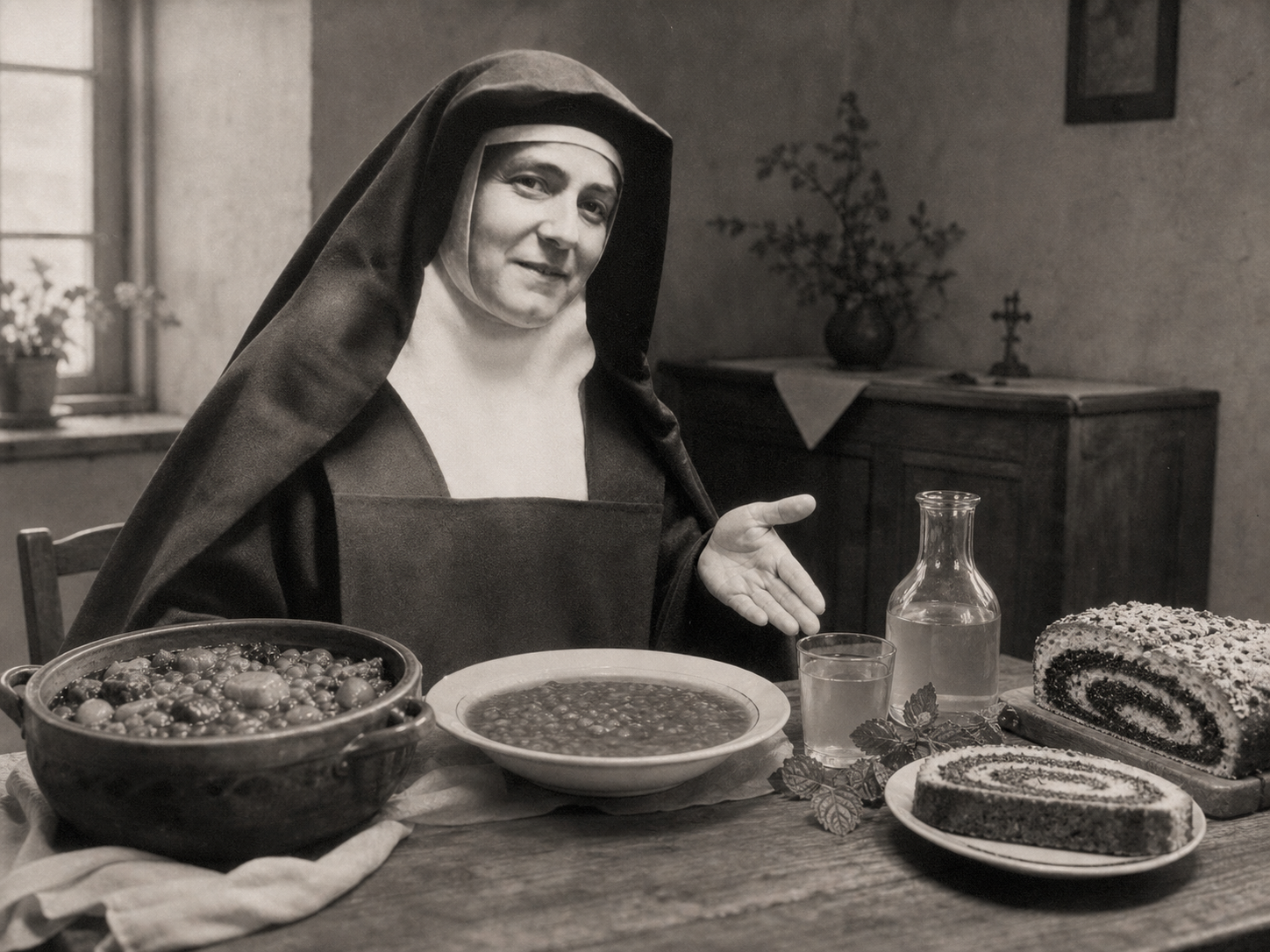
Edith Stein at the table
1891 — 1942
On the menu
From the Sabbath Table to the Carmelite Refectory
Edith Stein's life unfolds between two dietary rhythms. In Breslau, in an observant Jewish family, meals follow the Hebrew calendar: the ordinary week, sober, and especially the Sabbath, when everything is cooked the day before because no fire may be lit on the holy day — hence the dishes that simmer all night. Once she entered the Carmel, she adopted the monastic table: the silent refectory, the meatless meal taken in common, abstinence from meat several days a week, and the fasts of Advent and Lent. No starter/main/dessert: here we speak of Sabbath meals, refectory fare, cloister remedies, and Silesian holiday sweets.
Signature : Blue Poppy (Mohn)
An emblematic seed of her childhood Silesia, the blue poppy is ground into a dark, fragrant paste that flavors cakes and festive dishes. It is the madeleine-flavor of Breslau, where the Germanic, Jewish, and Slavic worlds meet in a single spoon.
click to flip back
Edith Stein at the table
1891 — 1942
4 period recipes
 Festive
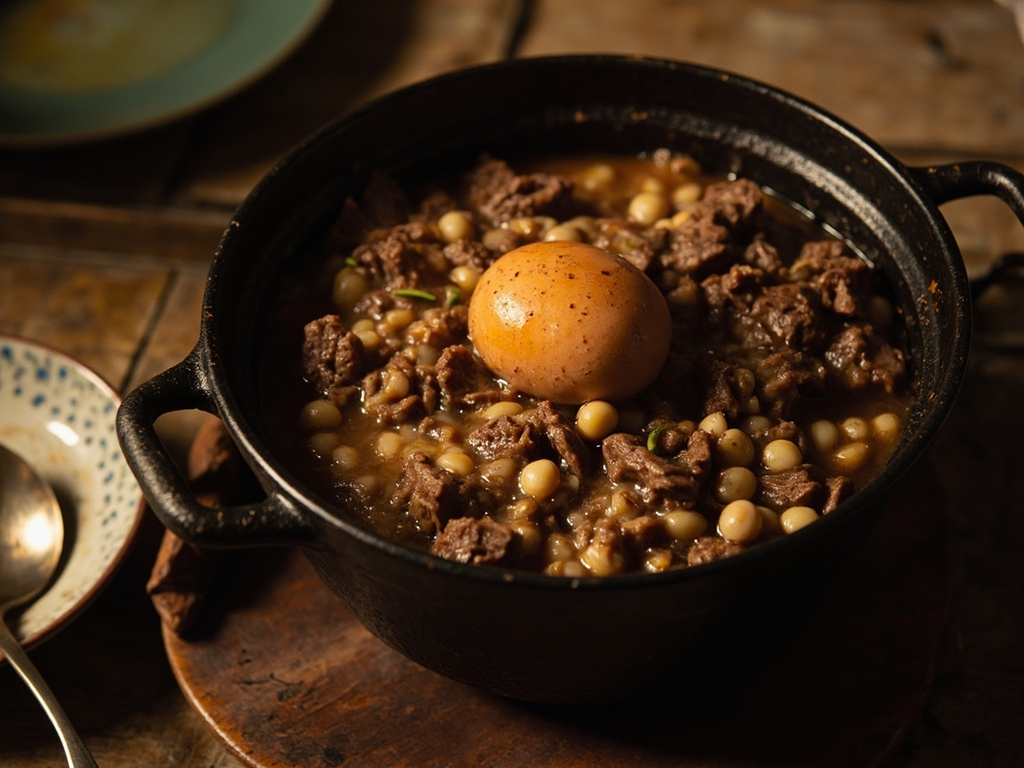
Silesian Schalet (Sabbath Cholent)
Sabbath main dish (Saturday midday meal, slow-cooked from the night before)
🧂 🍄· 30 min prep + 8 to 12 h slow cooking
View the recipe
 Everyday
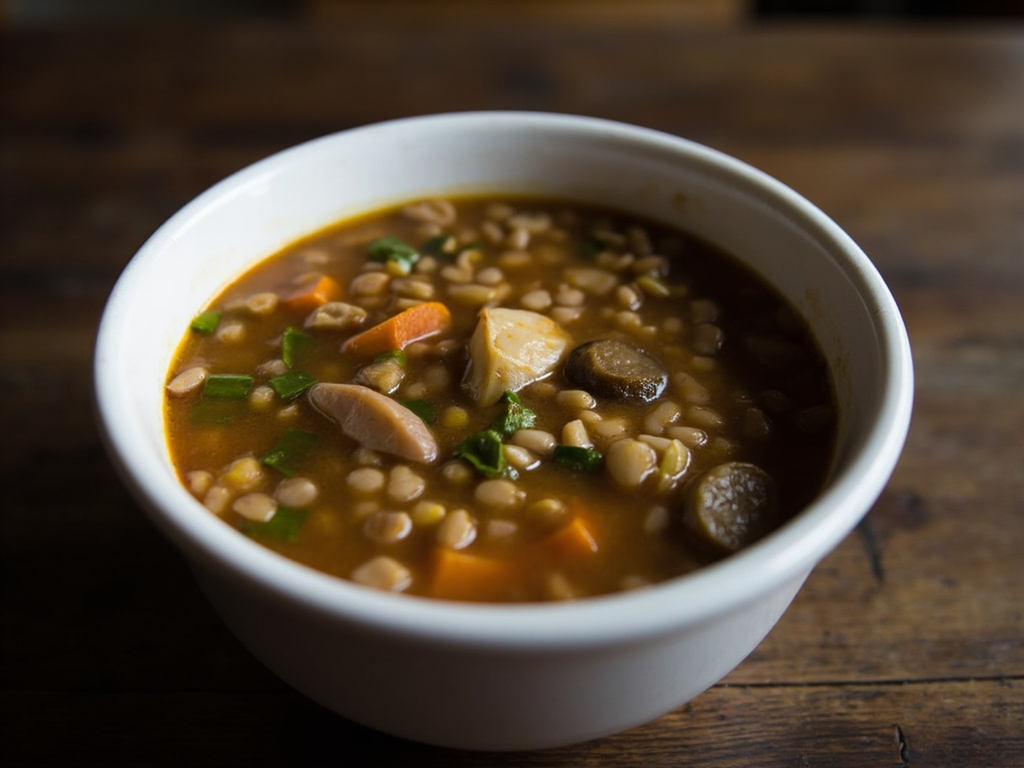
Barley and Lentil Soup of the Refectory
Ordinary refectory fare of the Carmelite nuns (everyday meatless meal)
🧂 🍄· 1 h
View the recipe
 Remedy
Carmelite Balm Water (Gentle Version)
Cloister remedy and comforting herbal tea (medicinal drink)
☕ 🌶️· 15 min
View the recipe
 Preserving
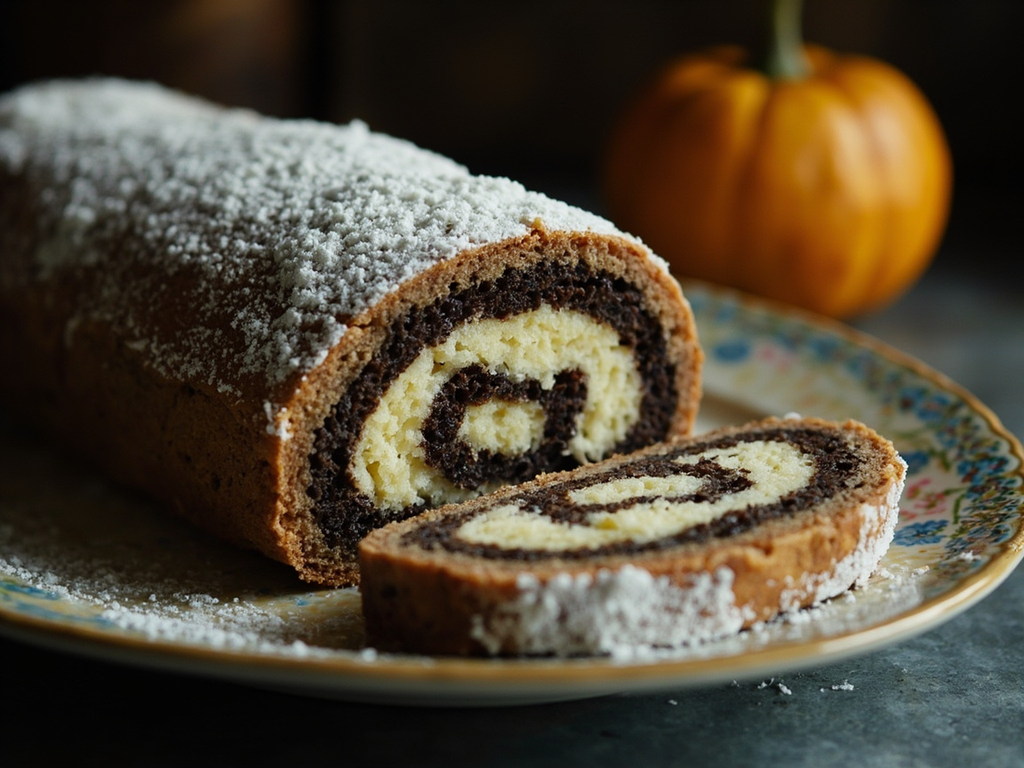
Mohnkuchen — Silesian Poppy Seed Cake
Holiday sweet in Silesia (cake prepared in advance, keeps well)
🍯· 1 h + 1 h 30 rising
View the recipe