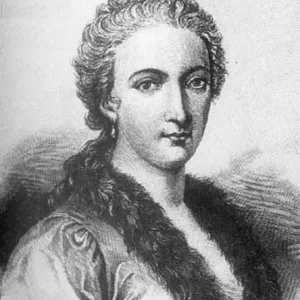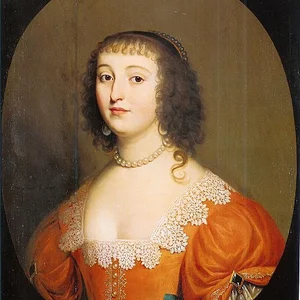

Princess Palatine (1618–1680), daughter of King Frederick V of Bohemia. A self-taught philosopher, she engaged in a celebrated correspondence with Descartes, challenging his mind-body dualism. She ended her life as abbess of the Lutheran convent of Herford.
Elisabeth of Bohemia(1618 — 1680)
Elisabeth of Bohemia
Palatinat du Rhin
6 min read
Frequently asked questions
Famous Quotes
« I ask you to tell me how the soul of a human being can determine the bodily spirits in producing voluntary actions. (Letter to Descartes, 1643)»
Key Facts
- Born on February 26, 1618, in Heidelberg, daughter of Frederick V of the Palatinate.
- From 1643 onward, she exchanged a landmark philosophical correspondence with René Descartes until his death in 1650.
- She raised a fundamental challenge to Cartesian dualism: how can an immaterial soul act upon a material body?
- In 1667, she became abbess of the Lutheran convent of Herford, in Westphalia.
- She died on February 8, 1680, in Herford, leaving behind a major body of philosophical correspondence.
Works & Achievements
A foundational exchange of letters in the history of philosophy, in which Elisabeth challenges the mind-body dualism and pushes Descartes to refine his thinking on the union of substances.
An exchange of letters on metaphysics and natural theology, bearing witness to Elisabeth's intellectual influence well into the final years of her life.
Elisabeth administered the convent, transforming it into a space of religious tolerance and intellectual activity, welcoming various persecuted spiritual communities.
Beyond Descartes and Leibniz, Elisabeth maintained exchanges with several scholars and theologians of her time, weaving a cross-confessional intellectual network that was remarkably rare for a woman in the 17th century.
Anecdotes
In May 1643, Elisabeth sent Descartes a letter that has become famous in the history of philosophy: she asked him to explain how an immaterial soul can act upon a material body, if the two are of entirely different natures. The question deeply embarrassed Descartes, who acknowledged that he had never clearly answered it in his previous writings.
So struck by Elisabeth's intellect, Descartes dedicated his 'Principles of Philosophy' to her in 1644, describing her as the only person capable not only of understanding all his principles, but of advancing beyond them to new knowledge. For a seventeenth-century philosopher, dedicating a major work to a woman was an exceptional and deliberate act.
After her father Frederick V's defeat at the Battle of White Mountain in 1620, the deposed royal family took refuge in The Hague in relative poverty. Despite exile and material hardship, Elisabeth educated herself in mathematics, philosophy, Latin, Greek, Hebrew, French, English, and German, becoming one of the most learned women of her century.
Having become abbess of the Lutheran convent of Herford in 1667, Elisabeth transformed her institution into a rare intellectual and religious haven in Europe. She sheltered persecuted spiritual communities, maintained a philosophical correspondence with Leibniz, and governed the convent with a degree of tolerance remarkable for the era — a striking contrast to the religious wars that had defined her youth.
Primary Sources
How can the soul of man determine the spirits of the body to perform voluntary actions, being only a thinking substance?
I have never met anyone who understood my writings so well, and who was at the same time so capable of bringing entirely new insights.
It is only by living and conversing in the ordinary way, and by refraining from meditating and studying things that exercise the imagination, that one learns to conceive the union of the soul and the body.
This treatise was born from the request of Her Highness Princess Elisabeth, who did me the honour of commanding me to explain to her the passions of the soul.
Key Places
Elisabeth's birthplace in 1618, capital of the Electorate Palatine governed by her father Frederick V. The city was occupied by imperial troops as early as 1622, forcing the family into exile.
The political capital of the Dutch Republic where the Palatine family lived in exile. It was here that Elisabeth pursued her education and began her correspondence with Descartes, who was himself residing in the Netherlands.
A Lutheran convent of which Elisabeth became abbess in 1667. She governed the community with tolerance, welcomed religious refugees, and maintained her philosophical correspondence until her death in 1680.
Elisabeth maintained close ties with the Brandenburg court, integrating herself into the Protestant intellectual and diplomatic networks of northern Europe that shaped her political and cultural world.
Typical Objects

Central tool of Elisabeth's intellectual life, through which she maintained a voluminous philosophical correspondence in several languages with the greatest thinkers of her era, most notably Descartes and Leibniz.
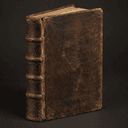
Descartes' Meditations on First Philosophy and Principles of Philosophy were the texts Elisabeth discussed in her letters, annotated and reread constantly.
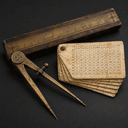
Compass, ruler, and arithmetic tables: Elisabeth had mastered mathematics, which allowed her to engage with Descartes as an equal in scientific and geometric discussions.
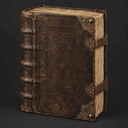
As abbess of a Lutheran convent, Elisabeth grounded her spiritual guidance in the direct reading of Scripture, in keeping with the Reformed tradition inherited from Luther.
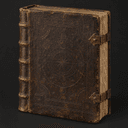
Elisabeth took a keen interest in anatomy, physics, and astronomy — sciences that fueled her questions about the nature of the human body and the mind-body union she debated with Descartes.
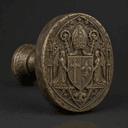
Official instruments of her role as abbess, used to authenticate the administrative and diplomatic acts of Herford Abbey, which she governed with authority.
School Curriculum
Vocabulary & Tags
Key Vocabulary
Tags
Daily Life
Morning
Elisabeth begins the day with Lutheran prayer and Scripture reading, a structuring ritual in the life of Herford Abbey. She then devotes the early hours to philosophical correspondence, composing her letters with precision in several languages.
Afternoon
The afternoon is divided between her abbatial duties — managing property, receiving visitors, mediating disputes within the community — and reading philosophical or scientific treatises recently received from across Europe.
Evening
The evening is reserved for reflection and writing. Elisabeth meditates on the metaphysical questions that fuel her scholarly exchanges. Vespers and communal prayer bring the day to a close in keeping with Lutheran practice.
Food
The abbey table follows Protestant simplicity: bread, vegetables, fish, and meat on ordinary days, with plain communal meals accompanied by spiritual readings aloud.
Clothing
Elisabeth wears austere clothing befitting her rank as a Lutheran abbess: a long black or dark-coloured gown, a fine white lace collar, and a simple coif. Her dress reflects both her Palatine heritage and her commitment to reformed religious life.
Housing
Elisabeth occupies the abbatial apartments of Herford Abbey, a medieval stone building with functional and simply furnished rooms. Her study, lined with books and manuscripts, is the centre of her intellectual life.
Historical Timeline
Period Vocabulary
Visual Style
Portrait aristocratique hollandais du XVIIe siècle, sobriété protestante et clair-obscur affirmé, mettant en valeur l'intensité intellectuelle d'une femme philosophe vivant entre exil et vocation abbatiale.
Sound Ambience
Ambiance studieuse d'un cabinet abbatial du XVIIe siècle, mêlant le silence propice à la correspondance philosophique aux sons discrets d'un couvent luthérien d'Europe du Nord.
Liens externes & ressources
Références
Œuvres
Correspondance philosophique avec René Descartes
1643–1649
Correspondance avec Gottfried Wilhelm Leibniz
1678–1680
Direction de l'Abbaye luthérienne de Herford
1667–1680
Correspondance avec d'autres philosophes et savants européens
1640–1680