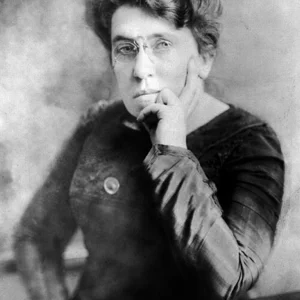

Emma Goldman (1869-1940) was a Lithuanian-born anarchist and feminist activist who emigrated to the United States. A leading figure in the American labor movement, she championed individual freedom, women's emancipation, and opposed war and capitalism.
Emma Goldman(1869 — 1940)
Emma Goldman
États-Unis, Lituanie, France, Royaume-Uni, Empire russe
7 min read
Frequently asked questions
Famous Quotes
« If I can't dance, I don't want to be part of your revolution.»
« True emancipation begins neither at the polls nor in courts. It begins in woman's soul.»
Key Facts
- 1869: born in Kaunas (Lithuania), then part of the Russian Empire
- 1886: emigrated to the United States, settling in New York
- 1892: involved in the assassination attempt against industrialist Henry Clay Frick alongside Alexander Berkman
- 1906: founded and edited the anarchist journal Mother Earth
- 1919: deported from the United States to Soviet Russia due to her activist activities
Works & Achievements
Monthly anarchist journal founded and edited by Goldman, the primary outlet for radical ideas in the United States. She used it to publish articles on feminism, individual freedom, and resistance to capitalism.
A collection of foundational essays laying out her vision of anarchism as a philosophy of total liberation. A landmark text in English-language anarchist thought.
An essay in which Goldman analyzes the theater of Ibsen, Strindberg, and Shaw as a vehicle for social critique and emancipation, reflecting her broad artistic and intellectual sensibility.
A critical account of her time in Soviet Russia, in which she condemns the Bolshevik betrayal of revolutionary ideals. A major document in the anarchist critique of Leninism.
A monumental two-volume autobiography tracing her journey from Jewish immigrant to a defining figure of international anarchism. An essential historical source on American radicalism in the early twentieth century.
A collection of her writings and correspondence on the Spanish Civil War, documenting her commitment to the CNT-FAI anarchists through the defeat of the Republic.
Anecdotes
In 1893, Emma Goldman delivered a fiery speech in New York before thousands of unemployed workers, urging them to demand bread — or take it. Arrested for inciting a riot, she was sentenced to one year in prison at Blackwell's Island, where she learned nursing and emerged more determined than ever.
In 1901, when anarchist Leon Czolgosz assassinated President McKinley, Goldman was immediately suspected of complicity. She had indeed met Czolgosz, but refused to publicly denounce him — earning her the reputation of being 'the most dangerous woman in America,' according to the press of the day.
In 1906, Goldman founded the magazine Mother Earth, which she partly funded by lecturing across the United States. Through it, she published articles on anarchism, feminism, and birth control, openly defying the Comstock Laws that banned the distribution of such information.
In 1917, Goldman was arrested alongside Alexander Berkman for organizing resistance to military conscription during World War I. Sentenced to two years in prison, she was then deported from the United States in 1919 aboard a ship nicknamed 'the Soviet Ark,' along with 248 other foreign activists.
During the Spanish Civil War (1936–1939), Goldman — then in her seventies — traveled to Republican Spain to support the anarchists of the CNT-FAI. She wrote dispatches and lectured across Europe to raise international awareness of the antifascist cause.
Primary Sources
Anarchism is the only philosophy which brings to man the consciousness of himself; which maintains that God, the State, and society are non-existent, that their promises are null and void, since they can be fulfilled only through man's subordination.
I want freedom, the right to self-expression, everybody's right to beautiful, radiant things. Anarchism meant that to me, and I would live it in spite of the whole world.
The most vital right is the right to love and be loved. Indeed, if partial emancipation is to become a complete and true emancipation of woman, it will have to do away with the ridiculous notion that to be loved, to be sweetheart and mother, is synonymous with being slave or subordinate.
No great idea in its beginning can ever be within the law. How can it be within the law? The law is stationary. The law is fixed. The law is a chariot wheel which binds us all regardless of conditions or place or time.
Key Places
The Jewish immigrant neighborhood where Goldman settled upon arriving in the United States. It was here that she witnessed workers' poverty firsthand and embraced anarchism.
The New York prison where Goldman was incarcerated in 1893. There she learned nursing and lived alongside the most marginalized women in American society.
The site of the Haymarket Martyrs' Monument, a pilgrimage destination for anarchists worldwide. Goldman was buried there in 1940, having asked to rest near these founding figures of the movement.
Goldman traveled to Russia in 1919, hoping to see anarchism flourish in the wake of the revolution. Bolshevik repression quickly disillusioned her.
The heart of Spanish anarchism, where Goldman stayed during the Civil War (1936–1938). She witnessed and supported the revolutionary experiment led by the CNT-FAI.
Typical Objects
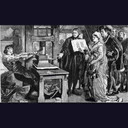
Goldman used a printing press to publish her journal Mother Earth. This tool symbolizes her belief that spreading ideas is as powerful a weapon of liberation as direct action.
📷 Domaine public · Wikimedia Commons ↗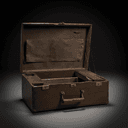
Goldman traveled across the United States giving public lectures. Her briefcase held her notes, brochures, and anarchist pamphlets, which she sold or handed out to audiences.
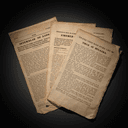
Distributing printed activist texts was central to her work. Goldman handed out thousands of pamphlets on anarchism, feminism, and birth control, at the risk of arrest.
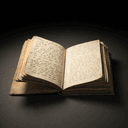
Goldman maintained an international correspondence with intellectuals, activists, and revolutionaries from around the world, weaving a transnational radical network.
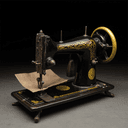
Like many immigrant women, Goldman worked in garment factories in her early years in the United States. The sewing machine represents the working-class conditions she fought against her whole life.
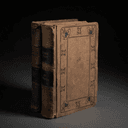
Goldman was deeply influenced by Kropotkin, Bakunin, and Proudhon. She read and promoted their works, adapting European anarchist thought to the American context.
School Curriculum
Vocabulary & Tags
Key Vocabulary
Tags
Daily Life
Morning
Goldman starts her days early, often after staying up late to write. She reads the newspapers carefully, annotating articles about strikes, labor trials, and international politics. When in New York, she manages the heavy correspondence for the Mother Earth journal.
Afternoon
Her afternoons are devoted to writing articles, preparing lectures, or organizing activist meetings. During her tours across the United States, she covers long distances by train to reach her audiences, often under surveillance by federal agents.
Evening
Goldman's evenings are frequently spent in packed meeting halls, where she delivers fiery speeches to workers, immigrants, and intellectuals. After lectures, she debates late into the night with comrades in cafés or activist apartments.
Food
Goldman eats simply, in keeping with the working-class and immigrant community she lives among. Rye bread, vegetable soups, pickled herring, and potatoes form the basis of a frugal diet. She often shares her meals with comrades and visiting activists.
Clothing
Goldman dresses plainly and functionally, as a working-class woman: dark high-necked dresses, an apron, sturdy shoes. She rejects corsets and ornamentation, which she sees as symbols of female submission — a political act in itself in the society of her time.
Housing
Goldman lives in modest apartments on the Lower East Side of New York, often shared with comrades and serving simultaneously as an office, meeting room, and workshop for the journal. Her living quarters are filled with books, newspapers, and activist pamphlets, always under the threat of a police raid.
Historical Timeline
Period Vocabulary
Visual Style
Un style documentaire en noir et blanc, contrasté et granuleux, évoquant la presse militante et la photographie sociale du début du XXe siècle, avec les affiches en rouge et noir de la presse anarchiste.
Sound Ambience
Une ambiance urbaine et ouvrière mêlant le bruit des presses militantes, les débats passionnés dans des salles enfumées et la rumeur des rues immigrantes de New York au tournant du XXe siècle.
Liens externes & ressources
Références
Œuvres
Mother Earth (revue)
1906-1917
Anarchism and Other Essays
1910
The Social Significance of the Modern Drama
1914
My Disillusionment in Russia
1923
Living My Life (autobiographie)
1931
Vision on Fire: Emma Goldman on the Spanish Revolution
1938