 Flip the card
Enheduanna at the table
2300 av. J.-C. — 2300 av. J.-C.
On the menu
Naptanu — the Mesopotamian meal
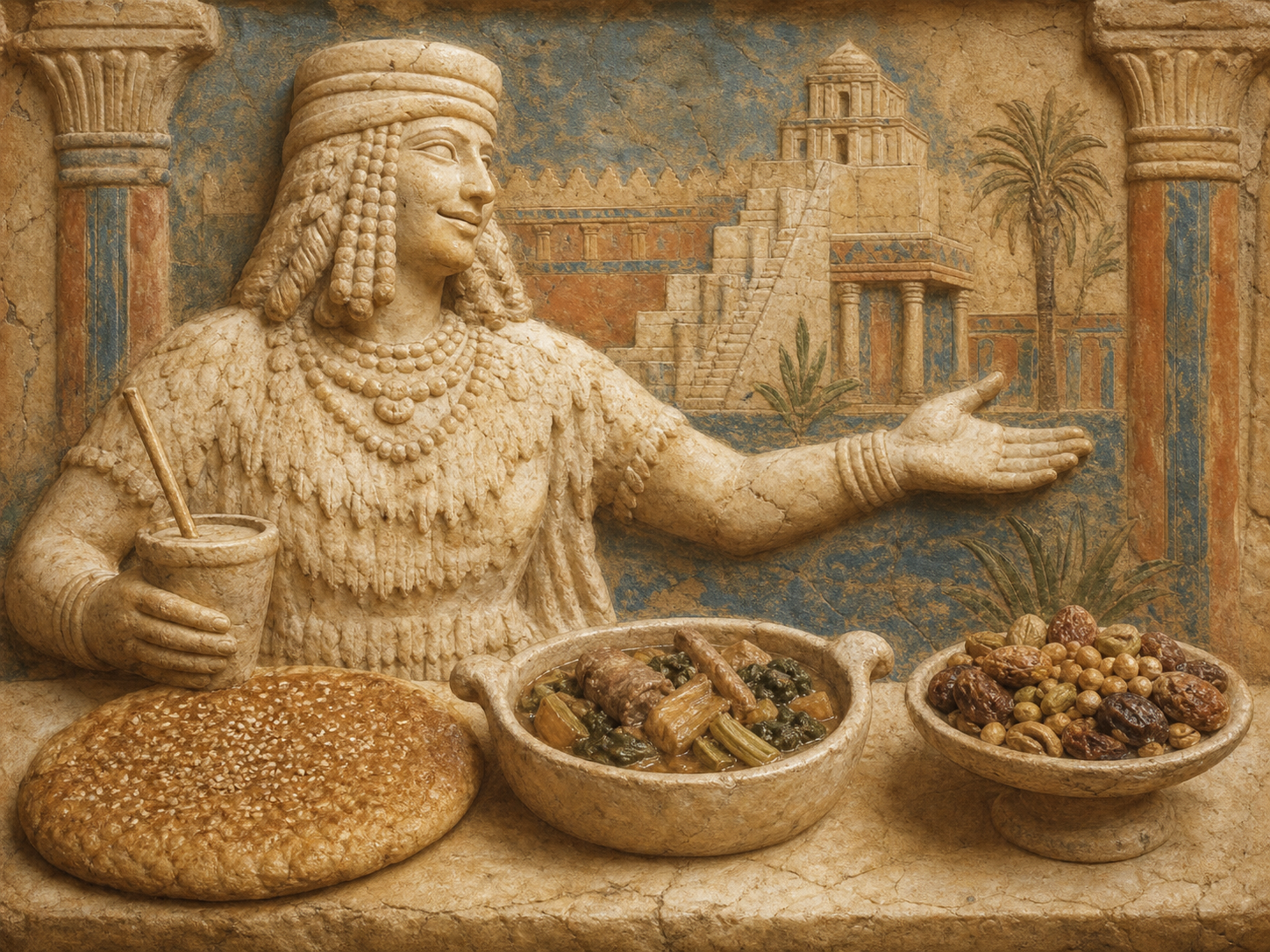
In Ur, the meal (naptanu in Akkadian) is built around two inseparable pillars: barley bread (akalu) and thick beer (šikaru), drunk through a straw. Around these come stews of meat or fish simmered in broth, aromatic vegetables (leek, garlic, onion), dates and figs, and confections sweetened with honey and date syrup. At the table of the high priestess, this same meal has a double: the offering placed before the gods (nindabû), for the divine statue is fed as one would feed a great king — the banquet of men mirrors the banquet of the gods.
Signature : Date syrup (dišpu)
Before sugar and before the word "honey" meant anything other than fruit syrup, Mesopotamia sweetened everything with dišpu, a thick syrup made from pressed and reduced dates. It binds sauces, glazes festival breads, and flavors beer. It is the signature sweetness of the land of Ur, present on the table as on the altar.
click to flip back
Enheduanna at the table
2300 av. J.-C. — 2300 av. J.-C.
5 period recipes
 Everyday
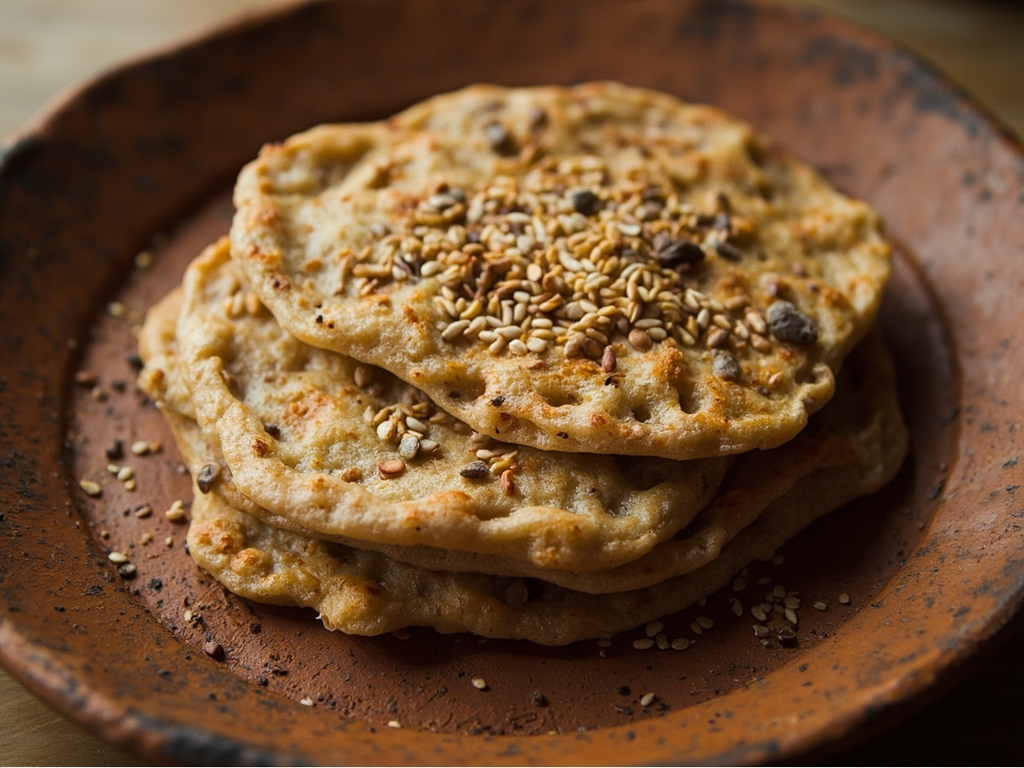
Akalu — barley flatbread with sesame
The foundation of naptanu (daily bread)
🧂· 50 min
View the recipe
 Festive
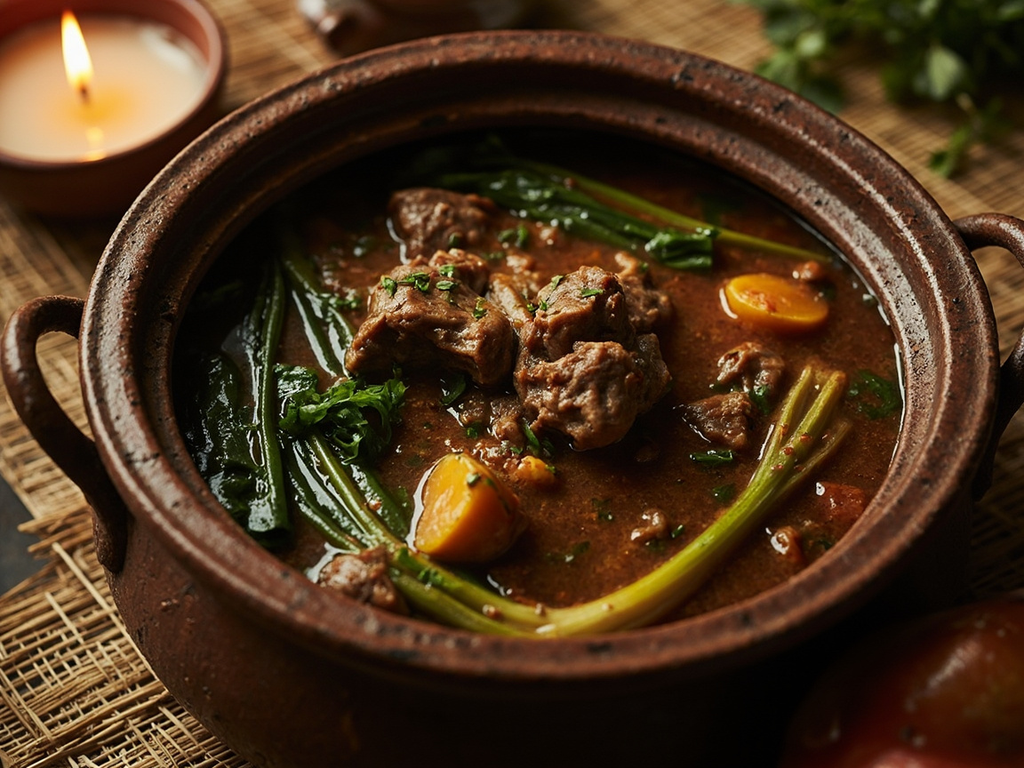
Tuh'u — lamb stew with chard and leek
The meat dish of the banquet (me-e puhadi)
🧂 🍄· 2 h
View the recipe
 Drink
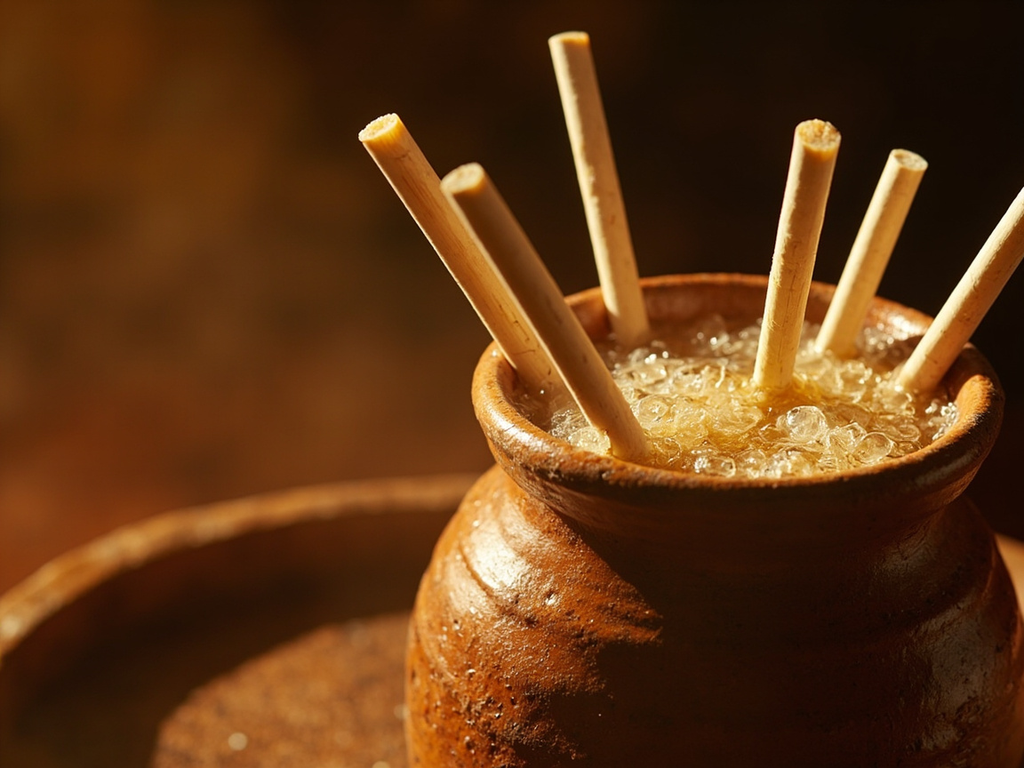
DrinkŠikaru — thick barley beer with straw
The drink of naptanu (kaš)
🫙 🍋· 1 h + 3 to 5 days fermentation
View the recipe
 Offering
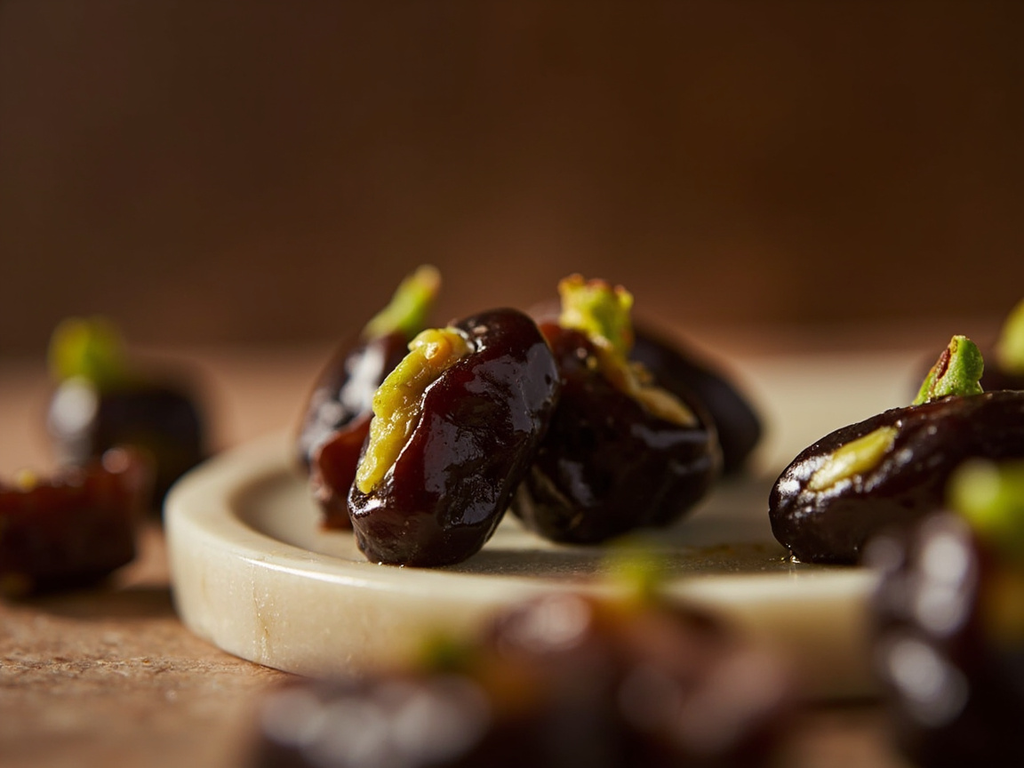
Mersu — date, fig, and pistachio confit
The sweet offering placed before the goddess (nindabû)
🍯· 30 min + 1 h resting
View the recipe
 Preserving
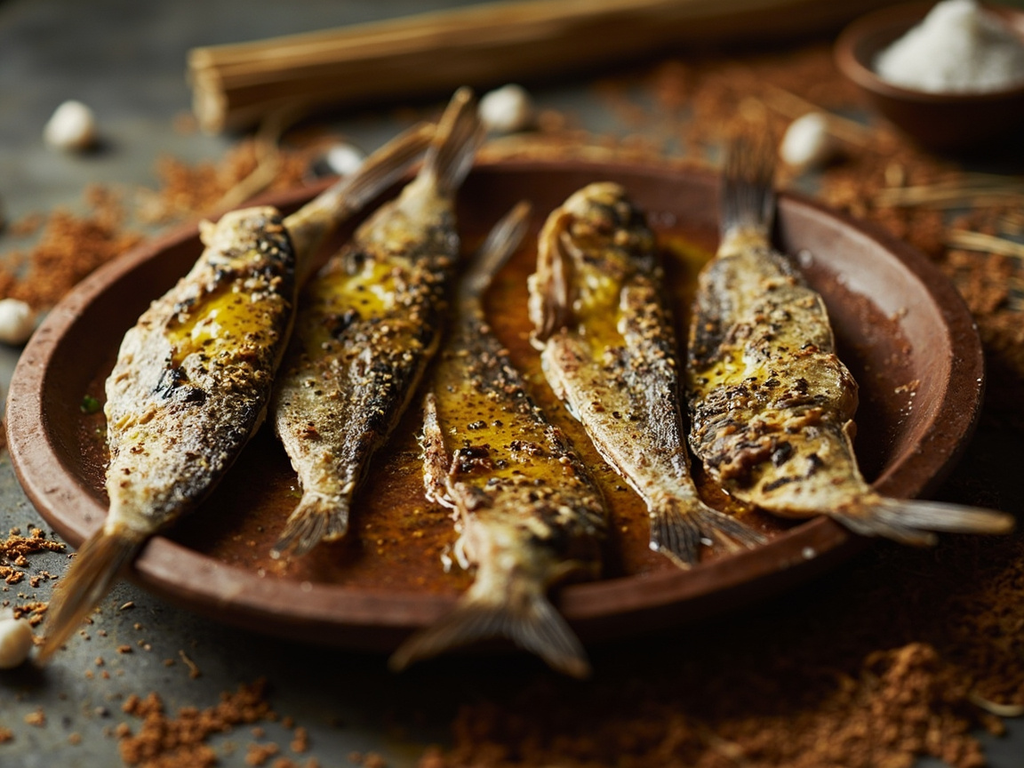
Nūnu wābilu — dried and grilled marsh fish
The naptanu reserve (preserved provision)
🧂 🍄· 20 min + 1 to 2 days drying
View the recipe