 flip
flipAkalu — barley flatbread with sesame
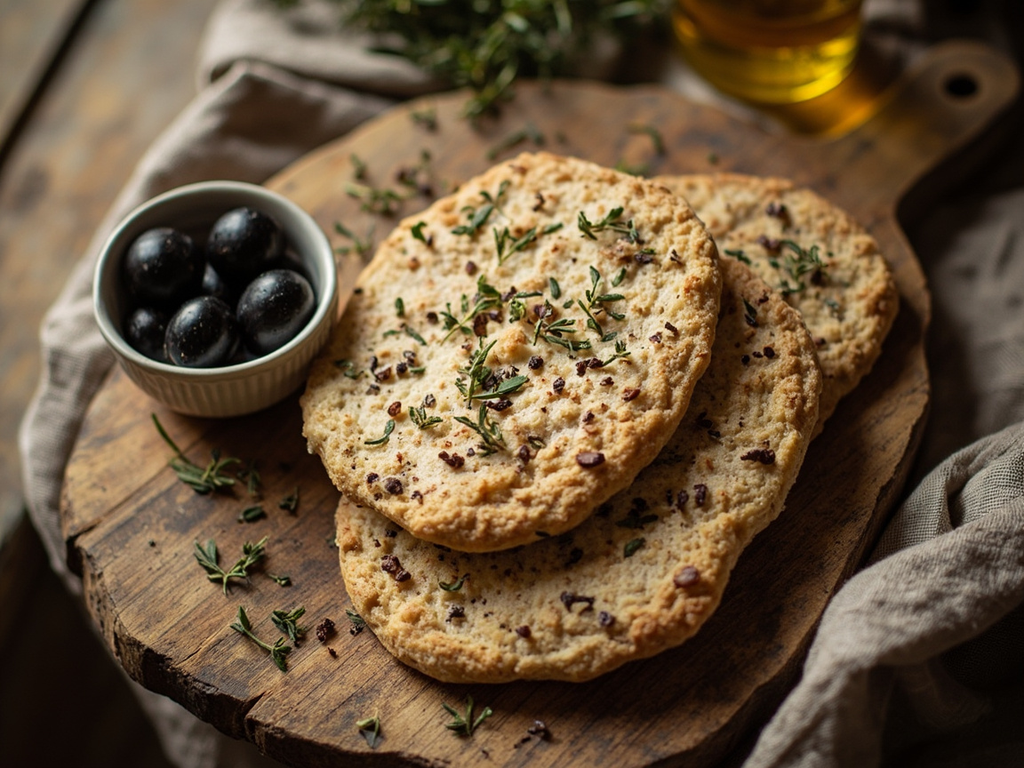
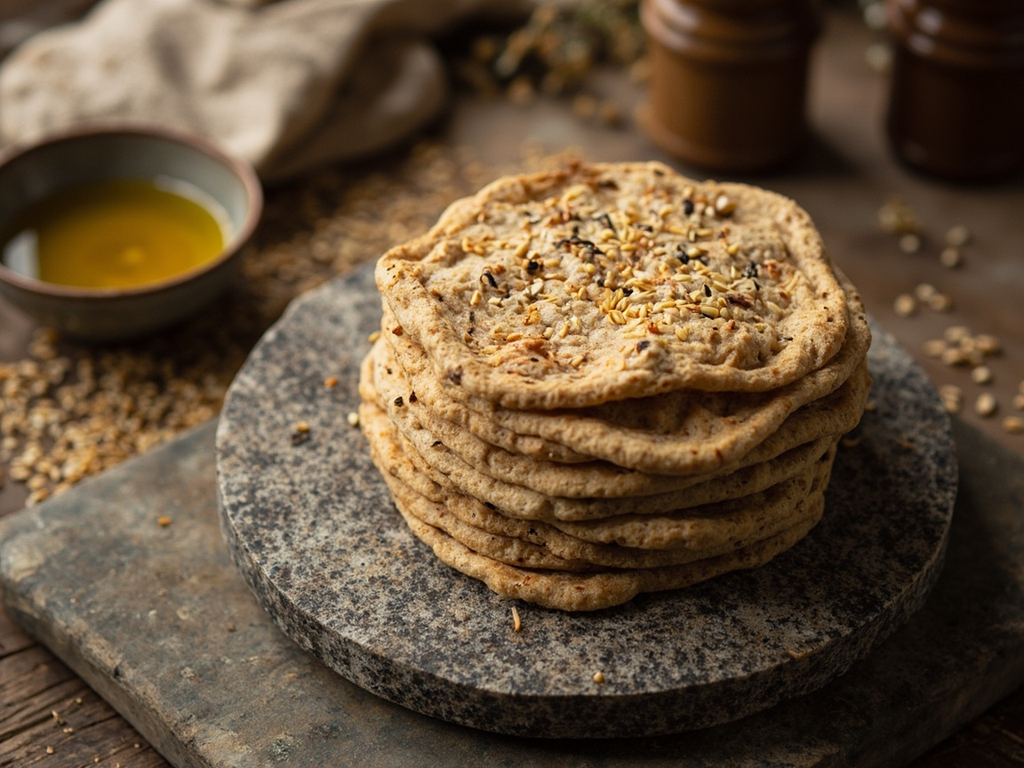
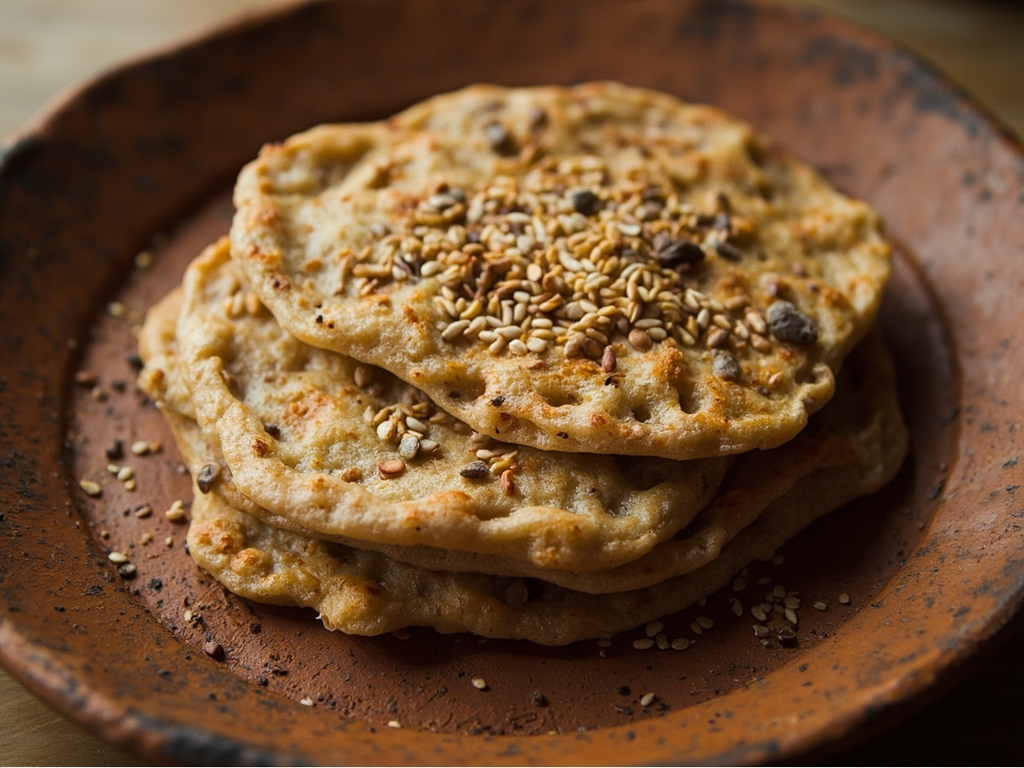
Akalu — barley flatbread with sesame
Why this dish? Barley was the queen grain of Ur, paid as rations in the temples; barley bread formed the basis of every meal in the priestly household of Enheduanna, from the humblest scribe to the high priestess herself.
A dense and nourishing flatbread of ground barley, baked on the hot wall of a clay oven or on a hot stone, seasoned with oil and sesame seeds. It is the everyday bread, broken with beer.
I, Enheduanna, priestess of Nanna the moon-god, tell you this: before the hymn, there is the grain. Each morning at the giparu, we grind barley between two stones into grey flour, knead it with water and a little salt, and slap the flatbread against the still-hot clay oven. Pour sesame oil over it, scatter the seeds like sowing a field, and break it warm — for shared bread keeps a person upright before the gods.
- •Barley flour — two full handfuls (base of the flatbread)
- •Water — as needed (binder for the dough)
- •Salt — a pinch (seasoning)
- •Sesame oil — a drizzle (softness and flavor)
- •Sesame seeds — a handful (toasted garnish)
Akalu — barley flatbread with sesame
A dense and nourishing flatbread of ground barley, baked on the hot wall of a clay oven or on a hot stone, seasoned with oil and sesame seeds. It is the everyday bread, broken with beer.
Why this dish? Barley was the queen grain of Ur, paid as rations in the temples; barley bread formed the basis of every meal in the priestly household of Enheduanna, from the humblest scribe to the high priestess herself.
I, Enheduanna, priestess of Nanna the moon-god, tell you this: before the hymn, there is the grain. Each morning at the giparu, we grind barley between two stones into grey flour, knead it with water and a little salt, and slap the flatbread against the still-hot clay oven. Pour sesame oil over it, scatter the seeds like sowing a field, and break it warm — for shared bread keeps a person upright before the gods.
Ingredients (period version)
- Barley flour — two full handfuls (base of the flatbread)
- Water — as needed (binder for the dough)
- Salt — a pinch (seasoning)
- Sesame oil — a drizzle (softness and flavor)
- Sesame seeds — a handful (toasted garnish)
Ingredients
- Barley flour — 250 g (base of the flatbread)
- Warm water — about 150 ml (binder for the dough)
- Salt — 1 teaspoon (seasoning)
- Sesame oil — 2 tablespoons (softness and flavor)
- Sesame seeds — 2 tablespoons (toasted garnish)
Method
- Mix the barley flour and salt, add warm water little by little until a soft, non-sticky dough forms. Knead for 5 minutes.
- Let rest for 30 minutes under a cloth.
- Divide into 4 balls, roll each into a thin flatbread 5 mm thick.
- Brush with sesame oil, sprinkle with sesame seeds.
- Cook on a cast-iron pan or very hot stone for 2–3 minutes per side, until golden spots appear and the sesame is toasted.
How it was made : Barley dominated wheat in Mesopotamia because it tolerates the salty soils of the irrigated plain. It was mostly eaten as flatbread baked in a tannur (clay oven) or on hearth walls, and as porridge. Leavening was rare: most breads were dense flatbreads.
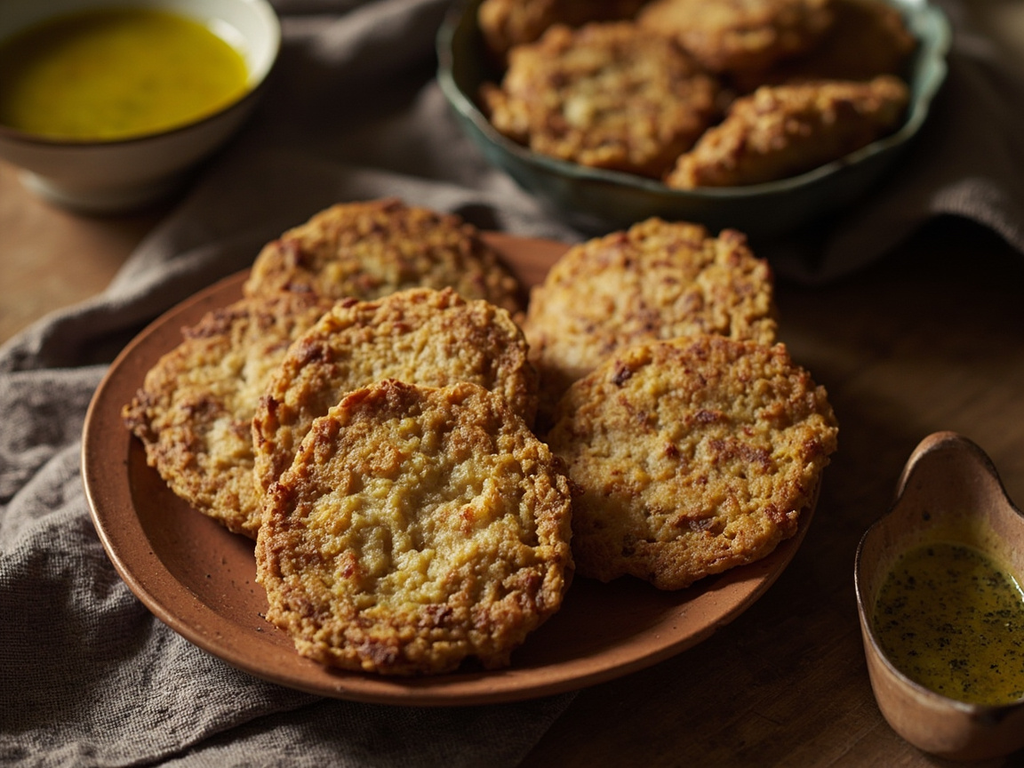
The contemporary twist : Serve in thick slices as a dipping bread, with a bowl of mixed sesame oil and dišpu, like a sweet-savory duo.
Sources : Jean Bottéro, La plus vieille cuisine du monde, 2002 · Documentation on barley rations in Sumerian temples (Ur III administrative texts)
Enheduanna · Charactorium