 Flip the card
Euripides at the table
480 av. J.-C. — 406 av. J.-C.
On the menu
Sitos and opson, then the tragēmata of the symposion
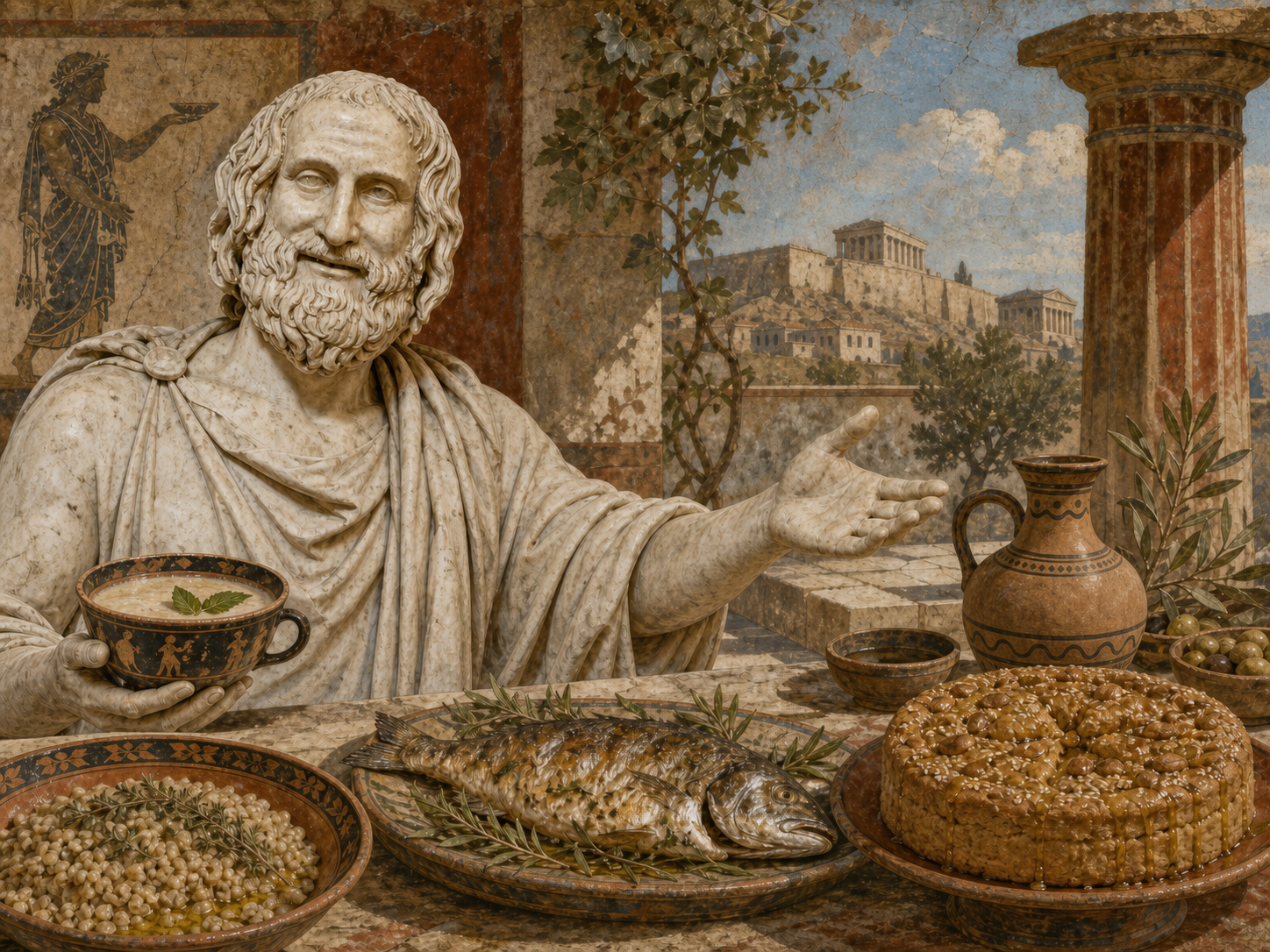
In Athens, the meal is organized around sitos — the staple food made from barley or wheat (maza flatbread, plain bread) — accompanied by opson, the "what-goes-with-it": fish, vegetables, cheese, olives. People sit or recline, then come the tragēmata, the sweet treats at the end of the meal (dried figs, nuts, sesame, honey cakes) nibbled during the symposion, the moment when wine mixed with water is drunk while discussing and reciting verses. The well-off citizen Euripides knew these simple yet refined tables, where words counted more than abundance.
Signature : Hymettus thyme honey
Harvested from the Attic hills scented with wild thyme, this amber, resinous honey was the gastronomic pride of Athens. Since sugar was unknown to the Greeks, it sweetened cakes, drinks, and fruits, and served as an offering to the gods. It appears throughout the Greek meal.
click to flip back
Euripides at the table
480 av. J.-C. — 406 av. J.-C.
5 period recipes
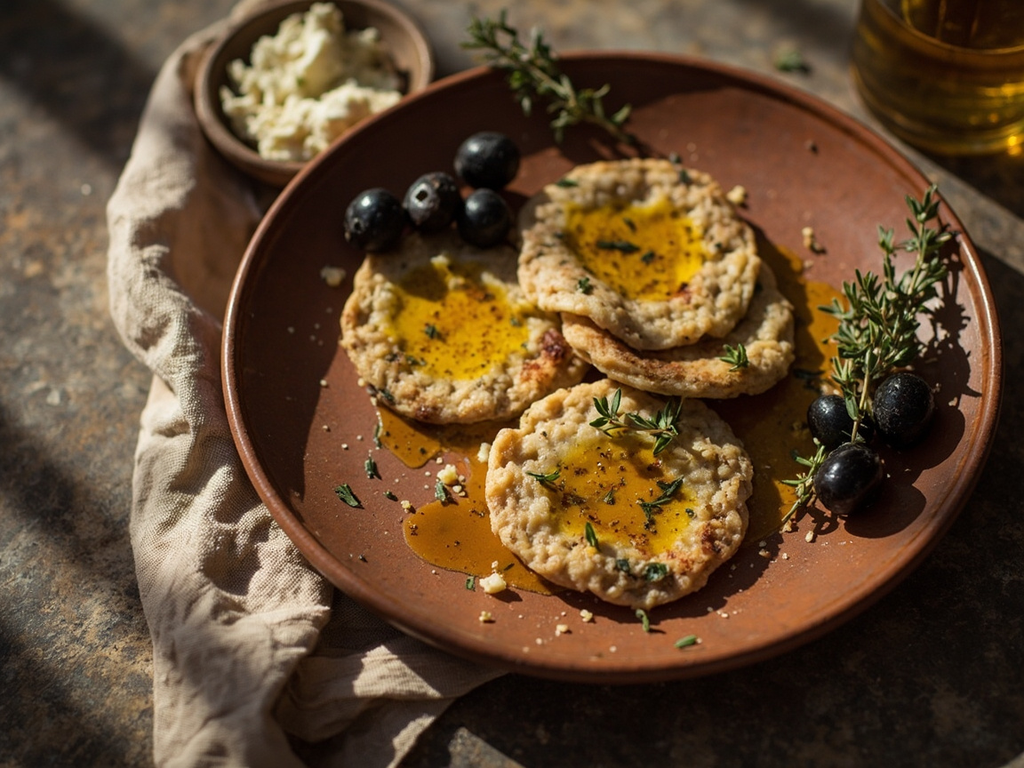 Everyday
Barley maza with oil and thyme
Sitos (the staple food of the meal)
🧂 ☕· 30 min
View the recipe
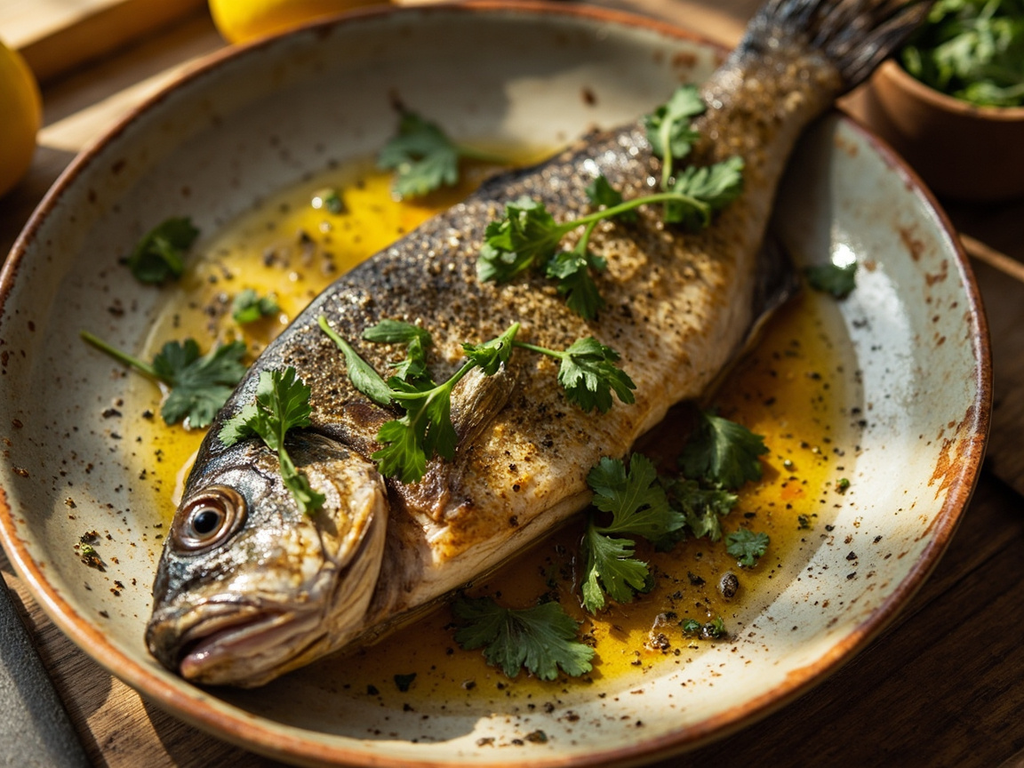 Festive
Grilled fish with herbs, the opson of dinner
Opson (the relish accompanying sitos)
🧂 🍄· 25 min
View the recipe
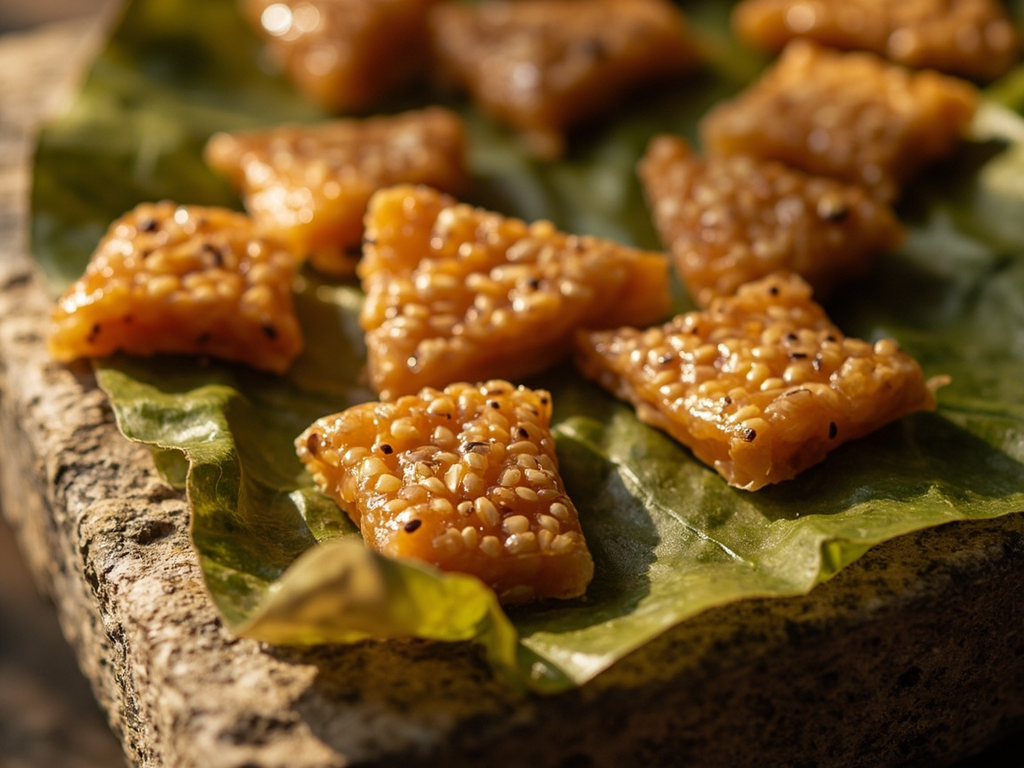 Offering
Melitoutta, sesame and honey cake for Dionysus
Tragēmata / offering to the god of theater
🍯· 20 min
View the recipe
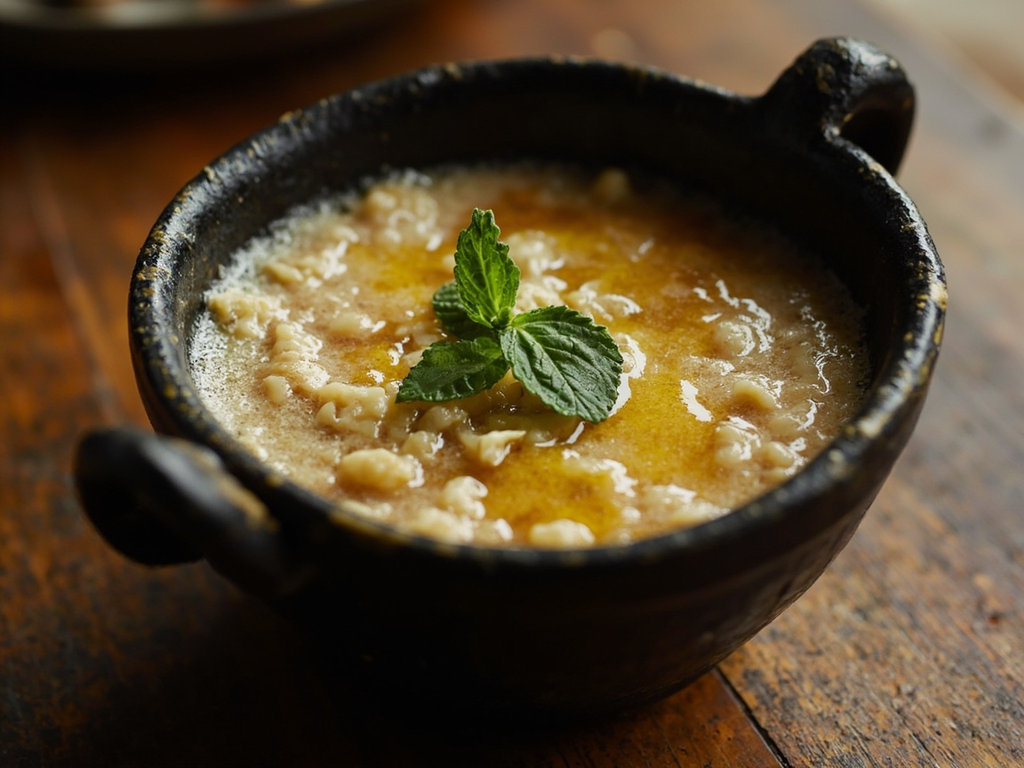 Drink
DrinkBarley kykeon with honey and mint
Propoma (base drink, before or during the meal)
🍋 ☕· 10 min
View the recipe
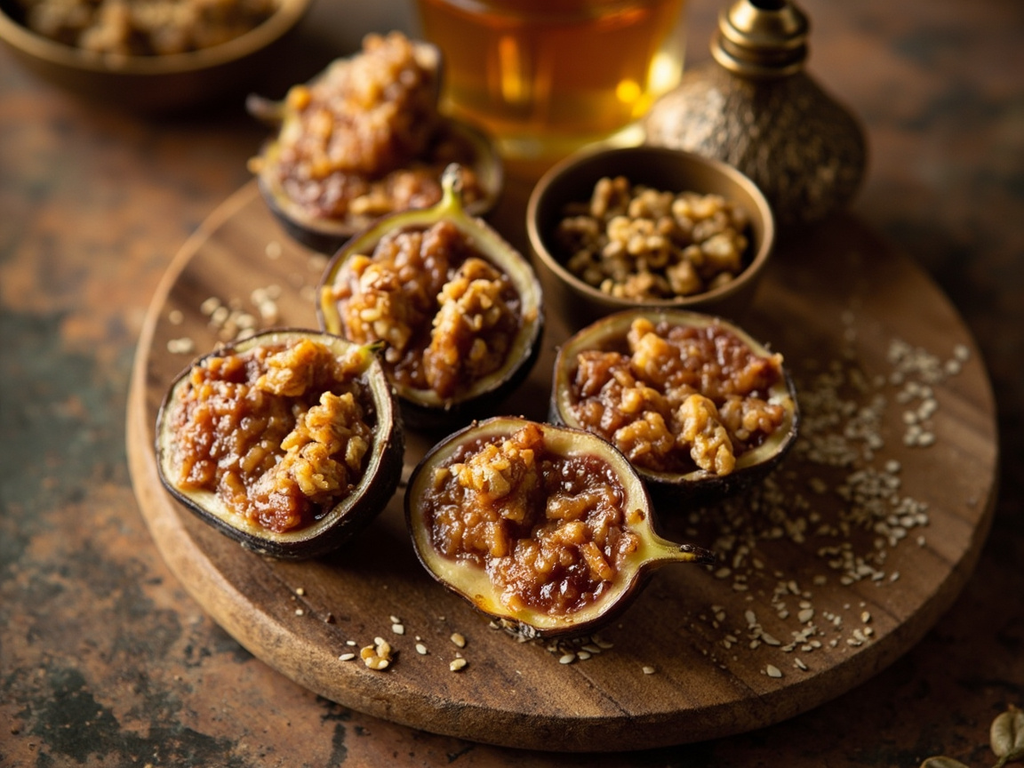 Preserving
Dried figs with honey and walnuts for the road to Pella
Tragēmata for travel (road provisions and end-of-meal sweets)
🍯 🍄· 20 min
View the recipe