 flip
flipGrilled fish with herbs, the opson of dinner
Grilled fish with herbs, the opson of dinner
Why this dish? Fresh fish was the most coveted opson in Athens, the affordable luxury of a maritime city. Near the Theater of Dionysus and the Agora, on days of tragic competitions when Euripides presented his plays, a fine grilled fish drizzled with oil was feasted upon — the reward of a crowned playwright.
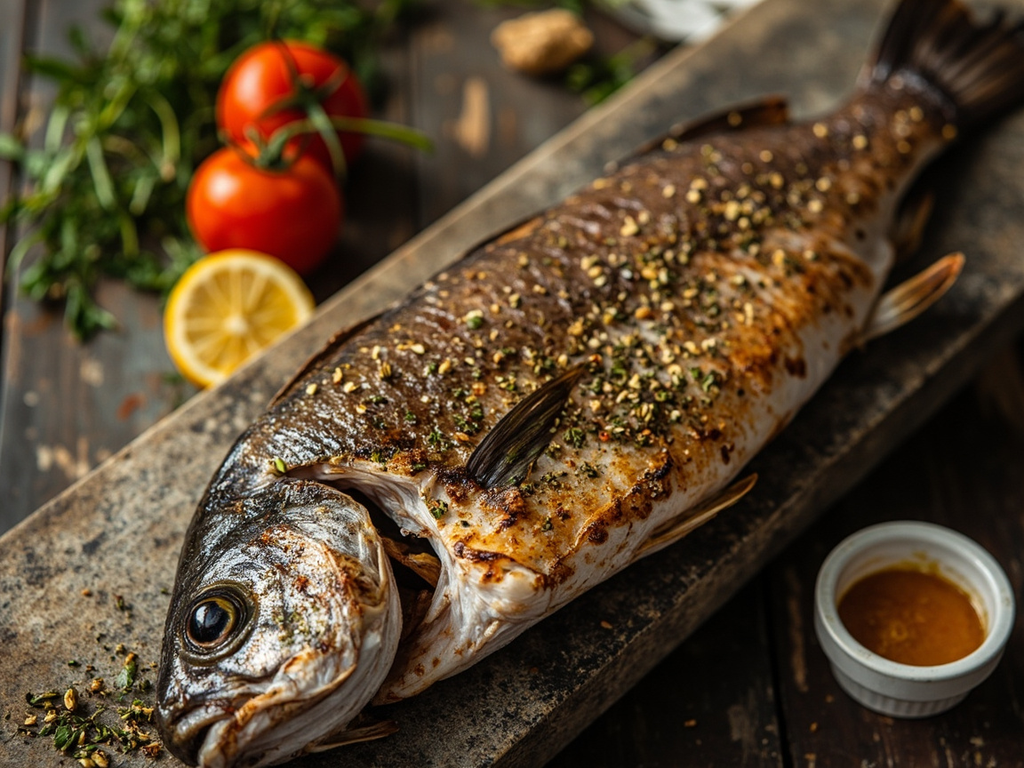
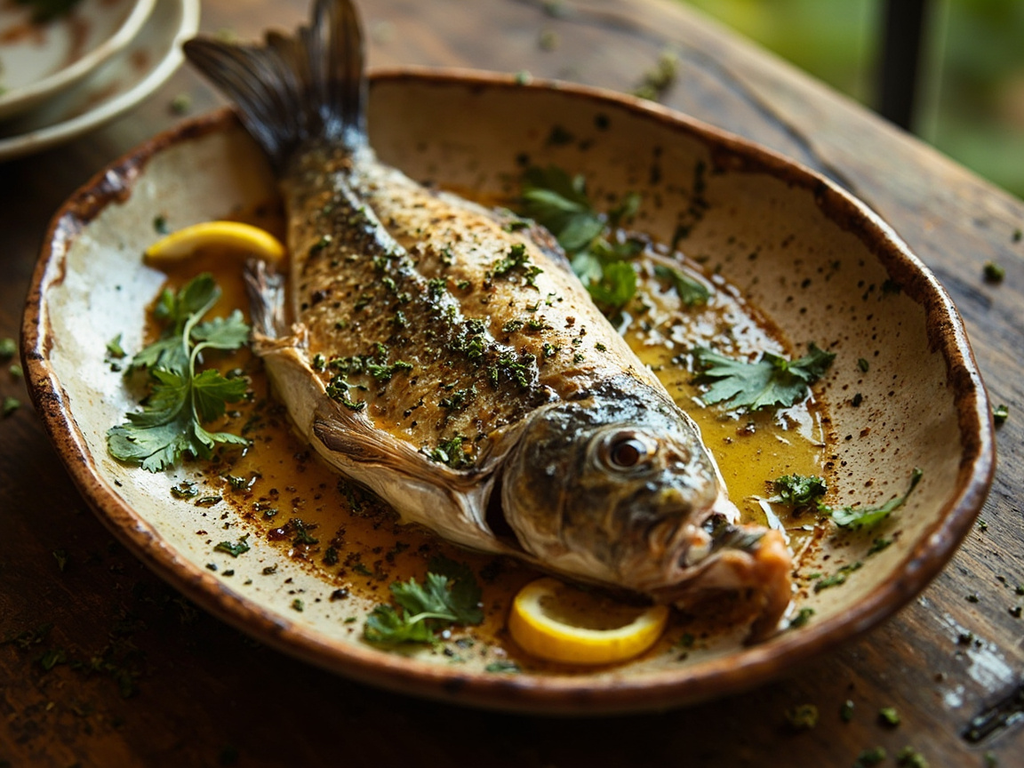
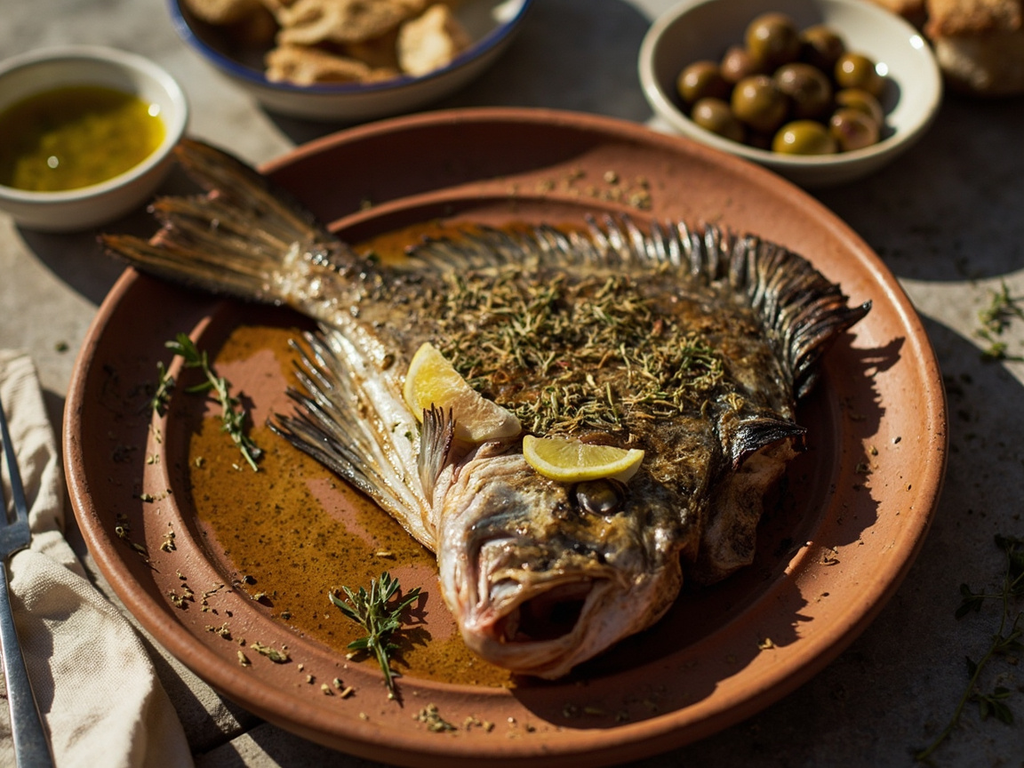
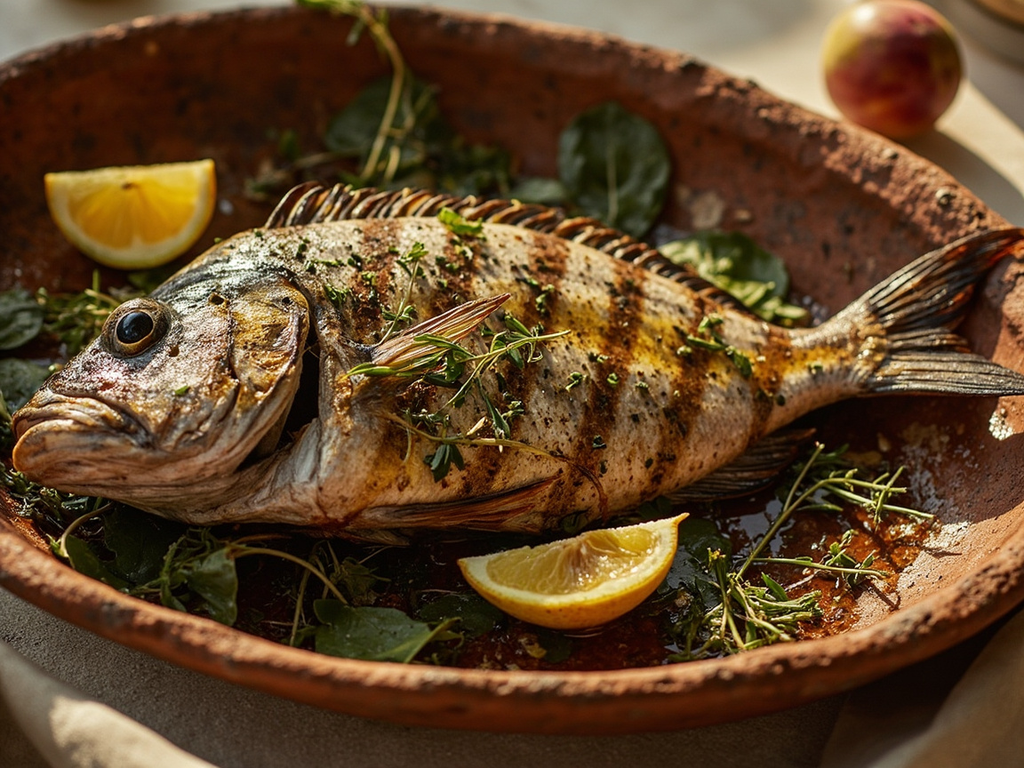
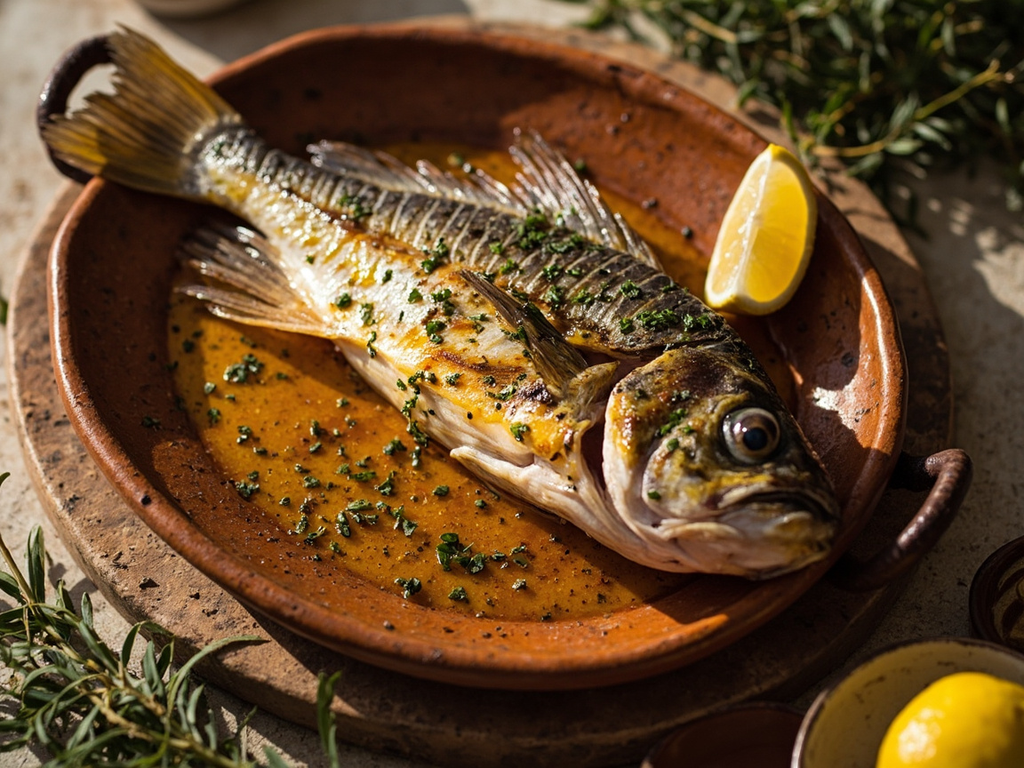
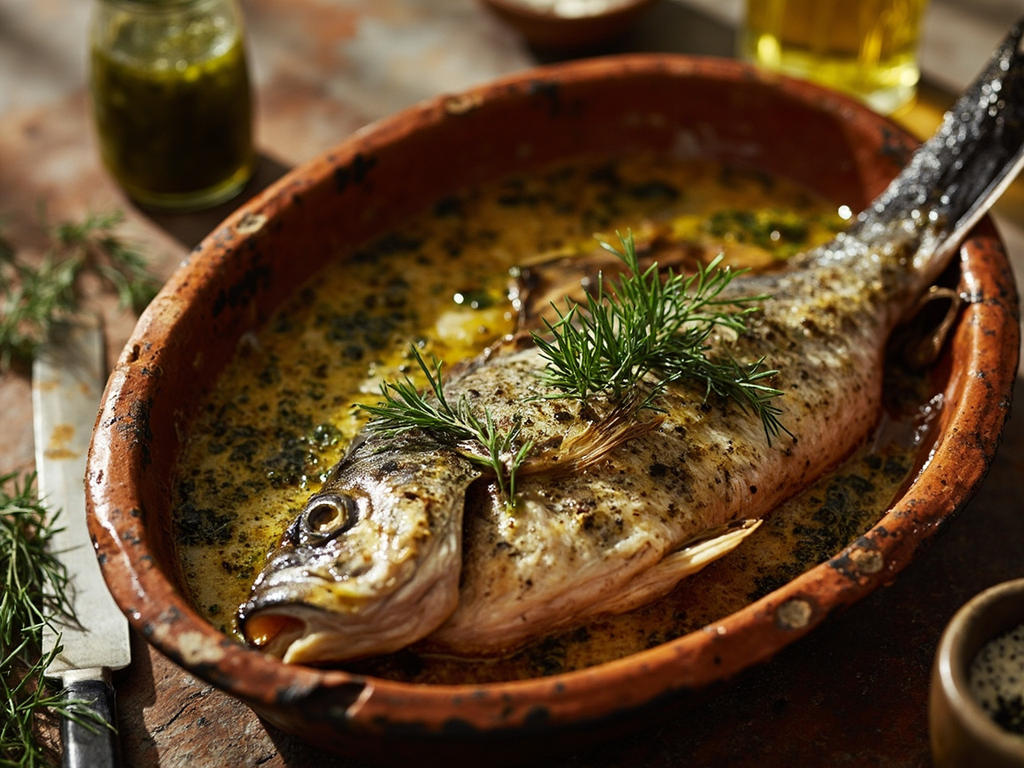
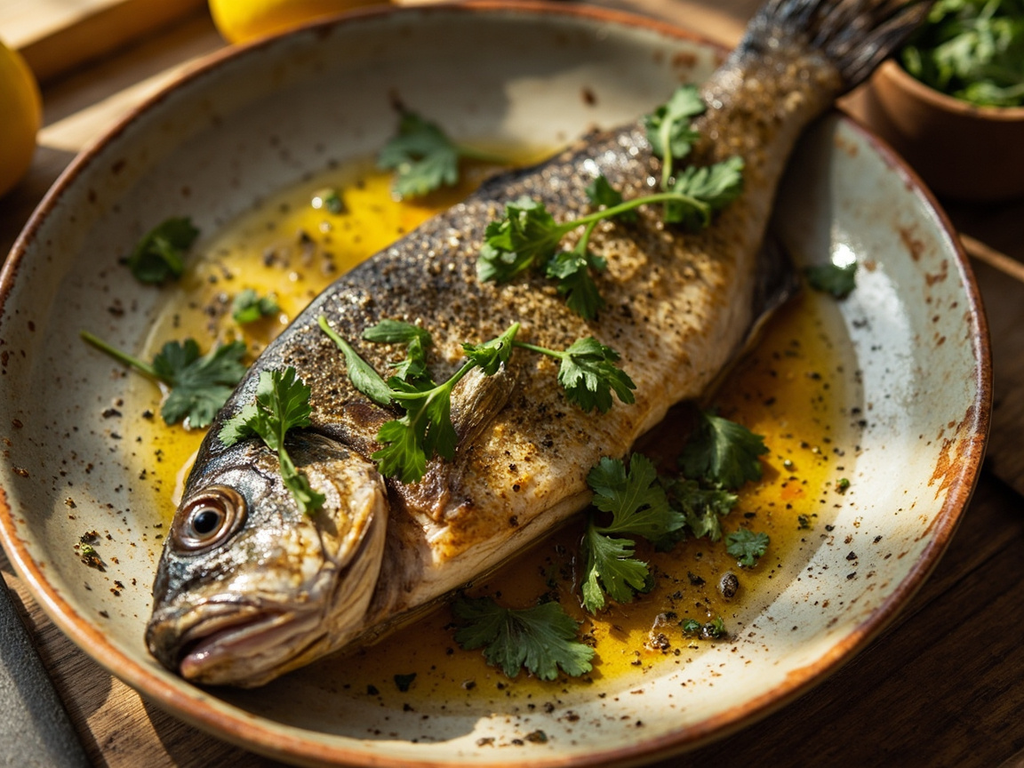
A whole Mediterranean fish grilled, rubbed with olive oil, perfumed with coriander, oregano, and a splash of vinegar. Salty and deep, it is the festive dish of Athenian tables.
On the day a poet is crowned, the table deserves better than an olive. I choose a fish pulled from the gulf that morning, I rub it with oil, I lay it on the embers without fuss, and I let it speak for itself — an herb, a grain of salt, barely a hint of vinegar. You see, I have put on stage torn queens and unjust gods; but before a well-grilled fish, even a tragedian falls silent and thanks the sea.
- •Whole sea fish (sea bream, red mullet) — one fine fish (heart of the dish)
- •Olive oil — generously (cooking and flavor)
- •Fresh coriander and oregano — a few sprigs (flavor)
- •Wine vinegar — a splash (acidity)
- •Sea salt — to taste (seasoning)
Grilled fish with herbs, the opson of dinner
A whole Mediterranean fish grilled, rubbed with olive oil, perfumed with coriander, oregano, and a splash of vinegar. Salty and deep, it is the festive dish of Athenian tables.
Why this dish? Fresh fish was the most coveted opson in Athens, the affordable luxury of a maritime city. Near the Theater of Dionysus and the Agora, on days of tragic competitions when Euripides presented his plays, a fine grilled fish drizzled with oil was feasted upon — the reward of a crowned playwright.
On the day a poet is crowned, the table deserves better than an olive. I choose a fish pulled from the gulf that morning, I rub it with oil, I lay it on the embers without fuss, and I let it speak for itself — an herb, a grain of salt, barely a hint of vinegar. You see, I have put on stage torn queens and unjust gods; but before a well-grilled fish, even a tragedian falls silent and thanks the sea.
Ingredients (period version)
- Whole sea fish (sea bream, red mullet) — one fine fish (heart of the dish)
- Olive oil — generously (cooking and flavor)
- Fresh coriander and oregano — a few sprigs (flavor)
- Wine vinegar — a splash (acidity)
- Sea salt — to taste (seasoning)
Ingredients
- Whole gutted sea bream or red mullet — 1 (approx. 400–500 g) (heart of the dish)
- Extra virgin olive oil — 4 tbsp (cooking)
- Fresh coriander — a few sprigs (flavor)
- Dried oregano — 1 tsp (flavor)
- Wine vinegar — 1 tbsp (acidity)
- Sea salt — to taste (seasoning)
Method
- Score the fish on both sides, salt inside and out, tuck oregano and coriander into the cavity.
- Brush with olive oil.
- Grill over embers or a hot griddle for 5–7 minutes per side depending on size, until the skin is golden and the flesh opaque.
- Just before serving, drizzle with wine vinegar and fresh oil, sprinkle with herbs.
- Serve with barley maza to soak up the juices.
How it was made : Greeks grilled or poached fish simply; the art was not to mask its freshness. Fermented fish sauce (garos) and vinegar already seasoned dishes, but good fish needed little else.
The contemporary twist : Served on a slate with a touch of lemon zest — a citrus that arrived later in the Mediterranean, a knowing wink.
Sources : Archestratus of Gela, fragments on gastronomy (4th century BC) · James Davidson, Courtesans and Fishcakes (1997)
Euripides · Charactorium