 flip
flipMelitoutta, sesame and honey cake for Dionysus
Melitoutta, sesame and honey cake for Dionysus
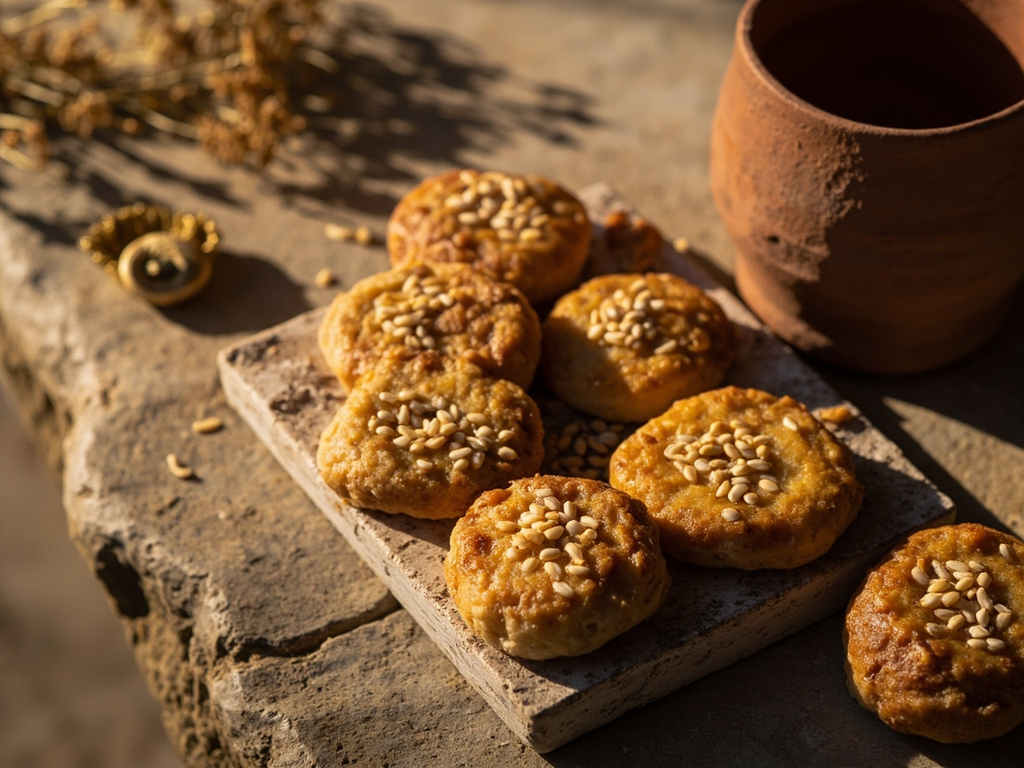
Why this dish? The tragic competitions of Athens were held during the Great Dionysia, in honor of Dionysus, god of theater and wine. Before his plays faced the public's judgment, Euripides, like all poets, witnessed the rites and offerings to the god. This honey and sesame cake, inspired by sweets placed on altars, celebrates this sacred bond between stage and divinity.
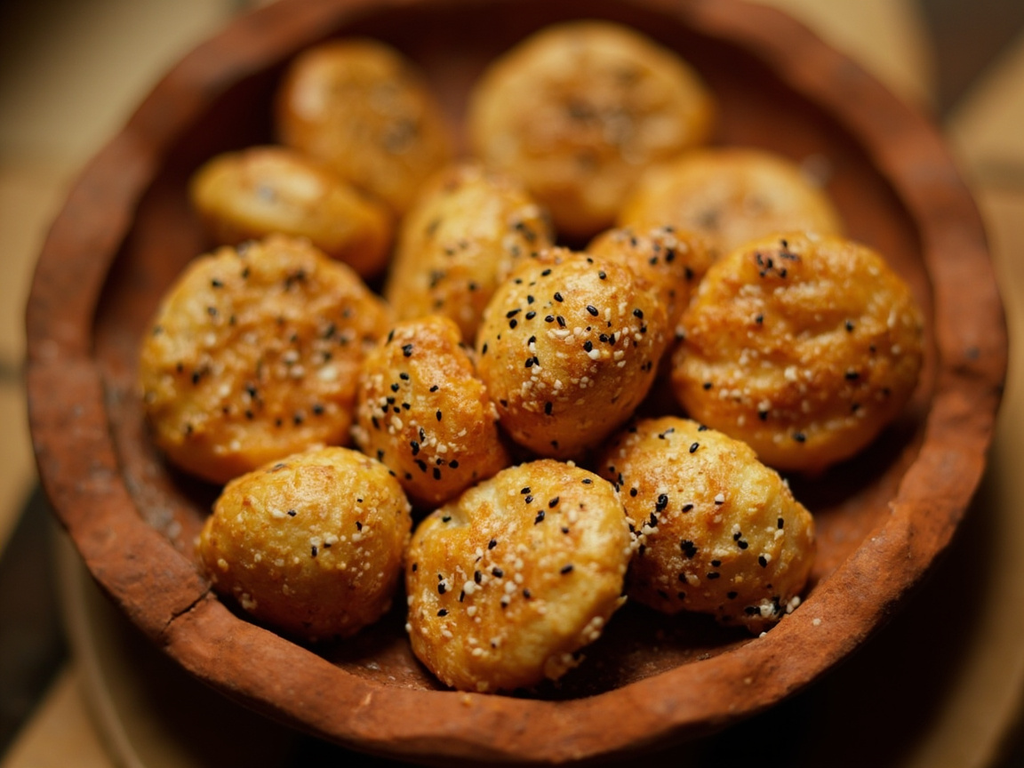
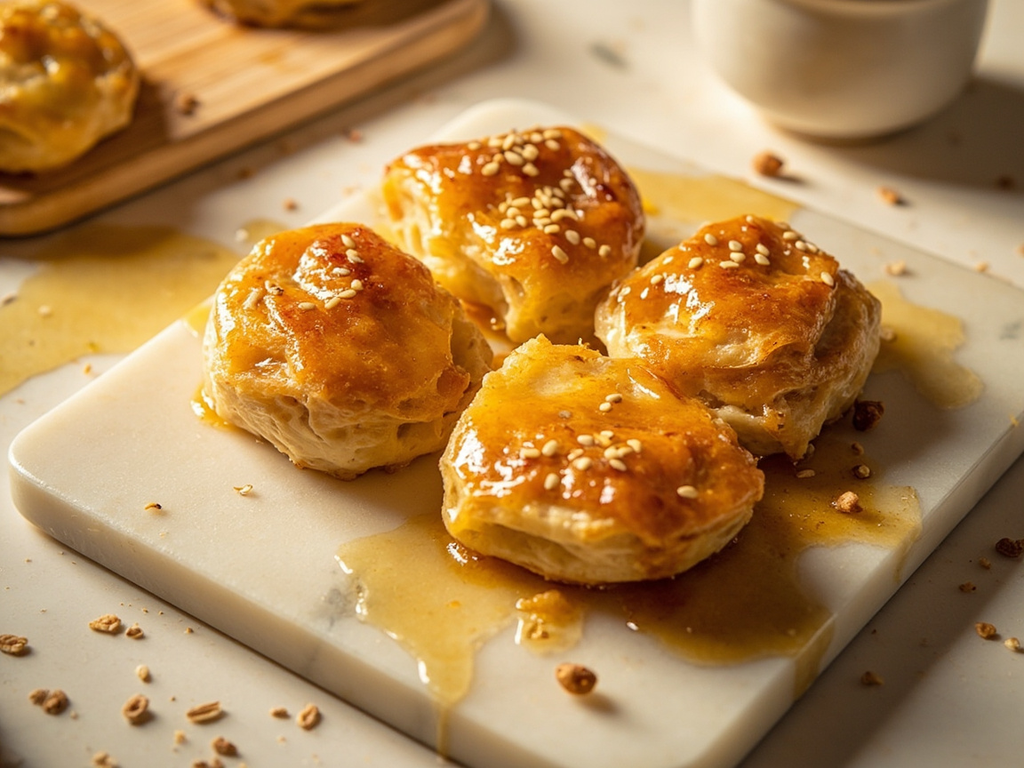
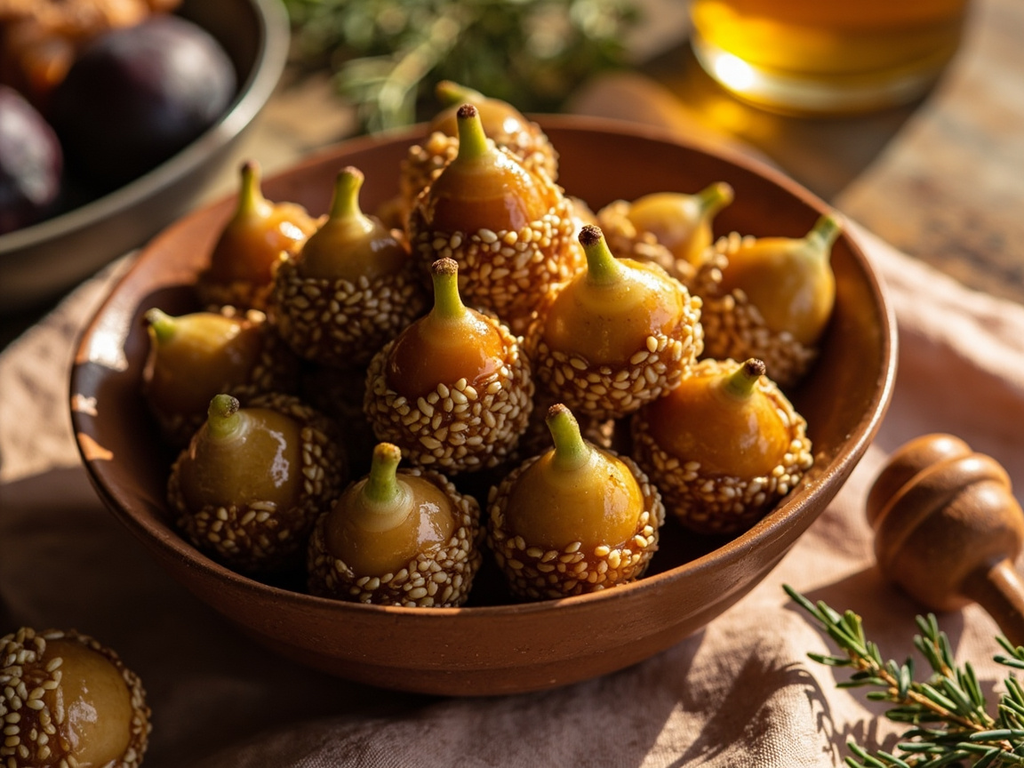
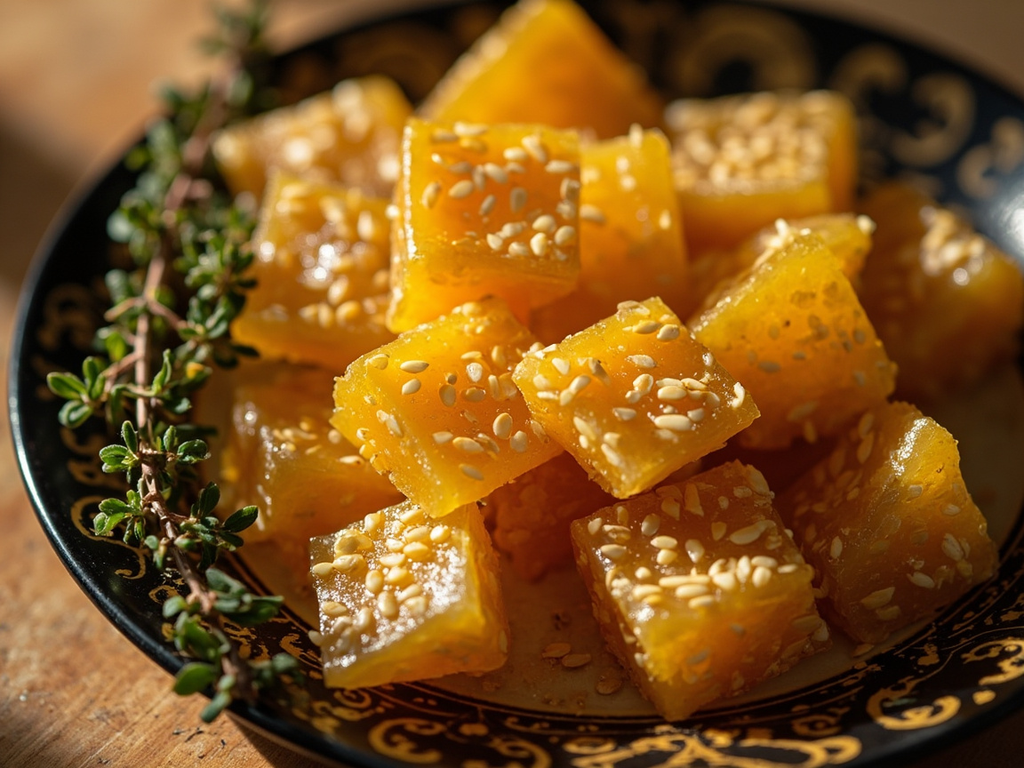
Small bites of toasted sesame bound with thyme honey, scented with a hint of cooked wine. Frankly sweet and crunchy, they evoke the sweet offerings of Dionysian festivals.
Before the crowd decides whether my verses deserve the crown, the god receives his shares of honey and grain. I mix the toasted sesame with the honey from our hills until it flows and turns golden, and I shape small portions for Dionysus, who rules over both stage and cup. Be pious, friend: a little sweetness offered appeases the gods — and perhaps it also softens the verdict of the judges.
- •Sesame seeds — a good measure (crunchy base)
- •Hymettus thyme honey — generously (sweet binder)
- •Cooked wine (reduced must) — a splash (flavor)
Melitoutta, sesame and honey cake for Dionysus
Small bites of toasted sesame bound with thyme honey, scented with a hint of cooked wine. Frankly sweet and crunchy, they evoke the sweet offerings of Dionysian festivals.
Why this dish? The tragic competitions of Athens were held during the Great Dionysia, in honor of Dionysus, god of theater and wine. Before his plays faced the public's judgment, Euripides, like all poets, witnessed the rites and offerings to the god. This honey and sesame cake, inspired by sweets placed on altars, celebrates this sacred bond between stage and divinity.
Before the crowd decides whether my verses deserve the crown, the god receives his shares of honey and grain. I mix the toasted sesame with the honey from our hills until it flows and turns golden, and I shape small portions for Dionysus, who rules over both stage and cup. Be pious, friend: a little sweetness offered appeases the gods — and perhaps it also softens the verdict of the judges.
Ingredients (period version)
- Sesame seeds — a good measure (crunchy base)
- Hymettus thyme honey — generously (sweet binder)
- Cooked wine (reduced must) — a splash (flavor)
Ingredients
- Sesame seeds — 150 g (base)
- Thyme honey (or flavored honey) — 120 g (binder)
- Reduced grape must or reduced grape juice — 1 tbsp (flavor)
Method
- Toast the sesame seeds in a dry pan, stirring, until golden and fragrant.
- In a saucepan, gently heat the honey with the reduced must until it bubbles and thickens slightly.
- Remove from heat, add the warm sesame, and mix well.
- Spread the mixture on an oiled surface or parchment paper to 1 cm thickness, and smooth.
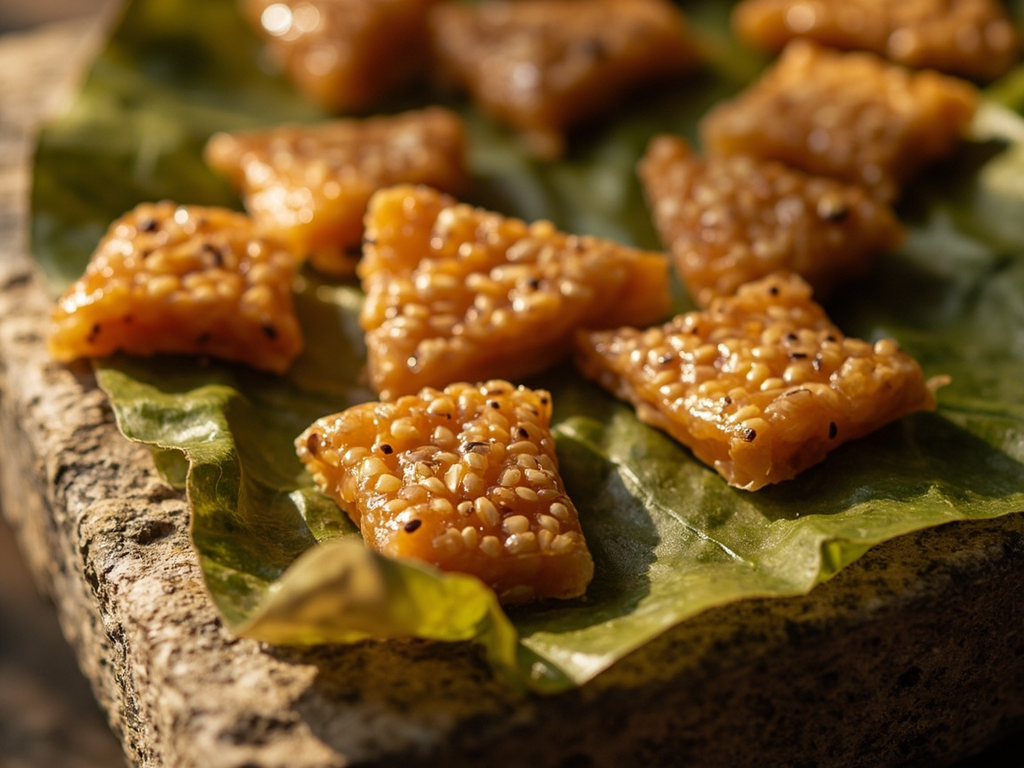
- Let cool slightly, then cut into small diamond shapes before it hardens completely.
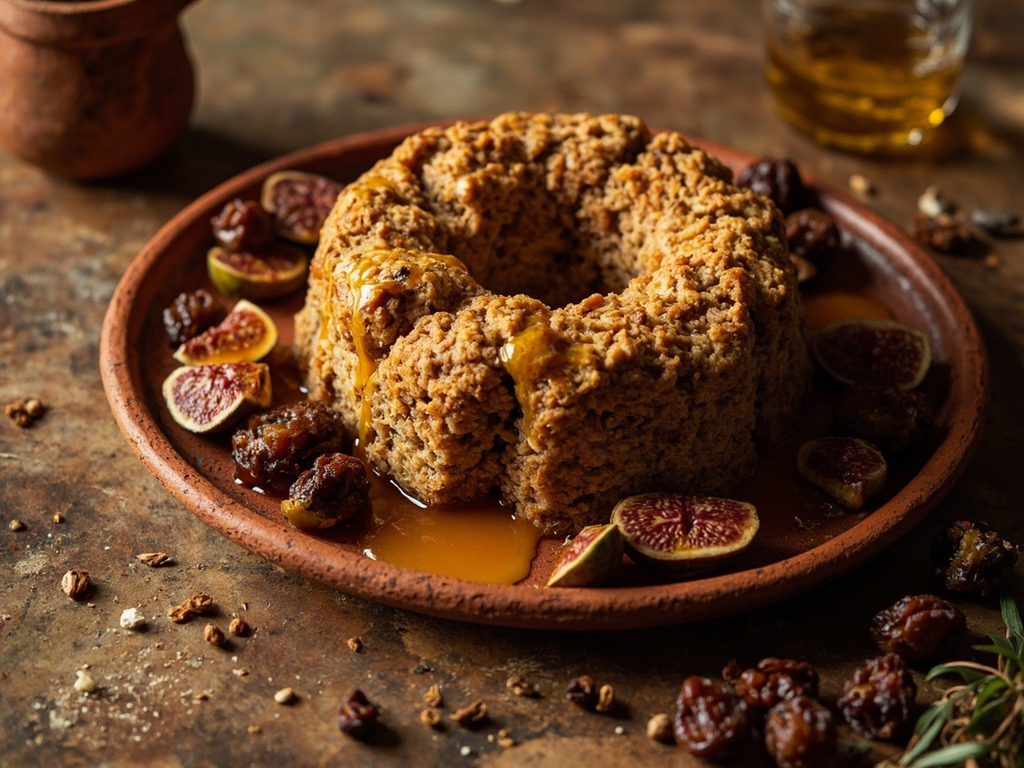
How it was made : Greeks offered the gods cakes (pelanos, popana) made from flour, honey, and seeds. Since sugar was unknown, honey was the only major sweetener; sesame, imported from the East, provided crunch — the direct ancestor of halva and today's sesame pastries.
The contemporary twist : Presented as diamonds on a fig leaf, like a modern offering laid at the foot of a theater mask.
Sources : Athenaeus of Naucratis, The Deipnosophists (Book XIV, on cakes)
Euripides · Charactorium