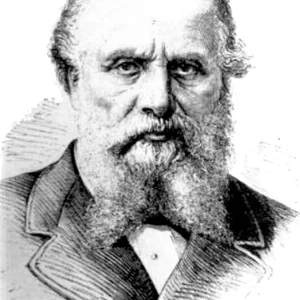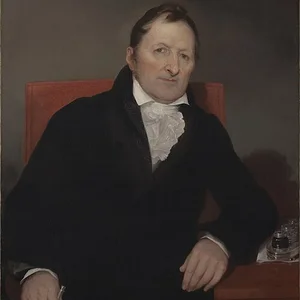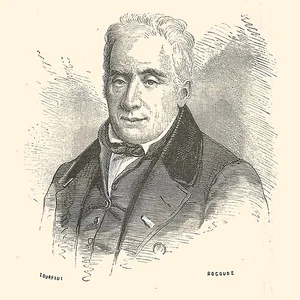

A Norman industrialist, he became one of the greatest French cotton manufacturers under the First Empire, taking advantage of the Continental Blockade to eliminate British competition. The fall of Napoleon and the return of British cotton ruined his fortune, but he is remembered for his genuine concern for the well-being of his workers.
François Richard-Lenoir(1765 — 1839)
François Richard-Lenoir
France
8 min read
Frequently asked questions
Key Facts
- 1765: born in Épinay-sur-Odon (Calvados)
- 1803: partners with Lenoir-Dufresne and takes the name Richard-Lenoir
- 1806–1814: the Continental Blockade allows him to dominate the French cotton market in the absence of British competition
- 1815: the fall of Napoleon and the opening of borders gradually ruin his industrial empire
- 1839: dies in Paris; the Boulevard Richard-Lenoir (11th arrondissement) and the Line 5 metro station perpetuate his memory
Works & Achievements
Co-founded with Jean-Louis Lenoir, this became one of the largest textile enterprises in France, growing at its peak into an industrial empire employing several thousand workers across multiple workshops in Paris and the provinces.
An autobiographical account in which Richard-Lenoir traces the story of his industrial rise, the ruin brought on by the end of the Continental Blockade, and his philanthropic efforts on behalf of his workers. An essential document for understanding French industry under the First Empire.
Richard-Lenoir funded and organized worker housing, nurseries, day shelters, schools, and mutual aid funds for his employees, making him a pioneer of industrial paternalism and social welfare in France.
By importing and adapting English spinning machines (the jenny and mule-jenny), Richard-Lenoir helped mechanize the French cotton industry and train a skilled workforce, foreshadowing the French Industrial Revolution.
After the fall of the Empire, Richard-Lenoir repeatedly lobbied the government to secure protective duties against British imports, contributing to the national debate on free trade versus industrial protectionism.
Anecdotes
In 1801, François Richard partnered with Jean-Louis Lenoir, a cotton merchant, and created the firm Richard-Lenoir by merging their two names into the company name — a common practice at the time to mark a commercial alliance. Together, they would build one of the largest textile empires in France, employing at their peak several thousand workers across numerous workshops in Paris and the provinces.
Thanks to the Berlin Decree of November 21, 1806, Napoleon established the Continental Blockade and closed European ports to British goods. Richard-Lenoir seized this exceptional opportunity: with no competition from cheaper English cotton cloth, his spinning mills ran at full capacity and made him one of the wealthiest men in France, at the head of a fortune estimated at several million francs.
Concerned about the welfare of his workers at a time when factory conditions were often miserable, Richard-Lenoir funded housing, nurseries, infant schools, and primary schools for the children of his employees. This paternalistic approach, exceptional for the era, earned him a reputation as a philanthropist that would outlast his financial ruin and inspire debates on social welfare throughout the nineteenth century.
The fall of Napoleon in 1814–1815 marked the beginning of his ruin: the return of low-cost British cotton cloth to the French market caused his selling prices to collapse. Despite his petitions to the government for protective tariffs, Richard-Lenoir was forced to declare bankruptcy around 1818. The man who had been one of the most powerful industrialists of the First Empire ended his days in relative poverty.
Richard-Lenoir played a pioneering role in introducing mechanization into the French cotton industry. He imported and adapted advanced spinning machines from England — notably the mule jenny — helping to train a skilled workforce and laying the foundations of the industrial revolution in France, well before mechanization became widespread across the country.
Primary Sources
In a moment of crisis, I had gathered in my workshops men without work, women without bread, children without shelter. I had done them good; they repaid me a hundredfold through their labor and their loyalty.
The reopening of ports to English cotton goods poses a mortal threat to our national industry. We urgently request that protective tariffs be established in order to safeguard the thousands of workers whose livelihoods depend on our manufactories.
M. Richard has introduced into his workshops notable improvements in the art of cotton spinning, particularly the use of jenny and mull-jenny spinning machines, successfully adapted to the conditions of French production.
Cotton spinning has undergone considerable development in France under the Continental Blockade. The establishments of the Richard-Lenoir firm rank among the most important in Europe, both in terms of the number of their workers and the excellence of their mechanical processes.
Key Places
The birthplace of François Richard, born on **August 9, 1765**. This rural commune in Anjou gave little hint of the remarkable industrial trajectory of its most famous son.
The historic district of Parisian craftsmanship and manufacturing where Richard-Lenoir established one of his main spinning mills. This working-class faubourg, cradle of the Revolution, was home to a dense population of laborers.
Richard-Lenoir's second major industrial hub in Paris, home to large spinning mills and weaving workshops employing several hundred workers.
The industrial capital of Norman textiles, with which Richard-Lenoir maintained close commercial ties. The Rouen region was the center of *rouennerie* — printed cotton cloth that made French textiles famous.
Headquarters of the Société d'encouragement pour l'industrie nationale, of which Richard-Lenoir was an active member. This institution promoted technical innovation and organized exhibitions of French industrial products.