 Flip the card
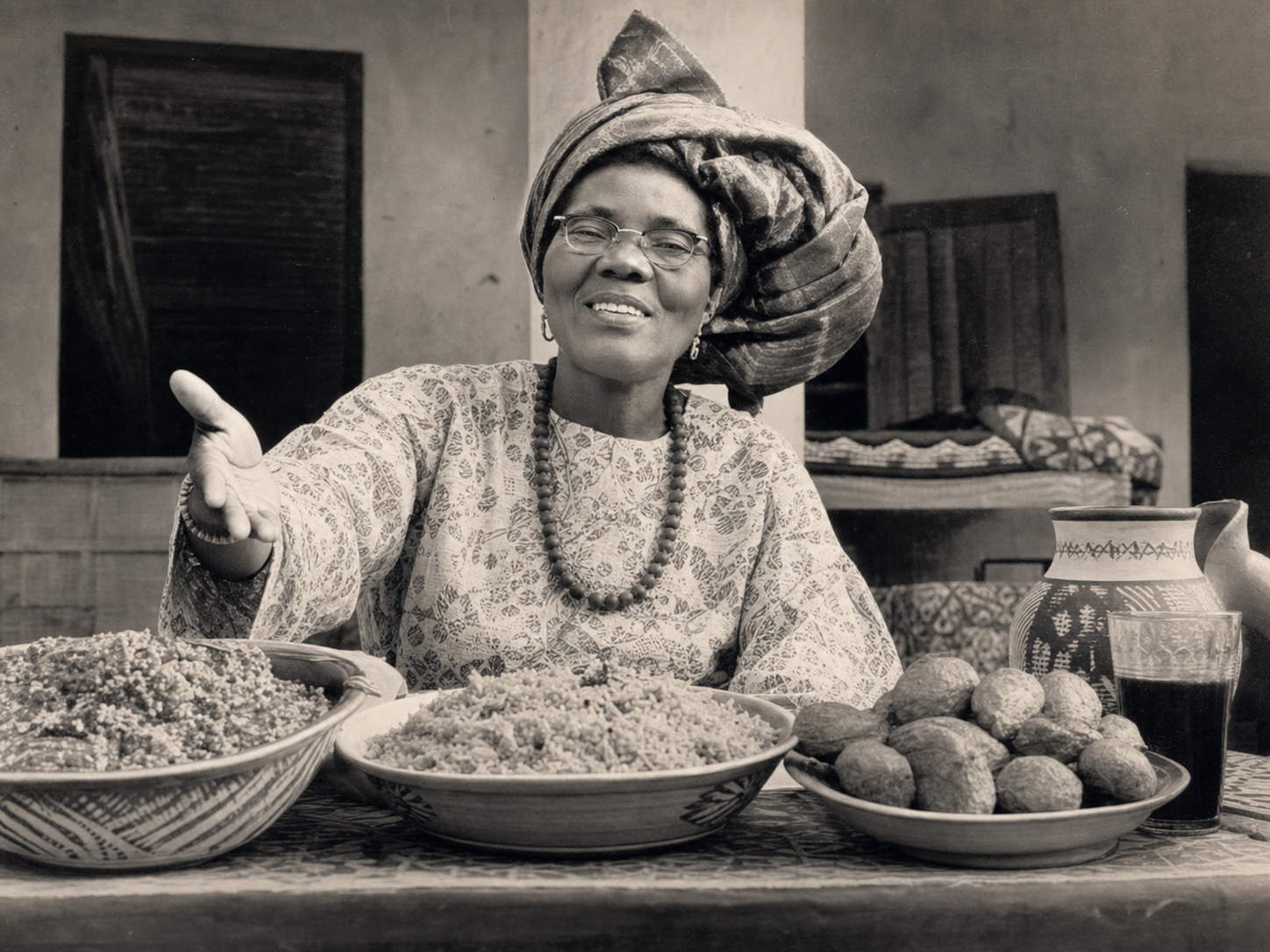
Funmilayo Ransome-Kuti at the table
1900 — 1978
On the menu
Yoruba base meal: the 'swallow' and its soup
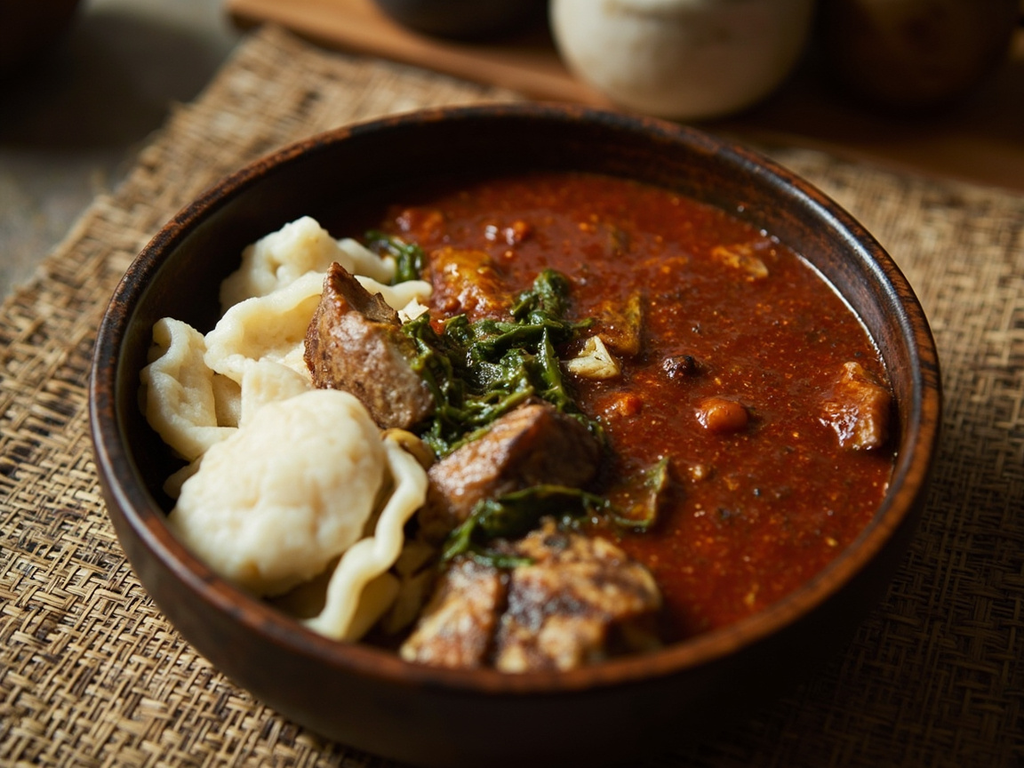
In Abeokuta as throughout Yoruba country, the meal is organized around a supple starch paste (pounded yam *iyan*, or later cassava *eba*) familiarly called the 'swallow': you pinch off a small ball with your right hand, hollow it with your thumb, and use it to scoop up a thick, oily soup. The soup (*egusi*, *ewedu*, *ila*) is the true heart of the dish; the swallow is merely the vehicle. Around it revolve street fritters, festive rice dishes, and red drinks. The meal is taken communally, by hand, and in the Ransome-Kuti household it was also the stage for great political discussions.
Signature : Red palm oil and egusi seed
Two pillars of Yoruba cuisine: red palm oil (*epo pupa*), fatty and orange-hued, which gives color and depth to almost every soup; and *egusi*, ground melon seed that thickens and brings an almost meaty umami roundness. Together, they signature the table of Abeokuta.
click to flip back
Funmilayo Ransome-Kuti at the table
1900 — 1978
4 period recipes
 Everyday
Iyan ati obe egusi — pounded yam and egusi soup
Swallow & soup (daily staple dish)
🧂 🍄 🌶️· 1 h
View the recipe
 Festive
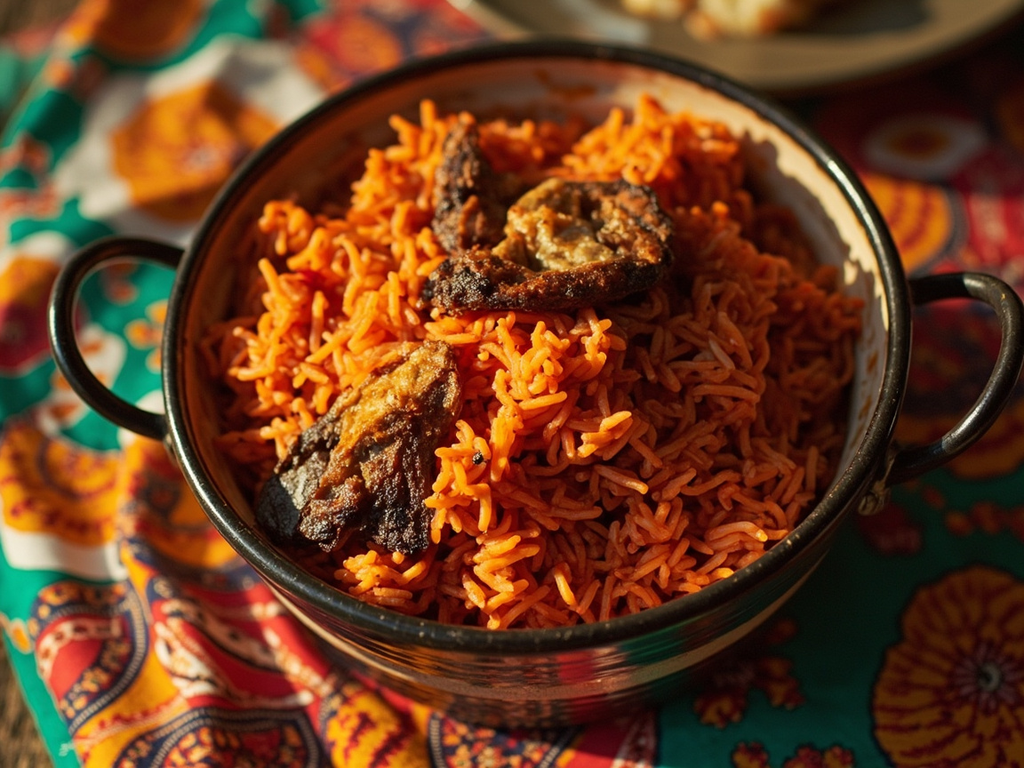
Jollof rice — festive red rice
Ceremonial rice (shared celebration dish)
🌶️ 🧂 🍄· 1 h 15
View the recipe
 Street food
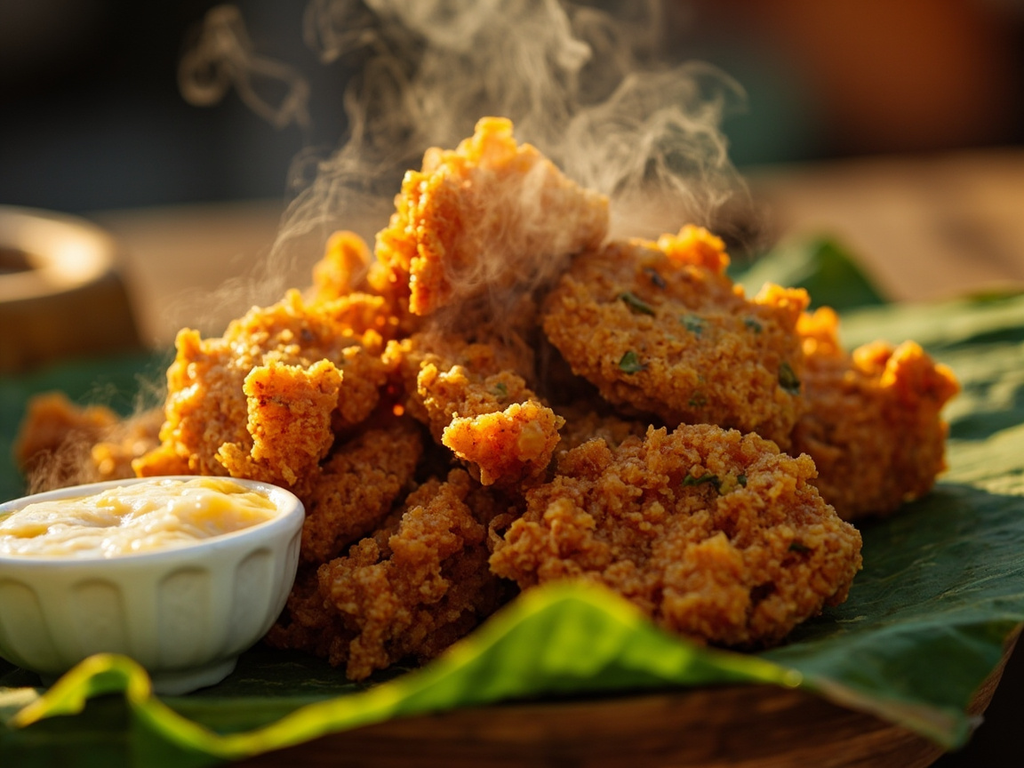
Akara — market bean fritters
Morning street fry (snack sold by women)
🧂 🍄· 40 min (plus soaking)
View the recipe
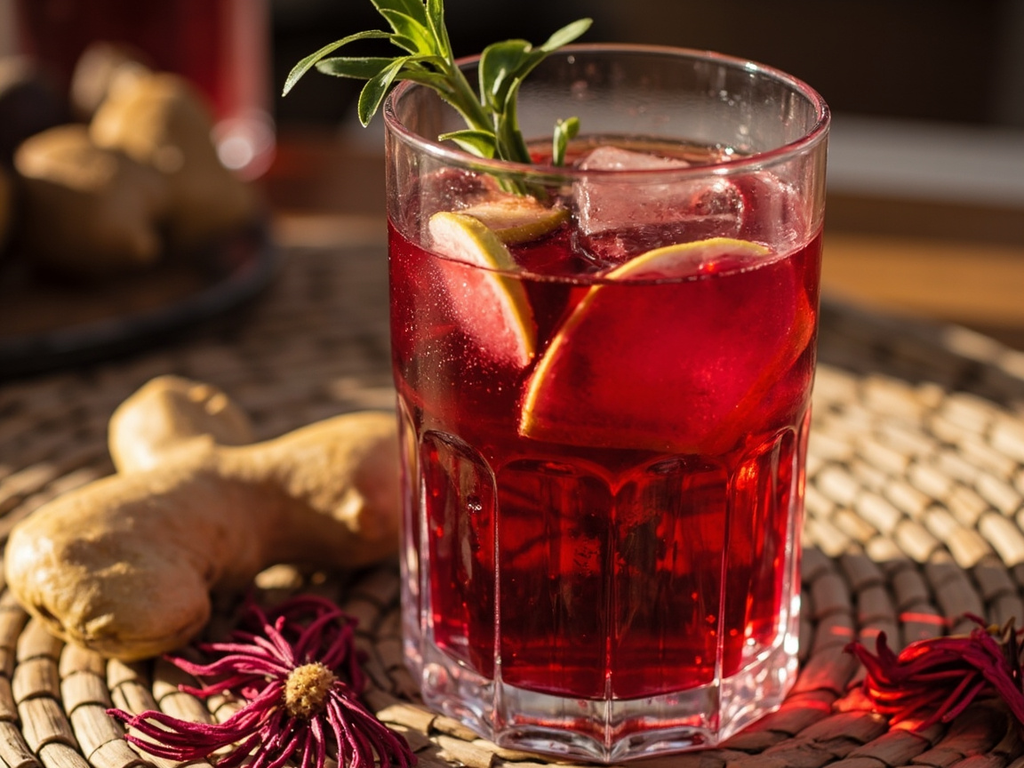 Drink
DrinkZobo — red hibiscus infusion
Courtyard refreshing drink (omi tutu, 'cool water')
🍋 🍯· 45 min (+ cooling)
View the recipe