 flip
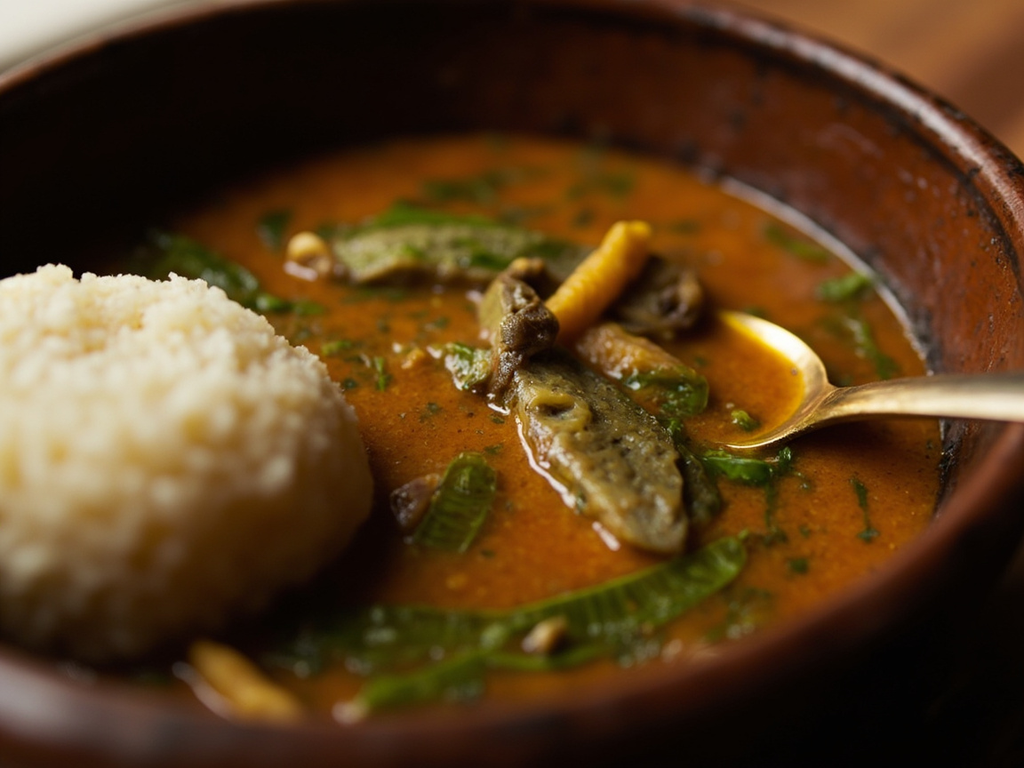
flipIyan ati obe egusi — pounded yam and egusi soup
Iyan ati obe egusi — pounded yam and egusi soup
Why this dish? Iyan accompanied by egusi soup was the daily fare of Yoruba families in Abeokuta, and Funmilayo's file explicitly mentions it as the daily food of her household. It was around this dish, shared by hand among the Ransome-Kutis, that discussions about colonial taxation and women's rights took place.
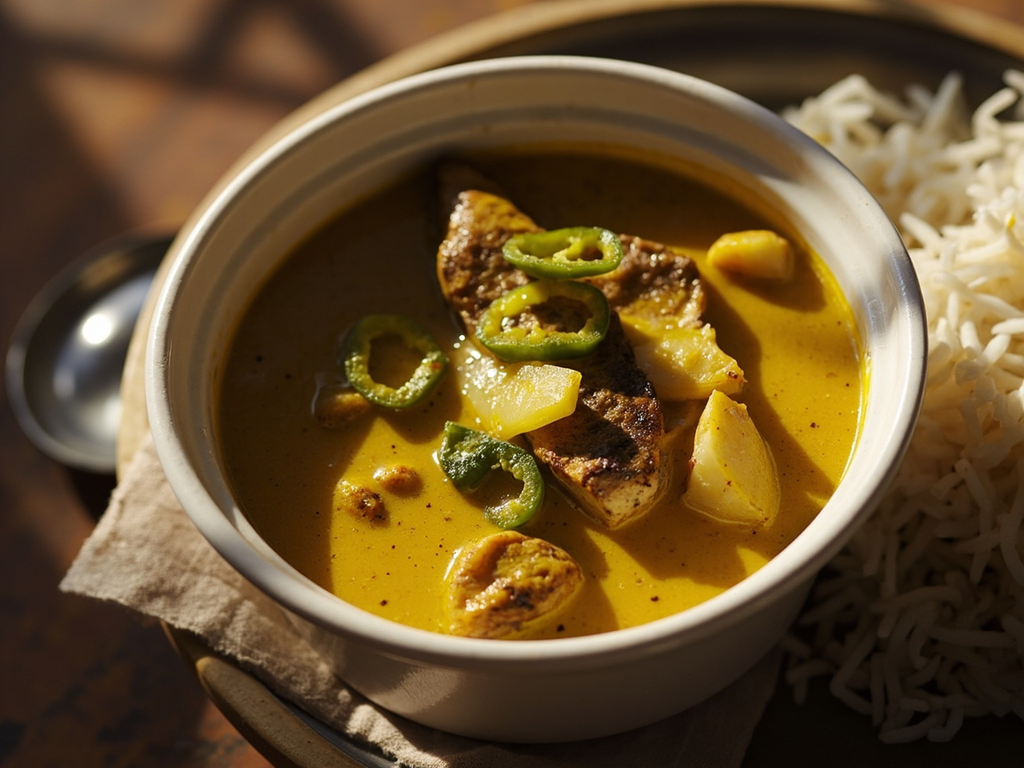
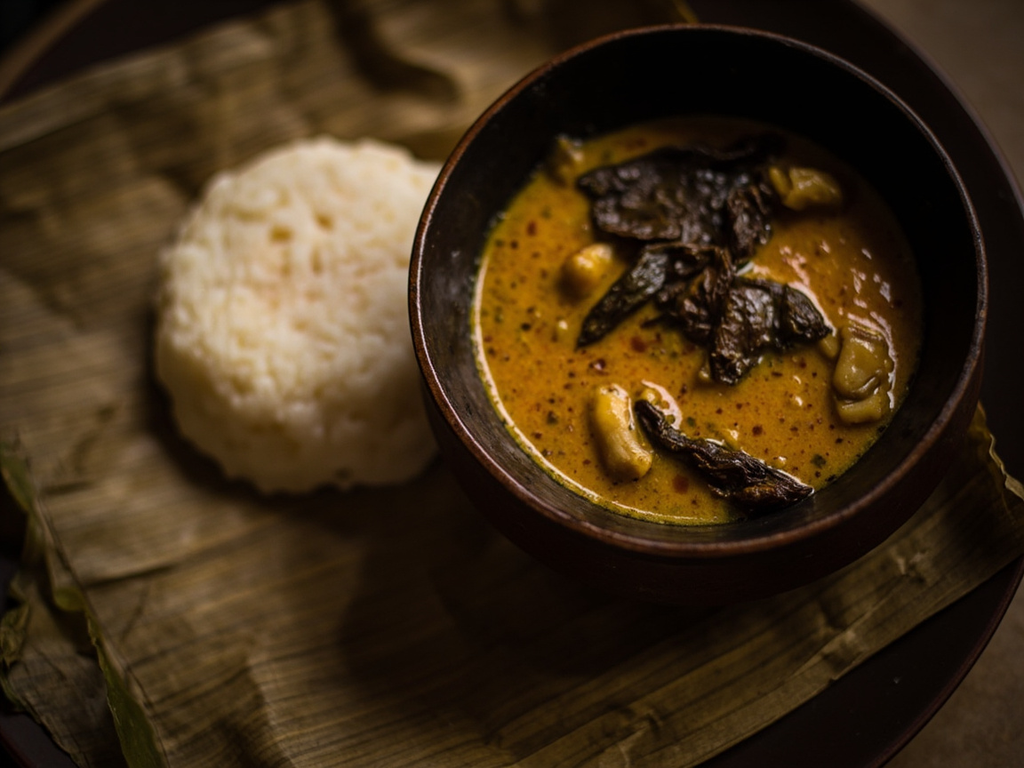
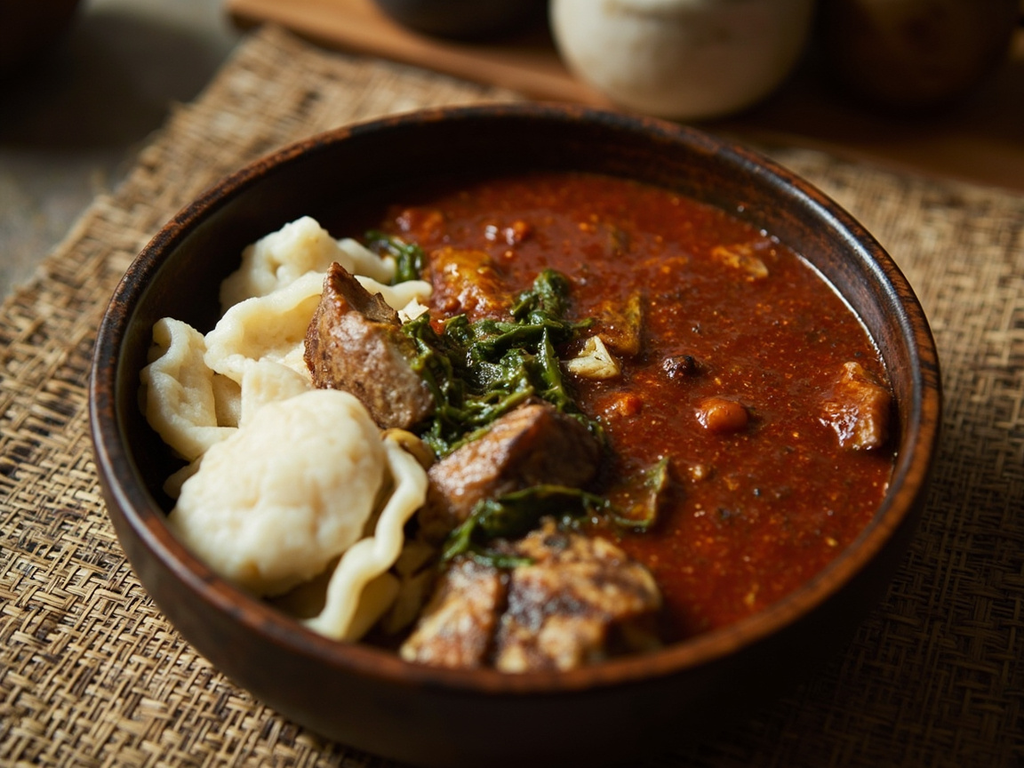
A ball of white yam pounded until smooth and elastic, dipped into a thick soup of ground egusi seeds bound with red palm oil, spiked with smoked fish and leafy greens. The everyday dish, nourishing and profound.
Come closer, my child, and watch how this yam becomes silky under the pestle — it takes two arms and a patient heart so that no lump remains. In our home in Abeokuta, we do not eat iyan with a fork: only the right hand knows the proper way to scoop the egusi. I have served this soup to market women who came to talk about the tax they demanded from us without giving us a voice, and I tell you: one thinks better with a belly filled with good soup. Never skimp on the red oil or the smoked fish, or you will end up with nothing but sad water.
- •White yam (African yam) — one large tuber for two (the swallow, pounded in a mortar)
- •Ground egusi seeds — two good handfuls (umami thickener for the soup)
- •Red palm oil (epo pupa) — one ladle (fat and color)
- •Smoked and dried fish — to taste (salty-umami base)
- •Green leaves (ugu / amaranth) — one bunch (vegetable)
- •Fresh chili, onion, dried shrimp (or crab) — to taste (seasoning)
Iyan ati obe egusi — pounded yam and egusi soup
A ball of white yam pounded until smooth and elastic, dipped into a thick soup of ground egusi seeds bound with red palm oil, spiked with smoked fish and leafy greens. The everyday dish, nourishing and profound.
Why this dish? Iyan accompanied by egusi soup was the daily fare of Yoruba families in Abeokuta, and Funmilayo's file explicitly mentions it as the daily food of her household. It was around this dish, shared by hand among the Ransome-Kutis, that discussions about colonial taxation and women's rights took place.
Come closer, my child, and watch how this yam becomes silky under the pestle — it takes two arms and a patient heart so that no lump remains. In our home in Abeokuta, we do not eat iyan with a fork: only the right hand knows the proper way to scoop the egusi. I have served this soup to market women who came to talk about the tax they demanded from us without giving us a voice, and I tell you: one thinks better with a belly filled with good soup. Never skimp on the red oil or the smoked fish, or you will end up with nothing but sad water.
Ingredients (period version)
- White yam (African yam) — one large tuber for two (the swallow, pounded in a mortar)
- Ground egusi seeds — two good handfuls (umami thickener for the soup)
- Red palm oil (epo pupa) — one ladle (fat and color)
- Smoked and dried fish — to taste (salty-umami base)
- Green leaves (ugu / amaranth) — one bunch (vegetable)
- Fresh chili, onion, dried shrimp (or crab) — to taste (seasoning)
Ingredients
- Yam (from African market) or, failing that, potatoes + cassava for eba — 800 g
- Ground egusi seeds — 200 g (thickener)
- Red palm oil — 6 tbsp (color and fat)
- Smoked fish (mackerel) + dried shrimp — 150 g + 2 tbsp (umami)
- Spinach or ugu leaves — 200 g (vegetable)
- Onion, 1 scotch bonnet chili, stock — 1 + 1 + 500 ml (aromatic base)
Method
- Peel the yam, cut into large chunks, and boil until tender.
- Pound in a mortar (or process hot in a food processor with a little cooking water) until a smooth, elastic dough forms; shape into balls.
- Heat the red palm oil, sauté onion and chili, add dried shrimp and crumbled smoked fish.
- Mix the ground egusi with a little stock to form a paste, add it spoonful by spoonful and cook until the seed 'curdles' and the oil rises.
- Add more stock, simmer for 15 minutes, add the leaves at the end, adjust salt.
- Serve the soup alongside the yam balls; eat with the right hand.
How it was made : Yam was pounded daily in the large wooden mortar (*odo*) with a pestle, a rhythmic and noisy task in Yoruba courtyards. Egusi was ground on a flat stone. Without industrial stock cubes, umami came from dried shrimp and fish, *iru* (fermented locust beans), and crayfish.
The contemporary twist : Serve the iyan ball as a smooth quenelle shaped with a wet spoon, egusi soup ladled around it, and a drizzle of red oil on top for a glossy finish.
Funmilayo Ransome-Kuti · Charactorium