 Flip the card
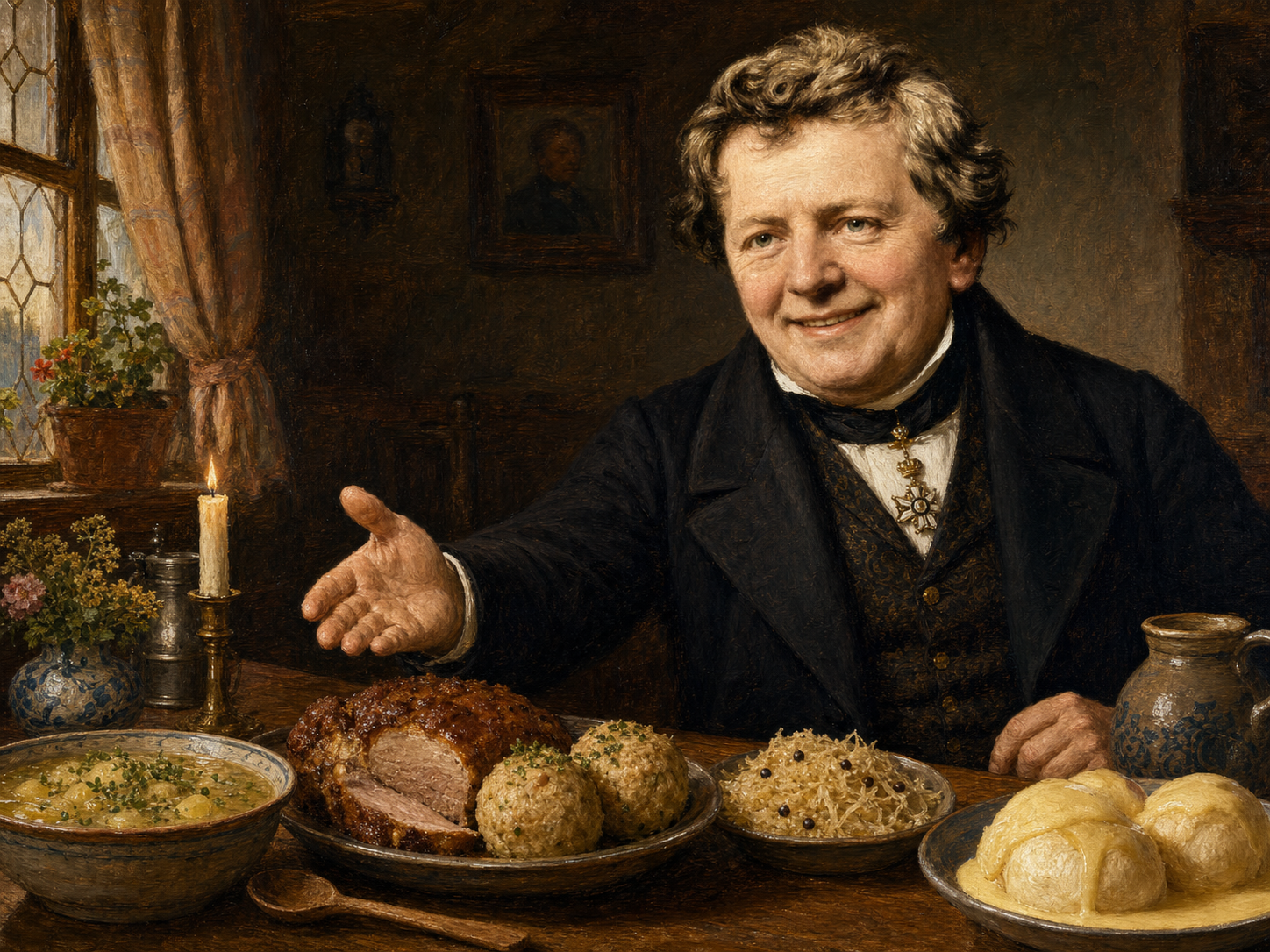
Georg Ohm at the table
1789 — 1854
On the menu
Bavarian Mittagessen, Brotzeit, and Abendbrot
In 19th-century Bavaria, the day revolved around a hot midday meal (Mittagessen) — soup followed by a single dish of meat, starch, and cabbage — framed by cold bread snacks (Brotzeit) in the morning and evening (Abendbrot). On Sundays and holidays, roast and Knödel were brought out; steamed sweet dumplings served as a full meal in modest households. Beer accompanied or nourished, even in the morning soup.
Signature : Kümmel (caraway)
Caraway is the red thread spice of Bavarian cuisine: it perfumes roast, cabbage, and rye bread, and is said to aid digestion of the hearty dishes of a frugal academic household. A discreet but omnipresent signature on Ohm's table.
click to flip back
Georg Ohm at the table
1789 — 1854
5 period recipes
 Everyday
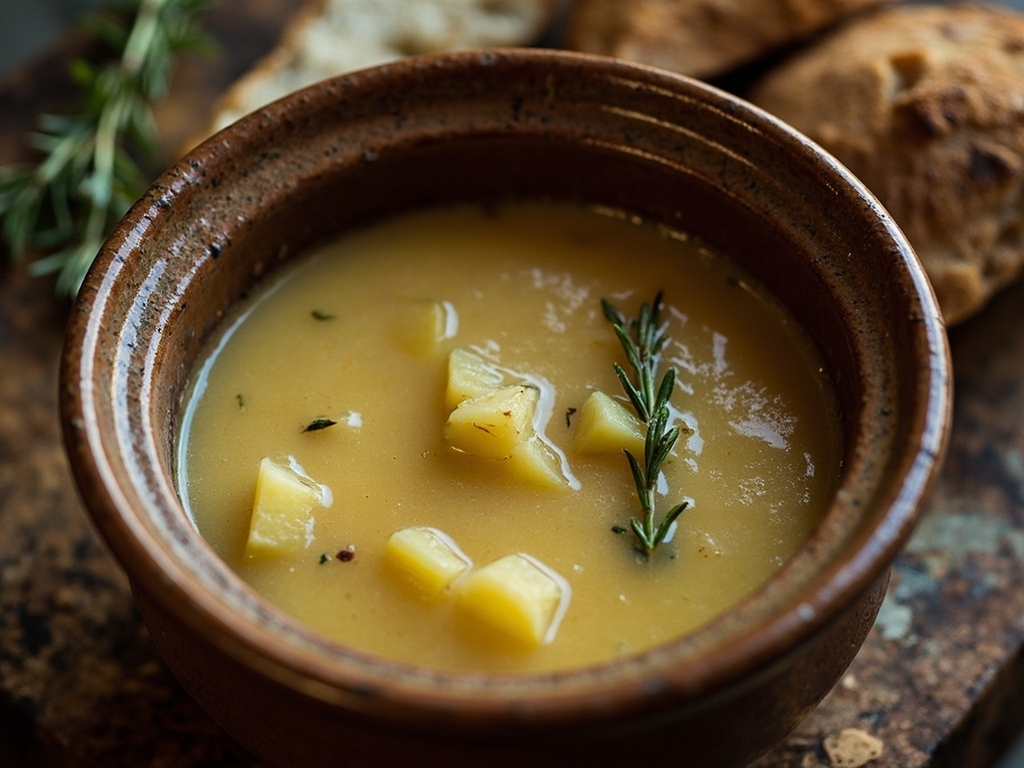
Kartoffelsuppe mit Majoran (Potato Soup with Marjoram)
Mittagessen — the hot soup that opens the midday meal
🧂 🍄· 40 min
View the recipe
 Festive
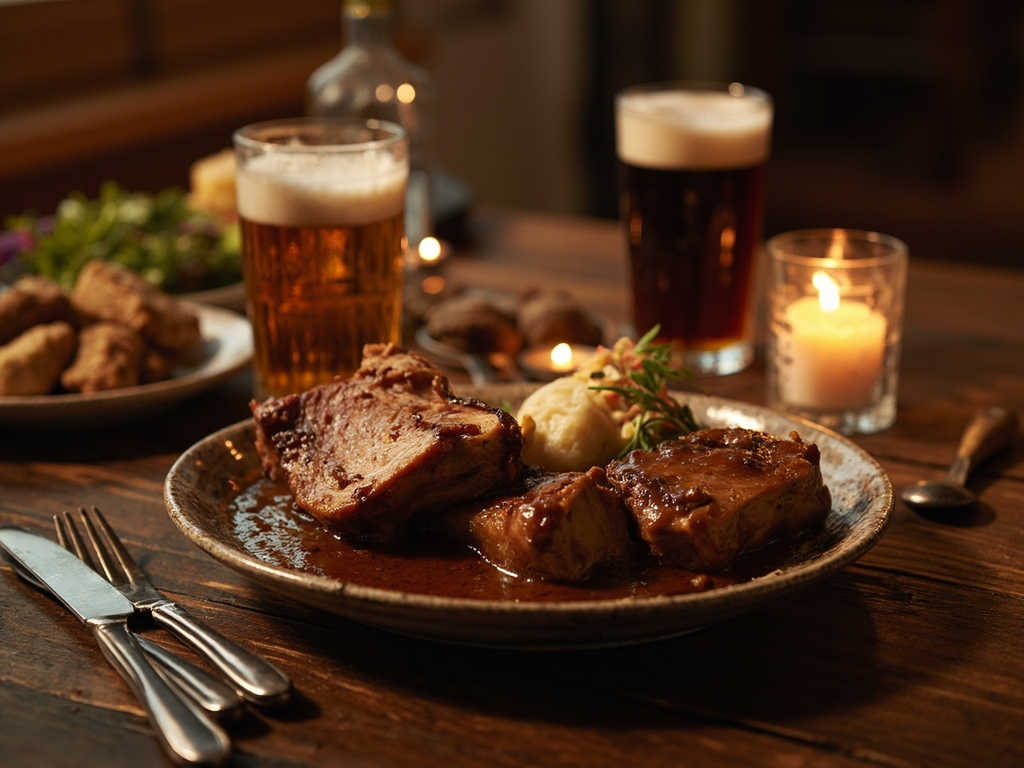
Schweinsbraten mit Semmelknödel (Roast Pork with Bread Dumplings)
Sonntagsbraten — the Sunday roast, heart of the festive meal
🧂 🍄· 2 h 45
View the recipe
 Preserving
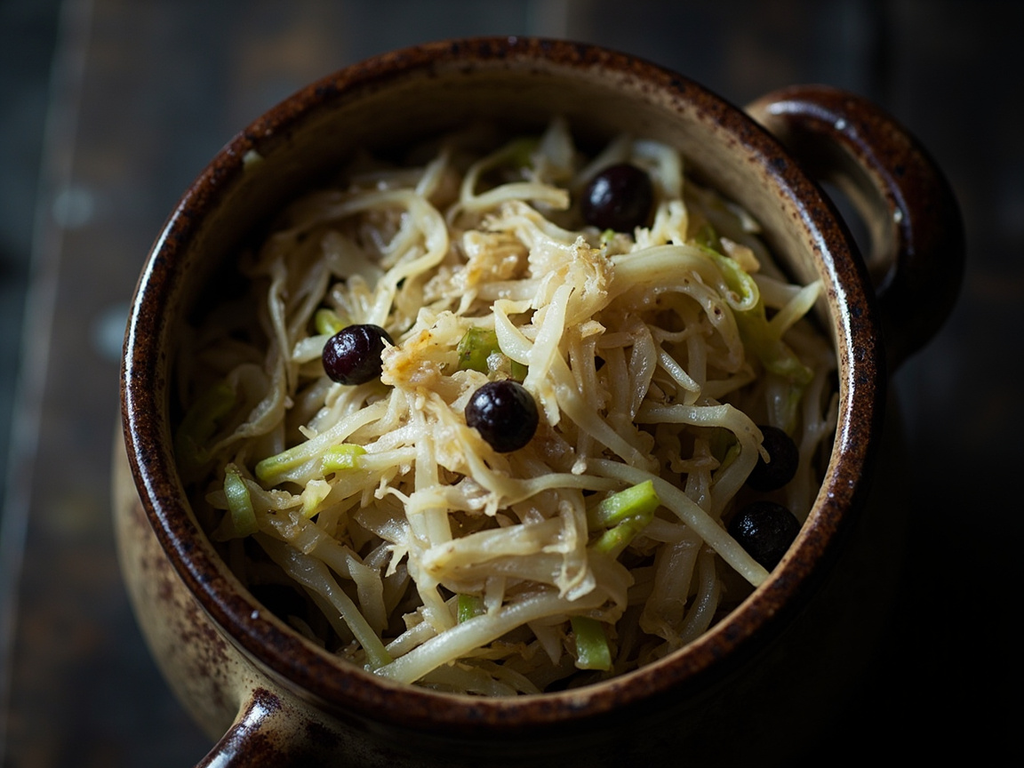
Sauerkraut mit Wacholder (Sauerkraut with Juniper)
Eingemachtes — the fermented winter pantry reserve
🍋 🫙· 40 min (excluding 2-4 weeks fermentation)
View the recipe
 Festive
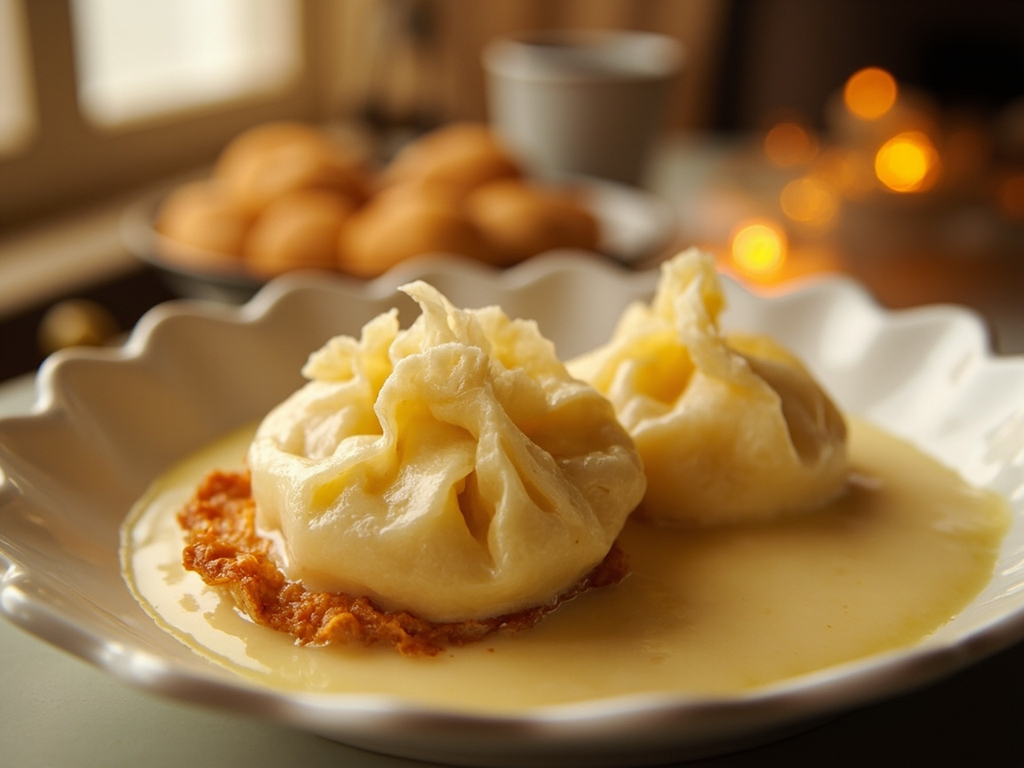
Dampfnudeln mit Vanillesoße (Steamed Yeast Dumplings with Vanilla Custard)
Mehlspeise — the sweet flour dish serving as a full meal
🍯· 2 h (including 1 h 20 rising)
View the recipe
 Remedy
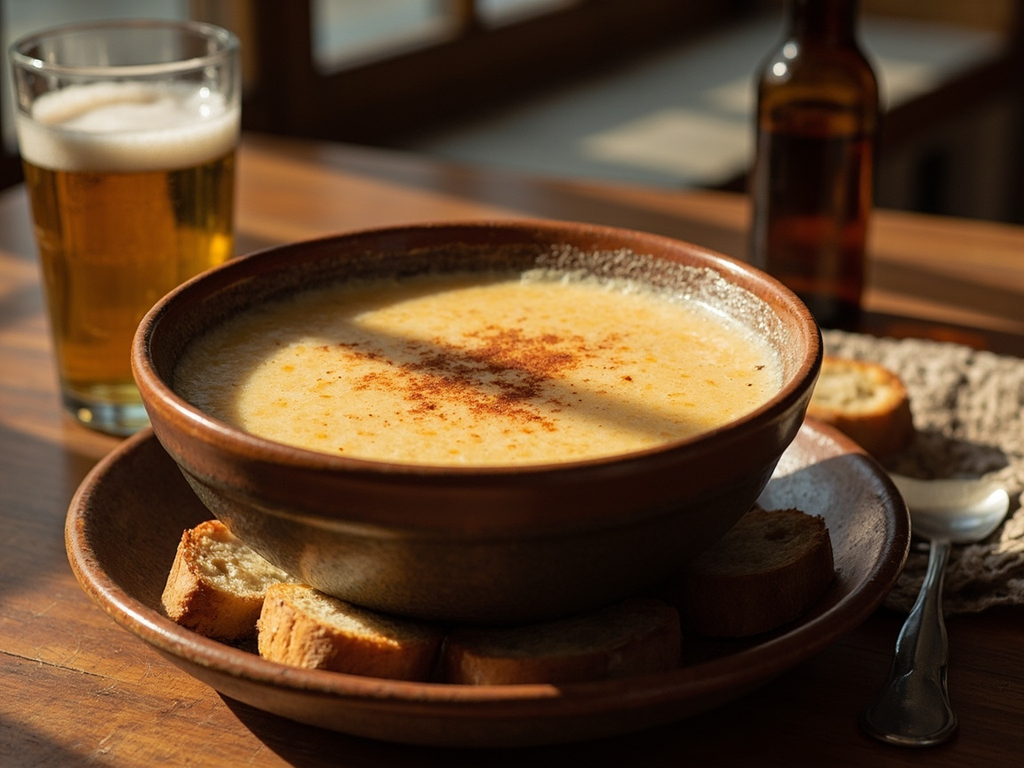
Biersuppe (Hot Beer Soup)
Frühstückssuppe — the morning remedy soup
☕ 🌶️· 20 min
View the recipe