 flip
flipSauerkraut mit Wacholder (Sauerkraut with Juniper)
Sauerkraut mit Wacholder (Sauerkraut with Juniper)
Why this dish? Sauerkraut is mentioned among the foods known at Ohm's table. Preserving cabbage by lactic fermentation was a necessity in continental Bavaria with its long winters: a reserve of vitamins and acidity when fresh vegetables were scarce.
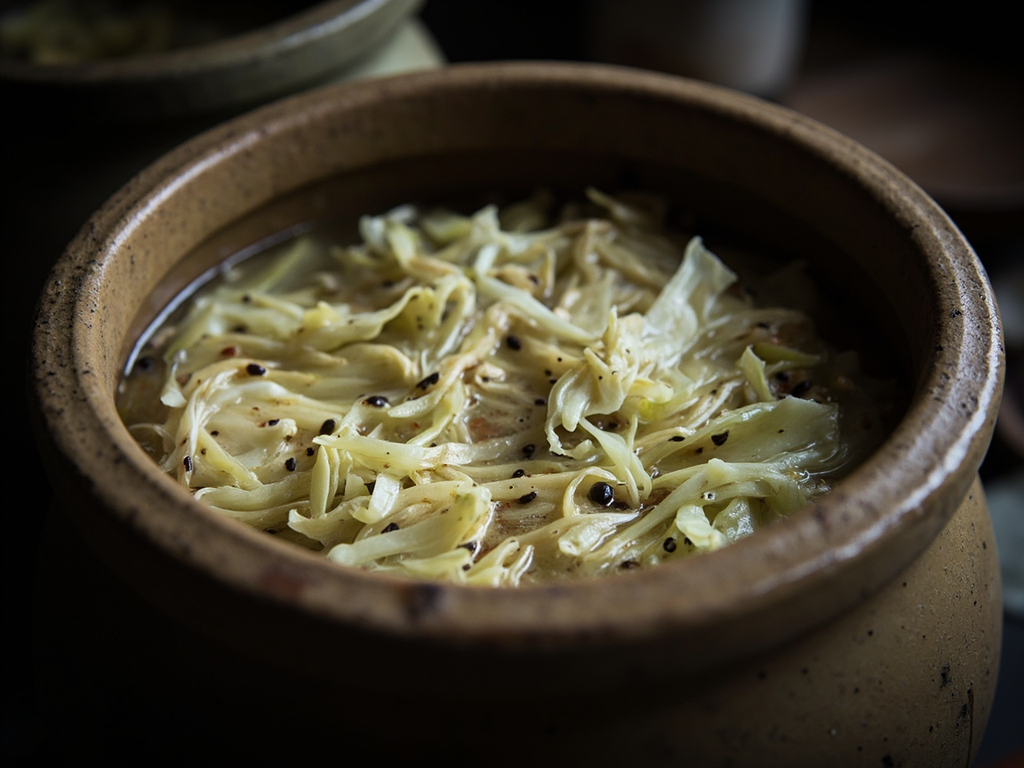
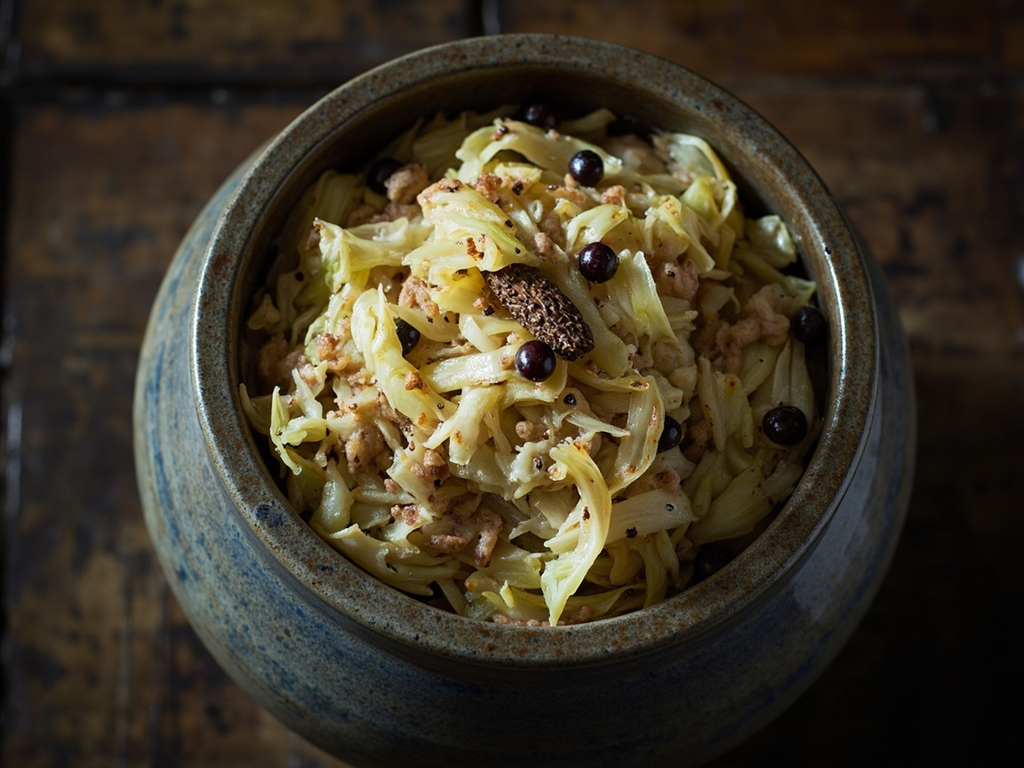
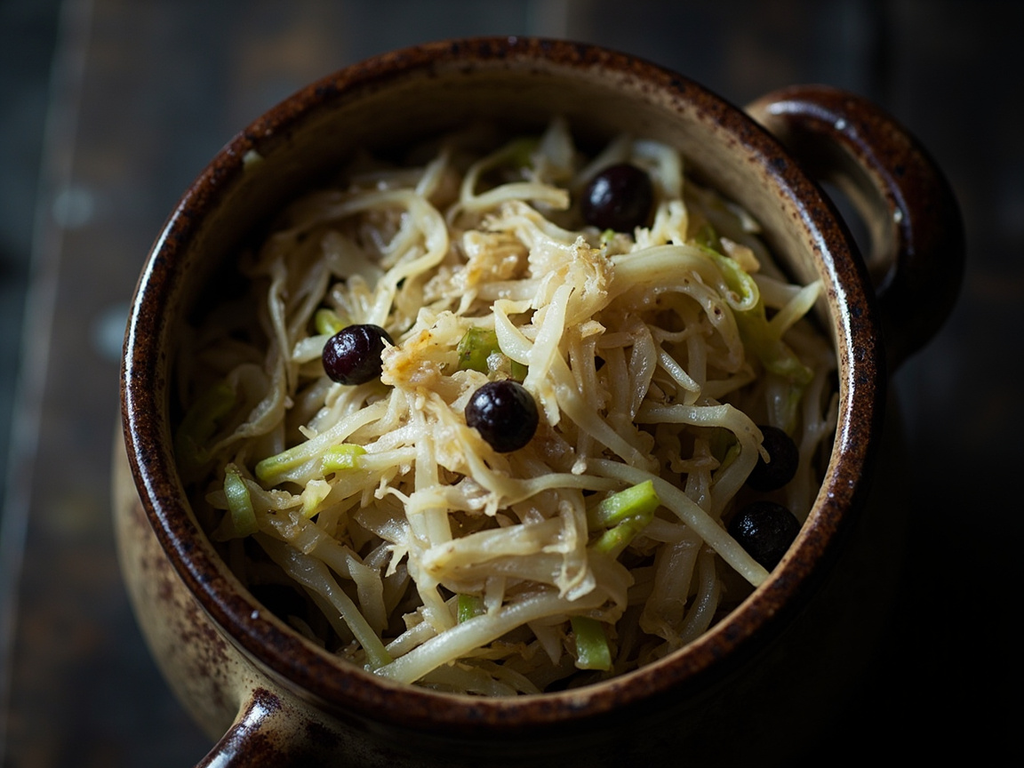
Finely shredded white cabbage, salted and fermented for several weeks, then simmered with juniper, caraway, and a little bacon. Tangy and lively, it is the side that balances fatty winter dishes.
Never underestimate a barrel of cabbage: it is domestic science. Salt, time, and a little patience turn a bland vegetable into a tangy reserve that lasts all winter — a fermentation as regular as a good experiment. My household always kept a jar. I would put in juniper berries and caraway, then let nature work. And when the Bavarian cold bit, this acidity was worth all remedies.
- •White cabbage — several heads (base to ferment)
- •Salt — about a handful per head (fermentation)
- •Juniper berries — a good pinch (perfume)
- •Caraway — a pinch (signature)
- •Bacon — a piece (cooking)
Sauerkraut mit Wacholder (Sauerkraut with Juniper)
Finely shredded white cabbage, salted and fermented for several weeks, then simmered with juniper, caraway, and a little bacon. Tangy and lively, it is the side that balances fatty winter dishes.
Why this dish? Sauerkraut is mentioned among the foods known at Ohm's table. Preserving cabbage by lactic fermentation was a necessity in continental Bavaria with its long winters: a reserve of vitamins and acidity when fresh vegetables were scarce.
Never underestimate a barrel of cabbage: it is domestic science. Salt, time, and a little patience turn a bland vegetable into a tangy reserve that lasts all winter — a fermentation as regular as a good experiment. My household always kept a jar. I would put in juniper berries and caraway, then let nature work. And when the Bavarian cold bit, this acidity was worth all remedies.
Ingredients (period version)
- White cabbage — several heads (base to ferment)
- Salt — about a handful per head (fermentation)
- Juniper berries — a good pinch (perfume)
- Caraway — a pinch (signature)
- Bacon — a piece (cooking)
Ingredients
- White cabbage — 1 kg (for fermentation) (base)
- Non-iodized salt — 20 g (2% of cabbage weight) (fermentation)
- Juniper berries — 10 (perfume)
- Caraway seeds — 1 tsp (signature)
- Smoked bacon or onion — 80 g (cooking)
- Already fermented raw sauerkraut — 500 g (quick option) (shortcut)
Method
- To ferment yourself: shred the cabbage very finely, massage with salt until it releases its juice.
- Pack tightly into a clean jar, cabbage must be submerged in its brine; cover and let ferment 2 to 4 weeks at room temperature.
- To cook (or with store-bought sauerkraut): sweat the bacon or onion in a pot.
- Add drained sauerkraut, juniper, and caraway, moisten with a little water or broth.
- Simmer covered for 30-40 min; serve with sausages or roast.
How it was made : The salted cabbage was packed into large wooden barrels, weighted with a stone, in the cool cellar. Lactic fermentation — practiced without knowledge of its microbiology — preserved the cabbage and gave it its characteristic sourness for the entire winter.
The contemporary twist : A spoonful of raw (uncooked) sauerkraut as a living condiment on a rye bread slice, to enjoy its ferments in a contemporary way.
Georg Ohm · Charactorium