 flip
flipNocino — Walnut Liqueur of St. John's Day
Nocino — Walnut Liqueur of St. John's Day
Why this dish? Verdi was a proud farmer of his Sant'Agata estate, where they produced oil, wine, and fruit. *Nocino*, a green walnut liqueur that Emilian families prepared on St. John's Day (June 24), embodies this attachment to the land he cultivated between operas.
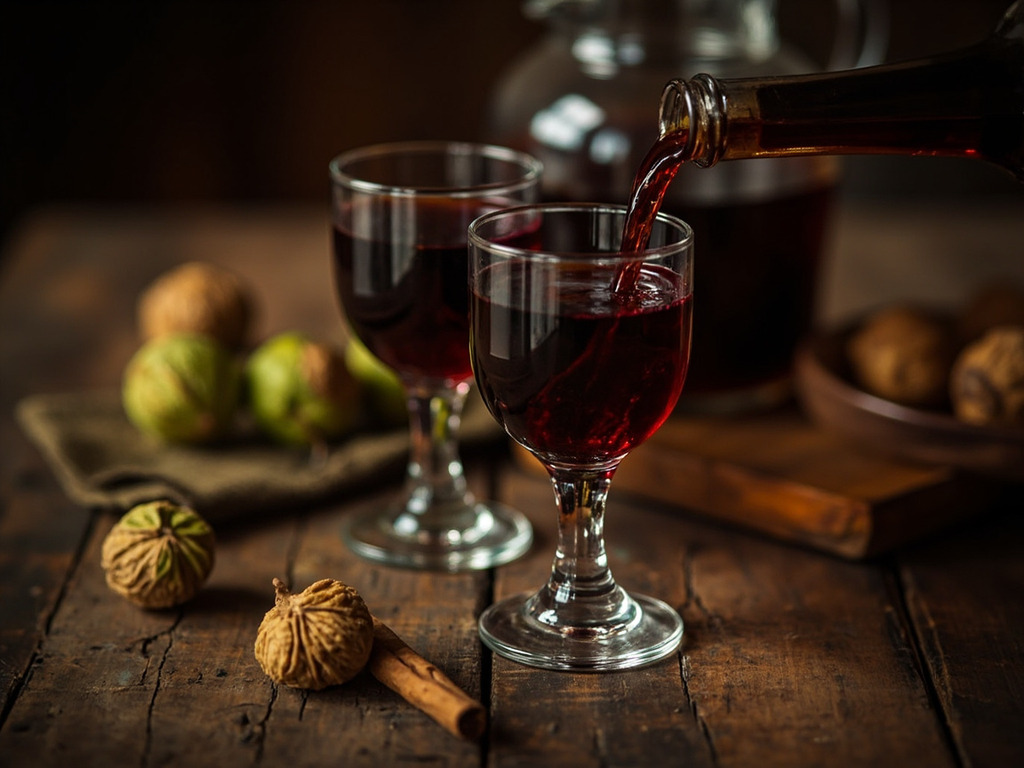
A dark, aromatic liqueur made from green walnuts picked in June, macerated with sugar and spices. Bitter and sweet at once, served as a digestif after the meal.
On St. John's Day, when the walnuts are still green and tender, you pick them before the shell hardens — it's the women's business, and woe to anyone who leaves it too late. You split them, let them macerate in alcohol with sugar, cinnamon, a clove, and you wait for time to do its work, like a score you don't rush. After forty days, it's black as ink and bittersweet. A small glass after the meal, and you sleep like a righteous man.
- •Green walnuts picked on St. John's Day — about twenty (aromatic base)
- •Eau-de-vie — one bottle (maceration)
- •Sugar — generously (sweetness)
- •Cinnamon, clove, lemon zest — to taste (spices)
Nocino — Walnut Liqueur of St. John's Day
A dark, aromatic liqueur made from green walnuts picked in June, macerated with sugar and spices. Bitter and sweet at once, served as a digestif after the meal.
Why this dish? Verdi was a proud farmer of his Sant'Agata estate, where they produced oil, wine, and fruit. *Nocino*, a green walnut liqueur that Emilian families prepared on St. John's Day (June 24), embodies this attachment to the land he cultivated between operas.
On St. John's Day, when the walnuts are still green and tender, you pick them before the shell hardens — it's the women's business, and woe to anyone who leaves it too late. You split them, let them macerate in alcohol with sugar, cinnamon, a clove, and you wait for time to do its work, like a score you don't rush. After forty days, it's black as ink and bittersweet. A small glass after the meal, and you sleep like a righteous man.
Ingredients (period version)
- Green walnuts picked on St. John's Day — about twenty (aromatic base)
- Eau-de-vie — one bottle (maceration)
- Sugar — generously (sweetness)
- Cinnamon, clove, lemon zest — to taste (spices)
Ingredients
- Green walnuts (harvested late June) — 20 pieces (aromatic base)
- 95% proof fruit alcohol (or 40% eau-de-vie) — 1 L (maceration)
- Sugar — 500 g (sweetness)
- Cinnamon stick — 1 (spice)
- Cloves — 3 (spice)
- Zest of 1 untreated lemon — 1 (freshness)
Method
- Quarter the green walnuts (wear gloves: they stain hands badly).
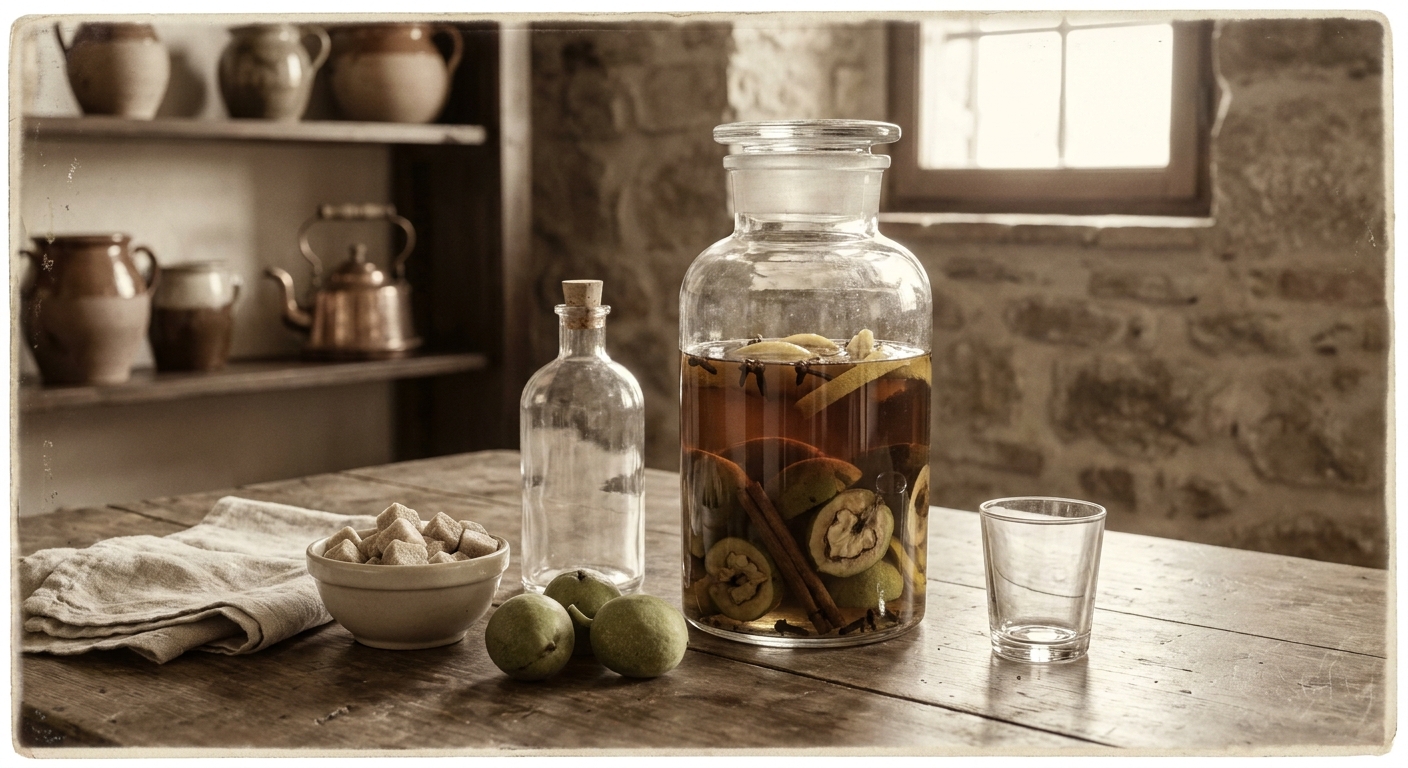
- Place them in a large jar with the alcohol, sugar, cinnamon, cloves, and lemon zest.
- Seal and macerate in the sun or at room temperature for 40 days, shaking the jar occasionally.
- Strain through a fine cloth and bottle.
- Age at least 3 to 6 months before tasting, in a very small glass.
How it was made : *Nocino* is a peasant liqueur of Emilia and Romagna, traditionally started on June 24 (St. John's Day), when the walnut is still milky. The harvest often fell to women, bare-handed or gloved, and each family kept its own spice recipe.
The contemporary twist : Serve over a large ice rock in a small glass — 'the Maestro's black digestif' at the end of an opera dinner.
Sources : Liqueur traditions of Emilia-Romagna (nocino di San Giovanni)
Giuseppe Verdi · Charactorium