 Flip the card
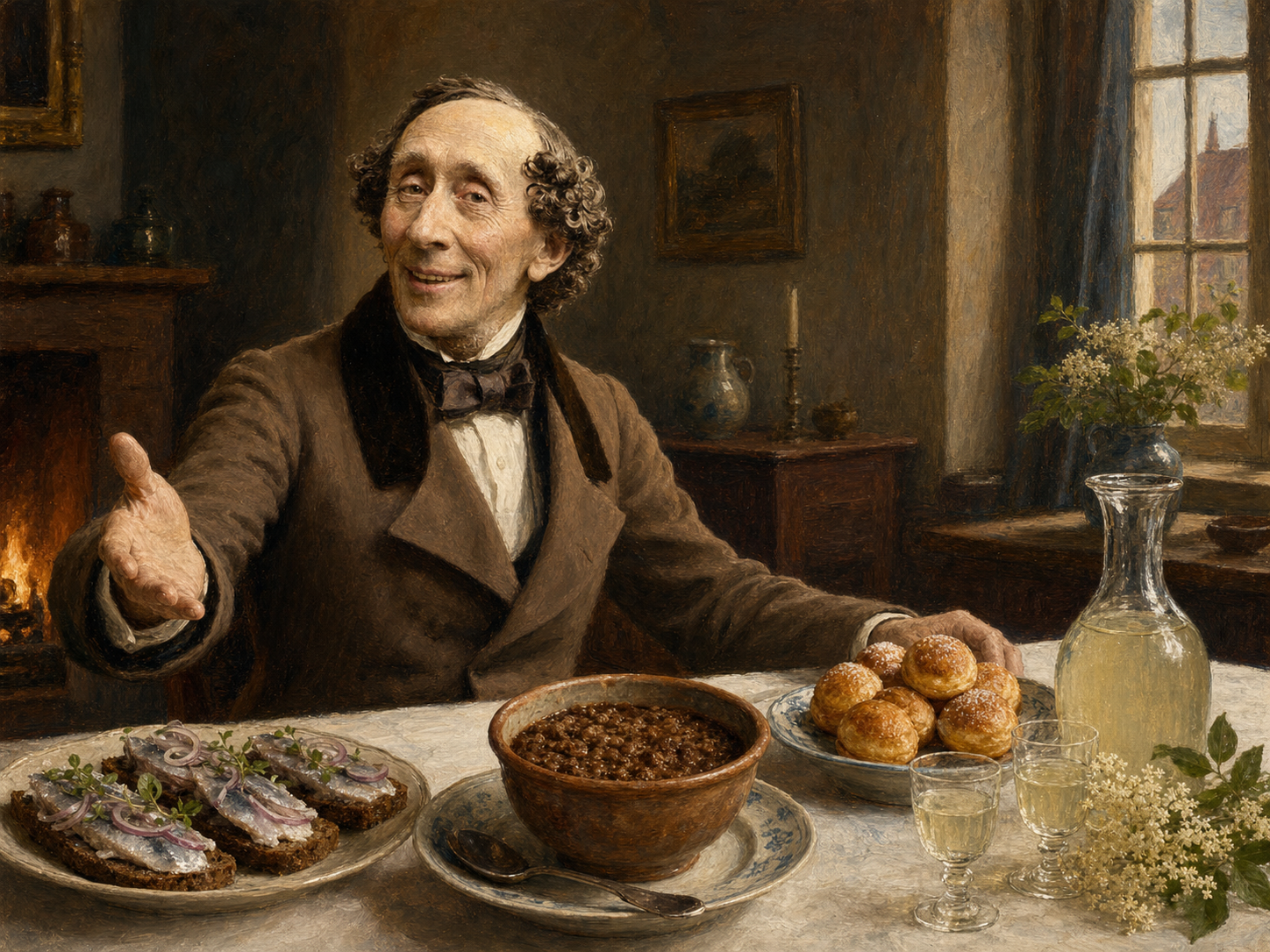
Hans Christian Andersen at the table
1805 — 1875
On the menu
The Rhythm of Danish Rugbrød (Davre, Mellemmad, Middag, Nadver)
In 19th-century Denmark, the day was not divided into starter-main-dessert but into four meals centered around rye bread. Davre (early morning) and mellemmad (midday snack) relied on rugbrød spread as smørrebrød; middag (hot meal) brought soup or stewed meat; nadver (evening) closed with porridge or a simple dish. Sour rye bread was the foundation of everything; sweets only appeared at festivities or in drinks.
Signature : Sour Rye (Surdej af Rug, Surdej)
The signature of Andersen's Danish table is naturally leavened rye: it makes the dense rugbrød for smørrebrød, is recycled into øllebrød porridge, and keeps for weeks for travel. This gentle acidity of fermented rye is the thread connecting the daily life of the poor boy from Odense to the dinners at the Hotel d'Angleterre.
click to flip back
Hans Christian Andersen at the table
1805 — 1875
5 period recipes
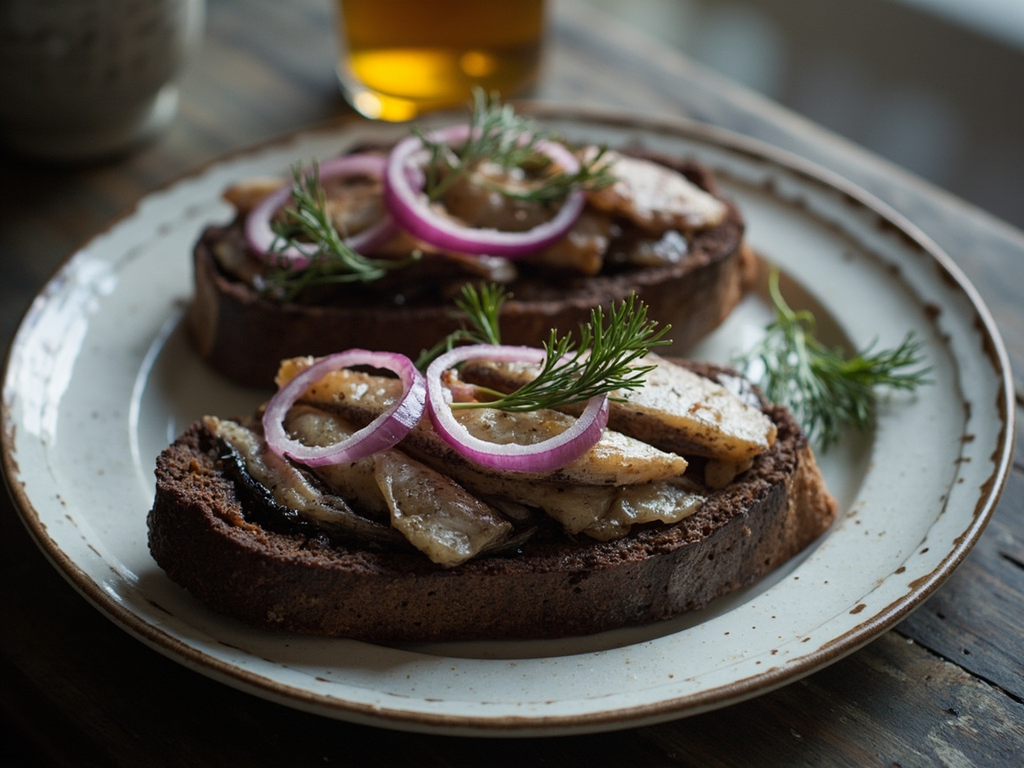 Everyday
Smørrebrød with Marinated Herring on Rye Bread
mellemmad (spread midday snack)
🧂 🍄 🫙· 15 min
View the recipe
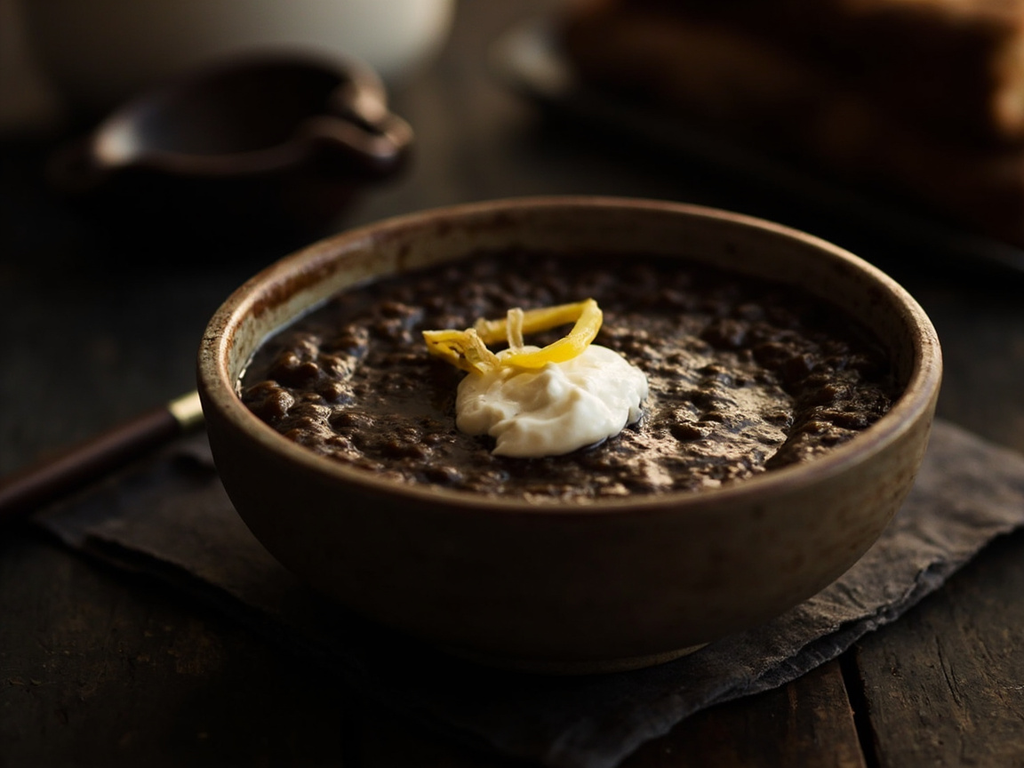 Remedy
Øllebrød — Rye Bread and Beer Porridge
davre / nadver (comforting morning or evening porridge)
🍯 ☕· 30 min (plus overnight soaking)
View the recipe
 Festive
Æbleskiver — Golden Christmas Eve Pancake Balls
jul (Advent and Christmas treat)
🍯· 45 min
View the recipe
 Drink
DrinkHyldeblomstsaft — Elderflower Cordial
saft (sweet summer drink to dilute)
🍯 🍋· 30 min (plus 2 to 3 days infusion)
View the recipe
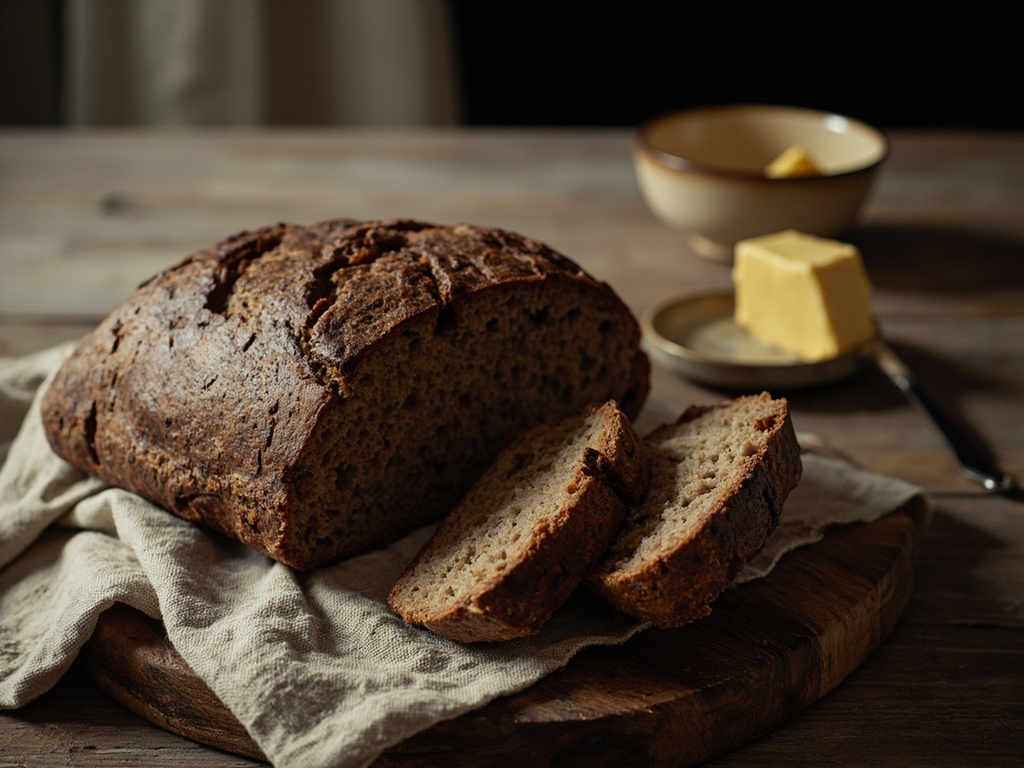 Travel
Rugbrød — Sourdough Rye Bread for the Road
brød (keeping bread, travel companion)
🧂 🫙· 2 h work (plus starter the night before and 3-5 h rise)
View the recipe