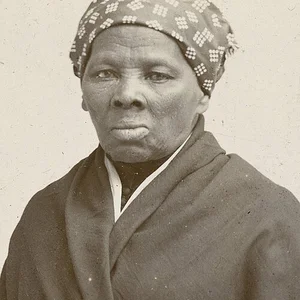

Born into slavery around 1822, Harriet Tubman escaped in 1849 and became one of the most celebrated conductors of the Underground Railroad, helping hundreds of enslaved people flee to the North. An abolitionist, a spy for the Union during the Civil War, and an advocate for women's rights, she is a towering figure in the American struggle for freedom.
Harriet Tubman(1820 — 1913)
Harriet Tubman
États-Unis
8 min read
Frequently asked questions
Famous Quotes
« I never ran my train off the track, and I never lost a passenger.»
« I could have freed a thousand more, if only they had known they were slaves.»
Key Facts
- Born around 1822 in Maryland into slavery under the name Araminta Ross
- Escaped slavery in 1849 and made her way to the free states of the North
- Conducted approximately 13 missions between 1850 and 1860, guiding more than 70 enslaved people to freedom via the Underground Railroad
- Served as a spy, scout, and nurse for the Union Army during the Civil War (1861–1865)
- Died on March 10, 1913; her portrait is slated to appear on the U.S. twenty-dollar bill
Works & Achievements
Harriet Tubman carried out around ten missions on the Underground Railroad, directly freeing approximately 70 people and inspiring hundreds of others. This clandestine network of safe houses stretched from the slaveholding South all the way to Canada.
A unique military operation in American history, planned and led by Harriet Tubman as a spy and guide for the Union Army in South Carolina. More than 700 enslaved people were freed in a single night.
The first biographical account based on Harriet Tubman's direct testimony, published to fund her humanitarian work. A foundational primary source on her missions and worldview.
Harriet Tubman's second authorized biography, enriched with new testimonies and anecdotes. The title 'Moses of Her People' echoes the nickname given to her by the abolitionist movement.
Harriet Tubman founded a care home in Auburn, New York, for elderly and destitute people, including former enslaved individuals. This project, run in partnership with the African Methodist Episcopal Church, reflects her lifelong commitment to social causes.
Anecdotes
Around the age of twelve, Harriet received a violent blow to the head when an overseer threw a metal weight at a fleeing enslaved man. This injury caused her to suffer epileptic episodes for the rest of her life, during which she would suddenly fall asleep. Despite this disability, she managed to lead dozens of covert missions, sometimes in the midst of an episode.
Harriet Tubman boasted that she had “never lost a single passenger” on the Underground Railroad. To ensure this, she enforced an iron rule: anyone who wanted to turn back endangered the entire group and risked betraying the whole network. She carried a revolver and did not take this rule lightly.
In June 1863, Harriet Tubman personally led the Combahee River Raid in South Carolina, guiding Union soldiers through mined areas identified by her local spies. In a single night, more than 700 enslaved people were freed — a unique military operation in American history, as it was led by a woman.
Frederick Douglass, himself a formerly enslaved man and great abolitionist, wrote to her in 1868: “I have known you for a long time and, among all the men and women I have ever heard of, few have lived lives more heroic than yours.” This letter remains one of the most eloquent testimonies to her courage.
In the final years of her life, Harriet Tubman actively campaigned for women’s suffrage. In 1911, at over 80 years old, she told a suffragist gathering: “I have suffered enough to believe that women deserve the right to vote.” She died in 1913, seven years before the 19th Amendment would finally grant that right.
Primary Sources
I have known you for a long time, and for a long time I have held your work sacred. I have not forgotten that the darkness, which was a hindrance to most, was an aid to you. The sun shone upon you only to betray you; the night was your shield.
When I escaped, I had a right to two things: liberty or death. If they had caught me and brought me back into slavery, they might have taken one or the other — not me.
She said she never lost a single passenger, she never permitted a soul to turn back, and to this day, she had never run the risk of being captured.
Harriet Tubman recounted that she heard the voice of God telling her which path to take, and that she trusted those instructions to guide her fugitives, whatever the circumstances.
Key Places
Harriet Tubman's birthplace and the site of her life in slavery, until her escape in 1849. The region is now designated a U.S. national historic site in her honor.
Harriet Tubman's first free destination after her escape in 1849, and the launching point for her earliest rescue missions. The city was a major hub of the abolitionist movement.
The Canadian city where Harriet Tubman settled between 1851 and 1857 to keep her freedom seekers beyond the reach of American fugitive slave laws. She organized numerous missions from this safe base.
Harriet Tubman's permanent home from 1859, where she lived until her death in 1913. She founded a home for elderly and indigent people there, which has since been converted into a national museum.
Site of the famous raid of June 2, 1863, led by Harriet Tubman alongside Black Union soldiers. In a single night, more than 700 enslaved people were freed in this historic military operation.
Typical Objects

Harriet Tubman always carried a weapon during her missions on the Underground Railroad. She used it to deter anyone who wanted to abandon the group, as a recaptured fugitive risked betraying the entire network under torture.
📷 CC BY 2.5 · Wikimedia Commons ↗
This lantern with an adjustable shutter allowed the group to light their path without revealing their position to slave catchers and patrols. It was an indispensable tool during the long nighttime marches through forests and swamps.
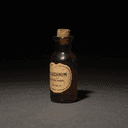
Harriet Tubman sometimes carried this liquid opiate to calm infants and young children during escapes, preventing their cries from alerting patrols or potentially hostile neighbors.
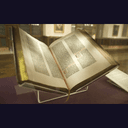
Deeply devout, Harriet Tubman relied on her faith to guide her decisions and keep her fugitives' spirits up. She attributed her 'visions' — likely connected to her epileptic seizures — to divine messages showing her the way forward.
📷 CC BY-SA 2.0 · Wikimedia Commons ↗
To avoid detection, Harriet Tubman sometimes disguised herself as a man, an old woman, or concealed her face beneath a wide shawl. These disguises allowed her to move relatively freely through slaveholding regions where she was a wanted fugitive.

Forged documents certifying that an enslaved person had been legally freed by their master. Harriet and her abolitionist allies used these papers to help fugitives pass through checkpoints without being immediately arrested.
School Curriculum
Vocabulary & Tags
Key Vocabulary
Tags
Daily Life
Morning
During her clandestine missions, Harriet Tubman rose before dawn to take advantage of the darkness. The group would then hide during the day in barns, cellars, or dense forests, sometimes with abolitionist sympathizers — free White and Black people — who were part of the network.
Afternoon
By day, Harriet and her fugitives remained still and silent in their hiding places, conserving their strength for the following night. She studied the stars, particularly the North Star, and memorized paths and natural landmarks to guide the next leg of the journey.
Evening
At nightfall, the group resumed its march northward, often covering dozens of miles through forests, swamps, and rivers. Harriet sang coded spirituals ('Go Down Moses', 'Wade in the Water') to relay information to the group without arousing the suspicion of passersby.
Food
During escapes, food was sparse and improvised: wild berries, raw or cooked corn, and provisions discreetly brought by sympathizers at stopping points. Once at their destination, the formerly enslaved people shared communal meals with the abolitionist families who sheltered them.
Clothing
Harriet Tubman wore simple, sturdy clothing suited to long walks through the wilderness in all weather. For her disguise missions, she dressed as a man, an old woman, or wrapped herself in a large shawl to conceal her features when passing through dangerous areas.
Housing
Harriet Tubman lived successively in plantation cabins during slavery, then in Underground Railroad safe houses belonging to abolitionists, and finally in her own home in Auburn (New York) purchased with the help of Senator William Henry Seward. This house is today a National Historic Landmark.
Historical Timeline
Period Vocabulary
Liens externes & ressources
Références
Œuvres
Underground Railroad — réseau de filières clandestines
1849-1860
Scenes in the Life of Harriet Tubman, recueillis par Sarah Bradford
1869
Harriet Tubman: The Moses of Her People, par Sarah Bradford
1886
Harriet Tubman Home — maison d'accueil pour personnes âgées
1896