 flip
flipRoast goose with honey, fig, and coriander
Roast goose with honey, fig, and coriander
Why this dish? During the great festivals of Hathor — such as the "Beautiful Feast of the Valley" or her birthday at Dendera — roasted poultry was offered to the gods. The goose, a fatty and prestigious bird of the Nile, appears on countless offering tables: the centerpiece of a banquet worthy of the goddess of joy.
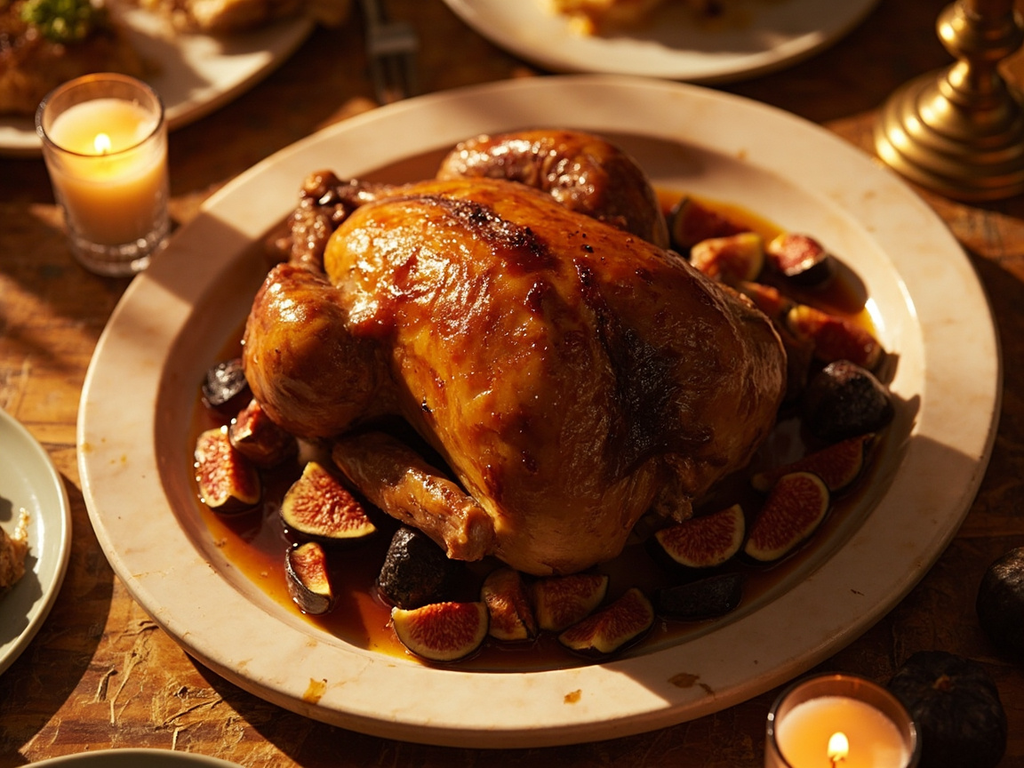
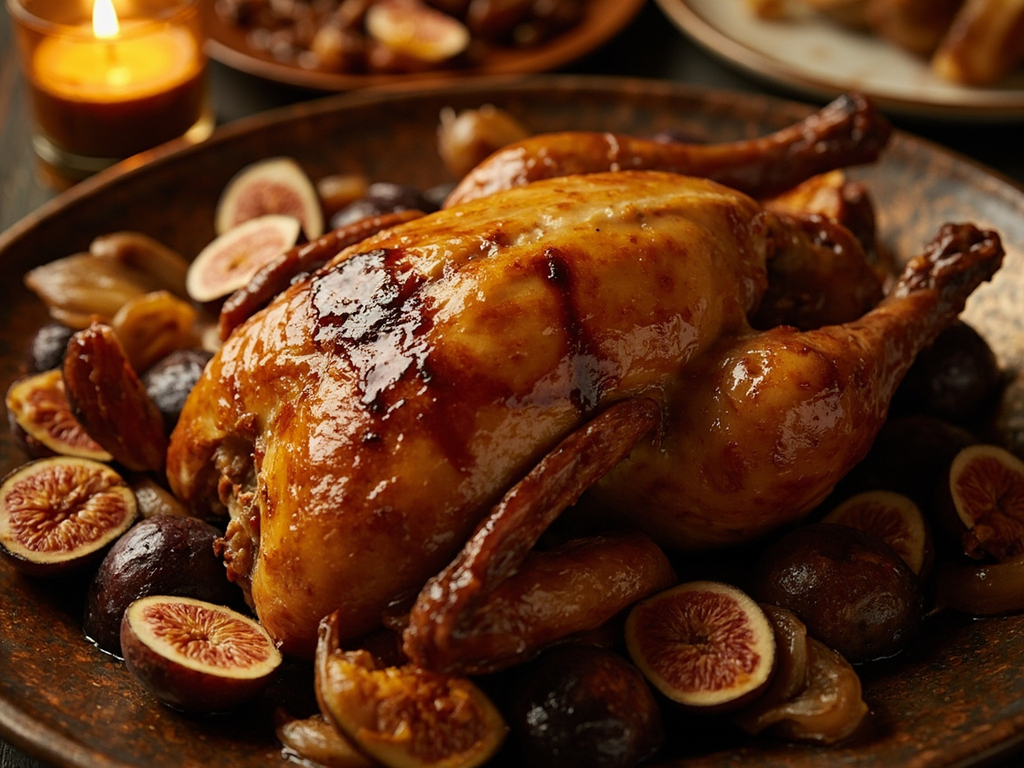
A roasted goose (or duck), lacquered with honey and cooking fat, stuffed with figs and perfumed with coriander and cumin — the festive dish par excellence, at once savory, sweet, and deeply flavorful.
Let the fattest goose from the Delta marshes be prepared for the day of my festival! My cooks rub it with salt and crushed coriander, slide ripe figs into its belly, and let it brown over the embers while basting it with honey until its skin sings under the finger. Its fat flows golden like the disk I wear between my horns — share it while singing, for no one weeps at my table.
- •Nile goose (or duck) — one bird (base)
- •Honey — for lacquering (glaze)
- •Figs — a handful (stuffing)
- •Coriander and cumin seeds — crushed (perfume)
- •Salt — for rubbing (seasoning)
- •Onion — a few (aromatic)
Roast goose with honey, fig, and coriander
A roasted goose (or duck), lacquered with honey and cooking fat, stuffed with figs and perfumed with coriander and cumin — the festive dish par excellence, at once savory, sweet, and deeply flavorful.
Why this dish? During the great festivals of Hathor — such as the "Beautiful Feast of the Valley" or her birthday at Dendera — roasted poultry was offered to the gods. The goose, a fatty and prestigious bird of the Nile, appears on countless offering tables: the centerpiece of a banquet worthy of the goddess of joy.
Let the fattest goose from the Delta marshes be prepared for the day of my festival! My cooks rub it with salt and crushed coriander, slide ripe figs into its belly, and let it brown over the embers while basting it with honey until its skin sings under the finger. Its fat flows golden like the disk I wear between my horns — share it while singing, for no one weeps at my table.
Ingredients (period version)
- Nile goose (or duck) — one bird (base)
- Honey — for lacquering (glaze)
- Figs — a handful (stuffing)
- Coriander and cumin seeds — crushed (perfume)
- Salt — for rubbing (seasoning)
- Onion — a few (aromatic)
Ingredients
- Farm duck (or goose legs) — 1 duck (~2 kg) (base)
- Honey — 4 tbsp (glaze)
- Fresh or dried figs — 8 (stuffing)
- Coriander seeds — 1 tbsp (perfume)
- Cumin seeds — 1 tsp (perfume)
- Onions — 2 (aromatic)
- Salt — 2 tsp (seasoning)
Method
- Crush the coriander, cumin, and salt in a mortar. Rub the duck inside and out with the mixture. Let rest for 1 hour.
- Stuff the cavity with figs and one onion cut into quarters. Truss the legs.
- Roast in the oven at 180 °C for 1.5 to 2 hours on a bed of onions, basting regularly with the cooking juices.
- During the last quarter hour, brush generously with honey several times to obtain a lacquered, shiny skin.
- Let rest for 10 minutes, then carve and serve with the tender figs and degreased juices.
How it was made : The raising and hunting of geese, ducks, and other waterfowl were central to Egyptian festive cuisine; geese were force-fed and their meat preserved in fat or salt. Poultry was roasted on a spit or in the oven, seasoned with coriander, cumin, and onion — ubiquitous spices and aromatics — and sometimes glazed with honey for banquets and divine offerings.
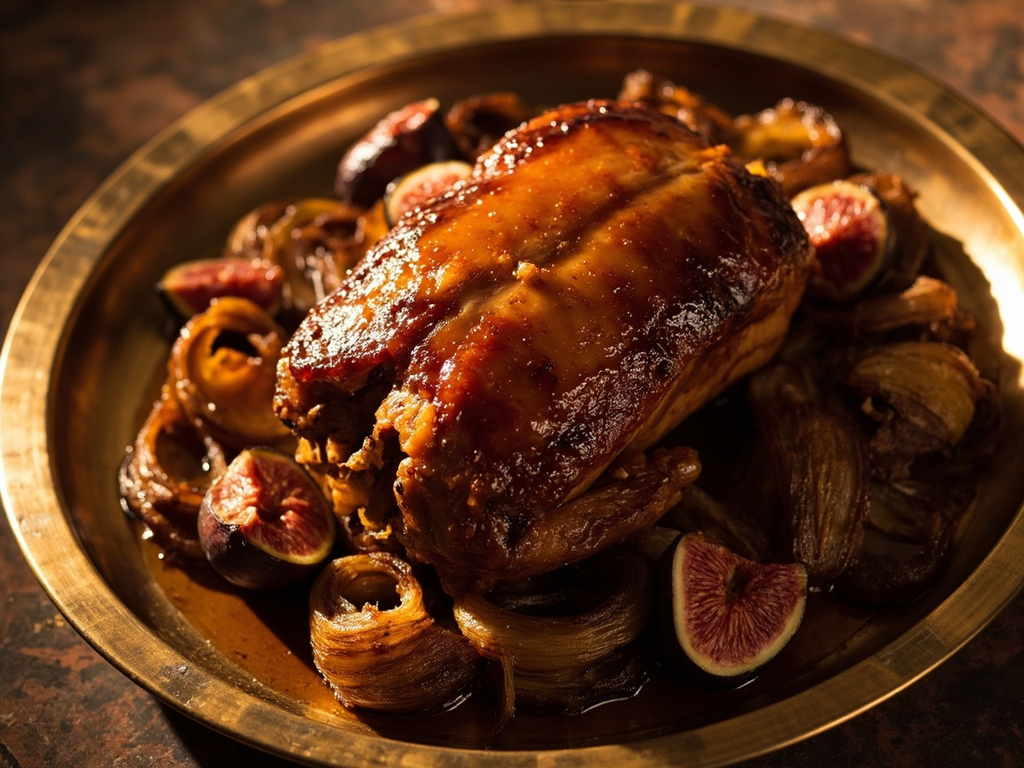
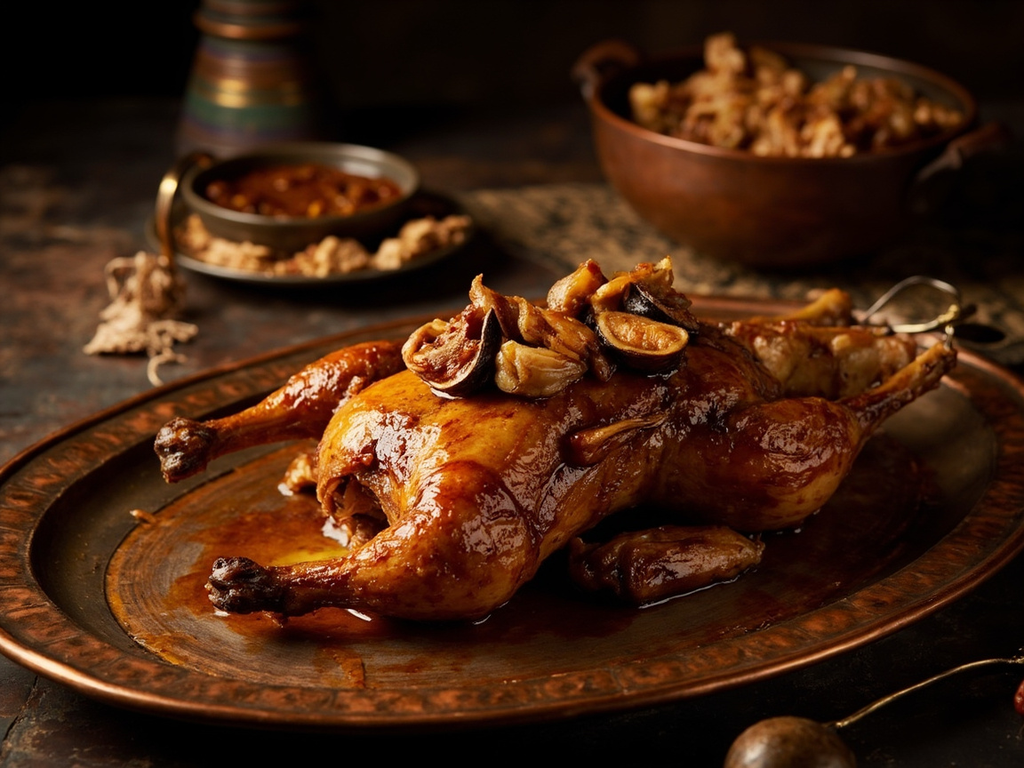
The contemporary twist : Present "banquet of Dendera" style: sliced lacquered duck, roasted figs, and a drizzle of honey jus on a copper platter.
Sources : William J. Darby, Paul Ghalioungui & Louis Grivetti, Food: The Gift of Osiris (1977) · Pierre Tallet, Histoire de la cuisine et de la gastronomie égyptiennes
Hathor · Charactorium