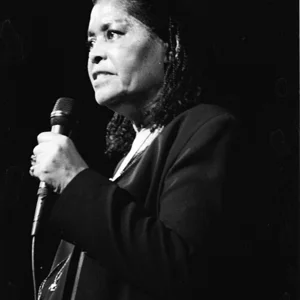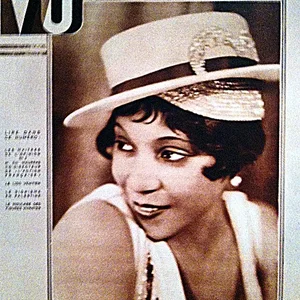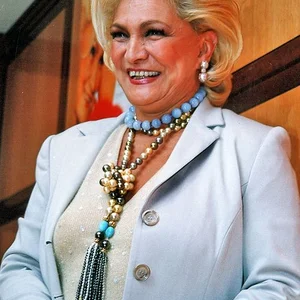

Hebe Camargo (1929-2012) was an icon of Brazilian television, a singer and TV host who shaped Brazil's popular culture for more than six decades. She began her career in radio in the 1940s before becoming a fixture on Brazilian television from its earliest days.
Hebe Camargo(1929 — 2012)
Hebe Camargo
Brésil
8 min read
Frequently asked questions
Key Facts
- Born on June 9, 1929, in Tietê, in the state of São Paulo, Brazil
- Began her career in radio in the 1940s, quickly becoming a household name in Brazil
- Was part of the launch of Brazilian television in the 1950s
- Hosted hugely popular variety shows for decades, most notably on TV Record and SBT
- Passed away on September 29, 2012, celebrated as one of the greatest figures in Brazilian culture
Works & Achievements
Hebe began her radio career at age 13 and over nearly a decade built a national reputation as a popular singer. This radio experience shaped her instinct for direct communication with audiences.
Hebe was one of the first stars of Brazilian television from its launch in 1950. She helped define the codes of televised entertainment in a country that was inventing the medium in real time.
A weekly talk and variety show broadcast on SBT, it became one of the longest-running programs in Brazilian television history. The show blended celebrity interviews, musical performances, and direct audience interaction.
Hebe recorded numerous albums of Brazilian popular music — samba, bolero, baião — between 1945 and 1970. Her warm, powerful voice earned her the nickname "A Camargo" in musical circles.
Unanimously recognized across Brazil as a popular and media distinction, this informal title of "Queen of Brazilian Television" encapsulates six decades of dominance in the national broadcasting landscape.
Anecdotes
Hebe Camargo made her radio debut at Record São Paulo in 1942, at just 13 years old, by walking into the studio unannounced after hearing an open audition call. Her powerful voice and boundless personality immediately convinced producers to hire her. That early boldness would become her trademark throughout her entire career.
In 1950, when TV Tupi — Brazil's and Latin America's first television channel — began broadcasting, Hebe was one of its first hosts. She found herself improvising in front of cameras that no one quite knew how to use yet, in studios where technicians were learning their craft on the fly. She would later recall: "We were inventing television at the same time as we were making it."
In 1988, during a live broadcast, Hebe uttered a phrase that became historic in Brazil: while discussing racial discrimination, she declared that she didn't see skin color in her guests, sparking a fierce national debate about racism. The incident forced the country into a public conversation on a subject long kept silent, and illustrated the political influence that popular television could wield.
Despite several serious health issues from the 2000s onward, including cancer, Hebe consistently refused to stop working. She continued taping her show while undergoing chemotherapy, wearing elaborate wigs matched to her outfits, insisting that her audience was her best medicine. She remained on air until just a few months before her death in 2012.
Primary Sources
"I didn't come to television — television came to me. When TV Tupi launched, I was already well known from radio. But it was on television that I truly found myself."
Weekly show broadcast on SBT since 1981, constituting the primary record of Hebe Camargo's television work: interviews, musical performances, and audience interactions.
"Hebe Camargo was the greatest host in the history of Brazilian television. For more than six decades, she dominated prime time with charisma, controversy, and a unique connection with the people."
"Radio gave me my voice, television gave me my face. But it was the audience that gave me my life. Without them, I would be nothing."
Key Places
Hebe Camargo's hometown, in the state of São Paulo. She was born there in 1929 into a modest family and spent her childhood there before leaving to try her luck in São Paulo.
It was at the Radio Record studios in São Paulo that Hebe launched her career in 1942 at the age of 13. Brazilian radio at the time was the main stepping stone for popular artists.
Brazil's first television channel, launched in 1950 in São Paulo. Hebe was one of its first hosts and witnessed firsthand the birth of Brazilian television as a medium.
The network founded by Silvio Santos, whose studios are located in Osasco near São Paulo, was Hebe's home from 1981 until her death. It was there that she hosted her flagship show for over thirty years.
A symbol of Brazilian cultural life, Hebe performed here at concerts and televised galas. This venue reflects her ability to bridge the gap between popular culture and institutional cultural prestige.
Typical Objects

Hebe was famous for her extravagant outfits — long dresses embroidered and covered in rhinestones or sequins. These spectacular costumes, often created by Brazilian fashion designers, had become her visual signature on screen.

The central object of her entire career, the microphone — first on radio, then on television — symbolized her direct, unfiltered connection with the public. She would often hold it firmly in one hand, as a natural extension of her personality.

The studios of TV Tupi and later SBT were equipped with large, bulky studio cameras that the early Brazilian television crews were learning to master. Hebe grew professionally alongside this emerging technology.

In Brazilian homes of the 1950s and 60s, the black-and-white television set was a prized possession, often placed at the center of the living room. It was on these screens that millions of Brazilians discovered Hebe for the very first time.

Hebe consistently wore bold jewelry — gemstone necklaces, gilded brooches, eye-catching earrings — that reinforced her image as a glamorous yet approachable star, blending visual opulence with a down-to-earth appeal.

Though known for her legendary naturalism and improvisation, Hebe prepared her shows with a team of writers. Scripts annotated in her own hand reveal the rigorous professionalism behind her apparent spontaneity.
School Curriculum
Vocabulary & Tags
Key Vocabulary
Tags
Daily Life
Morning
Hebe started her days very early, accustomed to the rhythms of media since the radio era when broadcasts began at dawn. She read the Brazilian and international press to prepare her interviews, jotting down in a notebook the topics she wanted to raise with her guests. Her chambermaid helped her put together the day's outfits, carefully selected from a sizeable wardrobe.
Afternoon
Afternoons were devoted to rehearsals and studio recordings, often at Osasco in the SBT studios. Hebe was actively involved in production meetings, choosing guests and approving musical segments. She also oversaw costume fittings with the show's stylists.
Evening
Recording evenings were events in themselves: Hebe, dressed in full regalia and draped in jewels, welcomed her audience with infectious energy. After the show, she frequently attended receptions held for distinguished guests — artists, politicians, celebrities — in the green rooms or at upscale restaurants in São Paulo.
Food
Traditional Brazilian cuisine was at the heart of Hebe's eating habits: feijão (black beans), white rice, grilled meats, and tropical fruits. She was particularly fond of a full feijoada on Saturdays — the quintessential national dish — which she often shared with the show's crew. Strong, sweet Brazilian coffee was a constant throughout her day.
Clothing
Hebe was famous for her extravagant stage gowns, custom-made by Brazilian designers such as Dener and Guilherme Guimarães. She invariably wore bold jewelry — necklaces, brooches, and earrings set with colorful stones — which amplified her stage presence. In her private life she opted for more understated looks, though always elegant, reflecting her status as a woman of power.
Housing
Hebe lived in a luxurious villa in the upscale residential neighborhood of Morumbi, in São Paulo, which she furnished with baroque pieces, velvet fabrics, and gilded ornaments that reflected her personality. Her home was renowned for its lavish gatherings bringing together the Brazilian artistic and political elite. She also owned a vacation residence in Campos do Jordão, a mountain resort town in the highlands of São Paulo state.
Historical Timeline
Period Vocabulary
Visual Style
Esthétique télévisuelle brésilienne glamour : robes à paillettes, bijoux imposants, lumières chaudes de plateau, décors baroque dorés et couleurs tropicales saturées typiques de la télévision brésilienne des années 1960-2010.
Sound Ambience
Sons d'un plateau de télévision brésilienne vivant : public en liesse, orchestre de samba, voix charismatique de l'animatrice et bourdonnement des équipements audiovisuels des années 1950-2000.