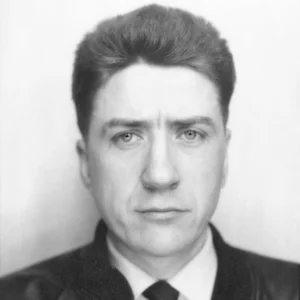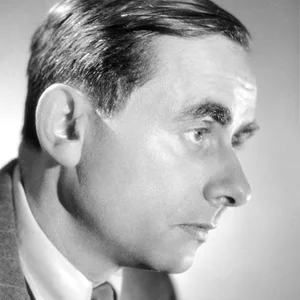

French filmmaker (1907–1977), nicknamed the “French Hitchcock”, Clouzot is the creator of landmark psychological thrillers in French cinema. His films are distinguished by relentless narrative tension and a dark vision of humanity.
Henri-Georges Clouzot(1907 — 1977)
Henri-Georges Clouzot
France
8 min read
Frequently asked questions
Key Facts
- Born on November 20, 1907 in Niort, died on January 12, 1977 in Paris
- Directed The Raven (1943), a controversial film made during the Occupation
- Directed The Wages of Fear (1953), winner of the Palme d'Or and Grand Jury Prize at Cannes
- Directed Diabolique (1955), considered one of the greatest thrillers in cinema history
- Directed The Mystery of Picasso (1956), a documentary on Pablo Picasso, winner of the Special Palme d'Or at Cannes
Works & Achievements
A psychological thriller about a village poisoned by anonymous letters. Clouzot's most controversial film, banned at the Liberation, it is now recognized as a masterpiece of French noir cinema.
A police thriller shot in the corridors of the Paris Prefecture, starring Louis Jouvet. Awarded at the Venice Film Festival, it marked Clouzot's triumphant return after his ban and revealed his genius for human portraiture.
A breathless thriller about four desperate men tasked with transporting nitroglycerin in failing trucks along mountain roads. Grand Prix winner at Cannes, it is considered one of the most intensely suspenseful films in cinema history.
An extremely tense suspense film adapted from Boileau-Narcejac that directly influenced Alfred Hitchcock. A massive international success, the film remains one of the most unsettling works in world cinema.
A unique experimental documentary filming Pablo Picasso as he paints through a translucent canvas. Declared a French national treasure in 1984, it revolutionizes our understanding of artistic creation by capturing it from the inside.
A courtroom drama starring Brigitte Bardot as a young woman accused of murder, probing justice and bourgeois morality. A major box-office success that revealed the star's unsuspected dramatic abilities.
An experimental project exploring pathological jealousy, abandoned after Clouzot suffered a heart attack during filming. The rediscovered footage, visually avant-garde, was presented in a documentary by Serge Bromberg in 2009.
Anecdotes
In 1943, Clouzot directed 'The Raven', a film about a village terrorized by anonymous defamatory letters. Produced by Continental Films, a company controlled by the German occupiers, the film sparked a scandal at the Liberation: accused of having served Nazi propaganda by casting France in a dark light, Clouzot was banned from filmmaking for several years. He experienced this exclusion as a profound injustice, convinced he had done nothing more than practice his art without any political intent.
Upon learning that Alfred Hitchcock was after the rights to the novel 'She Who Was No More' by Boileau and Narcejac, Clouzot rushed to acquire them and turned it into 'Diabolique' (1955). A frustrated Hitchcock, beaten to the punch, bought another novel by the same duo and made it into 'Vertigo' (1958). The two masters of suspense were thus locked in fierce rivalry, drawing from the same literary sources.
In 1956, Clouzot shot 'The Mystery of Picasso', a unique documentary in which he filmed Pablo Picasso painting through a translucent canvas, allowing the camera to capture the creative act from within. The film received the Jury Prize at Cannes and was designated a French national treasure in 1984. Picasso, captivated by the experience, decided to destroy most of the paintings created during the shoot so that the film would remain their only trace.
In 1964, Clouzot embarked on an experimental and hugely ambitious project, 'L'Enfer', with Romy Schneider in the role of a woman hunted by her husband's pathological jealousy. The psychedelic visual sequences, entirely innovative for the time, required weeks of preparation. But after just a few weeks of filming, Clouzot suffered a serious heart attack and was forced to abandon the project. Hundreds of film canisters would sit in archives for 45 years, until Serge Bromberg's documentary brought them to light in 2009.
Clouzot was renowned for his unrelenting rigor on set, sometimes pushing his actors to the very edge of what they could bear. On 'Diabolique', he drove his own wife Véra to portray a heart patient with genuine anguish, deliberately exploiting her real-life fragility to wring an authentic performance from her. This method allowed him to achieve a rare dramatic intensity, but earned him a lasting reputation as a tyrannical director.
Primary Sources
I don't make films to entertain people. I make films to force them to look at what they don't want to see in themselves.
This film is about men with their backs to the wall, who have nothing left to lose. That may be the most honest situation there is: when you have nothing left, you finally see clearly what you truly are.
Picasso agrees to let the camera penetrate the secret of his creative process, on the condition that the canvas be translucent. We film from the other side, as though watching a painting come to life from within.
Mr. Henri-Georges Clouzot is subject to a ban from working in the French film industry, on account of his collaboration with the Continental Films company during the Occupation.
Key Places
Birthplace of Henri-Georges Clouzot, who was born there on November 20, 1907. He grew up in this provincial town before moving to Paris to begin his career in entertainment and cinema.
The cultural capital where Clouzot built the bulk of his career and shot nearly all of his indoor scenes. The major Parisian studios of the era were his permanent places of work.
Clouzot triumphed here with *The Wages of Fear* (Grand Prix, 1953) and *The Mystery of Picasso* (Jury Prize, 1956), cementing his status as one of the leading figures in world cinema on the Croisette.
Locations in the south of France were used to recreate Latin American landscapes for *The Wages of Fear* (1953), lending the film its suffocating atmosphere of heat and dust.
It was in this region that *The Mystery of Picasso* (1956) was filmed, in collaboration with Picasso, who was living on the Côte d'Azur at the time. The La Victorine studios in Nice hosted the unique camera-through-canvas setup.
Typical Objects

Professional camera used in France during the 1940s–1960s, allowing films to be shot on silver-halide film stock with great optical precision. Clouzot used it for meticulously composed shots, building his suspense frame by frame.

A hinged board bearing shot information (title, scene, take number), snapped in front of the camera to synchronize picture and sound. An iconic fixture of film sets since the advent of talking pictures.

A machine that allowed editors to view and cut film stock in order to assemble a film's sequences. It was on the Moviola that Clouzot crafted the relentless pace of his thrillers, carefully calibrating tension and revelation.

A written document describing a film scene by scene, including dialogue and directorial notes. Clouzot placed enormous importance on writing, co-authoring his own screenplays with extreme care.

The silver-halide medium on which film images were recorded up until the 1960s. Clouzot masterfully exploited the contrasts of black and white to create oppressive atmospheres and his trademark interplays of light and shadow.

An optical device that projects film onto the screen in darkened movie theatres. In 1950s France, going to the cinema was a mass collective ritual — theatres were packed every week, and a new Clouzot film was anticipated as a major cultural event.
School Curriculum
Vocabulary & Tags
Key Vocabulary
Daily Life
Morning
Clouzot began his shooting days at 7 or 8 in the morning, arriving on set before his actors to check every detail of the staging. He had spent his nights annotating his screenplay, visualizing each camera angle, and preparing his instructions with meticulous precision.
Afternoon
Afternoon shoots were defined by repetition and exacting standards: Clouzot could film the same scene dozens of times until he got exactly what he was after. He personally supervised the lighting with his director of photography and weighed in on every artistic and technical decision.
Evening
In the evenings, Clouzot screened the day's rushes in a projection room with his crew, taking detailed notes to refine the following day's work. He often worked late into the night reworking the screenplay or devising new staging solutions.
Food
Like many post-war Parisian intellectuals, Clouzot frequented the brasseries and restaurants of bourgeois Paris. Meals with the crew during shoots were often eaten quickly on set, but he appreciated fine French cuisine during the rare moments he allowed himself to unwind.
Clothing
Clouzot favored plain, functional attire on his sets: a jacket, an open shirt, rarely a full suit. His characteristic silhouette — often photographed wearing glasses with a pencil in hand — was that of a focused craftsman rather than a showman.
Housing
Clouzot lived in bourgeois Parisian apartments, alongside his first wife Véra, whose sudden death in 1960 plunged him into deep despair and considerably slowed his career. He spent the final years of his life in relative Parisian seclusion.
Historical Timeline
Period Vocabulary
Liens externes & ressources
Références
Œuvres
Quai des Orfèvres
1947
La Vérité
1960
L'Enfer (inachevé)
1964