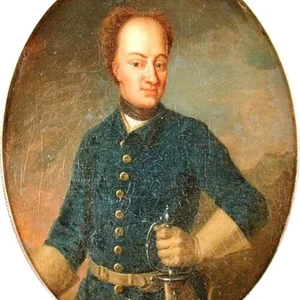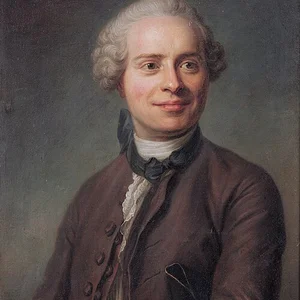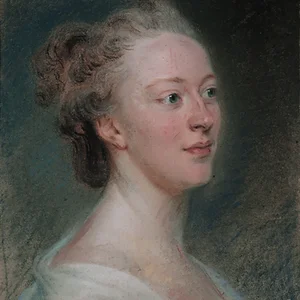

Born Belle van Zuylen in the Netherlands in 1740, Isabelle de Charrière settled in Switzerland after her marriage and became one of the most remarkable women writers of the 18th century. A novelist, letter-writer, and composer, she advocated with great clarity for women's freedom and critiqued the social conventions of her time.
Isabelle de Charrière(1740 — 1805)
Isabelle de Charrière
Suisse, Provinces-Unies
8 min read
Frequently asked questions
Famous Quotes
« I come from the land where people think.»
Key Facts
- 1740: born in Zuylen (Netherlands) as Isabella Agneta Elisabeth van Tuyll van Serooskerken
- 1771: married Charles-Emmanuel de Charrière and settled in Colombier near Neuchâtel
- 1784: published Lettres neuchâteloises, the first Swiss novel written in French
- 1784–1796: correspondence with Benjamin Constant, a major intellectual relationship
- 1805: died in Colombier after a prolific writing life spanning novels, operas, and essays
Works & Achievements
A satirical short story written at twenty-three, criticizing the prejudices of the nobility and the futility of hereditary social distinctions. This early work already reveals the sharp wit and independence of mind that would define her entire career.
An epistolary novel depicting provincial Neuchâtel society with precision and irony, questioning class inequalities and the fate of women without fortune. Considered one of the first realist novels written in French.
A two-part novel whose second part, 'Caliste', is her masterpiece, portraying the tragic fate of a talented woman crushed by social conventions. The text made a profound impression on sensitive readers at the close of the eighteenth century.
A short epistolary novel that lucidly explores the marital dissatisfaction of an intelligent woman married to a virtuous but narrow-minded man. One of the first French works to address the boredom and alienation of bourgeois marriage.
A post-revolutionary novel following three women of different nationalities confronting the upheavals of the era. In it, Isabelle develops a nuanced reflection on freedom, cosmopolitanism, and the possibilities open to women.
One of her musical compositions for the stage, reflecting her dual talent as a writer and musician. Isabelle composed several operas and musical pieces performed in provincial salons and theaters.
Anecdotes
As a brilliant young woman in the Netherlands, Isabelle van Zuylen — nicknamed 'Belle' — turned down several distinguished suitors, including James Boswell, the future biographer of Samuel Johnson, who courted her persistently. She reproached him for his lack of intellectual seriousness and ultimately chose instead a modest Swiss tutor, Charles-Emmanuel de Charrière, whom she married in 1771.
Isabelle de Charrière carried on a passionate and intellectually intense correspondence with Benjamin Constant, twenty-seven years her junior, whom she met in 1787. Their exchange of letters, rich in philosophy and literature, lasted for years — until Constant fell for Germaine de Staël, which Isabelle experienced as a painful betrayal.
An accomplished composer, Isabelle de Charrière wrote several operas and musical pieces. She composed works intended to be performed in her salon at Colombier, bringing together musicians and writers in a spirit typical of the Enlightenment. Her dual vocation as writer and musician made her a rare figure among women of her era.
In her epistolary novel 'Lettres neuchâteloises' (1784), Isabelle de Charrière painted a precise portrait of Swiss provincial society, including a young working-class woman victimized by class prejudice. The novel was poorly received locally, as the inhabitants of Neuchâtel recognized themselves in its satirical portraits.
During the French Revolution, Isabelle de Charrière opened her home in Colombier to French émigrés fleeing the Terror. A republican at heart but horrified by the violence, she observed events with a critical and clear-eyed perspective, which she channeled into her political writings and novels of the revolutionary period.
Primary Sources
I am neither beautiful nor young, and yet I claim the right to be loved for what I am, not for what I appear to be. Freedom of mind is the only luxury I allow myself without regret.
It is cruel to be born with feelings and a mind above one's station, yet be unable to rise to the place that these gifts of nature seem to indicate.
One cannot fathom how deeply women suffer in a world that judges them by their appearance rather than their reason. Caliste was worth a hundred times more than those who judged her.
You have the wit I always wished I had, and the heart I dare not show you. I read you, I read you again, and I cannot tell whether what I feel is joy or sorrow.
The Revolution toppled many thrones, but prejudices against women have remained standing like indestructible monuments. Our chains have changed in substance, not in nature.
Key Places
Isabelle van Zuylen's birthplace and childhood home, this family castle was the setting for her early intellectual development and her first correspondence with European philosophers.
Isabelle de Charrière's primary residence after her marriage, this château became a literary and musical salon frequented by 18th-century intellectuals, including Benjamin Constant.
The town neighboring Colombier, Neuchâtel is the setting of her novel 'Lettres neuchâteloises' and was the center of her social and intellectual life for more than thirty years.
A city Isabelle visited during her cultural stays, Geneva was an intellectual hub of the Enlightenment where she met philosophers and publishers.
Isabelle spent time in Paris, where she frequented literary salons before the Revolution. The French capital also inspired her novels dealing with emigration and the upheaval of the revolutionary period.
Typical Objects

Isabelle de Charrière was one of the most prolific letter writers of her century, composing thousands of letters across Europe. The quill and inkwell were her daily instruments of thought and communication.

An accomplished composer and keyboard player, Isabelle kept a harpsichord in her salon at Colombier where she composed and performed her own works. Music was for her as serious a form of expression as literature.

An avid reader of Enlightenment philosophers, Isabelle de Charrière owned and annotated the major works of her time, including the Encyclopédie. These books nourished her critical thinking on society and the condition of women.

Isabelle worked and reworked her texts tirelessly, leaving manuscripts covered in crossings-out and corrections. This literary rigor bears witness to the exacting standards of a professional woman of letters in a century that recognized very few.

Cosmopolitan by birth and by choice, Isabelle closely followed political events in France, the Netherlands, and Switzerland. Geographic maps allowed her to situate the revolutionary upheavals she commented on in her works.

Born into Dutch nobility, Isabelle wore the elegant dress of the enlightened aristocracy before adopting simpler attire after settling in Switzerland. Her physical appearance, which she felt fell short of society's ideals, became a source of reflection on the superficial judgments of the world around her.
School Curriculum
Vocabulary & Tags
Key Vocabulary
Daily Life
Morning
Isabelle rose early and devoted her mornings to correspondence, writing long, carefully crafted letters to her contacts scattered across Europe. She worked at her desk in the cold morning light of Neuchâtel, surrounded by manuscripts and annotated volumes.
Afternoon
Her afternoons were divided between composing music at the harpsichord and writing her novels and essays. Isabelle sometimes received visitors — émigrés, intellectuals, young people seeking her advice — and maintained an active intellectual network from her home in Colombier.
Evening
Evenings were occasions for salon gatherings where texts were read aloud, music was played, and philosophy and politics were debated. Isabelle presided over these assemblies with wit and authority, running her table as a provincial intellectual institution.
Food
Isabelle de Charrière's table reflected Swiss bourgeois simplicity: broths, roasted meats, garden vegetables, regional cheeses, and local wines. She had no taste for the gastronomic luxury of the great Parisian houses and preferred plain but carefully prepared food.
Clothing
Born into the nobility, Isabelle wore silk and brocade gowns in muted colors, with a boned corset and panniers in keeping with the fashion of her time. As she grew older in Colombier, she adopted simpler, more comfortable dress, reflecting her growing detachment from worldly conventions.
Housing
The Château de Colombier, her husband's property, was a comfortable bourgeois residence rather than an aristocratic palace. Isabelle furnished it with a well-stocked library and a music room, turning the house into a genuine intellectual center open to travelers and exiles.
Historical Timeline
Period Vocabulary
Visual Style
Le style visuel d'Isabelle de Charrière s'inscrit entre l'élégance rococo de sa jeunesse néerlandaise et la sobriété neoclassique de son salon suisse, baigné d'une lumière dorée et studieuse.
Sound Ambience
L'univers sonore d'Isabelle de Charrière mêle la douceur d'un salon lettré suisse — clavecin, plumes sur papier, conversations philosophiques — au cadre naturel et intimiste de Colombier, loin du tumulte parisien.