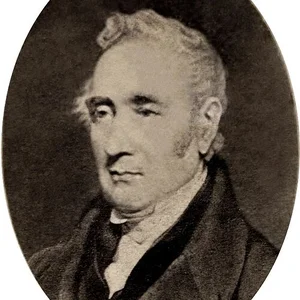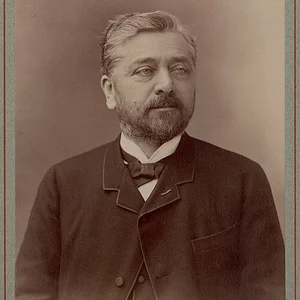

19th-century British engineer, Brunel revolutionized transportation with the Great Western Railway, the Thames Tunnel, and giant steamships. An iconic figure of the Victorian Industrial Revolution.
Isambard Kingdom Brunel(1806 — 1859)
Isambard Kingdom Brunel
Royaume-Uni de Grande-Bretagne et d'Irlande
9 min read
Frequently asked questions
Key Facts
- 1825: takes part in the construction of the Thames Tunnel alongside his father Marc Brunel
- 1833: appointed chief engineer of the Great Western Railway
- 1838: launch of the SS Great Western, the first steam-powered transatlantic ocean liner
- 1843: launch of the SS Great Britain, the first large iron-hulled, screw-propelled ship
- 1858: launch of the SS Great Eastern, the largest ship in the world at the time
Works & Achievements
Railway line connecting London to Bristol, pioneering for its broad gauge (7 feet) and nearly level track. Brunel was its chief engineer at age 27 and imposed revolutionary technical standards, notably the use of embankments rather than systematic viaducts.
The world's first tunnel under a river, built with his father Marc Brunel using a patented tunneling shield. Opened in 1843 after 18 years of epic construction, it is today used by the Overground line of the London Underground.
The first steamship designed specifically for a regular transatlantic service, it sailed from Bristol to New York in 15 days in 1838. It decisively proved the viability of steam power for long ocean crossings.
The first large ship with an entirely iron hull, driven by a screw propeller — a double revolution in shipbuilding. Restored and exhibited in Bristol, it is today considered the most significant ship in maritime history.
The London terminus of the GWR, remarkable for its three naves covered with metal vaulted roofs, a collaboration between Brunel and architect Matthew Digby Wyatt. It remains one of the most beautiful railway stations in the world and a monument to Victorian engineering.
The largest ship ever built at the time (211 metres, 18,914 tons), equipped with a paddle wheel, a screw propeller, and sails. Though a commercial failure, in 1866 it laid the first functional transatlantic telegraph cable.
Suspension bridge over the Avon Gorge, designed by Brunel in 1831 and completed in 1864 by his colleagues in his memory. With a span of 214 metres and a height of 75 metres, it was at the time of its construction one of the most daring suspension bridges in the world.
Anecdotes
In 1843, Brunel performed a magic trick for his children and accidentally swallowed a half-sovereign gold coin. The coin became lodged in his trachea for several weeks. Desperate surgeons built a special tilting board to his own specifications: he was strapped onto it and sharply tipped upside down until the coin flew out. Brunel had personally overseen the design of the device that saved his life.
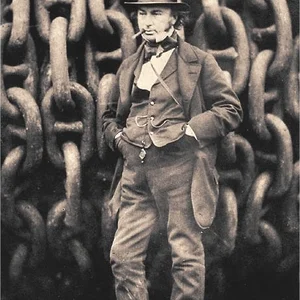
Brunel was never seen without his trademark top hat and cigar. The most famous photograph of him, taken in 1857 in front of the giant chains of the *Great Eastern*, immortalises him with his hat firmly on his head, cigar between his lips, hands in his pockets. This portrait has become one of the most recognisable symbols of the Victorian Industrial Revolution.
The launch of the SS *Great Eastern* in 1857–1858 was a nightmare: the ship, 211 metres long, was so enormous that it refused to slide smoothly into the Thames. It took three months and numerous failed attempts, watched by thousands of onlookers, before she finally floated. The ordeal exhausted Brunel physically; he collapsed from a stroke shortly after the maiden voyage.
Sent to study in France at the age of fourteen, Brunel attended the Lycée Henri-IV in Paris, then worked in the workshop of clockmaker **Louis Breguet**. His father Marc was of Norman descent, and Isambard grew up perfectly bilingual. This French education gave him a scientific rigour that he combined with the boldly entrepreneurial spirit typical of the Victorians.
During the Crimean War, Brunel designed in just six weeks a fully prefabricated, dismountable hospital, shipped in pieces and reassembled at the front in 1855. The **Renkioi Hospital**, equipped with a revolutionary ventilation and sanitation system, was praised by **Florence Nightingale** as the most hygienic she had ever seen.
Primary Sources
I am now just 20 years of age. In a few months I may be the resident engineer of the Thames Tunnel. What a situation for a young man to be in!
The distance is short, the country is not difficult, the gradients may be kept very flat, and the curves very easy. I shall recommend a line that will be the finest work in England.
I have no hesitation in stating that for the purposes of an ocean-going vessel the screw, when properly constructed and applied, is greatly superior to the paddle-wheel in heavy weather and in sea-keeping ability.
Every part has been designed so as to ensure the maximum of light and ventilation. The whole structure can be erected and taken down without any skilled labour beyond the superintendent, and can be transported in any ship.
Key Places
A port city on the south coast of England where Isambard Kingdom Brunel was born on 9 April 1806. His father Marc worked there as an engineer for the Royal Navy, and it was in this technical environment that young Isambard grew up.
The world's first underwater tunnel, built between 1825 and 1843. Isambard, appointed resident engineer at the age of 20, survived dramatic accidents there — including a flood in 1828 that nearly killed him. The tunnel is now part of the London Underground.
Brunel's masterpiece spanning the Avon Gorge at a height of 75 metres, designed in 1831 but completed only in 1864 — five years after his death — by his colleagues as a tribute to his genius. It is today the symbol of the city of Bristol.
The London terminus of the Great Western Railway, designed by Brunel together with architect Matthew Digby Wyatt and opened in 1854. Its spectacular three-nave iron roof structure defined the aesthetic of the great Victorian railway stations.
The SS Great Britain, the first large ocean-going iron-hulled propeller-driven ship, was built in Bristol Docks and now rests there fully restored. This museum dedicated to Brunel and maritime history is a listed British national monument.
Typical Objects

Brunel's signature headgear, permanently fixed to his head on construction sites and in drawing rooms alike. The 1857 photograph in front of the Great Eastern's chains made it iconic and turned it into the universal symbol of the Victorian engineer.

Brunel smoked cigars almost without interruption, even on construction sites. This notoriously excessive habit — he is said to have smoked around forty cigars a day during his most intense periods — took a severe toll on his health.

Brunel filled countless sketchbooks and calculation notebooks using his precision instruments. His archives hold hundreds of drawings that testify to his mastery of engineering draughtsmanship and his fertile imagination.

An essential angle-measuring instrument for topographical surveys, used to plot the route of the Great Western Railway through the hills and valleys of England in search of the gentlest possible gradients.

Brunel oversaw the design of the Great Western Railway's first locomotives, insisting on his broad gauge of 7 feet to achieve superior speed and comfort. These engines reached 100 km/h as early as 1848, astonishing contemporaries.

A metal frame invented by Marc Brunel and used to excavate the tunnel beneath the Thames, shielding workers from collapse. Isambard oversaw its day-to-day use and improved its operation; it is the direct ancestor of the modern tunnel boring machine.
School Curriculum
Vocabulary & Tags
Key Vocabulary
Tags
Daily Life
Morning
Brunel rose early and began his day by going through his voluminous correspondence. He would dictate or write dozens of letters himself to contractors, suppliers, and shareholders, coordinating several simultaneous construction projects spread across the country from his office on Duke Street in Westminster.
Afternoon
Afternoons were often devoted to site visits, on horseback or by special train along the GWR line. He would inspect tunnels, viaducts, and stations under construction, descending into the excavations himself to check on progress. He invariably wore his top hat and cigar, cutting a striking figure against the mud and sweat of the workers.
Evening
Evenings could stretch very late over plans and calculations, with Brunel sometimes working through the night before a critical deadline. He also frequented London's gentlemen's clubs and dinners at the Athenaeum Club, mingling with scientists, industrialists, and politicians of the Victorian era.
Food
Brunel ate erratically, often too absorbed in his work to stop for meals, compensating with a prodigious consumption of cigars. When he did eat, his meals followed typical Victorian middle-class habits: roast meat, boiled vegetables, beer or port, and sometimes a glass of brandy in the evening to keep himself going.
Clothing
Brunel wore the typical dark attire of the Victorian gentleman: a black frock coat, waistcoat, high-knotted cravat, and invariably his famous black silk top hat. Even on construction sites, he maintained this immaculate appearance, which asserted his status as chief engineer and lent him a natural authority.
Housing
Brunel lived in an elegant house at 18 Duke Street in the Westminster district of London, fitted with a large study where he kept his countless plans and scale models. His wife Mary Horsley and their three children lived there in the comfortable style typical of Victorian industrial high society.
Historical Timeline
Period Vocabulary
Liens externes & ressources
Références
Œuvres
Great Western Railway (GWR)
1838
Tunnel sous la Tamise
1843
SS Great Western
1838
SS Great Britain
1843
Gare de Paddington, Londres
1854
SS Great Eastern
1858
Pont suspendu de Clifton, Bristol
1864 (achevé posthumement)