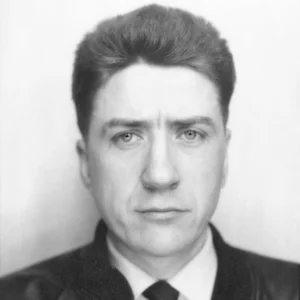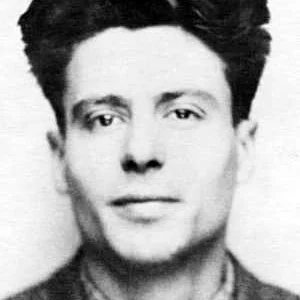

French filmmaker (1905-1934), a major figure of poetic cinema. Creator of L'Atalante and Zéro de conduite, he revolutionized French cinema with a lyrical and anarchist style before dying at the age of 29.
Jean Vigo(1905 — 1934)
Jean Vigo
France
8 min read
Frequently asked questions
Key Facts
- Born on April 26, 1905, in Paris, son of anarchist militant Miguel Almereyda
- Directed À propos de Nice in 1930, a satirical social documentary
- Shot Zéro de conduite in 1933, a film censored for its spirit of rebellion against school authority
- Directed L'Atalante in 1934, considered a masterpiece of poetic cinema
- Died of tuberculosis on October 5, 1934, at the age of 29
Works & Achievements
A silent satirical documentary denouncing the social inequalities between wealthy vacationers and the Nice working class. A founding work of Vigo's style, influenced by Soviet cinema and the poetic eye of Boris Kaufman, brother of the great Dziga Vertov.
A poetic short film commissioned by Gaumont about swimming champion Jean Taris. Vigo experiments with groundbreaking visual techniques — slow motion, reverse footage, underwater shots — that foreshadow the explorations of experimental cinema.
A semi-autobiographical work about a student revolt in an oppressive boarding school, banned in France for thirteen years. A cult classic of world cinema, it directly influenced François Truffaut (*The 400 Blows*) and Lindsay Anderson (*If…*).
A masterpiece of French poetic cinema, following the turbulent love story of a young couple of barge workers on a river boat. Regularly ranked among the ten greatest films in cinema history, it blends popular realism and dreamlike imagery with unmatched grace and freedom.
Anecdotes
Jean Vigo was the son of the anarchist Miguel Almereyda, who died under murky circumstances in prison in 1917 when Jean was only 12 years old. This traumatic loss and political inheritance left a deep mark on the rebellious, anti-authoritarian spirit that runs throughout his entire body of work.
*Zéro de conduite* (1933), a film about schoolboys revolting against an oppressive boarding school, was banned by French censors upon its release for being deemed "antimilitarist and liable to disturb public order." It remained banned for more than thirteen years, until the Liberation in 1945.
Suffering from tuberculosis since childhood, Jean Vigo shot *L'Atalante* under grueling physical conditions, often running a fever on set. He died of septicemia on **October 5, 1934**, at only 29 years old, just days after his masterpiece had its commercial release.
The distributor Gaumont, feeling the film was too difficult to market, re-edited *L'Atalante* without Vigo's knowledge, retitled it *Le Chaland qui passe*, and replaced the original score with a popular song. The authentic version was not reconstructed until decades later, through painstaking archival work drawing on prints scattered around the world.
Orphaned and placed under a false name in several boarding schools after his father's death, Jean Vigo grew up carrying a borrowed identity to escape the stigma attached to his father's name. This humiliating childhood experience of hidden identity and rigid school discipline fed directly into the autobiographical writing of *Zéro de conduite*.
Primary Sources
A social film will above all be the film of those who have no access to speech. This cinema does not seek to entertain but to awaken consciences by showing reality as it is, with its inequalities and its revolts.
The camera must surprise, must seek out what the ordinary eye does not yet see. Reality must be filmed in its moments of truth, without letting itself be trapped by the conventions of studio cinema.
The children rebel. Not because they decide to coldly, but because they cannot do otherwise. Freedom imposes itself on them as a physical necessity. That is what must be shown.
Vigo was exhausted but never discouraged. He improvised constantly, asking us to live the scenes rather than act them. You could feel that he was working against the clock, as though he knew time was running out.
Key Places
Jean Vigo's birthplace on April 26, 1905, and the city where he died on October 5, 1934. Paris was the center of his filmmaking activities and home to the avant-garde artistic and activist circles he frequented.
The Côte d'Azur city where Vigo shot *À propos de Nice* (1930), his first film. There he captured the striking contrast between wealthy vacationers and impoverished workers, exposing social inequality with a camera style akin to Soviet cinema of the era.
The French waterways on which *L'Atalante* (1934) was primarily filmed. The barge and its canals form the film's living backdrop, transforming an industrial, working-class landscape into a space of visual poetry unique in cinema history.
A medical facility in the south of France where Jean Vigo was treated on several occasions for tuberculosis. His chronic illness forced him to alternate between rest cures and intensive filming periods, in a race against death he lost at the age of 29.
A Parisian avant-garde theater and cinema where Jean Vigo presented *À propos de Nice* on February 14, 1930, accompanied by his landmark lecture *Vers un cinéma social*. It marked his official entry into the world of auteur cinema.
Typical Objects

A lightweight 35 mm cinematographic camera used by Vigo and Boris Kaufman to shoot outdoors with great freedom of movement. Its compact size allowed for bold shots taken close to the characters, breaking away from the static studio-bound filmmaking of the era.

The standard photosensitive medium of the film industry, recording images at 24 frames per second. Precious and costly, film stock forced Vigo to work within very tight budgets, demanding maximum precision from every take.

A flat-bottomed inland waterway vessel that serves as both the main setting and a character in its own right in the film *L'Atalante*. The real barge, rented for the shoot, traveled along the Seine and the canals of northern France, providing a uniquely poetic and working-class backdrop.

A sound-reproduction device found in working-class homes of the 1930s, symbolizing modernity and access to musical culture for the laboring classes. In *L'Atalante*, the popular music it plays contrasts with the emotional isolation of the characters aboard the barge.

A notebook in which Jean Vigo recorded his directing ideas, dramatic intentions, and improvisations. His notes reveal a filmmaker striving to blend documentary and fiction, social realism and poetic dreamlike imagery.

A machine for projecting films onto the big screen in cinemas or at activist screenings. The earliest screenings of Vigo's films took place in Parisian avant-garde venues such as the Vieux-Colombier, before audiences of intellectuals and artists.
School Curriculum
Vocabulary & Tags
Key Vocabulary
Daily Life
Morning
Jean Vigo often woke exhausted from the tuberculosis that had plagued him with fevers and a chronic cough since childhood. When his health allowed, his mornings were devoted to reading, writing scripts, and corresponding with his collaborators — chief among them his cinematographer Boris Kaufman.
Afternoon
Shooting afternoons were intense and grueling: Vigo worked with a very small crew and extremely tight budgets, often on location or aboard the barge. He favored improvisation and sought to capture the spontaneity of his actors — many of them non-professionals — whom he directed with a gentle, attentive touch.
Evening
Evenings were often spent in Parisian artistic and activist circles: avant-garde cinephiles, Surrealists, and anarchists who shared the convictions his father had passed down. Private screenings, intellectual debates in cafés, and film clubs punctuated his nights when he was not confined to bed.
Food
Like many artists living modestly in 1930s Paris, Vigo ate simply — bistro meals, bread, charcuterie, and house wine. His illness sometimes called for reinforced diets prescribed by his doctors to try to strengthen a body constantly worn down: red meat, milk, and plenty of fresh air and rest.
Clothing
Jean Vigo dressed plainly, in the manner of Parisian intellectuals and artists of his day: a dark suit or jacket, a raincoat, a felt hat. Nothing in his appearance set him apart from the bargemen, workers, or minor civil servants he loved to observe and film.
Housing
Vigo lived in modest Parisian apartments, often in precarious financial circumstances, relying on producers' advances and meager earnings. Between shoots, he regularly stayed in sanatoriums or rest homes — in Vence, Saint-Gervais, or the Paris suburbs — in an ongoing effort to treat his tuberculosis.