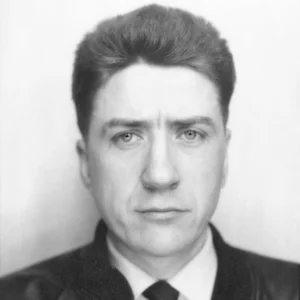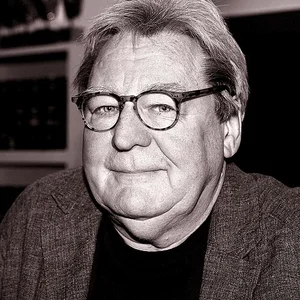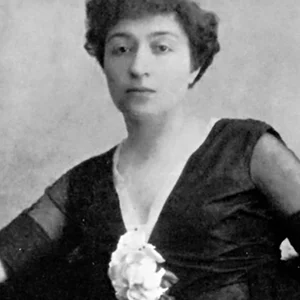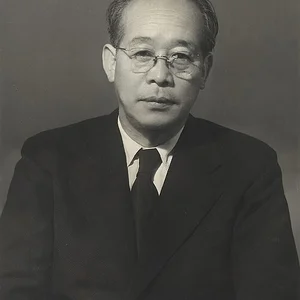

Japanese film director (1898–1956), a towering figure of world cinema. Celebrated for his long takes and his humanist gaze on the condition of women in Japan, he won the Silver Lion at Venice with *Ugetsu* (1953), also known as *Tales of the Pale and Silvery Moon After the Rain*.
Kenji Mizoguchi(1898 — 1956)
Kenji Mizoguchi
Japon
9 min read
Frequently asked questions
Famous Quotes
« I cannot make a film without understanding the suffering of women.»
Key Facts
- 1898: born in Tokyo; a childhood marked by poverty and his sister's sale into geisha service
- 1923: first silent films — a career spanning more than 90 films over thirty years
- 1936: directs *Sisters of the Gion*, a critical portrait of the lives of geishas
- 1953: *Ugetsu Monogatari* — Silver Lion at Venice, international acclaim
- 1956: death in Kyoto from leukemia, leaving a canonical body of work in world cinema
Works & Achievements
A realistic portrait of a young telephone operator forced into prostitution to save her family. Mizoguchi's first major film, it establishes his humanist style and his unflinching critique of the exploitation of women in modern Japan.
Two geisha sisters in Kyoto embody two opposing attitudes toward tradition and modernity. A masterpiece of Japanese realism, the film exposes the social captivity of women and the everyday violence of relations between the sexes.
The story of a kabuki actor and the woman who sacrifices everything for him. A technical high point of the silent-to-sound transition period, the film is remarkable for its long takes of unprecedented length and fluidity in Japanese cinema.
Adapted from a classic 17th-century novel, the film traces the descent of an aristocratic woman who becomes a geisha, a concubine, and finally a prostitute. Winner of the International Prize at Venice 1952, it introduced Mizoguchi to Western audiences.
Two peasants flee civil war and succumb to the temptations of worldly ambition and ghostly spirits. Blending realism and the supernatural in shots of hypnotic beauty, this Silver Lion winner at Venice is regarded as one of the greatest films in the history of cinema.
Adapted from a medieval tale, the film follows two noble children reduced to slavery and separated from their mother. A deeply moving meditation on servitude, freedom, and human compassion, it won the Silver Lion at Venice 1954.
Mizoguchi's final film, shot in the year of his death. A collective portrait of sex workers in a Tokyo district set against the backdrop of parliamentary debate over abolishing prostitution, it stands as his cinematic testament and his final plea for the dignity of women.
Anecdotes
When Mizoguchi was about eight years old, his father, having fallen into financial ruin, sold his older sister Suzu to a geisha house. This traumatic experience marked the director for life and explains his obsessive fascination with the fate of women in Japanese patriarchal society: he later stated that Suzu had been his “most important teacher.”
In 1925, his partner Yuriko Ichijo attacked him with a razor during a violent argument, leaving a deep scar on his back. Paradoxically, this brutal episode deepened his intimate understanding of female suffering; far from ending the relationship, he continued to see her and channeled this painful empathy into his films.
Mizoguchi was renowned for his relentless perfectionism on set: he could demand dozens of takes of a single scene, constantly pushing the technical limits of the era to develop his signature fluid long takes. His crews sometimes called him “the demon,” so exhausting were his demands on actors and technicians alike.
At the 1953 Venice Film Festival, the jury was stunned by Ugetsu: the film blended social realism with a ghostly atmosphere through an unprecedented fluidity of camera movement, and won the Silver Lion. The following year, Sansho the Bailiff (1954) again claimed the Silver Lion — two consecutive major awards for the same director, an extraordinarily rare feat in the festival’s history.
Stricken with leukemia in 1956, Mizoguchi continued working until the final weeks of his life, completing Street of Shame, his final plea for the dignity of women in prostitution. He died in Kyoto on August 24, 1956, at the age of 58, leaving behind a body of work of more than eighty films, the majority of his silent pictures having been lost in nitrate film fires.
Primary Sources
I film women because their condition reveals the truth of society better than any other subject. My sister, the women I have known, taught me that their suffering is the faithful reflection of an unjust world.
The sequence shot is not a stylistic effect. It is about respecting the real time of human beings, about not cutting their lives into arbitrary fragments the way ordinary editing does.
Saikaku wrote in the 17th century, but Oharu still exists today on every street in Japan. I want to show what has not changed: the way society consumes women.
Mizoguchi was fond of declaring that cinema must "show the truth without decorating it" and that formal beauty only had meaning if it served the human truth of a situation.
Key Places
A working-class neighborhood of Tokyo where Mizoguchi was born in 1898 into a laborer's family. It was here that he experienced poverty and witnessed his older sister being sold into geishahood — a formative experience that shaped his lifelong perspective on the condition of women.
The ancient imperial capital where Mizoguchi shot nearly all of his late masterpieces at the Daiei studios. It was also in Kyoto that he died in 1956; the city, with its geisha districts and temples, deeply permeates the aesthetic of his films.
The great commercial city of the Kansai region, setting of *Osaka Elegy* (1936), an unflinching portrait of a young telephone operator driven to prostitution by her family's debts. For Mizoguchi, the city embodied the brutal social relations of industrial Japan.
The international film festival where Mizoguchi triumphed three years in a row (International Prize 1952, Silver Lion 1953 and 1954), bringing his work to Western audiences and establishing Japanese cinema on the world stage.
The production company that financed and produced Mizoguchi's most celebrated late films: *The Life of Oharu*, *Ugetsu*, and *Sansho the Bailiff*. Daiei gave him the resources his artistic ambitions required.
Typical Objects

The central instrument of Mizoguchi's craft, the 35mm camera allowed him to execute his famous fluid long takes by moving the apparatus over great distances through precisely calibrated tracking shots. His cinematographer Kazuo Miyagawa commanded its movements with exceptional precision.
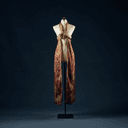
A traditional Japanese silk garment with refined patterns, worn by geishas and many of the heroines in Mizoguchi's films. Both a symbol of codified beauty and of women's constrained circumstances, it becomes in his work a narrative costume laden with social meaning.
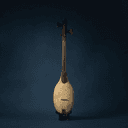
A three-stringed plucked instrument, emblematic of geisha culture and kabuki theatre. Present in many of Mizoguchi's films, it evokes the world of traditional feminine arts and the blurred line between artistry and servitude in the Japan of that era.

A lacquered multi-panel folding screen painted with landscapes or traditional scenes, which visually structures interior spaces in Mizoguchi's period films. It frames many scenes of intense emotion, reinforcing the painterly composition of his shots.
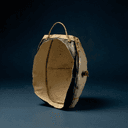
A traditional lantern made of oiled paper stretched over a bamboo frame, used in the night scenes of *Ugetsu* to create a ghostly atmosphere and evoke the passage between the world of the living and the world of spirits. Its flickering light deepens the ambiguity between the real and the supernatural.
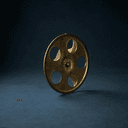
The physical medium on which films were recorded until the 1950s. Highly flammable, nitrate film stock caused the destruction of a large portion of Mizoguchi's silent films, most of which are now permanently lost.
School Curriculum
Vocabulary & Tags
Key Vocabulary
Daily Life
Morning
Mizoguchi arrived very early on set, often before dawn, to inspect the scenery and plan camera movements with his cinematographer Kazuo Miyagawa. His focus was total from the morning hours, and he would sometimes sketch the tracking shot trajectories himself on drawings he handed to the technical crew.
Afternoon
Afternoons were devoted to filming, with takes often repeated dozens of times until the crew was exhausted. Mizoguchi demanded millimeter precision in camera movements and did not hesitate to completely rebuild a set if the result did not match his vision, causing recurring budget overruns.
Evening
In the evenings, Mizoguchi would withdraw to read — classical Japanese literature, Edo-period tales, the novels of Saikaku — or he would frequent the pleasure districts of Kyoto and Osaka, observing geishas and kabuki actors, gaining an intimate knowledge of the world he was filming.
Food
Like most Japanese of his generation, Mizoguchi ate primarily rice, fish, pickled vegetables (*tsukemono*), and miso soup. Meals on set were simple and quick, but dinners out in the city — which he often hosted for his collaborators at Kyoto restaurants — could be quite lavish.
Clothing
At work, Mizoguchi most often wore understated Western clothing — a dark work jacket or a suit — in keeping with the post-war Westernization of Japanese dress. For private outings or traditional dinners, he would sometimes wear a *kimono*, reflecting a deep attachment to classical Japanese culture.
Housing
At the height of his career, Mizoguchi lived in Kyoto in a traditional townhouse (*machiya*) near the Daiei studios. He was drawn to the older neighborhoods of the city, their inner gardens and meditative atmosphere, which nourished his screenwriting and his visual imagination.