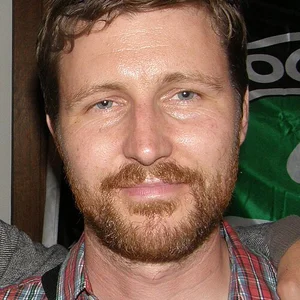

Lars von Trier is a Danish director, screenwriter, and producer born in 1956. A leading figure in European auteur cinema, in 1995 he co-founded the Dogme 95 movement and has made provocative films honored at the major festivals.
Lars von Trier(1956 — ?)
Lars von Trier
Royaume de Danemark
7 min read
Frequently asked questions
Key Facts
- Born on April 30, 1956, in Copenhagen (Denmark)
- Co-founded the Dogme 95 movement with Thomas Vinterberg in 1995
- Directed *Breaking the Waves* (1996), Grand Prix of the Jury at Cannes
- Won the Palme d'Or at Cannes in 2000 for *Dancer in the Dark*
- Pursued a controversial body of work with *Dogville* (2003), *Antichrist* (2009), and *Melancholia* (2011)
Works & Achievements
First feature film, a thriller with a misty, sepia-toned atmosphere, awarded for its technique at Cannes. It reveals a highly inventive visual style.
A hypnotic film about post-war Germany, blending black and white with color. It won the Jury Prize at the Cannes Film Festival.
A television series blending hospital drama and the supernatural, which met with great success and broadened his audience.
A devastating drama about sacrifice and faith, Grand Prix at Cannes. It marked the beginning of his international recognition.
The second official Dogme 95 film, shot with a handheld camera, about a provocative group. A practical manifesto of his theories on cinema.
A tragic musical starring Björk, awarded the Palme d'Or. The emotional peak of his work.
A fable about human cruelty filmed on a bare stage with sets outlined in chalk. A radical experiment that rethinks staging.
An end-of-the-world film of great visual beauty, about depression and anguish. Kirsten Dunst received the Best Actress award at Cannes for her performance.
Anecdotes
The « von » in his name is not an inherited title of nobility: Lars Trier added it himself while studying at the National Film School of Denmark. It started as a mocking nickname from his classmates, which he chose to keep for signing his films, in the manner of the great filmmakers of old.
Lars von Trier suffers from a paralyzing fear of flying and refuses to board a plane. He travels by car or camper van, which forces him to shoot even his films supposedly set in the United States within Europe: for "Dogville
America is reduced to a black soundstage where the houses are drawn in chalk on the floor.
In 1995, together with his fellow Dane Thomas Vinterberg, he wrote the "Dogme 95" manifesto and its "Vow of Chastity
: ten very strict rules (handheld camera
natural light
no added music) meant to strip cinema of its artifice. The text was reportedly written in less than an hour.
In 2011, at the Cannes Film Festival press conference for "Melancholia
he made clumsy and provocative remarks about Hitler
jokingly calling himself a
Nazi". The scandal was immediate: the Festival declared him "persona non grata
even as his actress Kirsten Dunst went on to receive the Best Actress award there.
The shooting of "Dancer in the Dark
(2000) with the Icelandic singer Björk was so tense that the actress
in open conflict with the director
sometimes vanished from the set for several days. The film nonetheless won the Palme d
Or
and Björk received the Best Actress award at Cannes.
Primary Sources
DOGME 95 is a collective of filmmakers founded in Copenhagen in the spring of 1995. DOGME 95 aims to counter certain tendencies in cinema today.
Shooting must take place on location. Props and sets must not be brought in. The camera must be handheld. The film must be in colour; no special lighting is permitted.
The Festival's Board of Directors, meeting today, firmly condemns these remarks and declares Lars von Trier persona non grata at the Cannes Film Festival, with immediate effect.
If I have hurt anyone by what I said this morning, I sincerely apologise. I am neither antisemitic nor in any way sympathetic to Nazism.
Key Places
Birthplace of Lars von Trier, where he grew up and has spent most of his life. The Danish capital is the heart of his cinema and his work.
Institution in Copenhagen where he trained as a director between 1979 and 1983. There he shot short films that already drew attention, and adopted his name “von Trier.”
Former military barracks near Copenhagen turned into studios by the Zentropa company. Most of his films were prepared and shot there.
A major gathering of world cinema where von Trier presented nearly all of his films and won the Palme d'Or in 2000. It is also where he was declared persona non grata in 2011.
A town nicknamed “Trollywood” thanks to its studios (Film i Väst) where Zentropa shot several productions, including von Trier's films. It illustrates the cooperation of Scandinavian cinema.
Typical Objects

A symbol of Dogme 95, the camera held in the hand replaces the smooth movements of rails and cranes. It gives films a shaky, unstable image, meant to seem more truthful and closer to the characters.

A short text of rules, accompanied by the “Vow of Chastity,” through which von Trier and Vinterberg committed to shooting without artificial sets, added music, or special effects. This document influenced filmmakers all over the world.

Since he refuses to fly, von Trier travels by car or motorhome to reach his sets. This way of getting around explains why he almost always shoots in Europe, even for American stories.

The supreme award of the Cannes Film Festival, shaped like a golden palm leaf. Von Trier received it in 2000 for “Dancer in the Dark,” a crowning achievement for all of Danish auteur cinema.

A small slate with a hinged clapper struck in front of the camera at the start of each take. It indicates the scene number and synchronizes image and sound during the editing of the film.

A text that describes dialogue, scenes, and acting directions before shooting. Von Trier records his radical ideas there, such as the imaginary sets of “Dogville” reduced to chalk lines.
School Curriculum
Vocabulary & Tags
Key Vocabulary
Daily Life
Morning
Lars von Trier often begins his workdays at the Filmbyen studios, near Copenhagen, where the offices of his company Zentropa are located. The morning is devoted to writing screenplays and meticulously preparing the scenes to be shot.
Afternoon
The afternoon is spent on set, camera on his shoulder, or in the editing room. A demanding director, he directs his actors at length and does not hesitate to redo takes to reach the raw emotion he is after.
Evening
In the evening, he returns to his family in the Copenhagen area. Known for his anxieties and phobias, he avoids long-distance travel and prefers a rather home-loving life, far from the social whirl of the film world.
Food
Von Trier eats simply, in the Danish way. He has spoken openly about his struggles with anxiety, depression and, in the past, alcohol, which marked certain periods of his life.
Clothing
Far from the image of the elegant filmmaker, he dresses casually, often in simple, comfortable clothes, sometimes in combat fatigues or a beanie on set.
Housing
He lives in the Copenhagen area, in Denmark. His fear of flying ties him strongly to his country: he prefers to organize his work around his home rather than travel the world.
Historical Timeline
Period Vocabulary
Liens externes & ressources
Références
Œuvres
Element of Crime
1984
L'Hôpital et ses fantômes (Riget)
1994
Breaking the Waves
1996
Dancer in the Dark
2000
Dogville
2003