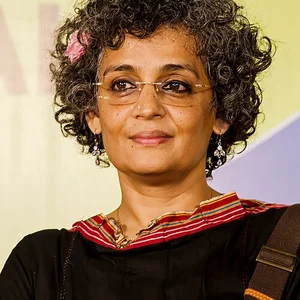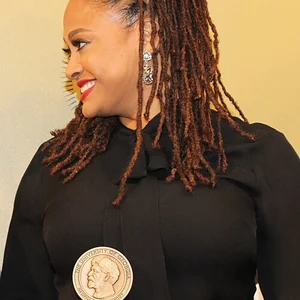

American director, producer, and screenwriter, Ava DuVernay has established herself as a major voice in socially engaged cinema. With Selma (2014) and the documentary 13th (2016), she explores the struggle for civil rights and racial inequality in the United States.
Ava DuVernay(1972 — ?)
Ava DuVernay
États-Unis
8 min read
Frequently asked questions
Famous Quotes
« Diversity is not a trend. It's a movement.»
Key Facts
- 1972: born in Long Beach, California
- 2012: founded Array, a distribution company supporting filmmakers from minority backgrounds
- 2014: directed Selma, about Martin Luther King Jr.'s civil rights march, nominated for the Academy Award for Best Picture
- 2016: directed 13th, a Netflix documentary on the American prison system and structural racism
- 2018: first Black woman to direct a Hollywood film with a budget exceeding $100 million (A Wrinkle in Time)
Works & Achievements
Ava DuVernay's debut feature film, an independent drama about grief within an African American family. Made on a minimal budget, it marks her entry into narrative fiction and enabled her to found ARRAY.
A film about a woman whose husband is incarcerated, exploring the impact of the prison system on Black American families. It won the Directing Award at the Sundance Film Festival, truly launching DuVernay's career.
A historical dramatization of the 1965 Selma to Montgomery voting rights marches led by Martin Luther King Jr. Nominated for the Academy Award for Best Picture, it is widely regarded as an essential film about the Civil Rights Movement.
A Netflix documentary examining the connection between the 13th Amendment, slavery, and mass incarceration in the United States. Nominated for an Academy Award, it is taught in numerous American universities and high schools.
An adaptation of Madeleine L'Engle's science fiction novel, and the first major Hollywood studio film directed by a Black woman. Its release marked a historic milestone for representation in Disney productions.
A four-part Netflix miniseries about the injustice suffered by the Central Park Five, five Black and Latino teenagers wrongfully convicted in 1989. Watched by tens of millions of households, it reignited debate over coerced confessions and racial bias in the justice system.
A Netflix series co-directed with football player Colin Kaepernick, tracing his African American adolescence and the roots of his activism against police violence.
Anecdotes
Before becoming a director, Ava DuVernay spent thirteen years working as a Hollywood publicist, organizing promotional campaigns for major studio productions. Frustrated by the lack of serious African-American stories on screen, she decided at 32 to step behind the camera — with no formal film training.
DuVernay was not the producers' first choice for Selma (2014). Once hired, she completely rewrote the existing screenplay to place Martin Luther King Jr. back at the center of the story and give an authentic voice to the Black activists of Selma. This rewrite earned the film an Academy Award nomination for Best Picture.
Her documentary 13th (2016), available on Netflix, takes its title from the 13th Amendment to the U.S. Constitution, ratified in 1865, which abolished slavery except as punishment for a crime. DuVernay shows how that exception has been exploited to fuel a system of mass incarceration that disproportionately affects African Americans — an argument that reignited a national debate in the United States.
In 2018, with A Wrinkle in Time, Ava DuVernay became the first Black woman to direct a Hollywood film with a budget exceeding $100 million. This science-fiction film, adapted from a beloved children's novel, features a young mixed-race heroine — a deliberate choice to offer positive representation to an audience of children rarely seen on the big screen.
When Netflix approached DuVernay to direct When They See Us (2019), she met personally with the five men from Harlem — known as the Central Park Five — who had been wrongfully convicted in 1989 and exonerated in 2002. The miniseries was watched by more than 23 million households in its first week, sent shockwaves through the media, and pressured New York City to pay $41 million in compensation to the men.
Primary Sources
«This story belongs to those who marched, to those who suffered, to those who believed justice was possible. We tell their truth so that no one will ever forget it.»
«The 13th Amendment did not end slavery. It legalized it under a different form. This documentary is an invitation to look history in the face, without turning away.»
«I don't want my films to be Black films for a Black audience. I want them to be films about humanity, that speak to everyone. The difference is that I refuse to set aside my own perspective to get there.»
«To represent others on screen is to tell them they exist, that they matter, that they deserve to be seen. It is a political act as much as an artistic one.»
«The data is clear: Black Americans make up 13% of the population and 40% of the prison population. This is not the result of chance — it is the result of policy.»
Key Places
Birthplace of Ava DuVernay, born on August 24, 1972. As a child, she grew up between Long Beach, Compton, and Lynwood — neighborhoods shaped by social inequality that forged her political sensibility.
Heart of the American film industry and Ava DuVernay's professional home base. It is here that she founded ARRAY and develops most of her film and series projects.
A symbolic city of the Civil Rights Movement, site of the historic 1965 marches. DuVernay filmed part of her movie Selma (2014) there and conducted extensive research into local history.
The federal capital, home to the Capitol, and the setting for debates on criminal and racial policy documented in 13th. DuVernay met with legislators and activists there while researching her documentary.
The city where the Central Park Five case unfolded in 1989, as told in When They See Us. DuVernay met with the five protagonists there to absorb their experiences before writing the miniseries.
Typical Objects
An iconic tool of filmmaking, the slate marks the start of each take and synchronizes picture and sound. DuVernay uses it on her sets to assert her rhythm and vision over every scene.

Ava DuVernay extensively rewrites and annotates her screenplays before and during production. For Selma, she filled entire pages with notes to ensure every line faithfully reflected the thinking of civil rights activists.

A professional digital camera used on her major productions, capable of capturing high-quality cinematic images. DuVernay works closely with her directors of photography to choose every angle and every lighting setup.

An essential tool during long editing sessions, particularly critical in documentaries like 13th where sound and music narration are central to guiding the viewer's emotional experience.

DuVernay actively uses Twitter and Instagram to communicate directly with her audience, share her political views, and promote causes related to racial justice and representation.

For 13th and When They See Us, DuVernay assembled extensive files of court documents, prison statistics, and personal testimonies. These archives form the backbone of her socially committed filmmaking.
School Curriculum
Vocabulary & Tags
Key Vocabulary
Tags
Daily Life
Morning
Ava DuVernay typically starts her day very early, often before six in the morning. She spends the first hours reading the news, particularly coverage of racial justice and American policy issues that constantly fuel her projects. She also responds to messages from her activist network across social media.
Afternoon
During filming or development periods, her afternoons are entirely devoted to production meetings, casting sessions, or dailies screenings with her team. DuVernay is known for her direct involvement at every stage, from the screenplay through to the final cut, refusing to delegate essential creative decisions.
Evening
Evenings are often reserved for screenings, premieres, or charitable events connected to ARRAY, her mission-driven distribution company. She frequently meets with emerging filmmakers she wants to support, carrying on a tradition of solidarity among underrepresented creators in Hollywood.
Food
Like many professionals in Los Angeles, DuVernay favors healthy eating given the long shooting days that demand both endurance and focus. She has mentioned in interviews how much she values shared meals with her team as a bonding ritual on set.
Clothing
Ava DuVernay is recognized for her elegant yet relaxed style, often featuring bold colors or pieces by African American designers she wants to champion. On red carpets, she deliberately chooses stylists and fashion houses from underrepresented communities.
Housing
DuVernay lives in the Windsor Hills neighborhood of Los Angeles, nicknamed the “Sugar Hill of the West Side” in reference to its history as one of the first affluent residential neighborhoods for African Americans in California. She has transformed part of her home into a workspace for ARRAY and small independent productions.
Historical Timeline
Period Vocabulary
Liens externes & ressources
Références
Œuvres
When They See Us
2019
Colin in Black & White
2021