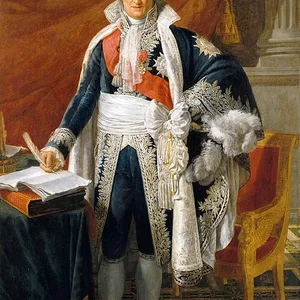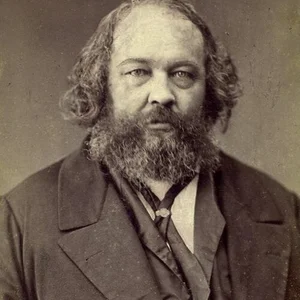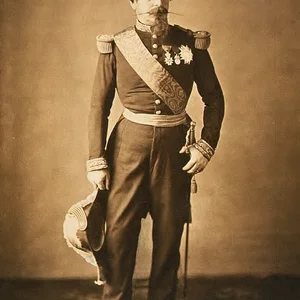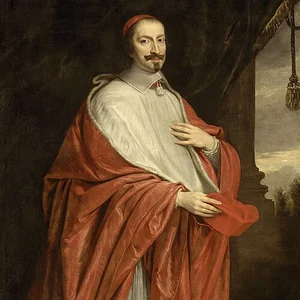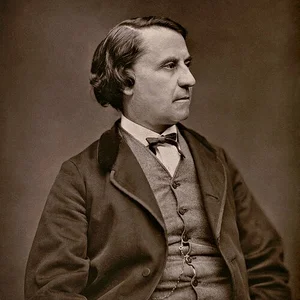

French journalist, historian, and socialist theorist (1811–1882). A member of the provisional government of the Second Republic in 1848, he championed the National Workshops and the right to work. Exiled in England after the June Days uprising, he returned to France after 1870.
Louis Blanc(1811 — 1882)
Louis Blanc
Espagne, France
10 min read
Frequently asked questions
Famous Quotes
« From each according to his abilities, to each according to his needs.»
« The state must be the regulator of competition.»
Key Facts
- 1839: Publication of Organisation du travail, his major theoretical work
- 1848: Member of the provisional government of the Second Republic
- 1848: Creation of the National Workshops to combat unemployment
- 1848: Exile in Great Britain following the suppression of the June Days uprising
- 1876: Return to France and election to the Chamber of Deputies
Works & Achievements
Louis Blanc's first major theoretical text, in which he lays the foundations of his socialist thought. He argues that inequality of social conditions is the primary source of the ills of modern society, and calls for a profound reorganization of the State.
The founding pamphlet that made Louis Blanc famous throughout France. He proposes the creation of social workshops funded by the State and democratically managed by the workers themselves, to put an end to cutthroat competition and the exploitation of the working class.
A sweeping five-volume historical panorama analysing the origins and excesses of the July Monarchy. An immediate popular success, the work established Louis Blanc as one of the leading political historians of his era and helped to destabilize the regime of Louis-Philippe.
A twelve-volume masterpiece written largely during his London exile, in which Louis Blanc reinterprets the Revolution of 1789 through the lens of social struggle. He rehabilitates Robespierre and the Montagnards, presenting them as forerunners of republican socialism.
A newspaper founded by Louis Blanc from his exile in London, through which he continued to spread his republican and socialist ideas. The publication allowed him to maintain an intellectual connection with his supporters in France despite his forced absence.
A collection of political articles and speeches published after his return from exile, in which Louis Blanc takes a stand on the major questions facing the nascent Third Republic: secular education, civil liberties, and workers' rights.
Anecdotes
Louis Blanc was famous for his very small stature — he stood barely five feet three. His political opponents mocked him with the nickname «le petit Blanc» (
little Blanc
)
but at the podium his powerful voice and eloquence made people forget his physique entirely. Contemporaries noted that he always stood perfectly straight
as if to compensate
and that his stage presence was remarkable for a man of such modest height.
In February 1848, Louis Blanc persuaded the provisional government to establish the Luxembourg Commission, the first official body charged with studying the labor question. Hundreds of workers' delegates and employers' representatives gathered there daily at the Palais du Luxembourg. It was the first time in French history that workers sat officially before the authorities to defend their collective rights.
The National Workshops created in 1848 bore the name of his ideas while betraying their spirit: Louis Blanc had proposed "social workshops" organized by trade, productive and self-managed. What the government actually put in place was little more than an unemployment fund to keep jobless workers occupied, with no productive organization whatsoever. This deliberate distortion of his ideas, orchestrated by his rivals within the government, helped discredit him in the eyes of part of public opinion.
After the bloody June Days of 1848, Louis Blanc was accused without the slightest evidence of having fomented the insurrection. He was forced into exile in London, where he would remain for more than twenty years. In the British capital he mixed with other European political refugees and continued writing his monumental *Histoire de la Révolution française* in the reading rooms of the British Museum.
Upon his return to France in 1871, Louis Blanc was elected as a deputy to the National Assembly. During the bloody week that crushed the Paris Commune, he took a courageous stance: without supporting the Communards, he voted against the emergency measures and publicly condemned the violence of the repression, earning him the hostility of much of the conservative Assembly. His funeral in 1882 was attended by an immense crowd, a testament to the lasting mark he had left.
Primary Sources
Competition is a system of extermination for the people. [...] The State must be, not a mere spectator of industrial activity, but the regulator and organiser of production.
The July Revolution was made by the people and profited the bourgeoisie. [...] The workers had fought; the middle classes reaped the fruits of their victory.
The right to work is the right to life. To deny a man the right to work is to deny him the right to exist. Society owes all its members the means to live by working.
Inequality of conditions is the primary source of all social ills. So long as man is made the enemy of man by the force of institutions, all liberty will be illusory.
To dissolve the National Workshops without offering the workers anything in return is to cast them into despair and set Paris ablaze. I implore the Assembly not to commit this irreparable mistake.
Key Places
Louis Blanc was born in Madrid on October 29, 1811, where his father Jean-Charles Blanc worked as a finance inspector for King Joseph Bonaparte. This birth in exile ironically foreshadowed the destiny of a man who would spend much of his life far from France.
In 1848, Louis Blanc presided over the Luxembourg Commission, established in this Parisian palace — home of the Senate. It was there that he brought together, for the first time, workers' delegates and government representatives to officially debate working conditions, a unique moment in French social history.
Louis Blanc lived in exile in London from 1848 to 1871 — more than twenty years. There he mingled with other European political refugees, wrote his *Histoire de la Révolution française* at the British Museum, and observed the growth of the English labor movement, which served as a source of inspiration for his theories.
After returning from exile, Louis Blanc served as a republican deputy in the National Assembly, where he championed social rights and opposed the conservative backlash. It was from this platform that he denounced the bloody repression of the Paris Commune in May 1871.
Louis Blanc died in Cannes on December 6, 1882, where he had gone to recover his failing health. His remains were brought back to Paris for a republican funeral attended by large crowds of workers and activists, a testament to the lasting mark left by his life spent entirely in the service of the social movement.
Typical Objects

Louis Blanc was above all a man of the pen: a tireless journalist, historian, and polemicist who wrote articles, pamphlets, and entire volumes with this ever-present tool. It was the pen that allowed him to spread his socialist ideas long before he joined the provisional government.

Louis Blanc distinguished himself as an orator at the Luxembourg Commission and later in the National Assembly. The rostrum was for him the instrument of republican democracy, the place where the voice of the working class could finally be heard at the highest level of the state.

The National Workshops of 1848 kept registers of the thousands of enrolled workers who came seeking employment or state assistance. These documents symbolize both the hope carried by Louis Blanc's ideas and the limits of their concrete implementation by a reluctant government.

Louis Blanc founded and ran several newspapers — *La Revue du progrès*, *Le Nouveau Monde* — to spread his socialist ideas. The press was at the time the primary vehicle for the circulation of political ideas, and Blanc wielded it with great rhetorical mastery.

Like most politicians and intellectuals of the nineteenth century, Louis Blanc wore the black frock coat, a symbol of bourgeois respectability. This attire stood in contrast to the egalitarian message he championed, highlighting the ambiguous position of the socialist intellectual who came from educated circles.

Louis Blanc's masterwork, published in twelve volumes between 1847 and 1862, represents years of research carried out largely in the reading room of the British Museum during his exile. These tomes embody his conviction that history is a political tool for understanding the present.
School Curriculum
Vocabulary & Tags
Key Vocabulary
Daily Life
Morning
Louis Blanc rose early to read the newspapers and sort through his correspondence. During his London exile, he devoted his mornings to historical research in libraries — most notably in the reading room of the British Museum — and to writing his voluminous works with the rigorous discipline of a trained historian.
Afternoon
Afternoons were given over to political meetings and theoretical discussions with fellow refugees or activists. In Paris before 1848, he received journalists, working-class militants, and intellectuals at his editorial office or in cafés of the Latin Quarter, preparing articles and speeches.
Evening
In the evenings, Louis Blanc attended political meetings, republican banquets, or gatherings at friends' homes. A gifted orator, he was frequently invited to address circles of artisans and intellectuals. In London, he regularly took part in meetings of international workers' associations.
Food
Like most intellectuals of the Parisian petite bourgeoisie in the nineteenth century, Louis Blanc took his meals at modest restaurants and brasseries. During his exile, he adapted to plain English cooking — thick soups, boiled meats — without entirely giving up the French wines his friends would sometimes send him.
Clothing
Louis Blanc wore the classic bourgeois dress of his era: a frock coat or black redingote, waistcoat, cravat, and top hat. Despite his small stature, he was careful about his appearance in order to command respect in political and intellectual circles, and his contemporaries noted that he always carried himself very upright.
Housing
In Paris before 1848, Louis Blanc lived in modest apartments in the Latin Quarter, close to editorial offices and republican circles. During his long exile in London, he lodged in furnished boarding houses and later in apartments in the Soho or Marylebone neighborhoods, at the heart of the European political refugee community.
Historical Timeline
Period Vocabulary
Liens externes & ressources
Références
Œuvres
De l'Égalité
1838
L'Organisation du travail
1839
Histoire de dix ans (1830-1840)
1841-1844
Histoire de la Révolution française
1847-1862
Le Nouveau Monde (journal)
1849-1851
Questions d'aujourd'hui et de demain
1873-1884