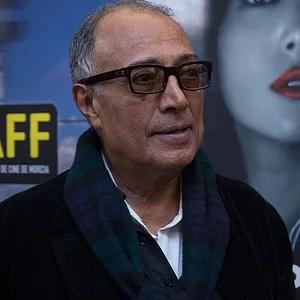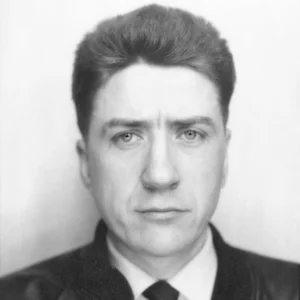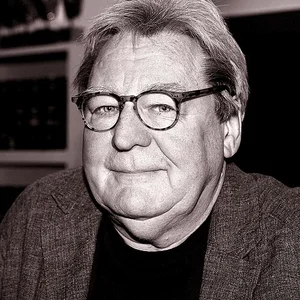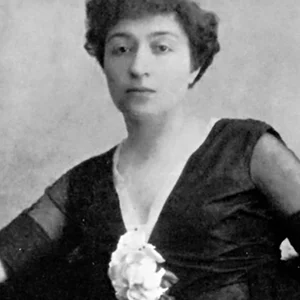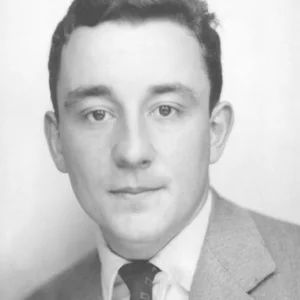

French filmmaker (1932–1995), a major figure of art-house cinema. Close to the French New Wave without formally belonging to it, he directed bold works such as *Lacombe Lucien* (1974) and *Au Revoir les Enfants* (1987), exploring the memory of the German Occupation.
Louis Malle(1932 — 1995)
Louis Malle
France
9 min read
Frequently asked questions
Famous Quotes
« I don't make films to please people — I make films because I have something to say.»
Key Facts
- Born in 1932 in Thumeries, he co-directed *The Silent World* with Jacques-Yves Cousteau (Palme d'Or, 1956).
- *Elevator to the Gallows* (1958) marked his acclaimed feature debut, with a score by Miles Davis.
- *Lacombe Lucien* (1974) sparked controversy for its portrayal of collaboration under the Nazi Occupation.
- *Au Revoir les Enfants* (1987), an autobiographical account of the deportation of Jewish children, won the Golden Lion at Venice.
- He pursued an international career between France and the United States, and died in Los Angeles in 1995.
Works & Achievements
Documentary co-directed with Cousteau about the ocean depths, winner of the Palme d'Or at Cannes and the Academy Award for Best Documentary. A technical and artistic feat from a 23-year-old filmmaker.
Malle's first fiction feature, a film noir starring Jeanne Moreau with an improvised score by Miles Davis that has since become legendary. The film heralded the renewal of French cinema.
A film starring Jeanne Moreau that was censored for obscenity in several countries and became the subject of a legal case that reached the United States Supreme Court. It confirmed the boldness and freedom of expression that define Malle's work.
A portrait of a man on the brink of suicide, adapted from Drieu la Rochelle. Considered one of Malle's most intense films, it won the Special Jury Prize at the Venice Film Festival.
Written with Patrick Modiano, the film examines everyday collaboration under the Occupation through the eyes of a young peasant with no real ideology. Nominated for an Academy Award, it sparked fierce controversy in France over the memory of the war.
This American-Canadian film won prizes at major international festivals and received five Academy Award nominations. It confirmed Malle's ability to capture American reality with the same sharp eye he brought to French subjects.
An autobiographical film about the arrest of a Jewish pupil at a Catholic boarding school during the Occupation. Winner of the Golden Lion at Venice and seven César Awards, it is Malle's most personal and celebrated work, studied in many French secondary schools.
Anecdotes
À 23 ans à peine, Louis Malle co-réalise avec Jacques-Yves Cousteau Le Monde du silence (1956), un documentaire sur les fonds marins tourné en plongée autonome. Le film décroche la Palme d'Or au Festival de Cannes et l'Oscar du meilleur documentaire, faisant d'un inconnu l'un des cinéastes les plus récompensés de l'année.
Son film Les Amants (1958) provoque un scandale retentissant à sa sortie : jugé obscène dans plusieurs États américains, il est poursuivi en justice. L'affaire remonte jusqu'à la Cour suprême des États-Unis, qui statue en 1964 que le film n'est pas pornographique — une décision historique pour la liberté d'expression cinématographique.
Au revoir les enfants (1987) est directement inspiré d'un souvenir douloureux que Malle porte depuis l'enfance : en 1944, dans son école catholique d'Avon, il assiste impuissant à l'arrestation de son camarade Jean Kippelstein, élève juif caché sous une fausse identité, emmené par la Gestapo devant toute la classe. Ce traumatisme le hante quarante ans avant qu'il ne parvienne à le mettre en images.
Pour écrire Lacombe Lucien (1974), Malle s'associe au jeune romancier Patrick Modiano, futur Prix Nobel de littérature (2014). Le film, qui montre un jeune paysan collaborant avec la Milice sans idéologie ni culpabilité apparente, déclenche une vive polémique en France : certains accusent les auteurs de banaliser la collaboration. Il est pourtant nommé aux Oscars du meilleur film en langue étrangère.
Louis Malle est l'un des rares cinéastes français à avoir mené une carrière de premier plan des deux côtés de l'Atlantique. Installé aux États-Unis à partir des années 1970, il réalise des films aussi différents qu'Atlantic City (1980), salué par la critique internationale, et My Dinner with Andre (1981), construit entièrement autour de deux hommes qui dînent et conversent — une forme radicale qui déroute autant qu'elle fascine.
Primary Sources
It took me forty years to make this film. It was something that had haunted me since childhood, since that January morning in 1944 when I watched Jean Bonnet being taken away by the Gestapo in front of the whole school. I have asked myself all my life whether I could have done something.
With Cousteau, we dived into a world still unexplored. The underwater camera demanded a slowness, a patience that had no equivalent in surface cinema. Filming the ocean floor meant inventing a new visual grammar.
Lacombe Lucien is neither an apology nor a condemnation. It is an attempt to understand how an ordinary young man can end up on the wrong side of history without even realizing it. That, to me, is what is most disturbing.
I feel as much American as French now. That is not a betrayal: it is a way of staying free, of not being a prisoner of a single culture, a single national cinema. Freedom is what has always guided me.
This film is dedicated to Jean, to all those who were torn from their childhood. I did not make this film to judge, but so as not to forget — and so that young audiences today might understand what it means to be complicit through silence.
Key Places
Louis Malle's birthplace, where his family owned a sugar refinery. This bourgeois childhood in the industrial North left a lasting mark on his sensitivity to social issues and the human condition.
The film school where Malle trained in the early 1950s. He acquired the technical and theoretical foundations of cinema there before going on to work with Cousteau.
A Catholic school near Fontainebleau where the young Louis Malle was a student during the Occupation. It was there that he witnessed the 1944 arrest of his Jewish classmate Jean Kippelstein — a scene directly recreated in *Au Revoir les Enfants*.
A site of international recognition for Malle from the very start of his career: he won the Palme d'Or here for *The Silent World* in 1956. Cannes embodies the global acclaim for French auteur cinema.
Malle settled in the United States from the 1970s onward, directing several major films there before dying in November 1995 from lymphoma at the age of 63.
Typical Objects

A lightweight camera used by New Wave filmmakers and their contemporaries to shoot outdoors without a large crew. Malle used it notably for his documentaries in India and North America.

The physical medium on which a film's images are recorded. Each reel corresponds to approximately ten minutes of projection and must be handled and stored with great care.

An iconic filmmaking tool used to synchronize sound and image during editing. It displays the scene number, take, film title, and director's name.

A fundamental working document for the filmmaker, describing the action, dialogue, and staging directions scene by scene. For *Lacombe Lucien*, the screenplay was co-written with the writer Patrick Modiano.

A mechanical machine that allowed the editor and director to view and assemble rushes. A central tool in filmmaking before the era of digital editing.

Diving equipment invented by Cousteau and Gagnan, used during the filming of *The Silent World* (1956). It allowed Malle and the crew to film the seabed at great depth for the first time in cinema history.
School Curriculum
Vocabulary & Tags
Key Vocabulary
Daily Life
Morning
On shoot days, Malle rises early and reviews the day's schedule with his assistant director. He prefers informal conversations with actors before takes, building an atmosphere of trust rather than imposing authoritative direction.
Afternoon
Afternoons are devoted to filming, often on location or in real spaces rather than in a studio. Malle encourages improvisation and does not hesitate to rewrite the script mid-shoot if a better idea emerges in the moment.
Evening
In the evenings, Malle reviews the day's rushes with the director of photography and the editor, assessing what worked and what did not. Outside of shoots, he frequents Parisian film clubs, literary circles, and the cafés of Saint-Germain-des-Prés.
Food
Born into a bourgeois family from northern France, Malle grew up with traditional, carefully prepared French cuisine. After settling in the United States in the 1970s, he adopted some American habits while remaining attached to shared meals as a time for conversation and creative exchange.
Clothing
Malle favors the relaxed style of the intellectuals of his generation: corduroy jacket, open collar, sometimes a turtleneck sweater. His elegant yet unpretentious look reflects his belonging to the educated bourgeoisie without ostentation.
Housing
In Paris during the 1950s and 1960s, Malle lives in the Saint-Germain-des-Prés neighborhood, at the heart of the postwar cultural ferment. From the 1970s onward, he divides his life between France and New York, then Los Angeles, in apartments that also serve as his workspace.
Historical Timeline
Period Vocabulary
Liens externes & ressources
Références
Œuvres
Le Monde du silence
1956