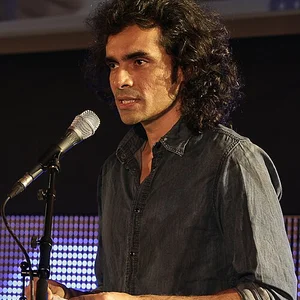
Spanish-born filmmaker who became a Mexican citizen (1900–1983), a towering figure of cinematic surrealism. His provocative films blend dream imagery, social critique, and anticlericalism. He is the creator of masterworks such as Un chien andalou, Belle de jour, and The Discreet Charm of the Bourgeoisie.
Luis Buñuel(1900 — 1983)
Luis Buñuel
Espagne, Mexique
9 min read
Frequently asked questions
Famous Quotes
« Thank God, I'm still an atheist.»
« Chance is the greatest of all artists.»
Key Facts
- 1900: born in Calanda, Aragon, Spain
- 1929: directs Un chien andalou with Salvador Dalí, a manifesto of surrealist cinema
- 1930: L'Age d'Or causes a scandal in Paris and is banned
- 1961: Viridiana wins the Palme d'Or at Cannes and is immediately censored in Spain
- 1972: The Discreet Charm of the Bourgeoisie wins the Academy Award for Best Foreign Language Film
Works & Achievements
Surrealist short film co-directed with Salvador Dalí, the first avant-garde film to cause an international scandal. The opening scene — an eye sliced open by a razor — remains the most famous and shocking image in cinema history.
A surrealist feature film that launches a savage attack on the bourgeoisie, the Church, and social conventions. Banned after riots broke out in Parisian theaters, the film remained censored for many decades.
An unflinching portrait of poverty among the slum children of Mexico City, blending neorealism with dream imagery. The film earned Buñuel the Best Director Prize at Cannes and marked his international comeback after fifteen years in exile.
A Spanish film that won the Palme d'Or at Cannes before being immediately banned in Spain for its parody of the Last Supper and its biting critique of Catholicism. The scandal cemented Buñuel's reputation as the most subversive filmmaker of his time.
An adaptation of Joseph Kessel's novel starring Catherine Deneuve, exploring the fantasy and repressed desire of a bourgeois wife who works as a prostitute in the afternoons. A major commercial and artistic success, the film definitively elevated Buñuel into the pantheon of world cinema.
An absurdist, repetitive satire of the European bourgeoisie, in which a group of dinner guests never manages to eat together due to increasingly surreal obstacles. The film won the Academy Award for Best Foreign Language Film in 1973.
Buñuel's final film, in which the role of the desired woman is split between two different actresses without explanation, illustrating the elusive nature of desire. Nominated for an Academy Award, it is widely regarded as a perfect artistic testament.
Anecdotes
To shoot the opening scene of *Un chien andalou* (1929), Luis Buñuel himself sliced open the eye of a dead calf in order to film the razor-cut eye shot. The idea had come to him from a dream: a wispy cloud was slicing through the full moon, and immediately afterward he dreamed of a razor splitting open an eye. This shocking image, deliberately beyond rational interpretation, became one of the most famous in the entire history of cinema.
Viridiana (1961) was selected by Francoist Spain as its official entry for the Cannes Film Festival, where it won the Palme d'Or. But at the screening, the Spanish government realized the film was mocking the Catholic religion and immediately banned it from the country. The director general of Spanish cinema was fired, and Buñuel was unable to return to Spain until Franco's death.
Buñuel was a convinced atheist, yet paradoxically obsessed with the figure of the priest and the Catholic rituals of his Aragonese childhood. He famously declared: “Thank God, I am still an atheist.” This tension between fascination with and rejection of Catholicism runs through his entire body of work, from *L'Âge d'or* (1930) to *The Discreet Charm of the Bourgeoisie* (1972).
In exile in Mexico, Buñuel became a legendary figure for his dry martinis. He devoted several pages of his autobiography to the perfect recipe: the glass must be ice-cold, the vermouth merely grazed by sunlight filtered through the bottle, and the gin must be of the finest quality. He organized near-ritual ceremonies around the preparation of this cocktail.
Buñuel had studied at the Residencia de Estudiantes in Madrid in the 1920s, where he befriended Salvador Dalí and Federico García Lorca. This trio of brilliant artists would go on to revolutionize Spanish art. Buñuel and Dalí co-wrote *Un chien andalou* in just a few days, following one absolute rule: no image could have a rational explanation — anything that could be explained was cut.
Primary Sources
I am, thank God, still an atheist. [...] In my youth, we spent long hours at the Residencia de Estudiantes discussing everything and nothing — literature, painting, death. That is where I met Dalí and Lorca.
Once upon a time... A balcony. Night. A man sharpens his razor near the balcony. The man looks out the window and sees: 1° A light cloud drifting toward the full moon. 2° Then the head of a young woman with wide-open eyes. 3° Then the cloud passes across the moon.
Surrealism taught me that human life and imagination are one and the same. My films do not seek to explain — they seek to show what lies hidden beneath the polished surface of bourgeois society.
I am not trying to cause a scandal. I am trying to show what the bourgeois and clerical world prefers not to see. If it shocks, it is because reality itself is shocking.
Key Places
A small Aragonese village where Buñuel was born in 1900 into a bourgeois Catholic family. He was deeply shaped by Iberian religious traditions there, particularly the Holy Week drum procession, which he continued to celebrate throughout his life even in exile.
An elite intellectual institution where Buñuel studied from 1917 to 1925 and met Salvador Dalí and Federico García Lorca. This avant-garde hub was the crucible of his artistic formation and the founding creative friendships of his life.
The city where Buñuel settled in 1925 and joined André Breton's Surrealist group. It was in Paris that he made his first two masterpieces, *Un Chien Andalou* and *L'Age d'Or*, before being forced into exile by the Spanish Civil War.
The city where Buñuel settled permanently in 1946 after his exile and where he obtained Mexican citizenship. He made the majority of his body of work there, including *Los Olvidados* (1950), and died there in 1983. Mexico gave him the creative freedom that Europe and the United States had denied him.
The site of Buñuel's international consecration, where *Los Olvidados* won the Best Director Prize in 1951 and *Viridiana* took the Palme d'Or in 1961. Cannes represented for Buñuel the European recognition of his Mexican work.
Typical Objects
The central tool of Buñuel's craft, with which he built his dreamlike and subversive narratives. He favored a sober, direct approach to direction, avoiding ostentatious technical effects and letting strangeness emerge from the situations themselves.
An iconic object immortalized in the opening scene of *Un Chien Andalou* (1929), it became a symbol of the Surrealist break with classical narrative cinema. The razor slicing an eye is the most famous — and most shocking — image in avant-garde film history.
André Breton's founding text (1924) that shaped Buñuel's artistic commitments and directed his filmmaking toward the exploration of the unconscious, dreams, and desire. Buñuel was one of the few artists to faithfully transpose Surrealist principles onto the screen.
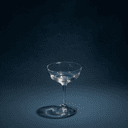
Buñuel was famous for his love of the dry martini, whose preparation he codified with near-ritualistic precision in his autobiography. This glass is emblematic of his life in Mexico and of the sociable world he cultivated as a refined exile.
Buñuel co-wrote most of his films, most notably with Jean-Claude Carrière on his later French works. His Surrealist screenplays were deliberately constructed without causal logic, accumulating dream images with no explicit meaning.
The medium used for films from the first part of his career (up through the 1950s), highly flammable and now largely lost. Several of Buñuel's Mexican films survive only in degraded copies due to the fragility of this material.
School Curriculum
Vocabulary & Tags
Key Vocabulary
Tags
Daily Life
Morning
Buñuel rose early and devoted his mornings to writing screenplays, often in collaboration with Jean-Claude Carrière on his later films. He worked by hand or on a typewriter, in the quiet of his Mexican home, generally refusing interruptions before lunch.
Afternoon
His afternoons were given over to filming, production meetings, or reading — Buñuel was a voracious reader, particularly of classic Spanish literature and detective novels. He took a regular nap, a typically Spanish habit he kept throughout his life.
Evening
Buñuel's evenings were occasions for friendly, intellectual gatherings at his Mexico City home, centered around the ceremonious preparation of his dry martinis. He loved to host filmmaker friends, painters, and writers, and conversation could stretch well into the night.
Food
Buñuel was deeply attached to the Spanish and Aragonese cuisine of his childhood — especially pulses, lamb, and Iberian charcuterie that he had sent over from Spain. In Mexico he came to appreciate the local cooking, but remained faithful to certain European food rituals, above all the importance of the meal as a social occasion.
Clothing
Buñuel dressed soberly and conventionally, preferring simple, functional suits with no ostentation. On set he often wore casual clothes — an open shirt, loose trousers — in contrast to the image of a Spanish aristocrat he could project in social life.
Housing
In Mexico City, Buñuel lived in a comfortable but unpretentious house, furnished to his restrained tastes. He valued quiet workspaces and kept a tidy desk where he wrote his screenplays; the library occupied a central place in his home.