 Flip the card
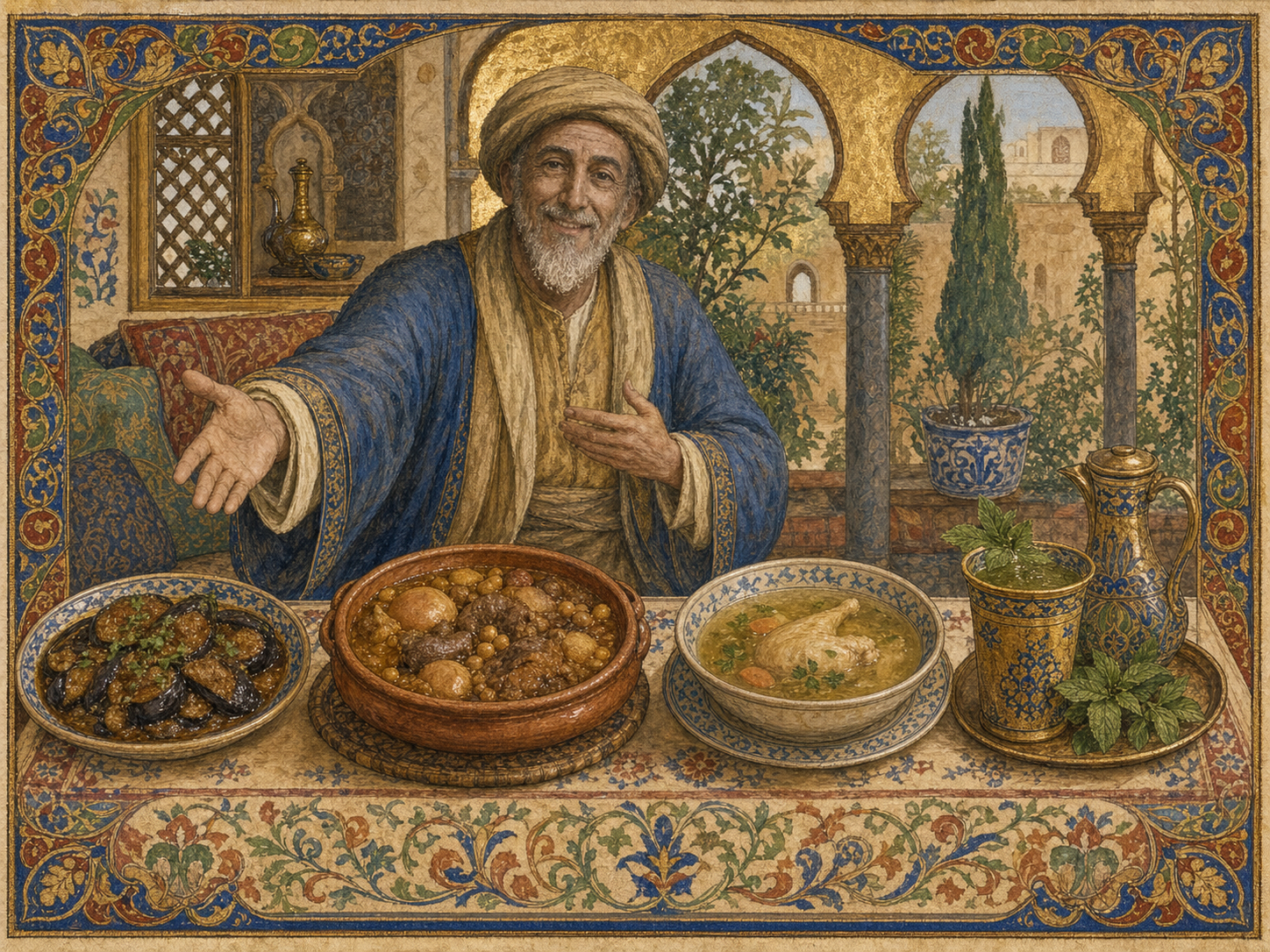
Maimonides at the table
1135 — 1204
On the menu
The Sephardic Table of al-Andalus and Fustat
Maimonides' cuisine reflects the Jewish communities of the Muslim West (al-Andalus, Maghreb, Egypt) in the 12th century: an art of balance where the physician speaks as loudly as the believer. It includes everyday dishes, frugal and plant-based (braised vegetables, chickpeas, lentils) that Maimonides recommended to his patients; the single Shabbat dish (adafina/hamin) put on the fire on Friday and left to simmer all night since cooking is forbidden on the day of rest; medicinal broths and drinks prepared according to the theory of humors; and dry confections for travel. All in strict observance of kashrut: no mixing of meat and dairy, no forbidden foods, ritual slaughter.
Signature : Cumin (kammoun) and the Andalusian Triad
Cumin, coriander, and saffron form the aromatic signature of Jewish-Andalusian cuisine. Cumin especially, inexpensive and reputed to soothe the stomach, perfumes both everyday meals and festive dishes. Maimonides, as a physician, appreciated these "hot" spices for aiding digestion without weighing down the body.
click to flip back
Maimonides at the table
1135 — 1204
5 period recipes
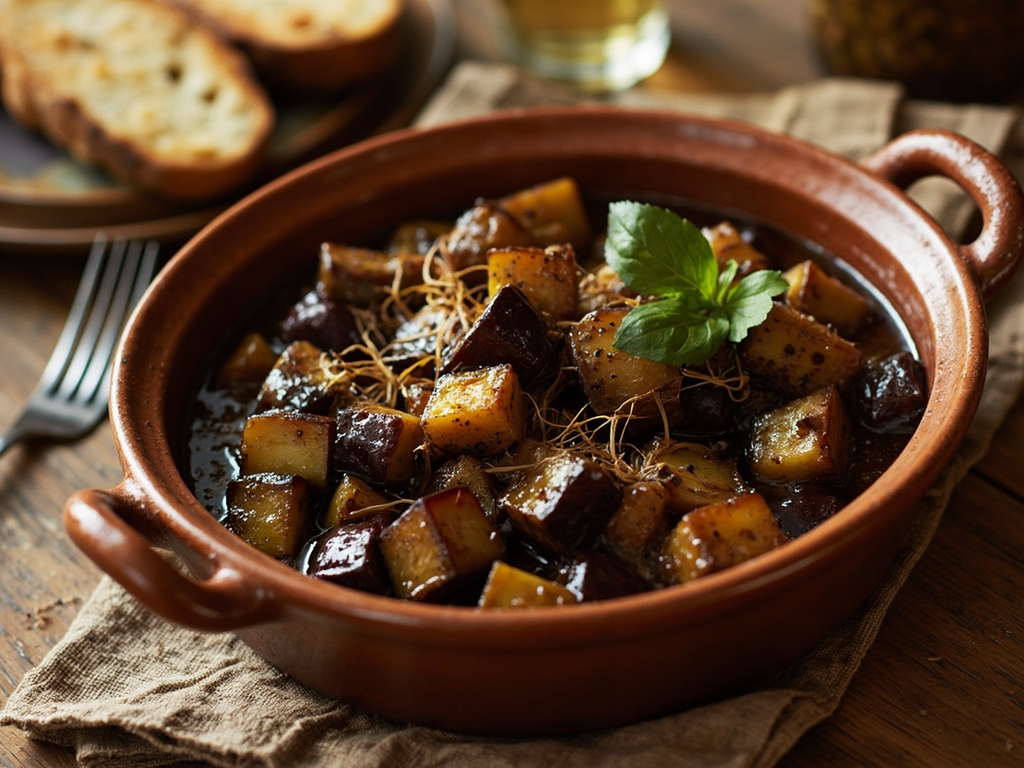 Everyday
Cumin-Scented Eggplants (Andalusian Braised Eggplants)
Everyday vegetable dish (qidra of vegetables)
🧂 ☕ 🌶️· 1 h (including 20 min resting)
View the recipe
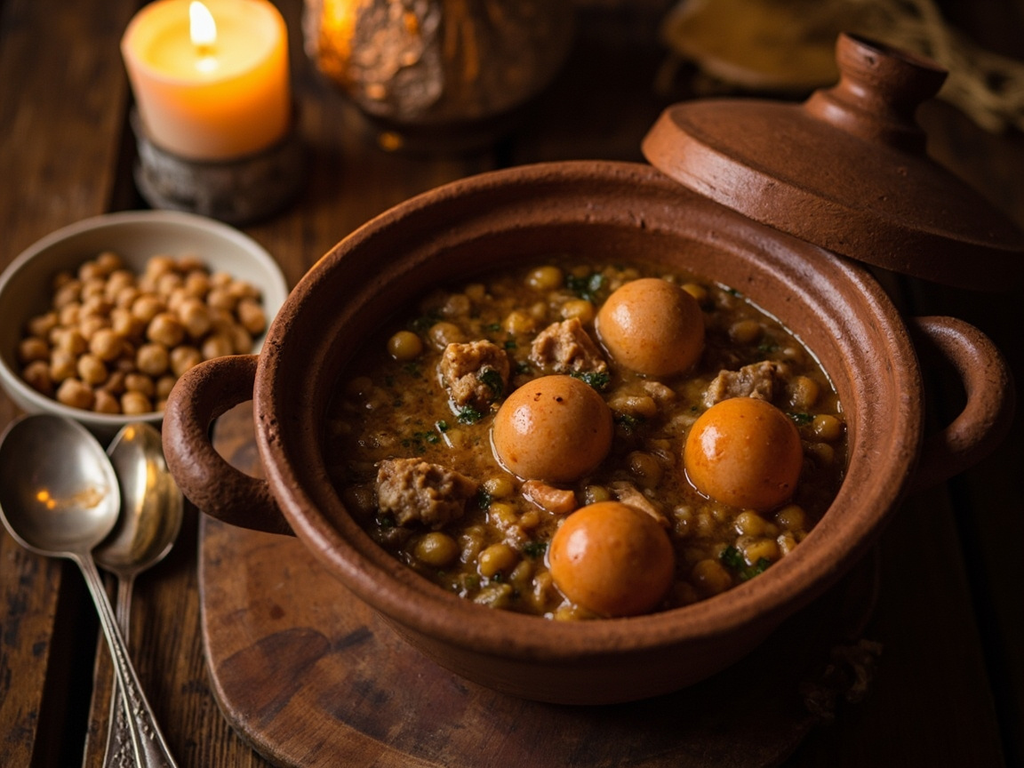 Festive
Shabbat Adafina (Sephardic Hamin)
Sabbath main dish (adafina / cocido de Shabbat)
🧂 🍄 🌶️· 8 to 12 h slow cooking
View the recipe
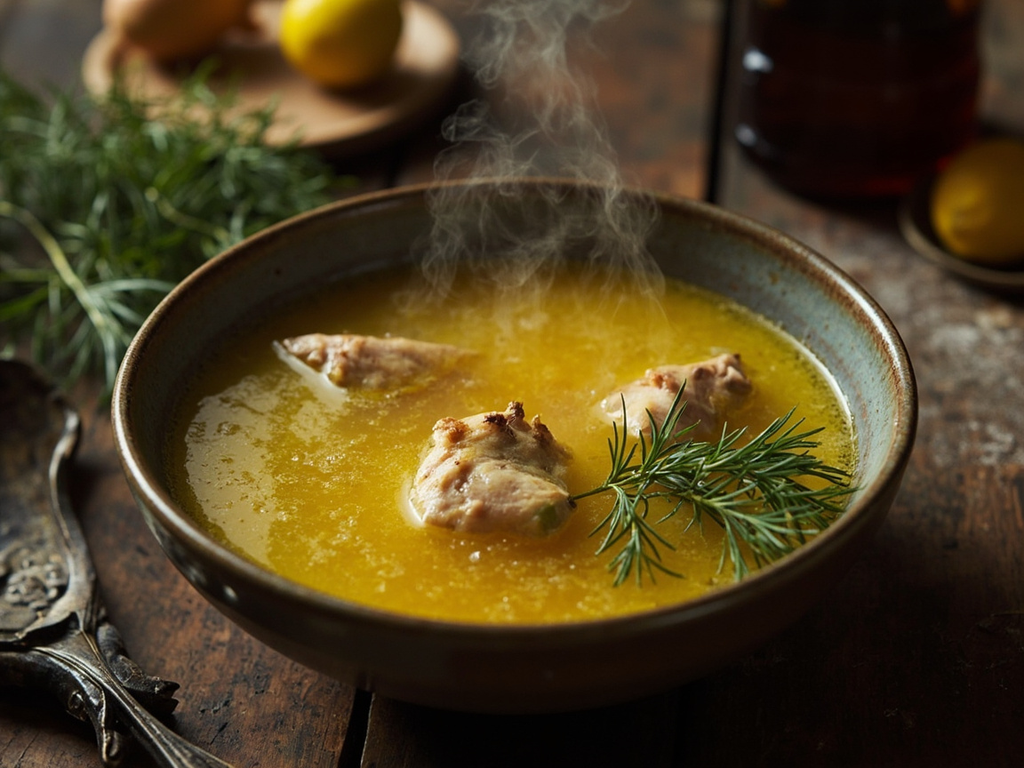 Remedy
Physician's Chicken Broth (Marak)
Medicinal broth (at the tabīb's, the physician)
🧂 🍄· 3 h
View the recipe
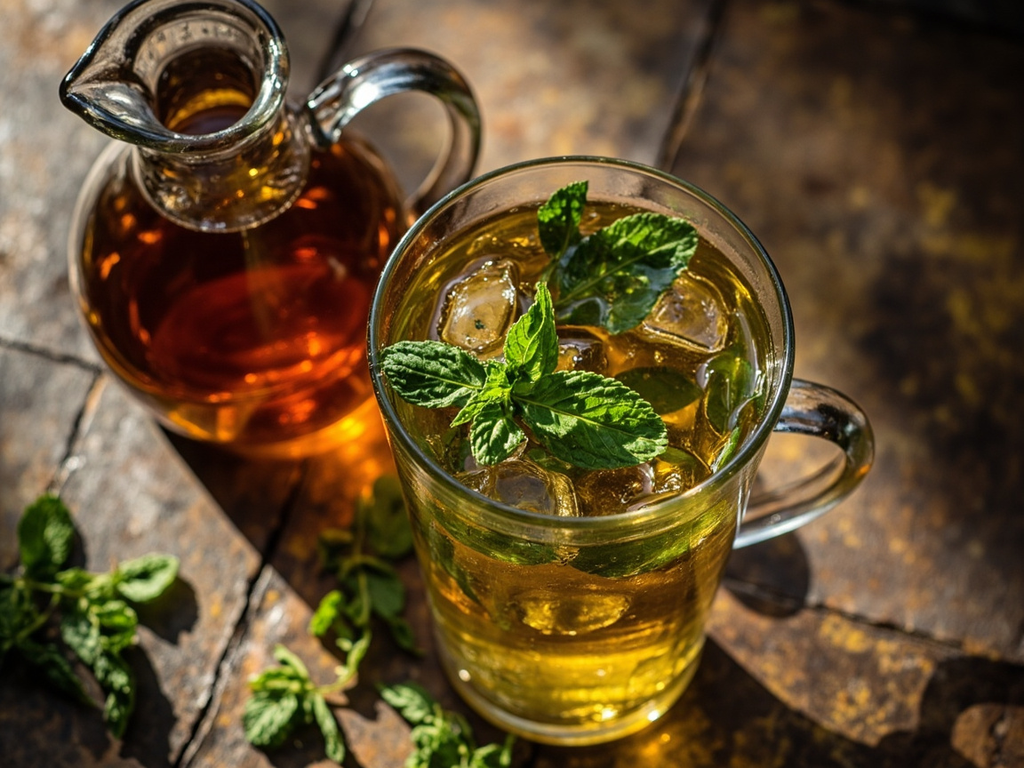 Drink
DrinkSekanjabin (Mint Oxymel)
Refreshing medicinal drink (sharāb)
🍯 🍋· 25 min (+ cooling)
View the recipe
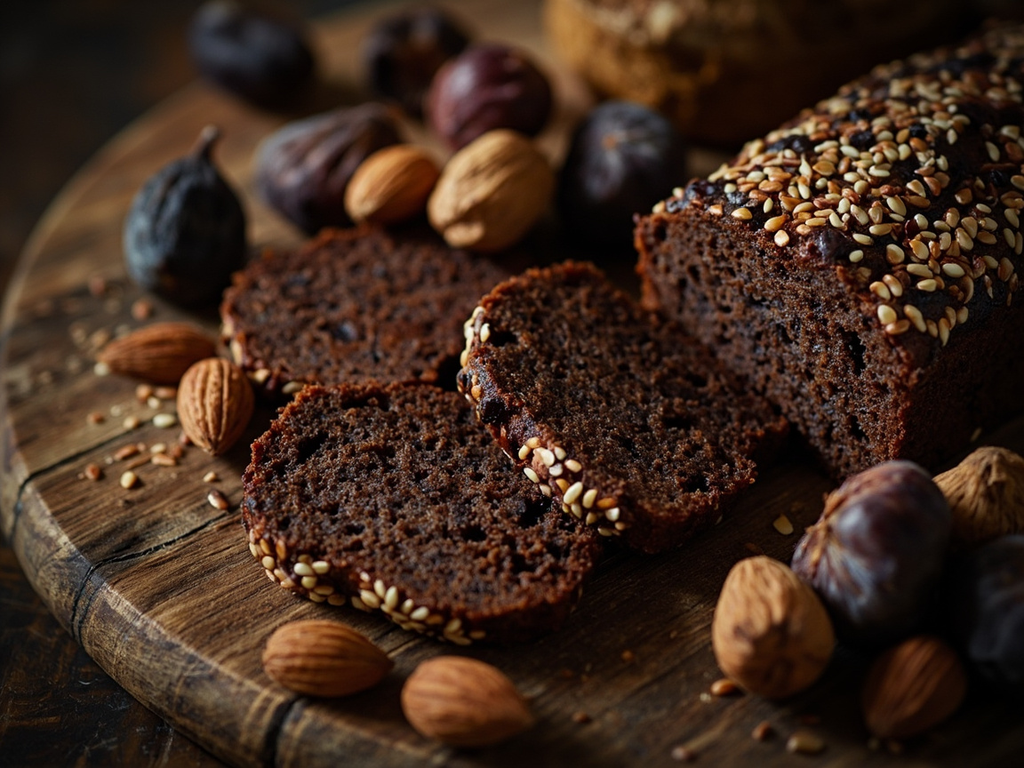 Travel
Fig and Almond Bread (Travel Pan de Higo)
Dry travel confection and provision (dulce seco)
🍯· 30 min (+ drying 1–2 days)
View the recipe