 flip
flipShabbat Adafina (Sephardic Hamin)
Shabbat Adafina (Sephardic Hamin)
Why this dish? Jewish law forbids lighting a fire on Shabbat. Sephardic Jews invented this dish, placed in the oven before sunset on Friday and left to simmer all night, ready to eat hot on Saturday noon. Maimonides, a great codifier of the Law in his *Mishneh Torah*, lived and precisely regulated these Sabbath rest practices.
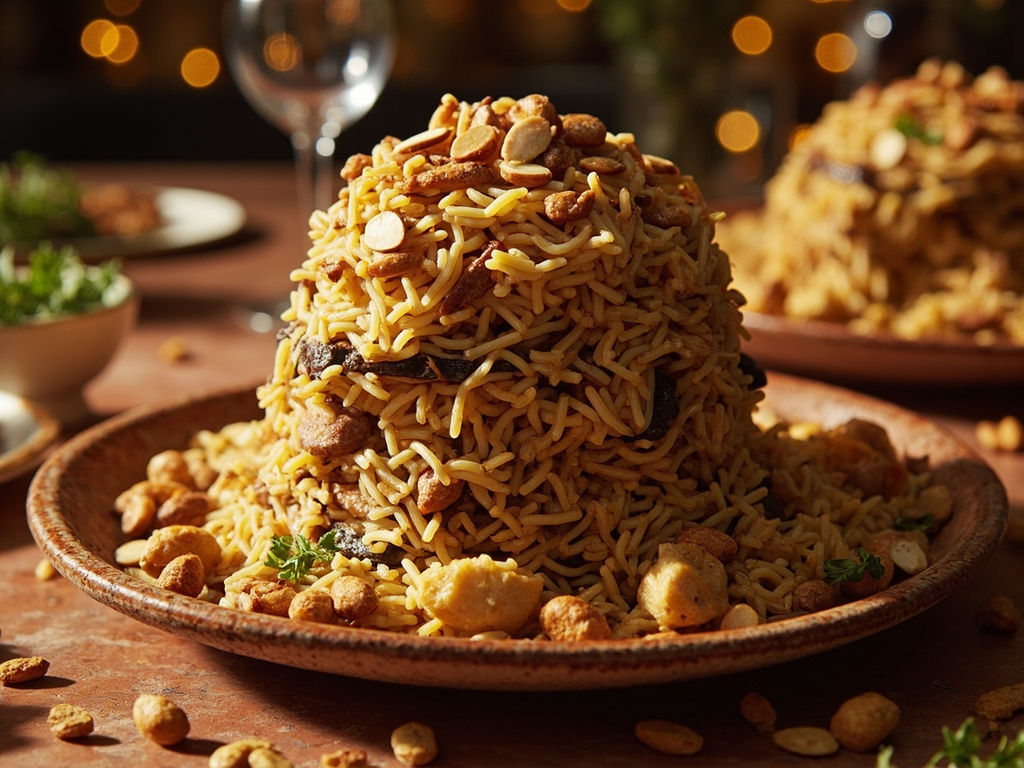
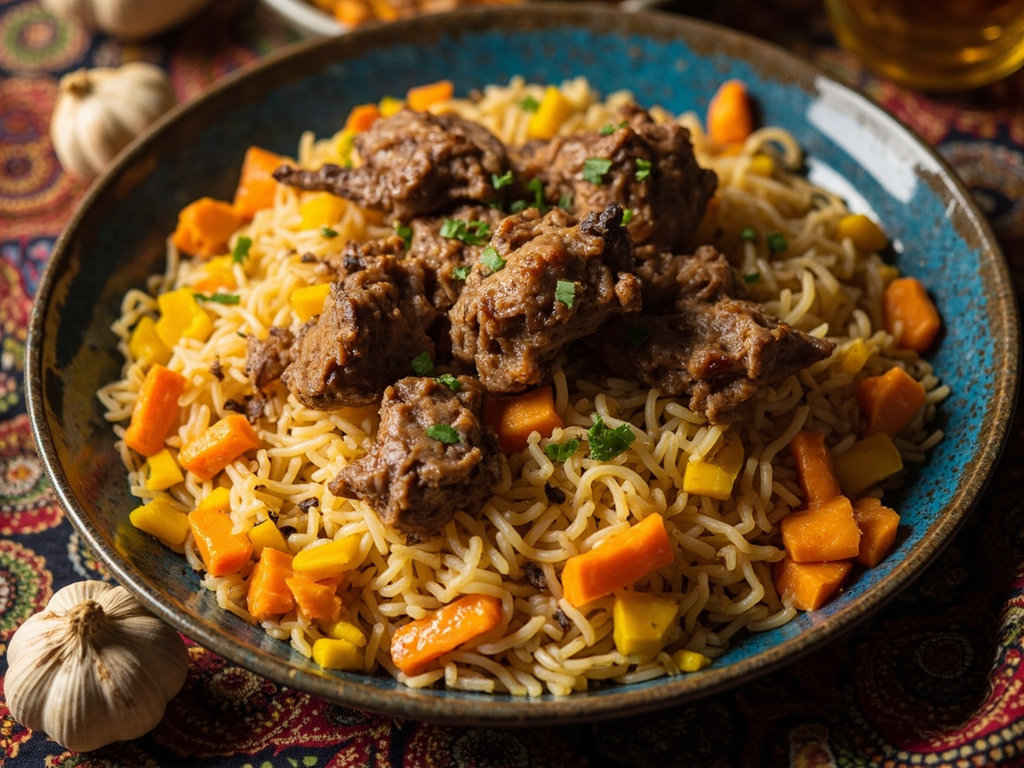
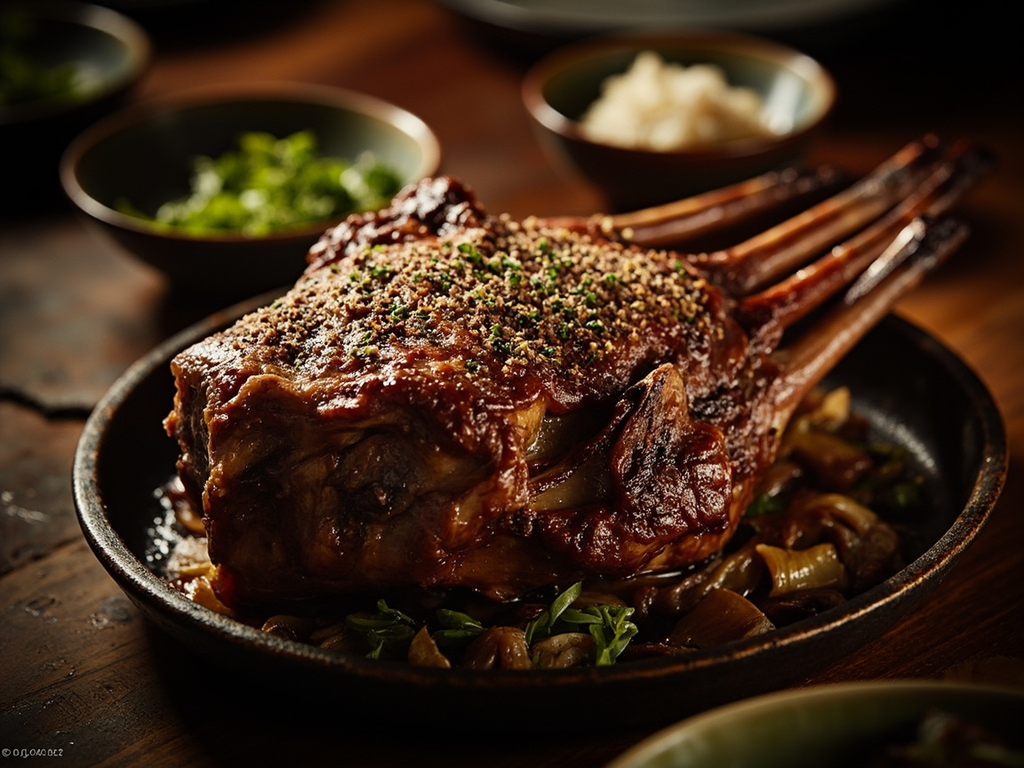
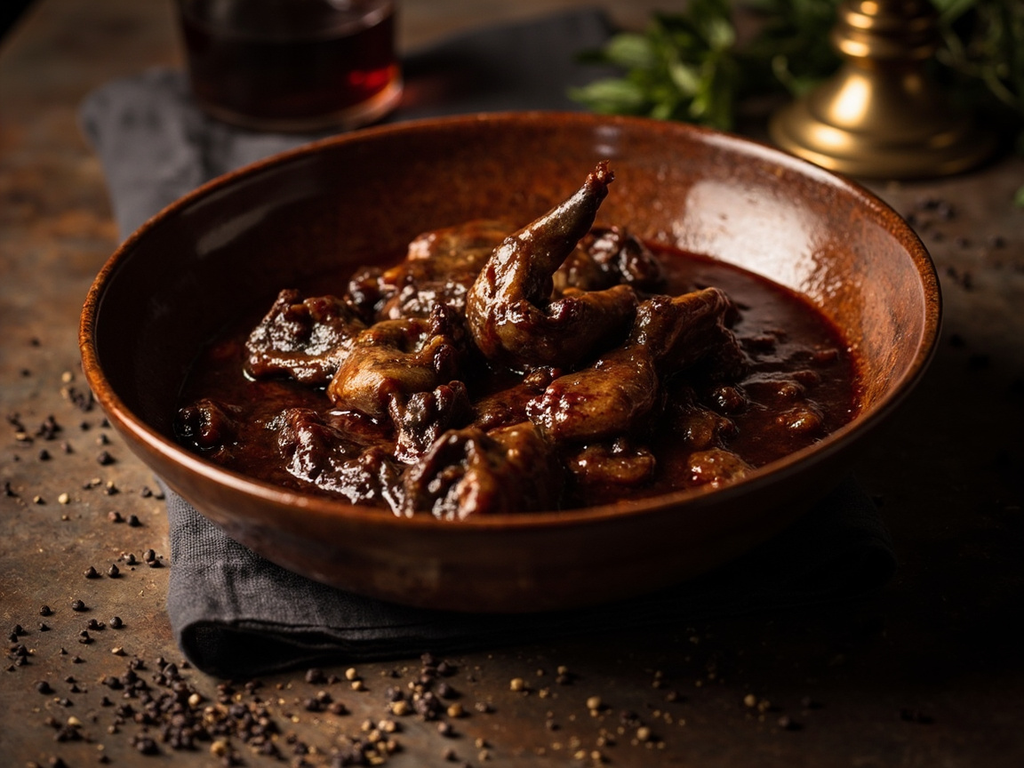
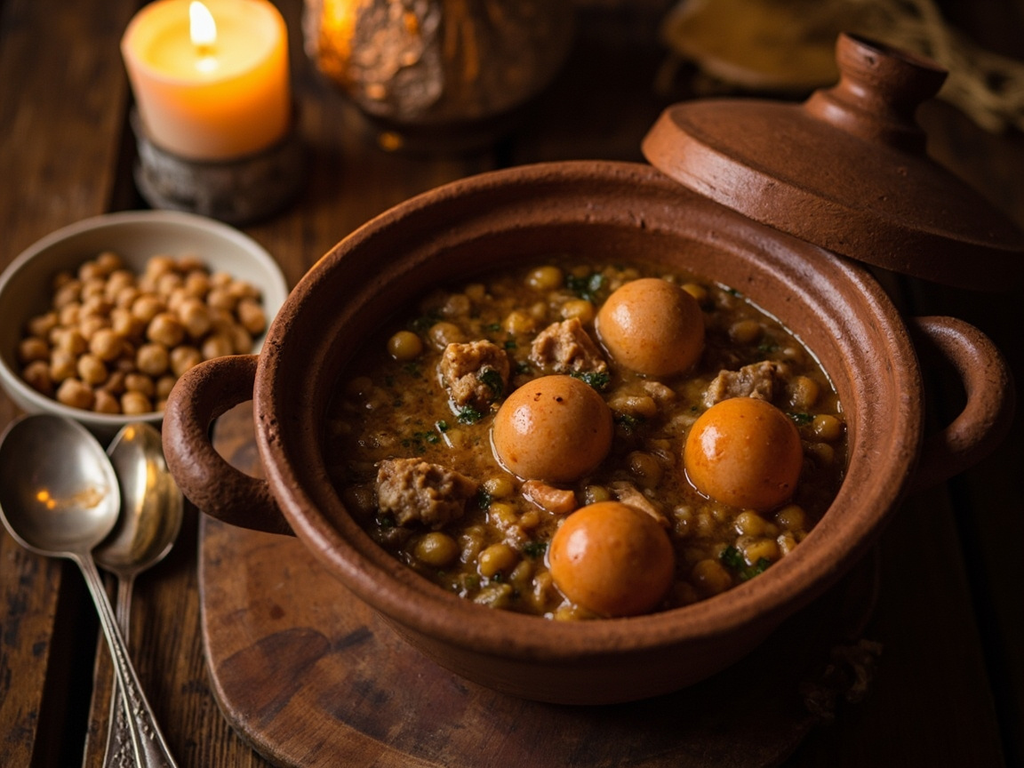
A festive stew combining chickpeas, wheat, poultry, and eggs cooked in their shells until brown and creamy (*huevos haminados*). Mild, deep, comforting, perfumed with cumin and cinnamon.
On the seventh day you shall kindle no fire: thus the Holy One, blessed be He, has commanded, and thus I have recorded in the Repeated Law. Therefore, on Friday, before the sun sets, we buried the pot in the embers so that it would keep watch with us all night. In the morning of rest, we uncovered it: the chickpeas melted, the eggs turned brown like amber, the poultry falling apart by itself. Eat of it, but with measure, for even the joy of Shabbat desires a sober heart.
- •Chickpeas — a good measure, soaked (nourishing base)
- •Wheat berries (or hulled barley) — a handful (starch)
- •Poultry (hen) — pieces (protein, preferred over red meat)
- •Whole eggs in shells — as many as guests (haminados eggs)
- •Onions — a few (base)
- •Cumin, cinnamon, saffron — to taste (spices)
- •Dates or prunes — a handful (sweetness)
- •Olive oil, salt — as needed (seasoning)
Shabbat Adafina (Sephardic Hamin)
A festive stew combining chickpeas, wheat, poultry, and eggs cooked in their shells until brown and creamy (*huevos haminados*). Mild, deep, comforting, perfumed with cumin and cinnamon.
Why this dish? Jewish law forbids lighting a fire on Shabbat. Sephardic Jews invented this dish, placed in the oven before sunset on Friday and left to simmer all night, ready to eat hot on Saturday noon. Maimonides, a great codifier of the Law in his *Mishneh Torah*, lived and precisely regulated these Sabbath rest practices.
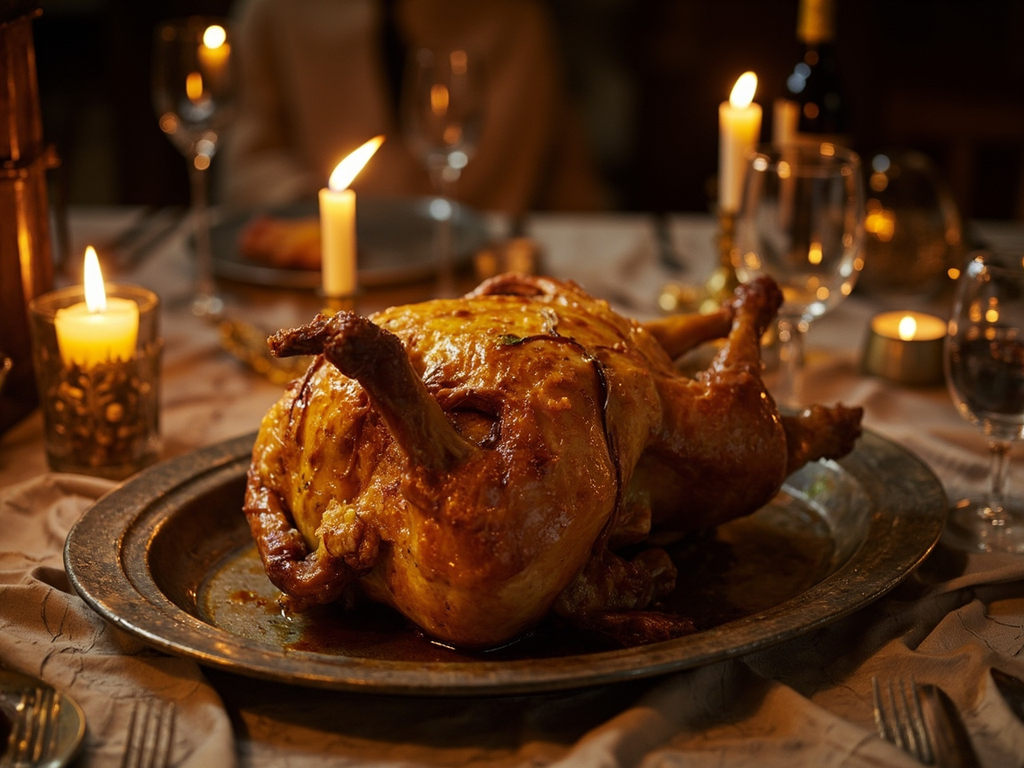
On the seventh day you shall kindle no fire: thus the Holy One, blessed be He, has commanded, and thus I have recorded in the Repeated Law. Therefore, on Friday, before the sun sets, we buried the pot in the embers so that it would keep watch with us all night. In the morning of rest, we uncovered it: the chickpeas melted, the eggs turned brown like amber, the poultry falling apart by itself. Eat of it, but with measure, for even the joy of Shabbat desires a sober heart.
Ingredients (period version)
- Chickpeas — a good measure, soaked (nourishing base)
- Wheat berries (or hulled barley) — a handful (starch)
- Poultry (hen) — pieces (protein, preferred over red meat)
- Whole eggs in shells — as many as guests (haminados eggs)
- Onions — a few (base)
- Cumin, cinnamon, saffron — to taste (spices)
- Dates or prunes — a handful (sweetness)
- Olive oil, salt — as needed (seasoning)
Ingredients
- Dried chickpeas — 300 g, soaked overnight (nourishing base)
- Wheat berries (or pearl barley) — 150 g (starch)
- Chicken thighs — 4 pieces (protein)
- Eggs — 4 to 6, whole in shells (haminados eggs)
- Onions — 2 large, sliced (base)
- Ground cumin — 2 tsp (signature spice)
- Cinnamon — 1 stick (sweet spice)
- Saffron — 1 pinch (color)
- Pitted dates — 8 (sweetness)
- Olive oil — 3 tbsp (base)
- Salt, pepper — to taste (seasoning)
Method
- In a large pot, sauté the onions in olive oil until nicely browned.
- Add the drained chickpeas, wheat, chicken, spices, and dates; stir to combine.
- Place the whole eggs (washed, in shells) on top, nestled among the ingredients.
- Cover generously with water (about 3 cm above), add salt, and bring to a simmer.
- Cover tightly and bake at 120°C for 8 to 12 hours (or overnight), without opening.
- To serve, peel the brown eggs, divide the stew, and ladle some broth over each portion.
How it was made : The adafina (from Arabic *dafīna*, "buried") was literally cooked buried in the embers of the communal neighborhood oven, or in a domestic oven that was sealed shut. The eggs, cooked for hours in their shells, slowly browned from a reaction with onion skins and took on a creamy texture: these are the famous *huevos haminados*. This dish is the direct ancestor of Sephardic hamin and cousin of Ashkenazi cholent.
The contemporary twist : Serve each portion in an individual bowl with the haminado egg placed whole in the center, cut in half at the table to reveal its amber yolk.
Sources : Maimonides, *Mishneh Torah*, Laws of Shabbat · Claudia Roden, *The Book of Jewish Food*
Maimonides · Charactorium