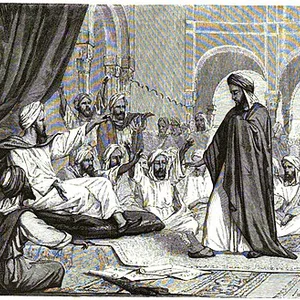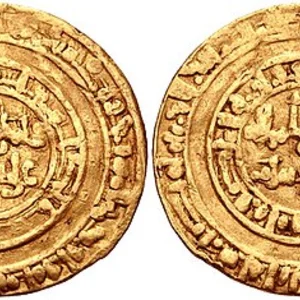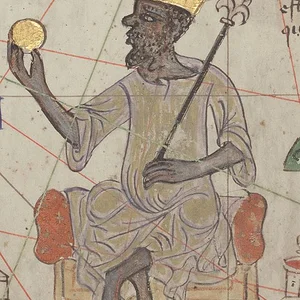

Mansa Musa (c. 1280–1337) was the tenth mansa (king) of the Mali Empire, one of the largest and wealthiest empires in the medieval world. His pilgrimage to Mecca in 1324–1325 revealed to the world the extraordinary riches of his kingdom.
Mansa Musa(1280 — 1337)
Mansa Musa
Empire du Mali
9 min read
Frequently asked questions
Key Facts
- Around 1312: ascended to the throne of the Mali Empire
- 1324–1325: pilgrimage (hajj) to Mecca with a caravan of 60,000 people and tons of gold
- His passage through Cairo caused gold inflation across Egypt and the Mediterranean for a decade
- Financed the construction of the great Djinguereber Mosque in Timbuktu
- His empire controlled half of the world's gold production at the time
Works & Achievements
Built by the architect Es-Saheli on the orders of Mansa Musa upon his return from Mecca, this mud-brick (banco) mosque is one of the finest examples of Sahelo-Sudanese architecture. Still standing today, it is a UNESCO World Heritage Site.
Developed under the patronage of Mansa Musa, the Sankore mosque housed a university capable of enrolling up to 25,000 students, training theologians, jurists, and scholars from across the world. It stands as a symbol of the intellectual golden age of medieval Africa.
Mansa Musa had the royal palace of the empire's capital built or renovated with the help of Es-Saheli. This domed palace, impressive in scale, exemplified the fusion of traditional African architecture with Arab-Andalusian influences.
Under Mansa Musa, the routes linking sub-Saharan Africa to the Maghreb were secured and organized, enabling a thriving trade in gold, salt, enslaved people, ivory, and spices between Africa, Europe, and the Arab world.
Mansa Musa encouraged the collection and copying of Arabic manuscripts covering every field of knowledge. Some of these collections survive in the private libraries of Timbuktu today, representing a unique intellectual heritage of medieval Africa.
Mansa Musa refined an administrative system built on provincial governors (farins) and an Islamic bureaucracy. This model, blending African tradition with Islamic law, made it possible to govern an empire spanning more than one million square kilometers.
Anecdotes
In 1324, Mansa Musa embarked on his pilgrimage to Mecca (the Hajj) at the head of an extraordinary caravan: around 60,000 people — including soldiers, servants, poets, and dignitaries — accompanied their ruler across the Sahara. Every Friday, he had a new mosque built along the route so he would never miss the weekly prayer.
As the caravan passed through Cairo, Mansa Musa distributed such staggering amounts of gold — reportedly several tons — that the price of the metal collapsed across the entire Mediterranean region. This lasting inflation struck Egypt, Syria, and even Arabia for more than a decade, illustrating just how incomprehensibly vast the wealth of the Mali Empire was to his contemporaries.
On his return from Mecca, Mansa Musa brought back with him the Andalusian architect and poet Abu Ishaq al-Sahili, known as Es-Saheli. He went on to build several mosques and palaces for the emperor, including the famous Djinguereber Mosque in Timbuktu (1327), which still stands today and is listed as a UNESCO World Heritage Site.
Under Mansa Musa's reign, Timbuktu became one of the greatest university cities of the medieval world. The Sankore Mosque welcomed up to 25,000 students from across Africa, Arabia, and Spain to study theology, mathematics, astronomy, and Islamic law — rivaling institutions such as Al-Azhar in Cairo or the University of Bologna in Europe.
In 1375, nearly forty years after Mansa Musa's death, the Catalan cartographer Abraham Cresques immortalized him on the Catalan Atlas, one of the most accurate world maps of the Middle Ages. It depicts a majestic African ruler wearing a golden crown and holding an enormous gold nugget, with the inscription: 'This Moorish king is the richest and most noble lord in all this region owing to the abundance of gold.'
Primary Sources
The sultan of Mali is the most powerful lord among the Blacks. He rules over an empire that stretches farther than the eye can see, and his generosity poured so much gold into Egypt that the price of that metal remained depressed for twelve years.
The people of Mali show great devotion to prayer and faithfully attend Friday sermons. Their children are put in chains if they neglect prayer, and are not released until they can recite the Quran by heart.
Mansa Musa made the pilgrimage in 724 of the Hijra [1324]. He crossed the Sahara with a magnificent retinue, distributed considerable alms, and displayed a generosity such that it will long be remembered among men.
Rex Melli, lord of the Blacks of Guinea. This Moorish king is called Musse Melly, lord of the Blacks of Guinea. So rich and so noble is this lord in gold that he is the most powerful ruler in all this region.
Timbuktu was, under the reign of the Mansas of Mali, a center of learning and commerce recognized by all the peoples of the earth. Scholars flocked there from every direction, drawn by the generosity of the princes and the renown of its masters.
Key Places
The political and administrative capital of the Mali Empire, Niani was the heart of Mansa Musa's power. Its royal palace and grand mosques made it a city of great prestige. Now lost to history, it was most likely located in present-day Guinea.
A major commercial and intellectual hub of medieval Africa, Timbuktu was beautified by Mansa Musa, who commissioned the Djinguereber Mosque and developed the Sankore Mosque into a university. The city is now a UNESCO World Heritage Site.
A key stop on Mansa Musa's pilgrimage in 1324, Cairo was the stage for his legendary distributions of gold. His meeting with the Mamluk sultan strengthened ties between the Mali Empire and the Arab world.
The ultimate destination of his pilgrimage, Mecca represented for Mansa Musa the Islamic faith that stood at the core of his identity as a ruler. His Hajj of 1324–1325 is one of the most celebrated in medieval history.
Located in the southern reaches of the Mali Empire, the Bure mines (in present-day Guinea) were the primary source of the gold that underpinned Mansa Musa's wealth. Control over them was a critical strategic asset for the empire.
A mining town deep in the Sahara, Taghaza produced the salt that was essential to sub-Saharan Africa. Mansa Musa controlled its trade, giving his empire a double source of wealth through both gold and salt.
Typical Objects

A symbol of the mansa's royal authority, the solid gold scepter was brandished during official audiences. Gold, omnipresent at the Malian court, symbolized the divinity and power of the sovereign.

The Mali Empire controlled the largest gold mines in West Africa (Bure, Bambuk). Gold in the form of dust or ingots was the primary currency of exchange and the most visible sign of the mansa's wealth.

Used for learning the Quran in the empire's Quranic schools, these wooden tablets covered in Arabic script attest to the importance of Islamic education promoted by Mansa Musa.

During his pilgrimage to Mecca, Mansa Musa wore the white garments of the hajji, symbolizing the equality of all believers before God. This gesture of humility stood in stark contrast to the magnificence of his entourage.

Salt from the Taghaza mines, transported by camel, was as precious as gold in the Mali Empire. Mansa Musa controlled its trade, making salt an indispensable currency of exchange.

During the pilgrimage, the mansa lodged in embroidered silk tents set apart from his retinue. Several Arabic accounts describe the magnificence of this traveling encampment, which impressed all who witnessed it.

Under Mansa Musa, thousands of Arabic manuscripts were gathered in Timbuktu, covering theology, astronomy, mathematics, and medicine. Some of these manuscripts have survived to this day.
School Curriculum
Vocabulary & Tags
Key Vocabulary
Daily Life
Morning
Mansa Musa rose before dawn for the first of the five daily prayers (Fajr), joined by his inner circle and Quranic scholars. After prayer, he received reports from his provincial governors (farins) and military commanders in the palace audience hall at Niani.
Afternoon
Afternoons were dedicated to diplomatic audiences: Arab merchants, envoys from the Sultan of Morocco or Mamluk Egypt, and tributary chiefs came to present offerings and negotiate alliances. Griots — court historians and poets — recited royal genealogies and sang of the empire's victories.
Evening
In the evening, after the Maghrib prayer, Mansa Musa gathered with his advisors, the ulama (Islamic scholars), and Mandinka clan chiefs to deliberate on major political decisions. Musicians played the balafon and kora, and storytellers kept alive the epics of Sundiata Keita, the empire's founder.
Food
The court's diet included millet and sorghum served as porridge or flatbread, rice in river regions, and beef and mutton for royal feasts, along with dried fish from the Niger. Rare spices — pepper, cinnamon, ginger — arrived via Saharan caravans, reflecting the court's extraordinary purchasing power.
Clothing
Mansa Musa wore white and gold cotton boubous woven by Mandinka craftsmen, with intricate embroidery at the collar and cuffs. For official ceremonies, he donned a turban and a silk cape imported from the Maghreb, tanned leather sandals, and solid gold jewelry: bracelets, necklaces, and rings set with semi-precious stones.
Housing
The royal palace at Niani was a vast mud-brick (banco) compound with multiple interior courtyards shaded by palm and fruit trees. Silk tents were erected for open-air audiences. A dedicated hall, decorated with drapes and Moroccan rugs, served for receiving ambassadors. In Timbuktu, Mansa Musa had an additional residence built by Es-Saheli.
Historical Timeline
Period Vocabulary
Visual Style
Style visuel alliant l'architecture en banco du Sahel, les enluminures des manuscrits de Tombouctou et la richesse dorée évoquée par l'Atlas Catalan : tons chauds d'or, d'ocre et d'indigo profond.
Sound Ambience
Ambiance sonore de la cour impériale du Mali médiéval : tambours de cérémonie, appels à la prière depuis les minarets en banco, bourdonnement des marchés de Tombouctou, chants épiques des griots et vent du Sahara.
Liens externes & ressources
Références
Œuvres
Mosquée Djinguereber (Djenguéréber) de Tombouctou
1327
Mosquée et université de Sankoré (Tombouctou)
vers 1325-1330
Palais royal de Madougou (Niani)
vers 1310-1325
Réseau de routes commerciales transsahariennes
1307-1337
Bibliothèques et collections de manuscrits de Tombouctou
vers 1325-1337
Organisation fiscale et administrative de l'Empire du Mali
1307-1337