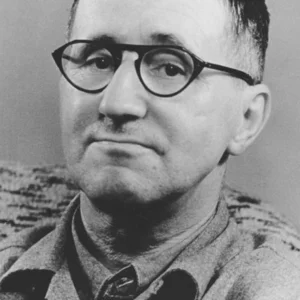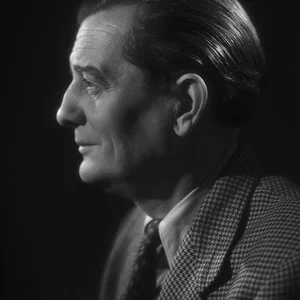

French writer, playwright, and filmmaker born in Aubagne in 1895. Author of the Marseilles Trilogy (*Marius*, *Fanny*, *César*) and autobiographical works such as *My Father's Glory*, he was the first filmmaker elected to the Académie française.
Marcel Pagnol(1895 — 1974)
Marcel Pagnol
France
8 min read
Frequently asked questions
Famous Quotes
« Quality films are those that please the public.»
« My father's glory is having made me what I am.»
« Like father, like son.»
Key Facts
- 1895: born in Aubagne (Bouches-du-Rhône)
- 1929: theatrical triumph of *Marius* in Paris
- 1931: *Marius* adapted for the screen, a landmark success of the talking picture era
- 1946: first filmmaker elected to the Académie française
- 1957–1960: publication of his childhood memoirs (*My Father's Glory*, *My Mother's Castle*)
Works & Achievements
A satirical play about corruption and social hypocrisy that introduced Pagnol to Parisian audiences. Adapted for the screen several times, it remains one of his most performed works worldwide.
The first installment of the Marseille trilogy, premiered at the Théâtre de Paris in October 1929. The play depicts the inner conflict between the call of the open sea and the ties of love, through vivid characters who embody the soul of Provence.
The second installment of the trilogy, also brought to the screen that same year. Pagnol explores motherhood, sacrifice, and honor within a highly codified Mediterranean society, with quiet and universal emotional resonance.
The third installment of the trilogy, directed for the cinema by Pagnol himself. It brings the characters' fates to a close with a depth that made the film an absolute classic of French cinema.
A film made with Raimu in the title role, widely regarded as one of Pagnol's masterpieces. The story of a baker driven to despair by his wife's infidelity — a despair that brings an entire village to a standstill — allows Pagnol to portray deep Provence with tenderness and humor.
The first volume of *Souvenirs d'enfance*, an autobiographical account of childhood summers in Provence and his father's passion for hunting. Now a towering classic of French literature, it regularly appears on school curricula.
The second volume of *Souvenirs d'enfance*, more melancholy in tone, evoking the bond with his mother and the fragility of childhood happiness. Its epilogue — memorized by generations of secondary-school students — stands as one of the most moving passages in twentieth-century French literature.
Anecdotes
In 1946, Marcel Pagnol became the first filmmaker in history to be elected to the Académie française, taking seat 27. The literary institution, traditionally reserved for writers and scholars, opened its doors to a man of cinema for the very first time — a move that sparked fierce debate in Parisian cultural circles.
In the 1930s, Pagnol built his own film studios in the Marseille region, refusing any dependence on the major Parisian or American studios. This complete independence allowed him to control everything — writing, directing, producing, and distribution — which was absolutely exceptional for the era.
The arrival of talking pictures in 1929 filled Pagnol with enthusiasm at a time when many filmmakers dreaded it. He immediately saw in it the perfect tool for capturing the accents, intonations, and music of the Marseille dialect, convinced that sound would transform cinema into a true literary art form.
*La Gloire de mon père*, published in 1957 when Pagnol was over 60, was written to honor the memory of his father Joseph, a Republican schoolteacher who died in 1933. He admitted to having waited decades before daring to tell the story of that happy childhood, fearing he would not find words equal to his memories.
Pagnol and the writer Jean Giono were close friends for many years and collaborated on several films in the 1930s (*Jofroi*, *Angèle*, *Regain*). Their friendship broke irrevocably during the Occupation: Giono had taken compromising positions with Vichy, something Pagnol — who had kept his distance while remaining a man of integrity — never forgave him for.
Primary Sources
I was born in the city of Aubagne, under the Garlaban crowned with goats, in the time of the last goatherd.
The theater fixes characters in a permanent setting; the cinema liberates them in space and time. That is why the talking film is not photographed theater, but a new art with its own laws.
These characters speak the way people speak at the Old Port. I invented nothing: I listened, and noted, for years, the words and silences of this city.
Such is the life of men. A few joys, quickly erased by unforgettable sorrows. There is no need to tell this to children.
Key Places
Marcel Pagnol's birthplace, where he was born on February 28, 1895. The town honors his memory today with a museum, a heritage trail, and santons (traditional Provençal clay figurines) made in his likeness.
A Provençal hill village where the Pagnol family spent their summers, and the magical setting of *My Father's Glory* and *My Mother's Castle*. Pagnol has been buried here since 1974, as he wished.
The city whose soul Pagnol immortalized in his trilogy. In the 1930s he established his own film studios there to produce his movies with complete artistic and financial independence.
Here Pagnol achieved theatrical fame with *Marius* in 1929 and was elected to the Académie française in 1946. He died in Paris on April 18, 1974, having spent his life between the capital and Provence.
The secondary school where Pagnol completed his studies and passed his baccalauréat with distinction. It was there that he formed his first literary friendships and developed his vocation as a writer.
Typical Objects
Pagnol's preferred writing instrument for drafting his plays and novels. He worked by hand, crossing out and starting over until he found exactly the right turn of phrase, particularly for dialogues that needed to sound like genuine spoken language.
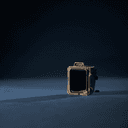
A professional camera used in French studios in the 1930s, heavy and requiring a technical crew. Pagnol operated it in his Provençal studios to shoot films that revolutionized the use of sound and regional speech in cinema.
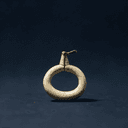
An essential technical accessory on the sets of talking pictures, used to synchronize image and sound. For Pagnol, a pioneer of sound cinema in France, it symbolized technical modernity put at the service of literature.
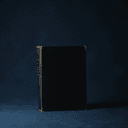
The everyday objects of Pagnol's father, Joseph, a schoolteacher under the Third Republic. Pagnol associated them with the values of the secular, republican school — the foundation of his happy childhood, so vividly present in his *Memories of Childhood*.
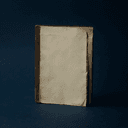
Pagnol jotted down in notebooks the expressions, turns of phrase, and lines of dialogue he overheard in Marseille's cafés and markets. This practice of listening and collecting everyday speech was central to his writing method and explains the authenticity of his dialogues.

An emblematic Provençal game that Pagnol played and described as a symbol of Mediterranean sociability. Invented in La Ciotat in 1907, pétanque is intimately linked to the Provençal culture he celebrated in his works.
School Curriculum
Vocabulary & Tags
Key Vocabulary
Daily Life
Morning
Pagnol devoted his mornings to writing, in the quiet of his Parisian study or, in summer, at his Provençal *bastide*. He worked by hand, crossing out and starting over until his dialogues rang true, with the music of real spoken language.
Afternoon
Afternoons were reserved for theatrical rehearsals or filming sessions when he was producing a film. Outside periods of intensive work, he would walk the hills around La Treille, observing the *garrigue* and the people with the attentive eye of a writer always on the alert.
Evening
Provençal evenings were spent in the company of friends around a long, lively table, in the tradition of the Mediterranean meal. In Paris, he attended opening-night dinners and discussions with his collaborators — actors such as Raimu or Fernandel, writers, and filmmakers.
Food
Pagnol had a deep attachment to Provençal cuisine: *bouillabaisse*, *aïoli*, lamb, and garden vegetables marked the rhythm of his summer meals at La Treille. The table was for him a place of storytelling and sharing, as evidenced by the many meal scenes laden with human meaning throughout his work.
Clothing
In Parisian social circles, Pagnol wore the dark suit, tie, and felt hat befitting an academician of his era. In Provence, he readily adopted a more relaxed outfit — open shirt, straw hat — in keeping with the sun-drenched Provençal image he proudly claimed.
Housing
In Paris, Pagnol lived in the bourgeois neighborhoods of the western city. In Provence, he owned a *bastide* at La Treille and other properties in the hills around Marseille — places of memory transposed directly into his autobiographical writings and now literary sites still visited today.
Historical Timeline
Period Vocabulary
Liens externes & ressources
Références
Œuvres
La Gloire de mon père
1957
Le Château de ma mère
1958