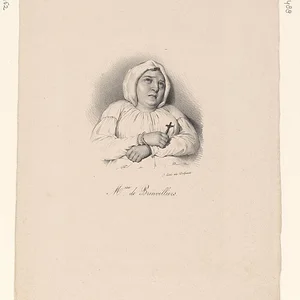

French noblewoman from the House of Dreux, a family of high Capetian lineage. A figure of the French aristocracy in the early modern period, her name combines Catholic devotion with membership in one of France's great seigneurial dynasties.
Marie-Madeleine de Dreux
Marie-Madeleine de Dreux
9 min read
Frequently asked questions
Key Facts
- From the House of Dreux, a cadet branch of the Capetian dynasty
- Bears the compound given name Marie-Madeleine, widely adopted among Catholic nobility following the Council of Trent (1545–1563)
- Member of the French aristocracy during the early modern period
Works & Achievements
Like many noblewomen of her rank, Marie-Madeleine de Dreux likely contributed to the founding or upkeep of a chapel bearing her family's coat of arms. These foundations provided for perpetual masses to be said for the salvation of deceased family members.
In the context of the Catholic Reformation, great ladies supported the new female religious orders through donations of money, land, or precious objects. These acts of piety were also political gestures that reinforced the family's influence within local society.
High-ranking noblewomen maintained networks of letters with other families, clergy, and royal officers. These correspondences reflected the informal yet crucial diplomatic role that great ladies played in the political and social life of the Ancien Régime.
One of the primary duties of a Catholic noblewoman was to ensure the religious and intellectual education of her children. Marie-Madeleine would have entrusted her sons to the Jesuits and her daughters to teaching convents, in keeping with the recommendations of the Council of Trent.
Anecdotes
The House of Dreux descends directly from Robert I of Dreux, grandson of King Louis VI the Fat. Although this Capetian lineage had been removed from the throne for centuries, it jealously preserved its noble prerogatives. At court ceremonies, its members sat among the great lords of the kingdom, reminding all of their royal origins through their coat of arms: gold with a red border charged with fleurs-de-lis.
Marie-Madeleine bore the name of the foremost evangelical saint, a biblical figure associated with conversion and devotion. In the France of the Catholic Reformation, saints' names were chosen with precise spiritual intent — hers amounted to a lifelong program: penance, fidelity to Christ, and elevation of the soul, ideals championed by the Council of Trent.
High-ranking noblewomen played an active role in the life of convents as benefactresses or founders of funerary chapels. Marie-Madeleine de Dreux is believed to have supported the new religious orders — reformed Carmelites, Ursulines — helping to spread Tridentine piety across her lands. These gestures strengthened both her spiritual reputation and her family's political influence in the region.
Managing seigneurial estates was a considerable responsibility for noblewomen, particularly widows. Marie-Madeleine had to balance the demands of the Catholic faith — numerous days of fasting, daily offices — with the imperatives of administration: meetings with stewards, signing lease agreements, and defending her rights before royal courts.
In the Dreux tradition, marriage was above all a matter of dynastic strategy. Matrimonial negotiations involved years of dealings between families, with the involvement of notaries, confessors, and influential relatives. A woman of this rank learned from childhood the codes of courtesy, the subtleties of precedence, and the management of a noble household that governed every aspect of aristocratic life.
Primary Sources
The House of Dreux, descended from the royal blood of France through Robert, Count of Dreux and Braine, son of Louis VI known as the Fat, has preserved to this day the distinctive marks of its lofty Capetian origins, bearing or with a bordure gules charged with fleurs-de-lis of France.
Monasteries of women shall be placed under the direction of the Ordinary. Noble benefactresses shall have the right of burial in the chapels they have founded, with a memorial bearing their arms, provided that said foundation has been approved by the bishop of the diocese.
Deed of recognition of the rights and prerogatives of the noble House of Dreux over its lands and lordships, confirming the distinguished lineage and privileges attached to this Capetian branch by letters patent of the Most Christian King.
My Philothea, this devotion must be practiced according to each person's station in life. It is not fitting for a nobleman to abandon his duties and withdraw to a cloister; but he can and must sanctify his home, his table, and his relationships through sincere and daily piety.
Key Places
The eponymous city of the house from which Marie-Madeleine descended, Dreux is the historical cradle of this Capetian branch. The city was home to the count's castle and the Royal Chapel of Saint-Louis, the family's necropolis and a symbol of its dynastic continuity across several centuries.
Braine was one of the important fiefdoms of the counts of Dreux since the 12th century. The Abbey of Saint-Yved, founded by the family, served as a burial site for the early lords of the lineage and remained a powerful symbol of their dynastic roots in noble memory.
In the 17th century, the French high nobility resided in the grand townhouses of the Marais. These aristocratic mansions were the stage for social life, matrimonial alliances, and the political intrigues that stirred society under the Ancien Régime.
A major center of reformed Catholic spirituality in the 17th century, Port-Royal attracted many noblewomen seeking a more rigorous form of devotion. It embodies the tension between austere Jansenist piety and Jesuit orthodoxy that ran through the lives of the Catholic high nobility.
Typical Objects

A collection of prayers illustrated with miniatures, the Book of Hours was the devotional object par excellence of Catholic nobles in the early modern period. Marie-Madeleine would have used it to sanctify each hour of her day according to the liturgical calendar, in keeping with Tridentine practices.

Red coral rosaries set in gold mounts were luxury devotional objects reserved for the aristocracy. They displayed both Catholic faith and social rank, worn openly at religious services or kept carefully in private oratories.

Great noble families had their coats of arms embroidered on tapestries and hangings that decorated their homes. The red border charged with fleurs-de-lys specific to the Dreux family announced their Capetian lineage in every grand room of the household.

A symbol of noble status, the jewelry box held jewels inherited from generation to generation. For a lady of the house of Dreux, these pieces often included reliquaries, blending aristocratic display with Catholic devotion.

The seal allowed a noble lady to validate her legal documents, farming leases, or important letters. Carrying one's own seal meant exercising legally recognized authority over the lands and people belonging to one's seigneurial estate.

The missal, the book of the Catholic Mass, was a precious object whose rich binding reflected the rank of its owner. Grand ladies would have the names of their deceased loved ones inscribed in it, so they could pray for them during liturgical ceremonies.
School Curriculum
Vocabulary & Tags
Key Vocabulary
Tags
Daily Life
Morning
Marie-Madeleine rises at dawn, guided by the bells of her estate's private chapel. She begins her day with an hour of prayer and reading from her book of hours, before attending the morning mass celebrated by her chaplain. This rigorous spiritual discipline, inherited from the Tridentine ideal, structures the whole of her noble day.
Afternoon
The afternoon is devoted to managing the estate: audiences with stewards, signing tenancy agreements, and correspondence with notaries and allied families. She also receives visits from ladies of equivalent standing, occasions to exchange court news, religious affairs, and marriage strategies for the children of the household.
Evening
The evening brings the extended family and guests together around a formal meal where rank and precedence are scrupulously observed. After supper, a pious reading aloud or chamber music precedes the private vespers recited as a family. Marie-Madeleine sets aside a moment for an examination of conscience before retiring, in keeping with the devout practices promoted by Francis de Sales.
Food
The table of a great lady of the early modern period observes the many days of abstinence prescribed by the Catholic Church, alternating between meals of roasted meats and fish dishes during Lent. Refined fare — pâtés en croûte, spit-roasted game, sweet spiced confections — signals the mistress of the house's social rank. Burgundy or Île-de-France wines accompany everyday meals, with rare vintages reserved for feasts.
Clothing
Marie-Madeleine wears the stiff-bodiced gowns typical of the seventeenth century, in crimson velvet or black silk for solemn occasions. White lace collars — flat falling bands in the fashion of the Court — frame her face with elegant restraint. For prayer, she dresses more simply but always in quality garments, a sign that devotion does not preclude the dignity of rank.
Housing
Marie-Madeleine divides her time between a private mansion in the Marais district of Paris and a seigneurial château on the ancestral Dreux lands. The interiors are adorned with tapestries bearing the family coat of arms, darkly stained carved furniture, and a private oratory presided over by a painting of the penitent Magdalene — her patron saint and spiritual model.
Historical Timeline
Period Vocabulary
Visual Style
Portrait aristocratique français de style baroque, entre austérité religieuse post-tridentine et magnificence nobiliaire, dans les tons sombres et dorés du XVIIe siècle.
Sound Ambience
Ambiance sonore d'un hôtel noble français du XVIIe siècle, entre oratoire privé et salle d'apparat, rythmée par les heures canoniques et le cérémonial aristocratique.
Liens externes & ressources
Références
Œuvres
Fondation d'une chapelle funéraire aux armes des Dreux
XVIIe siècle
Dotation d'un couvent de carmélites ou d'ursulines
XVIIe siècle
Réseau de correspondance aristocratique et de patronage
XVIIe siècle
Éducation des enfants selon le programme tridentin
XVIIe siècle