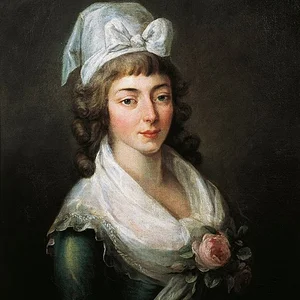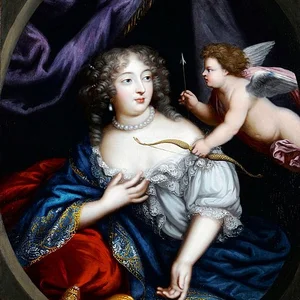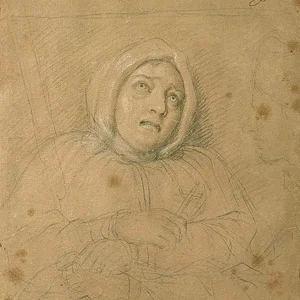

A French aristocrat of the 17th century, notorious for poisoning her father and brothers in order to inherit their fortune. Her trial and execution in 1676 triggered the Affair of the Poisons, exposing the widespread use of poison in high society.
Marquise de Brinvilliers(1630 — 1676)
Marie Madeleine Dreux d'Aubray, marquise de Brinvilliers
France
8 min read
Frequently asked questions
Key Facts
- Born in 1630 in Paris into a family of the high noblesse de robe
- Poisoned her father Charles Dreux d'Aubray as early as 1666, then her two brothers between 1670 and 1672
- Arrested in 1676 in Liège after her crimes were uncovered through an accomplice, Sainte-Croix
- Tried, convicted, and executed in Paris on July 16, 1676 (beheaded then burned)
- Her case triggered the Affair of the Poisons (1677–1682), a scandal that reached the court of Louis XIV
Works & Achievements
A lengthy oral confession recorded by Jesuit priest Edmund Pirot on the eve of her execution, describing the marquise's crimes, motivations, and repentance. A valuable historical document on criminal psychology under the Ancien Régime, published by Pirot in 1883.
Personal correspondence seized at the death of Sainte-Croix, attesting to the complicity of the two lovers in the poisonings. These letters constituted the principal pieces of evidence at the 1676 trial.
Legal documents drafted by her lawyers to plead her case before the Parlement of Paris. They shed light on defense strategies in criminal cases under the Ancien Régime and the limited rights afforded to the accused.
Anecdotes
To test the effectiveness of her poisons, Marie Madeleine would visit patients at the Hôtel-Dieu in Paris under the guise of Christian charity. She brought them sweets and poisoned food, observing the effects on these defenseless paupers. These 'charitable visits' allowed her to fine-tune her lethal doses before using them on her own family.
Her lover Godin de Sainte-Croix had been imprisoned in the Bastille in 1663 on the orders of the marquise's father, who was scandalized by their affair. It was there that he reportedly learned the art of poisons from an Italian alchemist named Exili, who shared his cell. This deadly knowledge would seal the fate of the entire Dreux d'Aubray family.
When Sainte-Croix died accidentally in 1672, a mysterious box was found in his room — one he had asked to be delivered to the marquise in the event of his death. But the authorities opened it before it could disappear: it contained poisons, poisoning recipes, and incriminating letters from the marquise that would serve as evidence of her crimes.
After the discovery of the box, the marquise fled to England and then to Flanders, eventually taking refuge in a convent in Liège. A police officer disguised as a gentleman managed to lure her out of the convent by courting her, then arrested her the moment she stepped through the gates, stripping her of the protection of sanctuary.
Madame de Sévigné, present on the day of the execution on July 17, 1676, wrote a striking account in her letters: she noted that the marquise approached the scaffold with an unsettling calm. According to popular tradition, her ashes scattered to the four winds inspired the phrase 'We all breathe in her ashes' — a terrifying image of the moral contamination of society.
Primary Sources
La Brinvilliers is in the air: after the execution, her poor little body was thrown into a great fire and the ashes scattered to the wind; so that we shall breathe her in, and through the communication of the tiny spirits, some poisonous humor will take hold of us.
I poisoned my father and my two brothers... I had the misfortune of meeting Sainte-Croix, who taught me how to prepare these poisons... I acknowledge that I have sinned against God and against men, and I die repentant of my crimes.
The Court declares the said Marie Madeleine d'Aubray, Marquise de Brinvilliers, duly charged and convicted of the murder and poisoning of the late Messire Antoine Dreux d'Aubray, her father, and of her two brothers, and in reparation thereof sentences her to have her head severed.
In the room of the Sieur de Sainte-Croix, a casket was found containing several vials of various poisons, recipes for poisoning, and letters from the Marquise de Brinvilliers detailing her crimes and their shared complicity.
Key Places
The main hospital of Paris, located on the Île de la Cité. It was here that the marquise tested her poisons on indigent patients under the guise of charitable visits, refining her methods before turning them on her own family.
The royal fortress-prison in the faubourg Saint-Antoine. Sainte-Croix was imprisoned there in 1663 by lettre de cachet, and it was within its walls that he allegedly learned the art of poisoning — sowing the seeds of the family tragedy to come.
Paris's main place of execution (today the Place de l'Hôtel-de-Ville). It was here that the marquise was beheaded and then burned on 17 July 1676, before a large crowd that included Madame de Sévigné.
A Belgian convent where the marquise took refuge after years of flight across Europe. She was arrested there in 1676 by a police officer disguised as a suitor who lured her outside by deception, stripping her of the right of sanctuary.
The Dreux d'Aubray family residence in Le Marais, an aristocratic quarter of Paris. It was in this home that several poisonings were carried out during family meals, the crime concealed beneath the appearance of ordinary domestic life.