 Flip the card
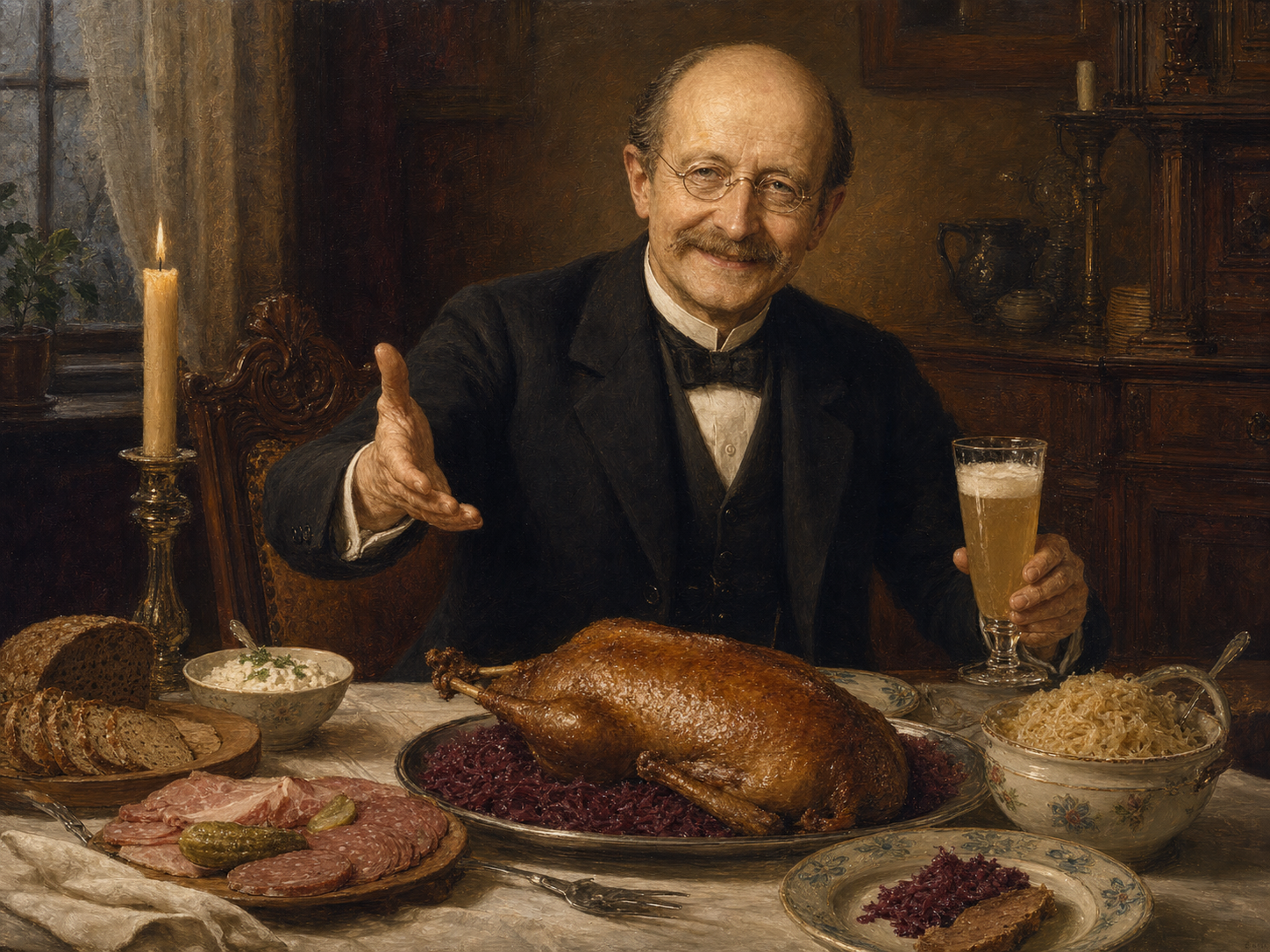
Max Planck at the table
1858 — 1947
On the menu
The German Bourgeois Day: Frühstück, Mittagessen, Kaffee und Kuchen, Abendbrot
In Wilhelmine Germany, where Planck lived, the day is structured into four parts: a breakfast (Frühstück) of bread and coffee, the hot midday Mittagessen which is the main meal, the afternoon ritual of Kaffee und Kuchen (coffee and cake), and finally Abendbrot — a cold supper of breads, cold cuts, and cheeses. Hot food is eaten at midday, cold food in the evening: the opposite of the French table.
Signature : Sour Rye and Prussian Fermentation
From the dense crumb of Roggenbrot to sour cabbage (Sauerkraut) and Berlin's tart beer, northern German cuisine relies on sour-fermented foods: preserving, acidifying, leavening with sourdough. It is the thread that connects Planck's frugal table, from daily bread to the evening glass.
click to flip back
Max Planck at the table
1858 — 1947
5 period recipes
 Everyday
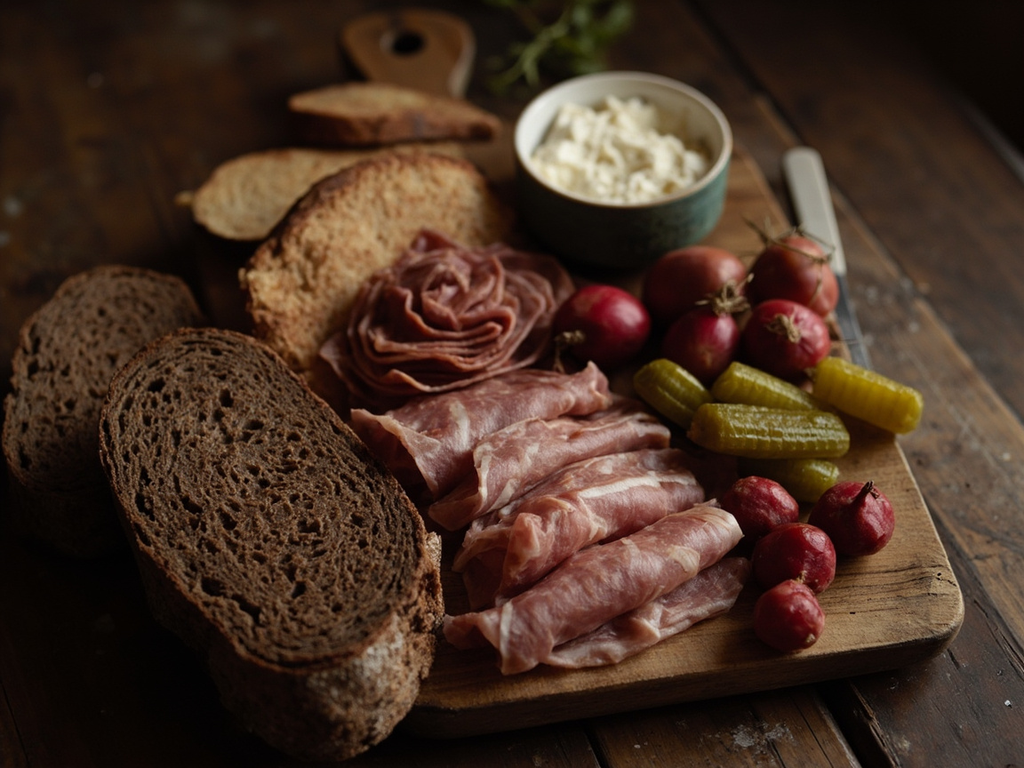
Abendbrot — Rye Bread, Cold Cuts, and Quark
Abendbrot (cold evening supper)
🧂 🫙· 15 min
View the recipe
 Festive
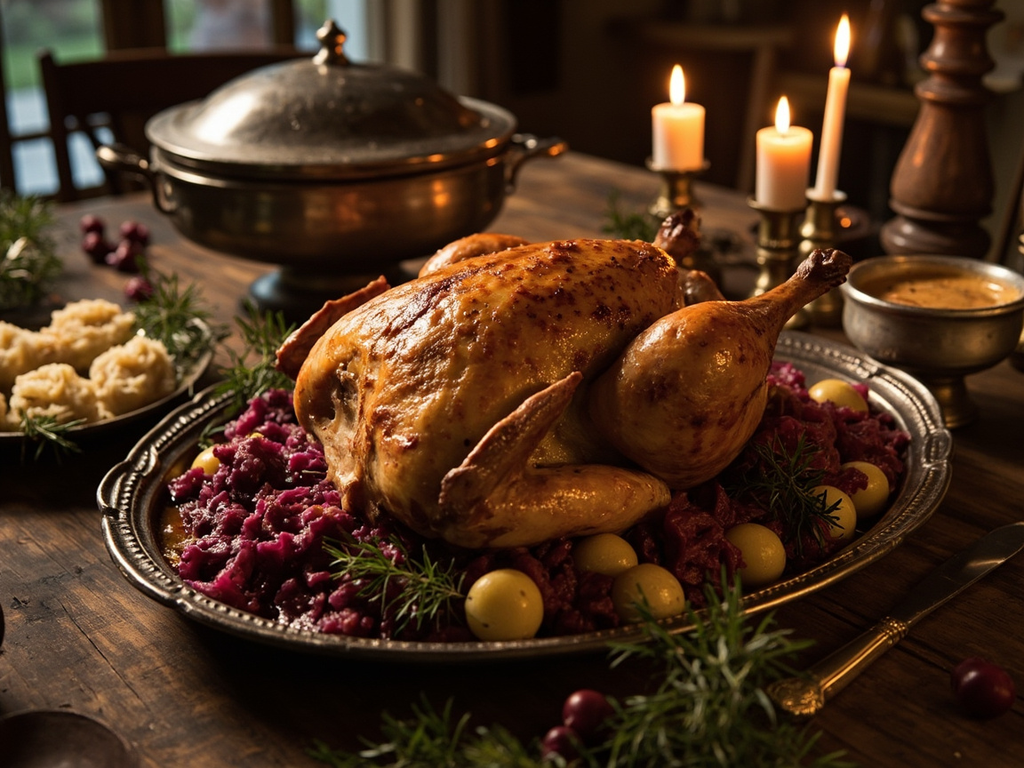
Christmas Roast Goose with Red Cabbage (Gänsebraten mit Rotkohl)
Festive Mittagessen (grand hot festive meal)
🧂 🍄 🍯· 4 h
View the recipe
 Preserving
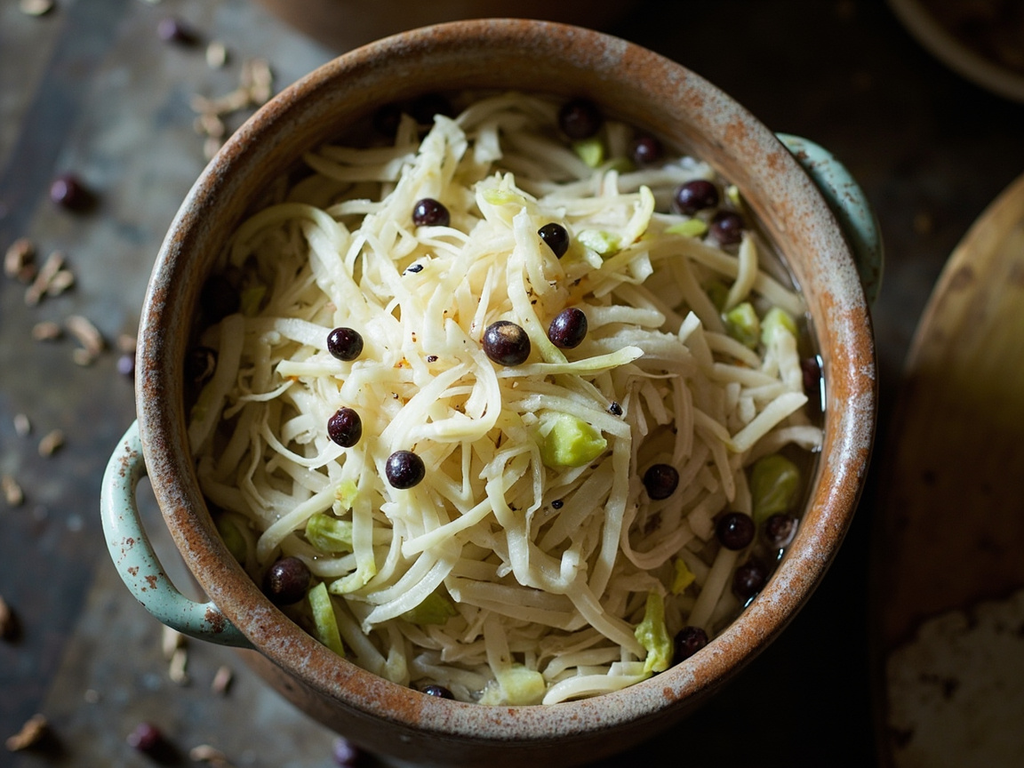
Homemade Sour Cabbage (Sauerkraut)
Vorrat (fermented pantry preserve)
🫙 🍋· 30 min + 1 to 4 weeks fermentation
View the recipe
 Drink
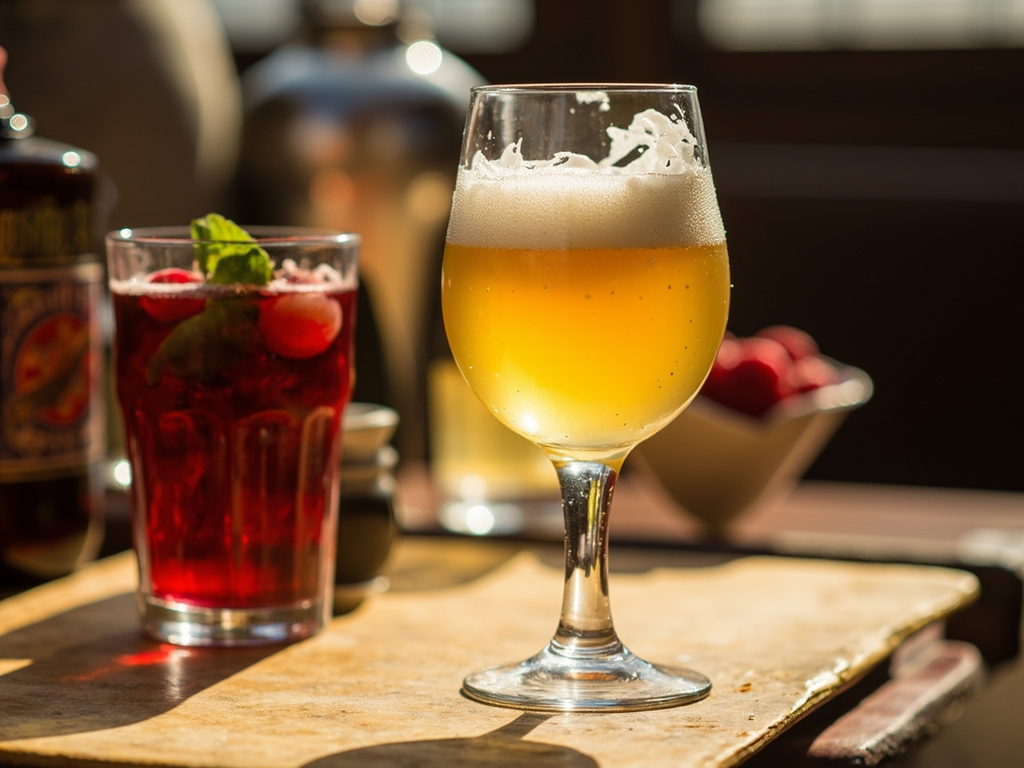
DrinkBerliner Weisse, the Tart Beer of Berlin
Getränk (convivial table beverage)
🍋 🫙· 5 min
View the recipe
 Everyday
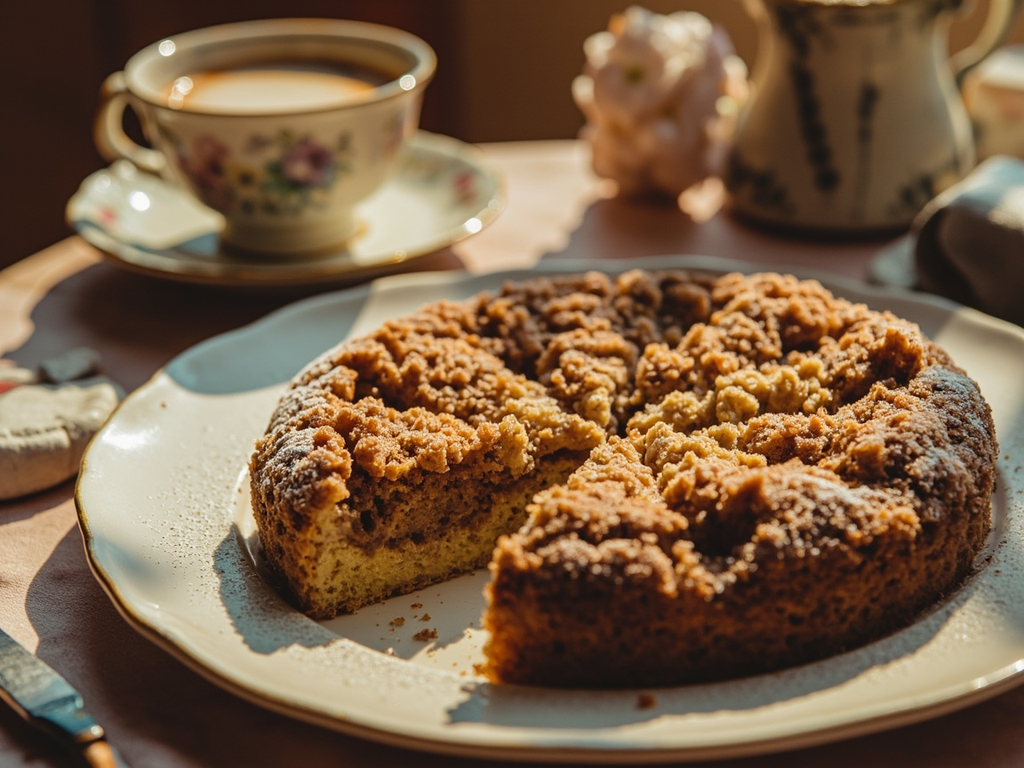
Yeast Crumb Cake (Streuselkuchen)
Kaffee und Kuchen (afternoon coffee and cake)
🍯· 2 h (including rising)
View the recipe